

More news on this day
Travellers heading from Pattaya to Koh Larn in 2026 are beginning to see long‑talked‑about fare increases materialise on one of Thailand’s busiest short‑haul ferry routes, as operators respond to higher fuel and operating costs while trying to keep the journey affordable for domestic and international visitors.
Get the latest news straight to your inbox!
A Budget Icon Faces Cost Pressures
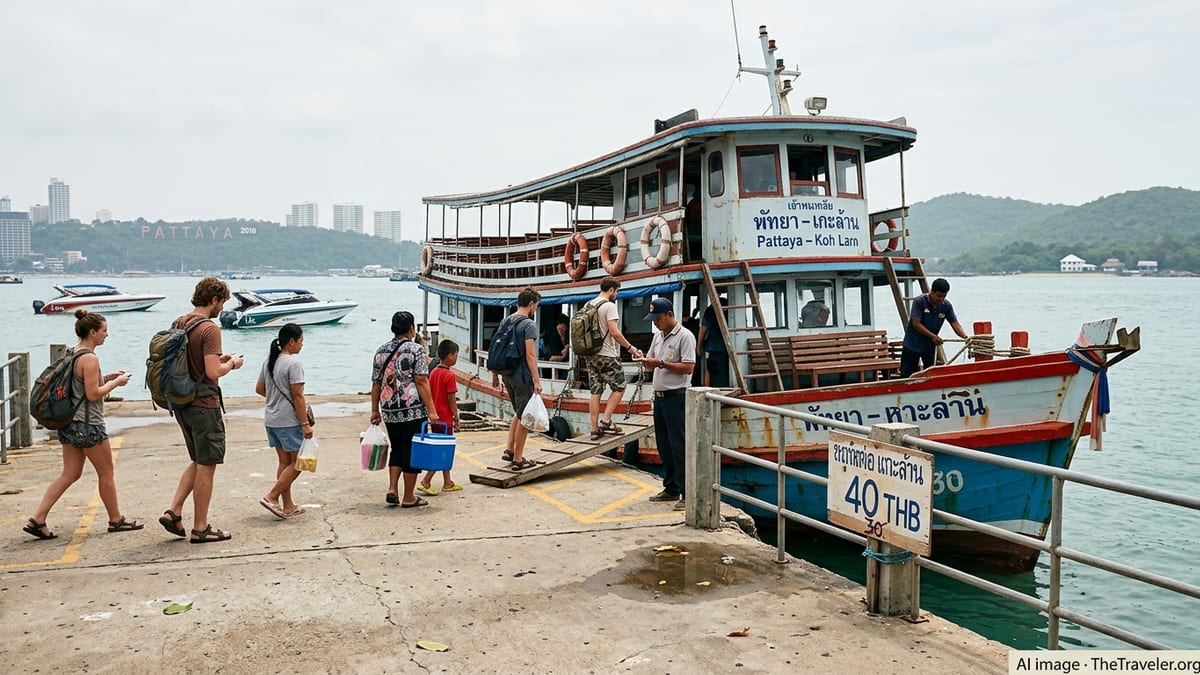
For years, the wooden passenger ferries shuttling between Pattaya’s Bali Hai Pier and Koh Larn have been among the cheapest boat rides in Thailand, with published information through 2025 and early 2026 consistently pointing to a base fare of about 30 baht per person each way. Guide sites updated for 2026 still describe this as a benchmark price for the standard public ferry service.
That benchmark is now being tested. Recent traveller reports circulating in early 2026 describe tickets edging up to around 40 baht per person on some sailings, with higher energy prices cited as a key reason. While this remains inexpensive by international standards, it marks the first meaningful rise in several years on a route known for rock‑bottom pricing.
The incremental adjustment reflects a wider pattern in Thai transport, where fuel and maintenance costs have climbed faster than many regulated fares. Operators on the Pattaya–Koh Larn route appear to be phasing in increases cautiously, aiming to avoid deterring day‑trippers while covering higher diesel and staffing bills during a period of sustained visitor demand.
Industry observers note that the modest change keeps the ferry firmly in the “budget travel” category for 2026, but it narrows the gap with other local transport options and may reshape how some visitors plan island outings and multi‑day stays on Koh Larn.
How Much Travellers Can Expect to Pay in 2026
Publicly available guides and recent traveller accounts suggest that, as of early 2026, most passengers should plan around a working figure of 40 baht each way for the standard large ferry between Bali Hai Pier and Koh Larn’s main piers, Na Baan village or Tawaen Beach. In practice, ticket sellers may still quote 30 baht on some departures while others are rounded up, so visitors are advised to carry small bills and check the current rate at the pier.
Return fares are usually calculated as two single journeys rather than a discounted round‑trip ticket, meaning a typical day‑trip budget for the ferry alone now falls in the 60 to 80 baht range per person. Even with the increase, that remains significantly cheaper than organised tour packages that bundle hotel transfers and beach activities into a single price.
At the faster end of the market, shared speedboats continue to command a substantial premium over the wooden ferries. Published fare tables and local travel sites list shared speedboat prices in the 150 to 300 baht per‑person range each way from Bali Hai Pier, depending on the specific operator, destination beach on Koh Larn and time of day. Private charters commonly start around 1,500 baht for a small group and can rise to 3,000 baht or more for larger or newer boats.
The widening spread between the low ferry fare and higher speedboat prices means that the recent ferry increase still leaves the slow boat as the clear budget choice. For cost‑conscious travellers in 2026, the slightly longer crossing time of about 30 to 40 minutes continues to offer strong value against both organised tours and ad‑hoc speedboat deals negotiated at the pier.
Fuel Costs and the Push to Keep Services Running
The fare adjustments come amid a broader trend of cost pressure on marine transport in Thailand. Fuel prices have risen over the past two years, and operators of short‑haul coastal routes have reported higher bills not only for fuel, but also for parts, insurance and pier fees. On the Pattaya–Koh Larn corridor, this is particularly sensitive because boats run frequent departures throughout the day and rely on steady passenger volumes rather than high margins.
Publicly available information from local news outlets and tourism bulletins indicates that Pattaya’s authorities and pier managers have been reluctant to approve steep ticket hikes for the most basic ferry services, viewing the 30 baht level as an important social price point for domestic tourists and workers commuting between the city and the island. The move toward a 40 baht fare on some departures appears to be a compromise between maintaining that accessibility and ensuring boats remain financially viable.
Speedboat services, which are operated largely by private companies rather than as quasi‑public transport, have historically adjusted their prices more flexibly in response to fuel swings. Standardised price tables introduced in recent years aimed to reduce confusion and aggressive competition at Bali Hai Pier, but operators still retain scope to tweak rates for private charters and off‑peak departures. As fuel costs move, these higher‑end options are likely to see more visible price changes than the main ferry in 2026.
For visitors, the result is a layered fare structure in which the basic ferry remains a subsidised or semi‑regulated option, while speedboats and tours respond more directly to market conditions. Understanding this dynamic helps travellers interpret price differences they see advertised online versus at the pier once they arrive in Pattaya.
Practical Advice for Planning a 2026 Trip
Travellers heading to Koh Larn in 2026 are unlikely to find the new ferry fares a major barrier, but it is wise to build the higher rates into daily budgets, especially for families or groups. Allowing 80 baht per person for a return ferry ticket leaves a realistic margin for modest increases or surcharges at particularly busy times such as public holidays or long weekends.
Arriving early at Bali Hai Pier remains advisable. Ferries typically run at regular intervals from early morning until late afternoon, and the most popular mid‑morning sailings can become crowded in high season. Buying tickets directly at the pier avoids intermediary booking fees that can obscure the true base fare and may be slower to reflect any new official rates.
Those considering speedboats should confirm whether quoted prices are per person or for the entire boat and clarify the exact drop‑off point on Koh Larn. A private speedboat can make sense for groups sharing the cost or for travellers returning after the last scheduled ferry, but solo visitors and couples typically find the public ferry more economical, especially as fuel‑related surcharges filter through the speedboat sector.
Travel advisers also suggest carrying cash in small denominations, as many ferry and speedboat operators still rely on cash payments. While a modest fare increase is unlikely to affect card acceptance policies, having exact change speeds boarding during busy periods and helps avoid any misunderstandings around posted versus charged prices.
What to Watch as the Season Progresses
Looking ahead through the rest of 2026, observers will be watching whether the step up from 30 to around 40 baht becomes universal on the Pattaya–Koh Larn ferries or remains limited to specific times and boats. The outcome may depend on how global fuel trends evolve and whether visitor numbers continue to grow at the current pace.
If fuel prices stabilise or fall, operators may find that the latest fare level is sufficient to restore margins without further changes. However, if operating costs keep climbing, there is scope for additional small increments, particularly on services that invest in newer vessels or expanded schedules.
Travellers planning trips later in the year are encouraged to treat current fares as indicative rather than fixed and to check up‑to‑date information shortly before travel. Local news outlets and recent trip reports remain useful references for seeing how prices at Bali Hai Pier compare with long‑standing guidebook figures.
For now, the Pattaya–Koh Larn crossing remains one of Thailand’s best‑value sea journeys, even with higher fuel expenses nudging fares upward. With a bit of planning and clear expectations about updated ticket prices, visitors in 2026 can continue to enjoy an affordable escape from the city to one of the eastern seaboard’s most accessible islands.