

More news on this day
Pattaya’s reputation as one of Thailand’s best-value beach cities is under strain as airfares, hotel rates and local costs jump, pressuring core markets such as China, Malaysia and Russia and prompting airlines and global hotel brands to recalibrate their strategies for the country’s new tourism reality.
Get the latest news straight to your inbox!
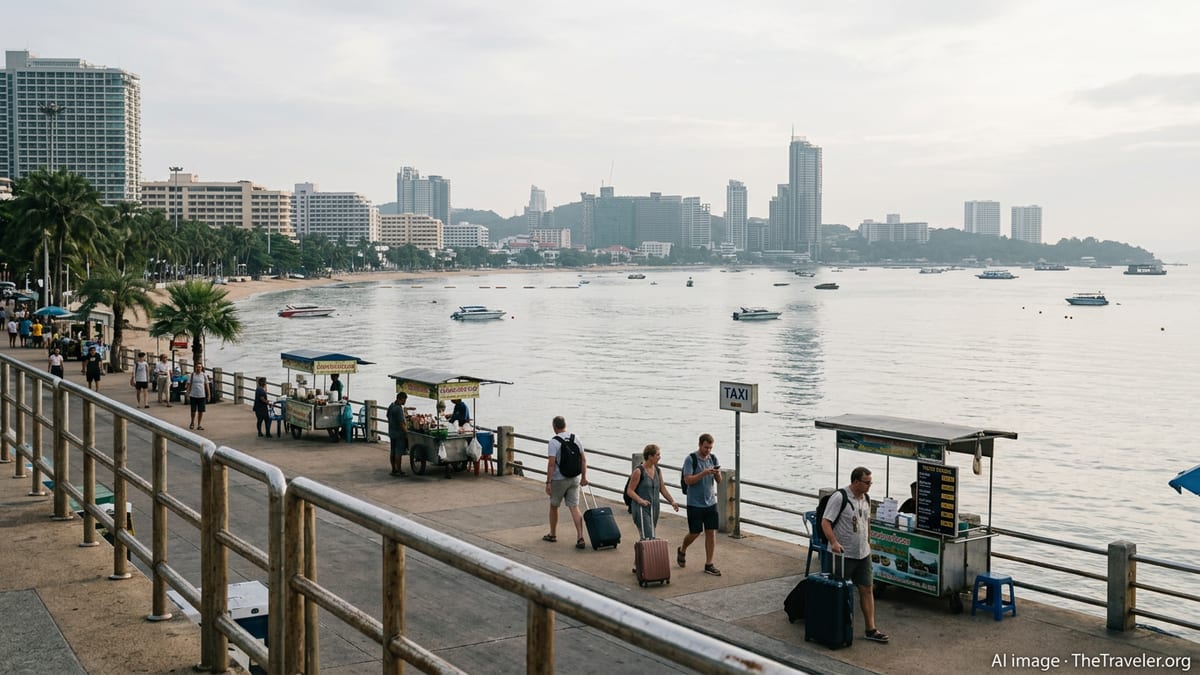
Pattaya’s New Price Point Tests Traditional Source Markets
For years, Pattaya drew mass-market travelers from China, Malaysia and Russia with low package prices and abundant mid-range accommodation. That value proposition is eroding as room rates, food costs and on-the-ground services climb faster than incomes in many source markets. Recent discussion among travelers points to double-digit increases for comparable hotels since late 2023, with some long-stay visitors reporting that properties which once offered month-long deals now command peak-night pricing throughout much of the year.
Industry data for Thailand shows that average daily rates in the upper tiers have continued to rise, and Pattaya has not been immune. Hotel performance reports for 2024 and early 2025 highlight higher yields at many coastal destinations, even as total foreign arrivals plateau. Operators in Pattaya have leaned on revenue per available room rather than pure volume, pushing prices higher while trimming discounts that previously targeted budget-conscious Chinese tour groups and Russian charter traffic.
At the same time, volatility in regional economies and currencies has narrowed the spending power of key visitor segments. Malaysian travelers crossing by land or booking short-haul flights are now confronting hotel and transport prices that resemble those of more established regional hubs. For Chinese and Russian tourists, who already face weaker domestic economic conditions and, in Russia’s case, sanctions-related frictions, Pattaya’s higher price point is forcing tougher choices between Thailand and rival middle-cost destinations.
The result is a more uneven demand pattern across the resort city. Upscale beachfront properties and branded residences continue to attract affluent guests willing to absorb higher rates, but smaller independent hotels and older mid-range blocks that once relied on bus tours and extended stays report thinner occupancy and more last-minute bargaining, despite headline prices rising.
Thai Airways and Regional Carriers Confront High Fares and Softer Arrivals
Airlines serving Thailand are at the center of the price shift. Analyses of the Thai aviation sector in late 2025 describe a tourism slowdown relative to earlier recovery years, with foreign arrivals projected below initial targets even as airfares remain elevated. Sector research circulated in Bangkok notes that higher operating costs, capacity constraints and intense competition for aircraft have kept ticket prices high on many routes, particularly those feeding leisure destinations like Pattaya via Bangkok and U-Tapao airports.
Thai Airways has been repositioning its business to navigate this environment. Publicly available information on the flag carrier’s restructuring strategy indicates a sharper focus on long-haul and connecting traffic, simplified fleets and higher-yield passengers. In practice, that has meant prioritizing routes and schedules that bring in travelers from Europe, the Middle East and South Asia, who are perceived as less price-sensitive than short-haul tourists on tightly budgeted packages.
Analyst coverage in 2025 highlights that Thai Airways and several competitors benefited from strong demand on Europe–Thailand sectors, even as Chinese arrivals fell and ASEAN short-haul markets softened. Research from local brokerages also underscores that airfares in Thailand are likely to remain relatively expensive because of fuel costs, airport fee pressures and the lag in adding new aircraft capacity. This has direct implications for Pattaya, which depends heavily on affordable seat supply to sustain its traditional mix of Malaysian road trippers, Chinese group tours and Russian holidaymakers.
Other carriers feeding Pattaya, including regional low-cost airlines and niche operators at U-Tapao, have responded by selectively reducing exposure to weaker markets and shifting capacity to more resilient segments such as India and long-stay European winter traffic. The net effect is a thinner menu of truly low-fare options into Thailand during peak periods, especially for travelers from China and neighboring ASEAN countries, reinforcing the city’s perception as a pricier destination than before.
Emirates and Gulf Carriers Balance High Yields With Network Risks
Gulf airlines such as Emirates remain crucial connectors between Europe, the Middle East and Thailand, feeding long-haul visitors into Bangkok and, in turn, onward to Pattaya by road. Recent coverage of Thailand’s tourism earnings points out that long-haul markets were among the few growth spots in 2025, even as overall foreign arrivals declined. In that context, higher fares on Gulf carriers have been tolerated by many European and Middle Eastern travelers focusing on shorter, higher-spend beach breaks and city stays.
Industry commentary from early 2026 suggests that high-yield demand and geopolitical uncertainty across parts of the Middle East and Eastern Europe are encouraging airlines like Emirates to keep pricing firm on popular Asian routes. Adjustments to routings around sensitive airspace, along with elevated fuel prices, have added cost and flight time on some journeys into Southeast Asia. Analysts warn that if such factors persist, premium pricing on non-stop and one-stop itineraries to Thailand could become a longer-term feature rather than a temporary spike.
For Pattaya, this dynamic cuts both ways. On one hand, well-off European holidaymakers arriving via Gulf hubs are less likely to cancel trips solely because hotel and local costs are higher, helping sustain spend in upper-tier beachfront resorts. On the other, higher through-fares can discourage more price-sensitive travelers who might otherwise piece together cheaper itineraries to Bangkok and then continue to Pattaya, further narrowing the mass-market base built up in the pre-pandemic decade.
Tourism economists in Thailand have raised concerns that a sustained period of costly long-haul air travel will reinforce the country’s strategic pivot toward “high-value” visitors. That may benefit cities like Pattaya if the shift results in upgraded infrastructure and more investment in quality experiences, but it risks alienating travelers from emerging markets who feel priced out of what was once an accessible seaside escape.
Accor and Global Hotel Brands Chase Yield in Pattaya and Beyond
Global hotel groups with a footprint in Pattaya, including Accor, are recalibrating their growth and pricing strategies around Thailand’s evolving demand profile. Hospitality industry reporting for 2024 and 2025 shows that international chains increased average daily rates across many Thai locations, while pursuing new openings and rebrandings in Pattaya and other coastal markets to capture higher-spending guests.
Data from lodging analytics firms indicates that luxury and upper-upscale hotels in Thailand recorded mid-single-digit rate growth on average in 2024. Accor-linked developments and reflags have been noted in Pattaya alongside projects in other regional hubs, reflecting continued confidence in the country’s long-term tourism appeal. The group and its peers are leaning on branded standards, loyalty programs and bundled experiences to justify firmer pricing even as some segments of the market soften.
Hotel presentations to investors during 2025 point to Pattaya’s gradual recovery in visitor nights, led by domestic travelers and regional guests from markets such as Malaysia and China, even as arrivals from the Commonwealth of Independent States, including Russia, declined. Operators describe a more fragmented market, where high-end beachfront towers and branded midscale hotels manage to push rates, while older stock struggles with rising costs and more demanding customers.
This strategy aligns with Thailand’s national emphasis on attracting higher-value tourists rather than simply maximizing headcount. However, it also accelerates Pattaya’s transition away from rock-bottom room deals that once anchored budget itineraries for Russian charter tourists and Chinese group tours. As more rooms in the city fall under international brand umbrellas, the scope for deep discounting narrows, further embedding the current price structure.
China, Malaysia and Russia Reassess Thailand’s Value Proposition
The reaction in Thailand’s core markets has been mixed. Sector updates compiled in late 2025 underline a pronounced contraction in short-haul arrivals from China and ASEAN, including Malaysia, even as long-haul visits held up. Pattaya, heavily exposed to these regional flows, has been among the first to feel the impact of fewer buses of Chinese tourists and less spontaneous cross-border travel from Malaysian visitors.
Reports on Thailand’s tourism performance describe nearly halved Chinese arrivals at certain points in 2025, driven by safety concerns, higher prices and increased competition from domestic Chinese destinations. In Pattaya, local businesses that previously depended on volume from Chinese package tours have responded with targeted promotions, Mandarin-language marketing and partnerships with online travel agencies, but many acknowledge that the days of ultra-cheap large-group packages are unlikely to return soon.
Russian demand has also shifted under the weight of currency depreciation, financial sanctions and restricted flight options. While some Russian travelers continue to favor Pattaya for its nightlife, beaches and established expatriate community, they face higher airfares routed through third countries and steeper hotel prices on arrival. Travel industry observers note that these pressures have nudged a portion of the Russian market toward alternative destinations in Southeast Asia or lower-cost Thai provinces further from the major resort belts.
Malaysia presents a more nuanced picture. Malaysian tourists remain among Thailand’s largest source markets, but commentary from analysts and travel associations highlights growing price sensitivity and a tilt toward shorter, more tightly budgeted trips. Pattaya still attracts weekenders and holiday groups, yet higher room and fuel costs are prompting some to swap seafront hotels for inland stays or to consider competing regional beach destinations perceived as cheaper.
Together, these shifts underline how Pattaya’s price surge is rippling through Thailand’s wider tourism ecosystem. Airlines such as Thai Airways, Gulf carriers like Emirates and hotel groups including Accor are all adjusting route maps, fare structures and rate strategies as they navigate a more complex, high-cost landscape in which Thailand’s famed beach city must work harder to prove it still offers good value for money.