

More news on this day
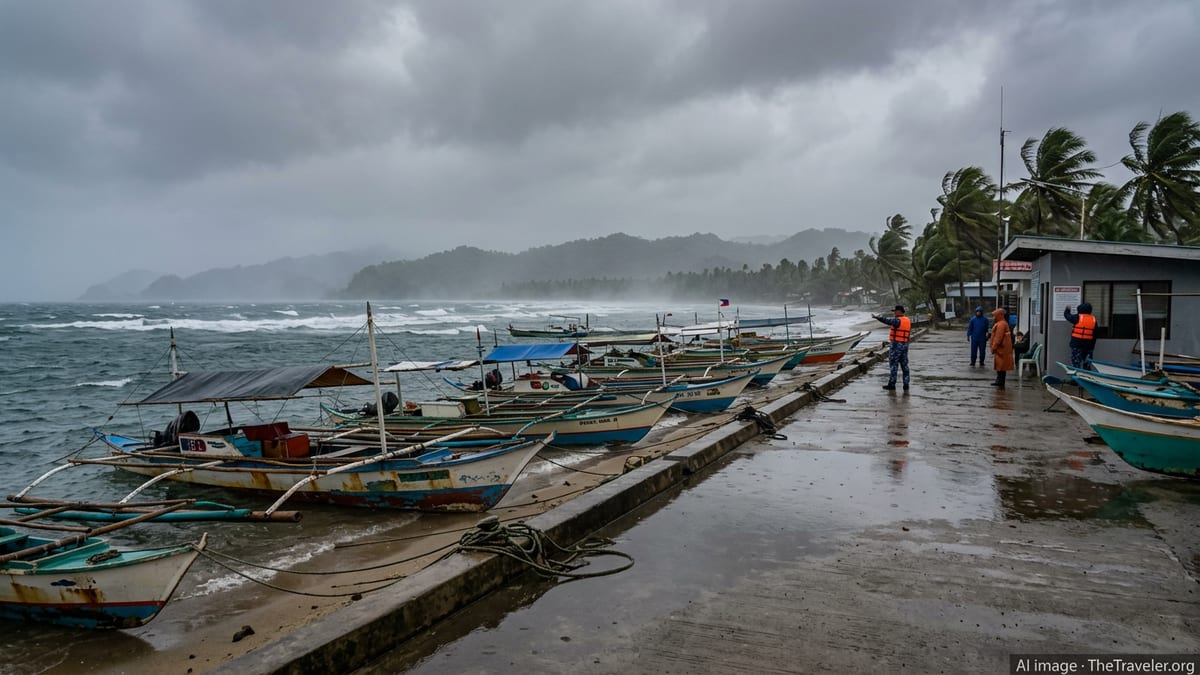
The Philippine Coast Guard has suspended the operations of small vessels along the northern Quezon coast as strong northeasterly winds whip up dangerous seas, a precautionary move officials describe as essential to preventing another deadly maritime disaster in the country’s busy waters.
Get the latest news straight to your inbox!
Gale Warnings Trigger Halt to Coastal Voyages
Maritime authorities in northern Quezon ordered the immediate suspension of trips for small vessels, including motor bancas and light fishing boats, after state weather forecasters raised gale warnings for the seaboard. The decision affects key jump-off ports serving island municipalities and coastal communities, where sea travel is often the only practical means of transport.
Weather bulletins from the national meteorological agency indicated rough to very rough sea conditions off parts of Luzon’s eastern and central seaboards, with strong winds associated with the prevailing northeast monsoon generating large waves hazardous to light craft. Under standing protocols, sea travel is classified as risky for small seacraft whenever sustained winds and wave heights exceed safe operating thresholds.
Coast Guard personnel in affected stations reported that operators were instructed to secure their vessels in port, advise passengers of cancellations, and monitor further advisories. The suspension will remain in place until conditions improve and the weather bureau lifts the gale warning for the area.
Local government units in the coastal belt of northern Quezon have been placed on heightened alert for possible weather-related incidents, including coastal flooding, minor landslides in upland areas, and disruptions to the supply of goods traditionally ferried by small inter-island boats.
A Maritime Nation Confronts Its Weather Risks
The Philippines’ long history of weather-related maritime accidents looms large over any decision to suspend sea travel. The archipelagic country relies heavily on small and medium-sized vessels to connect remote communities, but these same routes often lie directly in the path of strong monsoon winds, tropical storms, and rapidly changing offshore conditions.
Recent high-profile incidents, including the sinking of passenger vessels in southern waters during bouts of strong winds and choppy seas, have sharpened scrutiny on safety practices and compliance. Investigations into past sinkings have highlighted a pattern of voyages proceeding despite adverse forecasts, vessel overloading, and lapses in enforcement of safety guidelines intended to keep small boats in port during dangerous weather.
Maritime safety advocates say the Northern Quezon suspension reflects a growing recognition that economic pressures to keep routes open must yield when conditions become marginal. They argue that the country’s geography and climate demand a conservative approach, particularly for older wooden-hulled boats and small motorized bancas that lack the stability and power of larger steel-hulled ships.
For many coastal residents, the Coast Guard’s move carries immediate economic costs, from delayed deliveries of fuel and food staples to missed market days and tourism bookings. Yet among families with members who work at sea, there is also a palpable sense of relief that authorities are acting early, rather than waiting for a casualty to justify tighter controls.
Life-Saving Logic Behind a Difficult Decision
Officials involved in the suspension say the choice to halt small vessel operations in northern Quezon is guided by a straightforward calculation: the risk of loss of life far outweighs the inconvenience of disrupted travel. In the confined waters between mainland Quezon and its offshore islands, even a relatively brief spell of gale-force winds can produce steep, confused seas that challenge experienced crews and overwhelm lightly built craft.
Coast Guard commanders have been directed to maintain regular patrols in harbor approaches and anchorages to ensure compliance and to assist any vessels that may still be at sea as the gale conditions develop. Port authorities have also been asked to coordinate with local fisherfolk associations and transport cooperatives to keep information flowing about evolving weather and sea states.
Mariners are being reminded that gale warnings are based not only on sustained winds but also on expected wave heights and periods, which can amplify the risk in coastal areas where underwater topography magnifies swells. Small craft that might manage short hops in moderate conditions can become unmanageable when waves stack up against current and wind, making capsizing and engine failure more likely.
By intervening early, the Coast Guard aims to avoid search-and-rescue operations in extreme conditions, which endanger both distressed passengers and the responders sent to help them. Veteran officers note that rescue missions during gales often unfold at night and near rocky shorelines, where visibility is low and maneuvering room is limited.
Communities Adjust as Ports Fall Quiet
In affected northern Quezon towns, normally busy wharves and beach landings have fallen uncharacteristically quiet as passengers wait out the suspension. Small cargoes of agricultural produce and construction materials are stacked onshore, while local officials coordinate with traders and shipping firms to prioritize essential goods once voyages resume.
Public markets inland are bracing for short-term shortages of fresh seafood and island-grown products, which typically arrive daily by small boats. Transport operators are exploring limited use of larger, more weather-capable vessels where available, though these options remain constrained by port infrastructure and the same weather advisories guiding Coast Guard policy.
Tourism operators serving popular beach destinations and surf spots along the Quezon coastline face cancellations from travelers wary of rough seas and uncertain schedules. Some resorts have pivoted to promoting land-based activities and extended stays for guests already on-site, while working closely with local authorities for updates on when sea excursions can safely resume.
Community leaders are using the lull in boat movements as an opportunity to reinforce public awareness of maritime safety, holding briefings in coastal barangays on reading weather bulletins, recognizing hazardous sea conditions, and understanding why small craft suspensions are sometimes imposed even when skies appear clear from shore.
Strengthening a Culture of Safety at Sea
The suspension in northern Quezon forms part of a broader national push to modernize maritime safety regulations and cultivate what officials describe as a culture of safety at sea. This includes more rigorous inspections of small passenger vessels, updated training for crews on weather interpretation and emergency procedures, and stepped-up coordination between local disaster councils and maritime authorities.
Maritime experts argue that timely suspensions during gale conditions should be viewed not as isolated reactions to bad weather, but as an integrated element of risk management in a country that faces frequent tropical disturbances. They emphasize that consistency is key: when passengers and operators see that rules are applied predictably and backed by clear scientific criteria, compliance improves and pressure to bend regulations subsides.
In the longer term, improving safety for small craft in regions like northern Quezon may also involve upgrading port facilities, encouraging the gradual replacement of aging wooden hulls with sturdier designs, and investing in more reliable communication systems so coastal communities receive real-time updates on changing sea conditions.
For now, the Coast Guard’s decision in northern Quezon stands as a reminder that in a maritime nation shaped by wind and water, choosing to stay in port while gale warnings are in effect is not an overreaction. It is a life-saving measure that seeks to ensure that when the seas do calm, vessels, crews, and passengers will still be there to sail them.