

More news on this day
In April 2026, the Peak District National Park marks 75 years since it was designated the United Kingdom’s first national park, and the landmark anniversary is set to focus fresh attention on one of Britain’s most accessible wild landscapes.
Get the latest news straight to your inbox!
Britain’s First National Park Reaches a Milestone Year
Designated on 17 April 1951 under postwar legislation that created a new framework for protected landscapes, the Peak District stretches across 1,438 square kilometres of moorland, dales and gritstone ridges spanning Derbyshire, Cheshire, Greater Manchester, Staffordshire and South and West Yorkshire. Publicly available information indicates that it still ranks among the most visited national parks in the UK, with millions drawn annually to its walking trails and dramatic viewpoints.
The 75th anniversary in 2026 highlights the park’s role as a pioneer for the UK’s wider network of national parks. Historical accounts link its creation to long-running campaigns for public access, including the Kinder Scout mass trespass of 1932, which challenged restrictions on privately owned upland estates. The designation in 1951 helped cement the principle that landscapes of outstanding beauty and recreational value should be safeguarded for everyone.
Current material from the Peak District National Park Authority and partner organisations shows that the 75th year is being framed not only as an opportunity to celebrate, but also to assess how the park can respond to pressures from climate change, visitor numbers and funding constraints. A landmark anniversary report, developed jointly with other UK national parks that also date from 1951, is expected to call for long-term investment and updated policy support to secure the next 75 years.
Anniversary Events and Experiences Across the Peaks
Tourism and destination marketing bodies are positioning 2026 as a special year to visit the Peak District, with a programme of walks, talks and cultural events themed around the 75th anniversary. Information published by Visit Peak District & Derbyshire outlines guided hikes that follow historic rights-of-way, ranger-led introductions to moorland habitats and family-friendly routes linking viewpoints, reservoirs and village centres.
The national park authority has also released an official 75th anniversary wall calendar for 2026, using seasonal landscape photography to showcase locations from gritstone escarpments to limestone dales. Income from these anniversary products is being directed back into conservation and visitor services, underscoring how tourism spending is increasingly tied to the long-term care of paths, habitats and heritage features.
Festival programming is another thread of the anniversary year. According to published coverage, talks at events such as the Buxton International Festival will explore the past, present and future of the park, reflecting on how conservation policy, recreation trends and local economies have evolved since 1951. Visitors in 2026 can expect a mix of one-off commemorative activities alongside established fixtures like village shows, fell races and food events that highlight Peak District produce.
Wild Landscapes: From Kinder Scout to Limestone Dales
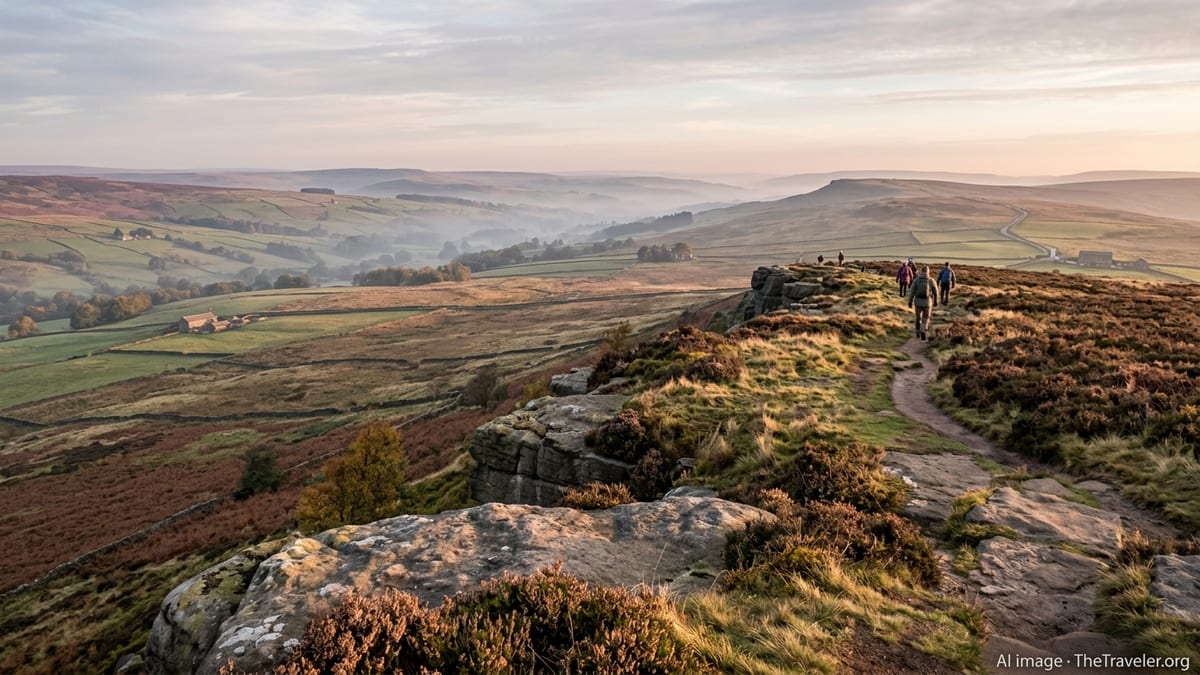
The 75th year is also prompting renewed focus on what makes the Peak District’s landscapes distinctive. The northern “Dark Peak” is dominated by blanket peat moorland, heather, gritstone edges and high plateaus such as Kinder Scout, the park’s highest point at 636 metres. These uplands are prized for long-distance walking, trail running and open vistas over the Manchester and Sheffield city regions, while also playing a critical role in carbon storage and water catchment.
To the south, the “White Peak” contrasts with rolling pasture, dry-stone walls and the steep-sided limestone dales carved by rivers such as the Wye and Dove. Well-known routes like the Monsal Trail, converted from a former railway line, and the stepping stones at Dovedale form part of a dense network of paths that make the area popular with day-trippers and families. Conservation bodies are using the anniversary to spotlight ongoing work to restore river health, manage visitor erosion and protect fragile wildflower meadows on valley slopes.
Caves and gorges around Castleton, including show caverns and wilder cave systems, underline the park’s geological interest and long human history. Campaign groups and heritage organisations point to prehistoric remains, medieval lead mining relics and the industrial heritage of mills and railways as evidence that the Peak District has been shaped by people for thousands of years, even as it is marketed today as a place of escape and open countryside.
Heritage Villages and Evolving Access
As the national park celebrates its 75th year, its villages and market towns remain central to the visitor experience. Bakewell, Castleton, Hathersage and Hayfield are among the historic settlements that act as gateways to walking routes and viewpoints, with stone-built centres, churches and bridges reflecting centuries of agricultural and industrial life. Publicly available tourism information highlights how independent shops, pubs and accommodation providers benefit from increased footfall during themed anniversary events and school holiday peaks.
The park’s creation followed decades of campaigning from access groups and reformers who wanted city residents to reach the moors and dales more easily. Rail links and bus routes still connect urban centres such as Sheffield, Manchester, Derby and Nottingham to key hubs including Edale, Hope Valley and Matlock, and current promotional material for 2026 is placing new emphasis on low-carbon travel. Messaging encourages visitors to arrive by train or bus where possible and to use local services once in the park, aiming to ease congestion on narrow roads and reduce emissions.
Walking remains the signature way to experience the Peak District, but the 75th anniversary year is also showcasing cycling, trail running and accessible routes designed for visitors with mobility needs. The rise of traffic-free greenways on former railway lines, along with adaptive bike hire in some locations, illustrates how access is evolving beyond the traditional image of steep hill walks. Information produced for the anniversary highlights the need to balance increased participation with careful path maintenance and habitat protection.
Looking Ahead: Climate, Conservation and Community
The themes emerging around the anniversary underline that the Peak District’s next 75 years are likely to be shaped as much by environmental change as by recreation trends. Research and policy reports linked to the park point to priorities such as restoring degraded peatlands to lock up carbon, improving biodiversity in upland and lowland habitats, and managing the risks of wildfire and flooding in a warming climate.
National discussions about the role of protected landscapes, including moves to update the statutory purposes of national parks, are expected to influence how the Peak District is managed in coming decades. Campaign organisations argue that secure funding and clear duties to enhance nature and promote public health are essential if parks are to meet rising expectations from visitors and local communities.
For travellers planning UK trips in 2026, the anniversary offers a structured way to engage with these debates on the ground. Guided walks, interpretation panels and temporary exhibitions are set to present stories of campaigners, rangers, farmers and residents who have helped shape the park since 1951. Against the backdrop of gritstone edges, reservoir shorelines and quiet dales, the Peak District’s 75th year is being framed as both a celebration and a reminder that the future of Britain’s landscapes depends on decisions being made now.