

More news on this day
Pegasus Airlines is marking the twentieth anniversary of its scheduled services between Cyprus and Turkey, celebrating a milestone of 28 million passengers carried on routes that have transformed regional tourism, trade and family travel across the Eastern Mediterranean.
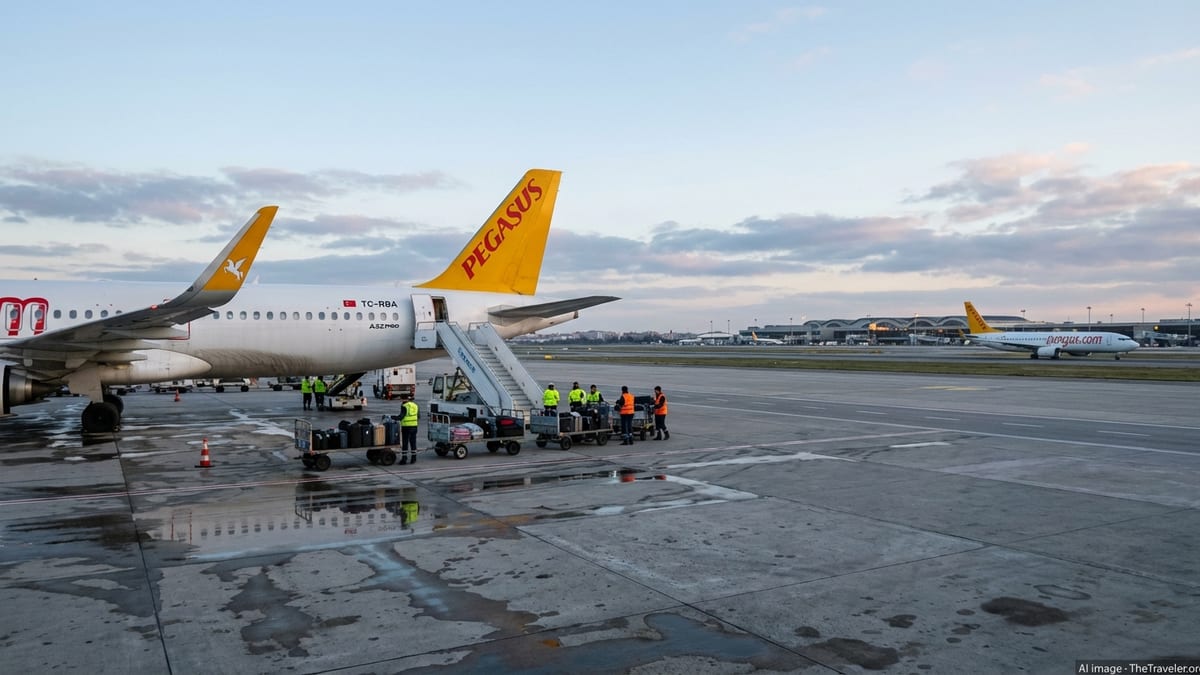
Two Decades of Growth Across the Eastern Mediterranean
When Pegasus Airlines launched regular low cost services between Cyprus and Turkey twenty years ago, the connection was modest in scale but ambitious in intent. The airline sought to open up affordable, high frequency travel across one of the region’s most politically sensitive yet economically intertwined corridors. Two decades later, Pegasus reports that 28 million passengers have flown between Cyprus and Turkey with the carrier, a figure that underlines how deeply these routes are now embedded in the travel habits of residents, expatriates and international visitors alike.
The anniversary comes at a moment when Pegasus is expanding rapidly from its main base at Istanbul Sabiha Gökçen and a growing network of secondary bases across Turkey. From those hubs, the airline has built a dense web of flights that has steadily increased the choice of departure points on both sides of the Cyprus Turkey market. What started as a small selection of point to point services has evolved into a wide lattice of connections that link Cypriot cities with major Turkish economic and tourism centers and onward to Europe, the Middle East and beyond.
Executives and airport partners describe the twenty year mark as both a commercial achievement and a symbolic one. For Cyprus, reliable and affordable air links are critical to mitigating geographic isolation and seasonality, while for Turkey, the Cyprus routes have become a stable contributor to outbound tourism and diaspora traffic, as well as an important piece of a wider regional network strategy. The 28 million passenger figure is seen inside the airline as a proof point for the long term viability of low cost connectivity on this corridor even through periods of political and economic volatility.
From Niche Routes to High Frequency Network
The Cyprus Turkey market that Pegasus entered twenty years ago looked very different from today’s busy schedules. At the time, direct options were fewer, fares tended to be higher and leisure travel was still heavily dependent on tour operators and charter flights. Pegasus initially positioned itself as a challenger, offering more flexible, book direct options and using a lean cost base to keep prices competitive for individuals, small businesses and visiting friends and relatives traffic.
Over the years, the airline has steadily layered additional frequencies and new city pairs on top of its original services. Frequencies have been ramped up during peak summer seasons to meet demand from holidaymakers heading for Cypriot resorts, while winter schedules have remained robust enough to support business and VFR traffic. This move from niche to mainstream has been supported by the broader growth of the Pegasus network, with more Turkish cities now directly linked to Cyprus and more one stop connecting opportunities created via Istanbul Sabiha Gökçen and other bases.
Industry analysts note that the maturing of these routes has also changed passenger expectations. High load factors, rapid turnarounds and increasing digital self service options have normalized the idea that a weekend break, a quick family visit or a last minute business trip between Turkish cities and Cypriot destinations is both feasible and affordable. As a result, the Cyprus Turkey corridor that once might have been reserved mainly for longer, infrequent trips has become part of a more fluid pattern of regional mobility.
Tourism and Trade Boosted by Low Cost Connectivity
Tourism authorities on both sides credit the Pegasus operation with playing a significant role in diversifying visitor flows. By keeping fares low and timetables frequent, the airline has encouraged independent travelers to explore beyond traditional package holiday zones. Hoteliers in coastal resorts and city centers report that a rising share of guests arrive on point to point low cost flights rather than through charter packages, giving local businesses a more resilient mix of demand.
For Turkey, the Cyprus routes feed outbound tourism to the island’s beaches, cultural sites and conference venues. Travel agents highlight that year round city links have supported the growth of weekend city breaks and short off season getaways, allowing Cyprus to attract more visitors outside the summer peak. At the same time, inbound flows to Turkey from Cyprus have benefitted destinations such as Istanbul, Izmir, Antalya and Ankara, where Pegasus offers extensive onward connections within Turkey and to international cities.
Beyond leisure travel, trade ties have quietly deepened on the back of improved air links. Small and medium sized enterprises on both shores now rely on frequent flights for quick supplier visits, contract negotiations and participation in regional trade fairs. Logistics specialists point to the importance of belly hold capacity on passenger aircraft for time sensitive cargo, particularly pharmaceuticals, electronics and high value perishables. While freight remains a small percentage of total capacity, the consistent schedule provided by a low cost carrier known for high aircraft utilization has increased reliability for shippers.
Serving Communities, Families and the Cypriot Diaspora
While tourism statistics and traffic figures attract the headlines, much of the day to day impact of Pegasus’ Cyprus Turkey services is felt by families and communities with cross border ties. The 28 million passengers carried over twenty years include students commuting between universities and home, workers in the tourism and construction sectors, and extended families divided across the Eastern Mediterranean who now treat short notice visits as a practical option.
Travel sociologists note that low cost connectivity has helped normalize circular migration patterns, where individuals move repeatedly between Cyprus and various Turkish cities for education, work or family obligations rather than relocating permanently. This in turn supports language learning, cross cultural familiarity and a degree of social resilience, as people are able to maintain networks on both sides without prohibitive travel costs.
The airline’s emphasis on digital booking channels and mobile self service tools has also made it easier for younger passengers to coordinate complex travel plans. Multi city itineraries that combine Cyprus with secondary Turkish cities are now more common, particularly among students and young professionals. As digital payment options and localized language tools have expanded, more segments of the population have been able to access and personalize their travel, reducing reliance on intermediaries and last minute ticketing.
Fleet Modernization and Operational Efficiency
The scale achieved on Cyprus Turkey routes over twenty years is closely tied to Pegasus Airlines’ broader fleet and efficiency strategy. The carrier has earned a reputation within European aviation for operating a young, fuel efficient fleet with high daily utilization and quick turnarounds. That model has allowed Pegasus to sustain competitive pricing on relatively short sector lengths typical of Cyprus Turkey flights while maintaining profitability.
In recent years Pegasus has accelerated its fleet renewal, adding new generation narrowbody aircraft that offer lower fuel burn per seat, reduced emissions and quieter operations. These aircraft are well suited to the dense, high frequency schedules the airline maintains in the Eastern Mediterranean, including its services to and from Cyprus. For airports and local communities, the shift to newer aircraft types has helped manage noise footprints and environmental impacts at a time when tourism growth and climate concerns are increasingly intertwined.
Operationally, the airline’s low cost model emphasizes punctuality and standardized procedures across its network. On Cyprus Turkey routes, that has translated into consistent performance metrics, with high on time departure rates and efficient ground handling. For passengers, the practical effect is reduced connection risk when using Cyprus as a starting point for longer itineraries via Turkish hubs, and a sense that point to point travel across the Eastern Mediterranean is as predictable as a short haul flight within Western Europe.
Cyprus as a Gateway to a Wider Pegasus Network
The twenty year milestone is also a reflection of how Pegasus has positioned Cyprus within its wider network strategy. What began as a bilateral flow between Cypriot and Turkish cities has increasingly been integrated into the airline’s growing map of destinations across Europe, the Middle East, North Africa and Central Asia. Cyprus functions as both an origin and destination market and as a feeder point, with travelers using Pegasus services to connect via Turkish hubs to onward routes.
This role as a gateway is particularly visible among travelers from Northern and Eastern Europe who combine holidays in Cyprus with multi city itineraries in Turkey, often booking separate legs on the same low cost platform. As Pegasus has expanded to more than a hundred international destinations, the number of possible same day combinations linking Cyprus to cities such as Dublin, Edinburgh, Zagreb or Algiers via Turkish hubs has multiplied.
Airline strategists argue that this network effect enhances the resilience of Cyprus Turkey routes, because traffic is no longer dependent solely on direct origin and destination demand. Instead, flows can be balanced by connecting passengers in peak and shoulder seasons, supporting year round schedules that benefit local economies. For Cyprus, this embeddedness in a larger low cost network helps maintain visibility in a highly competitive tourism landscape where travelers compare multiple sun and city break options.
Resilience Through Crises and Changing Demand
Twenty years of continuous connectivity between Cyprus and Turkey means that Pegasus has navigated a series of shocks, from global financial turbulence to geopolitical tensions and the pandemic era collapse in international travel. Company reports for the wider network show that passenger numbers rebounded strongly after the worst of the health crisis, with recent years bringing record totals and renewed international expansion.
Throughout these disruptions, Cyprus Turkey services have remained a core element of the airline’s schedule. Temporary reductions in frequencies were followed by gradual restorations as demand returned, and load factors on key routes have quickly recovered. Aviation analysts note that the combination of visiting friends and relatives traffic, business travel and resilient leisure demand has provided a diversified base that is less vulnerable to single market downturns.
The experience of managing these cycles has informed Pegasus’ approach to capacity planning and pricing on the corridor. Dynamic pricing tools, flexible inventory management and close coordination with airports and tourism authorities now underpin seasonal schedule adjustments. This allows the airline to respond more quickly to shifts in demand, whether triggered by currency fluctuations, changes in travel restrictions or the launch of new attractions and events in either market.
Future Plans and Sustainability Priorities
Looking ahead, Pegasus Airlines has signaled that it intends to keep investing in its Eastern Mediterranean network, with Cyprus Turkey routes seen as a mature but still evolving component. The airline’s broader order book for next generation aircraft and its emphasis on digital innovation point toward further incremental improvements in efficiency and customer experience that will be felt on these services.
Sustainability has moved higher up the agenda as passenger numbers have grown. Pegasus’ fleet renewal and operational efficiency initiatives are aimed at reducing per passenger emissions on short haul sectors, while partnerships with airports support initiatives such as improved ground power usage and more efficient air traffic management. For environmentally conscious travelers, the availability of modern aircraft and transparent performance data is becoming an important factor in choosing carriers for regional trips.
On the customer side, the airline is expected to continue refining its digital ecosystem, from dynamic ancillary offerings to more tailored communication in multiple languages, including services tailored to the Cypriot and Turkish markets. As Pegasus celebrates carrying 28 million passengers between Cyprus and Turkey over twenty years, executives describe the milestone as a foundation rather than a peak, with future growth likely to come from deeper integration of these routes into a wider, increasingly connected low cost network across three continents.