

Pennsylvania rewards curious travelers with an unusually rich mix of American history, Appalachian scenery, and deeply rooted local cultures. From the cobbled streets of Philadelphia and the brick warehouses of Pittsburgh to the quiet lanes of Amish Country and the forested ridges of the Alleghenies, this large and varied state feels less like a single destination and more like a collection of overlapping regions. This guide outlines how to experience Pennsylvania’s historic cities, mountain landscapes, and cultural heartlands in a thoughtful, up-to-date way.
Understanding Pennsylvania’s Regions and Seasons
Stretching from the Delaware River to the Ohio border, Pennsylvania is best understood as a patchwork of regions rather than a single route. The southeast is dominated by the greater Philadelphia area and the rolling farmland of Bucks, Chester, and Lancaster Counties. Central Pennsylvania brings college towns, state forests, and quiet river valleys, while the northwest edges into the Great Lakes basin near Erie. The southwest sits on the threshold of the Appalachian Plateau, where Pittsburgh anchors a landscape of ridges, gorges, and old industrial towns now shifting toward outdoor recreation and arts.
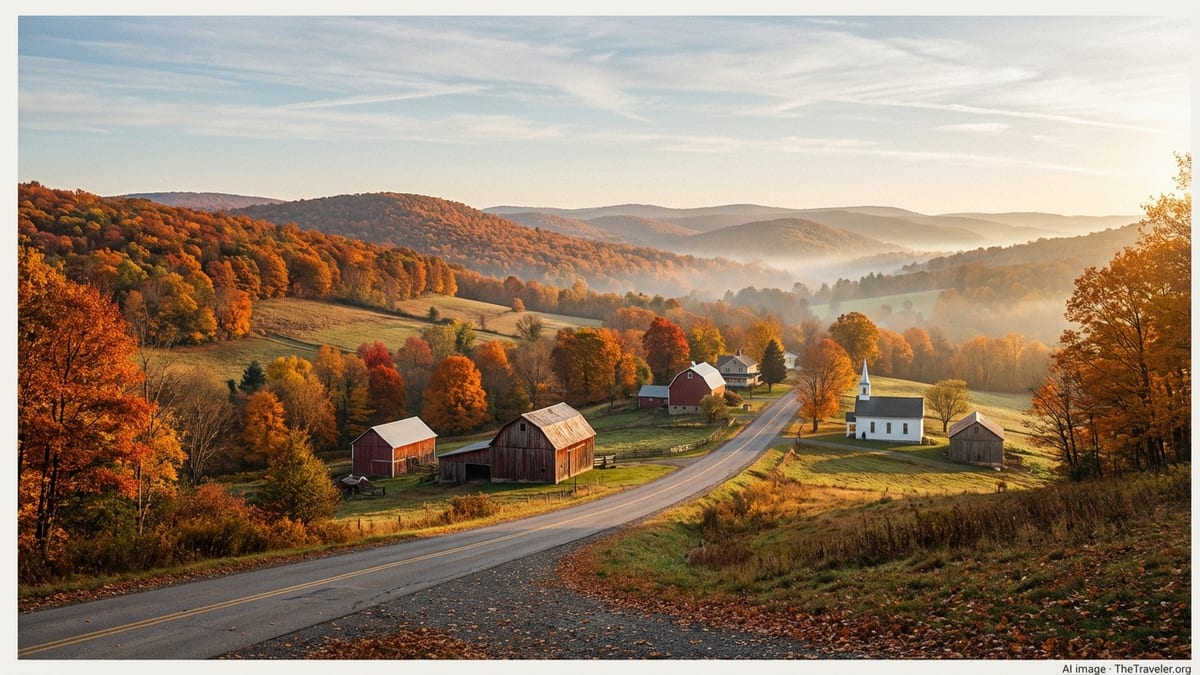
Most visitors time their trips around four distinct seasons. Late April through June brings mild temperatures, blooming forests, and smaller crowds, ideal for city walking tours and the first hikes of the year. July and August are popular for lake and river escapes, though humidity and thunderstorms are common, especially in the eastern lowlands. Autumn, roughly late September into late October, is prized across the state for fall foliage in the Poconos, the Laurel Highlands, and the Endless Mountains. Winters can be cold and snowy away from the southeast, but that same weather supports ski areas, state park cross-country trails, and cozy small towns geared toward cold-weather weekends.
Driving remains the most flexible way to explore, but Pennsylvania’s interstates and toll roads can be busy around major cities. I‑76, known as the Pennsylvania Turnpike, is the state’s main east–west artery, while I‑80 runs farther north across the forested interior. Regional rail and bus links make it possible to visit a few core hubs without a car, but once you venture into farm country or mountain towns, local roads and scenic byways become part of the experience. Plan travel times conservatively, especially when winding into the hills or crossing river valleys.
When it comes to trip length, a long weekend is enough for a focused city break or a single region, but a week allows you to combine an urban base with a couple of rural or mountain areas. Two weeks lets you sample both Philadelphia and Pittsburgh, detour into Amish Country, and spend a few nights in the Poconos or Laurel Highlands. As you plan, remember that regional identities are strong. Locals often identify first with their city or county and then with the state, which is part of what makes crossing from one part of Pennsylvania to another feel like stepping into a new chapter.
Historic Cities: Philadelphia, Pittsburgh, and Beyond
Philadelphia remains one of the most compelling entry points to Pennsylvania, especially for first-time visitors focused on American history. Center City and the Old City waterfront concentrate independence-era landmarks, including preserved brick rowhouses, cobbled lanes, and civic buildings that framed the country’s founding. Modern cultural life unfolds in nearby neighborhoods, where galleries, small theaters, and restaurants occupy former factories and storefronts. Museums range from large institutions devoted to art and science to smaller houses preserving abolitionist, immigrant, and religious histories.
Pittsburgh, positioned where three rivers meet and backed by steep hills, tells a different story. Once synonymous with steel, it has spent recent decades reimagining its industrial heritage through parks, riverfront trails, and repurposed warehouses. The skyline is best appreciated from the overlooks atop Mount Washington, reached by historic inclines that have carried residents up and down the bluff since the nineteenth century. On the riverbanks and in former factory districts, visitors now find independent breweries, performance spaces, and design-forward hotels. National publications have increasingly highlighted the city’s evolving role as an arts and technology hub, noting new public spaces and upcoming expansions at major museums.
Other cities and regional centers add texture to a statewide itinerary. In the Lehigh Valley, Allentown, Bethlehem, and Easton showcase industrial canals, steel works, and Victorian neighborhoods, many of them actively being restored. Scranton and Wilkes‑Barre in the northeast interpret the legacy of anthracite coal mining through museums and underground tours, offering a glimpse into the immigrant labor that powered the region’s growth. In the state capital of Harrisburg, the dome of the early twentieth-century capitol building dominates the Susquehanna Riverfront, while smaller galleries and cafes are slowly enlivening side streets and former warehouse districts.
Smaller towns with strong historical character reward slower exploration. Places like Doylestown in Bucks County or Bellefonte in Centre County combine courthouse squares, independent shops, and preserved residential streets lined with early twentieth-century architecture. Architecture buffs will also find scattered campuses, utopian communities, and religious districts that reveal different chapters of Pennsylvania’s social history. The key to these smaller cities is to walk, not just drive through. Look for courthouses, train stations, old theaters, and riverfronts, which often act as anchors for revitalization and local storytelling.
Cultural Regions: Amish Country, Anthracite Coal, and Rust Belt Stories
Pennsylvania’s cultural regions can feel as distinct as separate states. In the southeast, the farmland of Lancaster County and surrounding areas forms what many visitors know as Amish Country. Here, a patchwork of small farms, wooden bridges, and market towns supports communities that have maintained traditional ways of life, including horse-drawn buggies and plain dress. Travelers encounter Amish and Mennonite culture through roadside stands, farmers markets, and, increasingly, interpretive centers and guided tours run with an eye toward privacy and respect. While it is tempting to treat this region as a sightseeing backdrop, visitors are encouraged to prioritize ethical experiences that support local businesses without intruding on daily life or staging encounters.
Farther north and east, the anthracite coal region around Scranton, Hazleton, and smaller valley towns illustrates another side of Pennsylvania’s cultural identity. Museums and mine tours explain how hard coal extraction shaped landscapes, labor movements, and immigration patterns from the nineteenth century onward. Visitors can descend into former mine tunnels, view historic machinery, and learn about the hazards and camaraderie of underground work. Many of these institutions emphasize the stories of the immigrant families who settled in patch towns across the hills, bringing with them a diversity of languages, faiths, and food traditions that still influence the area.
The so‑called Rust Belt corridor, running from the outskirts of Philadelphia through the Lehigh Valley to the river valleys around Pittsburgh, carries the marks of deindustrialization and reinvention. Former rail hubs, steel mills, and factories now host arts districts, craft breweries, and mixed-use developments, while some facilities remain as evocative ruins incorporated into parks or visitor attractions. Towns like Bethlehem, Johnstown, and Homestead invite travelers to engage with the legacies of manufacturing, labor organizing, and economic shifts. Guided tours, interpretive signs, and local museums help visitors understand how these communities are balancing preservation, remembrance, and new investment.
Throughout these regions, food provides another way into the culture. Pennsylvania Dutch specialties, pierogi and haluski from Eastern European communities, Italian bakeries in former mill towns, and modern farm-to-table restaurants sourcing from nearby fields all tell stories about who settled where and how they adapted. Travelers who seek out family-owned diners, small-town bakeries, and church or firehouse fundraisers often discover regional dishes that never appear on national menus. Asking about the origin of a recipe or a festival can open conversations about migration, religion, and community networks that continue to shape life across the state.
Appalachian Landscapes: Trails, Highlands, and State Parks
Roughly the central and western two-thirds of Pennsylvania lie within the Appalachian region, giving travelers access to miles of forested ridges, plateau country, and river gorges. In the southeast, the Pennsylvania Highlands form part of a larger four-state landscape of wooded hills and reservoirs that stretch into New York and Maryland. Here, protected areas and conservation corridors buffer growing metropolitan regions while providing hiking, paddling, and wildlife viewing opportunities. As you move west, the terrain transitions into the folded ridges and valleys that runners, cyclists, and overnight hikers know from long-distance routes and state forest road networks.
The Laurel Highlands in the southwest are particularly appealing for visitors who want accessible mountain scenery. This region, encompassing counties southeast of Pittsburgh, includes the state’s highest elevations near Mount Davis and supports a network of state parks, ski areas, and trail systems. The Laurel Highlands Hiking Trail, which runs for roughly seventy miles along the ridgeline, is widely regarded as one of the state’s signature backpacking routes, with shelters spaced to support multi-day trips. Outside of long-distance hiking, travelers can sample short loops to overlooks, waterfalls, and rock outcrops without committing to overnight camping, making the area suitable for a wide range of fitness levels and seasons.
In the northeast, the Poconos and adjacent plateaus blend lakeside resorts, historic inns, and accessible hiking. Long a warm-weather escape for residents of New York, New Jersey, and Philadelphia, the region has been diversifying with outdoor adventure parks, rail trails, and conservation projects. Fall remains a peak season, when forests shift through layers of red and gold, but summer brings paddling on dammed lakes and tubing on mountain streams. Some towns have reinvented themselves around creative industries and events, pairing restored theaters and galleries with farm markets and seasonal festivals.
Across the state, Pennsylvania’s extensive network of state parks and state forests is one of its greatest assets. Many parks offer family-friendly amenities such as picnic areas, swimming beaches, boat rentals, and clear, well-marked trails. Others cater to more experienced outdoor travelers with backcountry camping, challenging terrain, and limited services. Conditions can vary significantly by elevation and season, so it is wise to check recent trail reports, weather forecasts, and any advisories before setting out. Wildlife is an integral part of the experience, from white‑tailed deer and black bears to migratory songbirds that seasonally fill forest canopies and wetlands.
City Neighborhoods, Small Towns, and Local Life
Part of Pennsylvania’s appeal is how quickly you can transition from dense city neighborhoods to quiet small towns. In Philadelphia, each district has its own character: rowhouse blocks and pocket parks in South Philadelphia, converted warehouses and lofts in Northern Liberties and Fishtown, university campuses and museums strung along the Schuylkill River. Travelers who limit themselves to the historic core miss out on the everyday life unfolding in side streets, corner delis, and neighborhood festivals. Exploring on foot or by bike reveals murals, local markets, and small community gardens that rarely appear in guidebooks but frame contemporary urban life.
Pittsburgh’s identity similarly emerges at the neighborhood level. The city is famously divided by rivers and hills into distinct pockets such as the Strip District, Lawrenceville, Oakland, and the South Side, each with its own mix of old storefronts, churches, and new construction. Bridges and staircases connect these enclaves, and viewpoints from hilltops or riverfronts help orient first-time visitors. Investment in riverfront trails and greenways has made it easier to move along the water, while former industrial sites now host food halls, technology campuses, and cultural institutions. Spending at least one day simply walking between a few neighborhoods often offers a deeper sense of place than ticking off individual attractions.
Beyond the big cities, county seats and market towns provide another lens on Pennsylvania life. Places like Lancaster, York, and Carlisle balance historic street grids with modern businesses, farmers markets, and weekly events. Many of these towns have embraced preservation, turning former factories and warehouses into apartments, studios, and boutique hotels while restoring train stations and theaters as civic anchors. Summer and fall are especially lively, when outdoor concerts, art walks, and harvest festivals spill into public squares and along main streets, drawing both locals and visitors.
In smaller communities, etiquette and curiosity go a long way. Rural residents may be cautious about tourism in areas where jobs have historically depended on farming, extraction, or manufacturing. Supporting locally owned lodging, restaurants, and shops can help demonstrate that visitors are invested in the community’s future. It is also worth remembering that some beloved features of the landscape, from red barns and covered bridges to hillside cemeteries, are working properties or sacred spaces. Observing signs, staying on public rights-of-way, and asking permission before photographing private land all contribute to more sustainable, respectful travel.
Planning, Practicalities, and Responsible Travel
Given Pennsylvania’s size and diversity, thoughtful planning can make the difference between a rushed checklist and a satisfying journey. Start by clarifying whether your priority is history, outdoor recreation, food and drink, or a blend of all three. Philadelphia pairs naturally with side trips to Bucks County or Lancaster County, while Pittsburgh is a convenient base for the Laurel Highlands, the Youghiogheny River valley, and emerging trail towns along converted rail corridors. Travelers with more time might route a loop that connects both major cities through the state capital and one or two mountain regions, adjusting night stops to avoid excessively long driving days.
Weather and timing deserve careful attention. Winters bring snow and ice to much of the state, particularly in higher elevations and along the Lake Erie snow belt. This can be a rewarding period for skiing and snowshoeing, but drivers should be prepared for changing conditions and possible delays. Spring can be muddy on hiking trails, and rivers may run high with snowmelt, which affects paddling safety and access. Summer humidity can be intense in lowland cities and valleys, making early morning or evening the most comfortable times for walking tours. Autumn, while often ideal for both cities and mountains, can also mean heavier traffic and booked-up lodging in popular foliage areas.
Responsible travel practices are increasingly central to Pennsylvania’s tourism strategies, especially in rural and Appalachian communities. Visitors are encouraged to follow Leave No Trace principles in parks and forests, dispose of waste properly, and stay on established paths. In former industrial and mining regions, some abandoned structures and lands are unsafe to enter; posted warnings should be taken seriously. Supporting organizations that restore trails, conserve watersheds, or interpret local history helps ensure that the places drawing travelers today remain vibrant for residents tomorrow.
Accessibility and inclusion are improving but remain uneven. Many major museums, city attractions, and newer outdoor facilities offer accessible entrances, restrooms, and programming. However, some historic sites and older small-town venues are limited by building design or funding. Travelers with mobility or sensory considerations may wish to contact attractions ahead of time to confirm current conditions. Public transit is strongest in the Philadelphia area and parts of Pittsburgh, while intercity buses and regional rail cover selected corridors. Outside those zones, reserving rental cars or arranging rideshare services in advance is often the most reliable way to move between destinations.
The Takeaway
Pennsylvania is not a single story but a landscape of intersecting narratives. In Philadelphia, the founding of a nation is written into brick and cobblestone, while in Pittsburgh, the arcs of industry and reinvention play out along rivers and hillsides. Between and beyond these cities, Appalachian forests, farm valleys, and Great Lakes shores host communities that carry forward traditions rooted in faith, labor, and the land itself.
For travelers, the reward lies in moving slowly enough to see how those narratives connect. A day in a mine museum can deepen the meaning of a river gorge once lined with coal trains. A walk through an Amish market can reframe the experience of driving past tidy fields at dusk. An evening at a neighborhood festival may linger as long in memory as a visit to a major museum. The most satisfying itineraries leave room for such links to emerge, rather than rushing from one highlight to another.
As you plan a Pennsylvania journey, consider balancing set-piece attractions with unscripted time: a morning wandering a county seat, an afternoon detour into a state park, a conversation with a baker or park ranger. Approach each region with humility and curiosity, recognizing that you are stepping into living communities rather than open-air museums. In doing so, you will likely leave with not only photographs of skylines and ridges, but also a more layered sense of how history, landscape, and culture continue to shape this complex corner of the Appalachian and Mid-Atlantic world.
FAQ
Q1. When is the best time of year to visit Pennsylvania?
The most broadly comfortable months are May, June, September, and October, when temperatures are moderate, foliage is attractive, and both cities and outdoor areas are active.
Q2. How many days do I need to see both Philadelphia and Pittsburgh?
A week allows you to spend two to three full days in each city with time for travel between them and a short side trip to a nearby region.
Q3. Do I need a car to explore Pennsylvania’s cultural and mountain regions?
You can visit major cities and a few nearby towns by train or bus, but a car provides the flexibility needed for Amish Country, the Poconos, and the Laurel Highlands.
Q4. Is Pennsylvania a good destination for hiking and outdoor activities?
Yes. Large portions of the state lie within the Appalachian region, offering extensive trails, state parks, river corridors, and four-season recreation from gentle walks to multi-day hikes.
Q5. What should I know about visiting Amish Country respectfully?
Travelers should avoid intrusive photography, especially of people, stick to public roads and businesses, and choose tours and shops that clearly respect community privacy and traditions.
Q6. Are Pennsylvania’s former industrial towns worth including on an itinerary?
Many are. Places shaped by steel, coal, and railroads now offer museums, historic sites, festivals, and evolving arts districts that add depth to a statewide trip.
Q7. How challenging are hikes in the Laurel Highlands and Poconos?
Both regions offer a range of difficulty, from short, well-marked loops suitable for families to longer, steeper trails. Checking trail descriptions and conditions in advance is essential.
Q8. What local foods should I try while traveling in Pennsylvania?
Look for regional specialties such as soft pretzels, scrapple, Pennsylvania Dutch baked goods, pierogi and other Eastern European dishes, and farm-sourced seasonal menus.
Q9. Is winter travel in Pennsylvania practical for visitors?
Yes, with preparation. Snow and ice are common outside the southeast, but they support skiing and other winter sports. Drivers should be ready for slower travel and occasional storms.
Q10. How can I travel responsibly in former mining and industrial areas?
Respect posted warnings, stay on designated paths, support local museums and small businesses, and treat these communities as living places rather than abandoned backdrops.