

More news on this day
Perth is set to welcome one of the National Rugby League’s fiercest modern rivalries in August 2026, as Melbourne Storm host the Manly Warringah Sea Eagles at HBF Park, with tickets and travel packages already beginning to target fans planning interstate trips.
Get the latest news straight to your inbox!
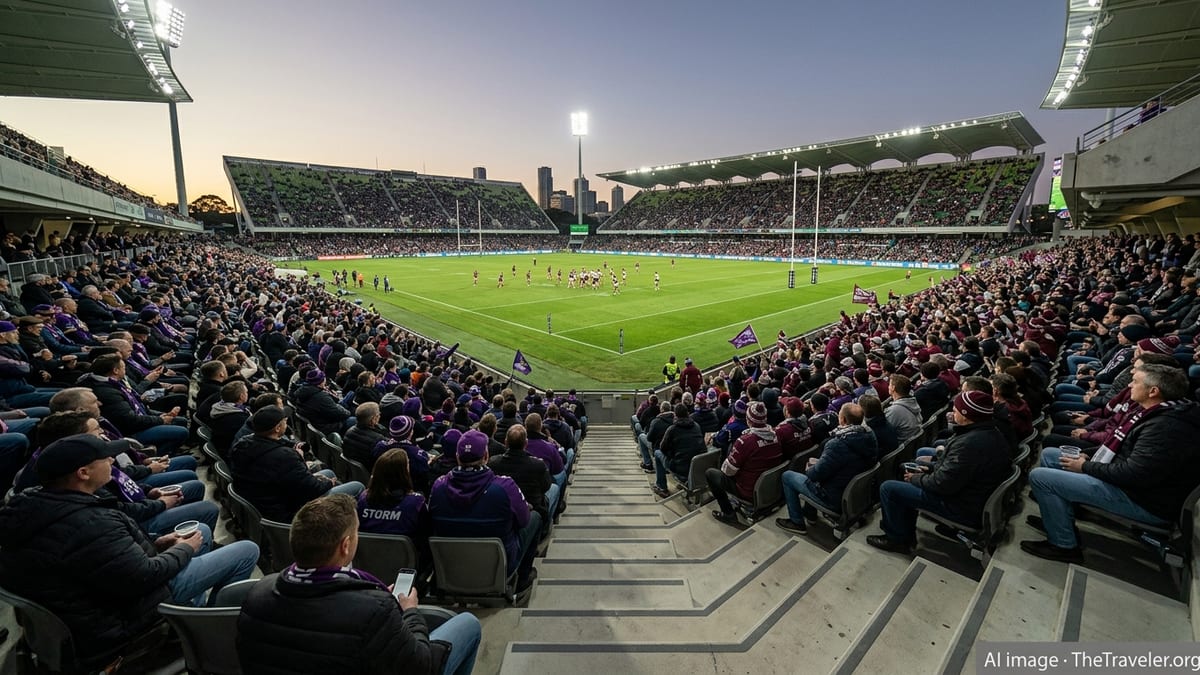
Perth Locks In Prime-Time Storm Home Game at HBF Park
Publicly available scheduling information shows that Melbourne Storm will stage a designated “home” fixture against the Manly Warringah Sea Eagles at HBF Park in Perth on Saturday 8 August 2026. The match forms part of a broader NRL push to spread premiership action across Western Australia, complementing a separate Perth double header slated for Optus Stadium earlier in the season.
Perth venue operator communications indicate that three NRL premiership games will be played in the city during 2026, positioning the Storm–Sea Eagles clash as the marquee stand-alone event at HBF Park. The ground, traditionally home to football and rugby union, has been increasingly used for rugby league and is expected to provide a more intimate atmosphere than the city’s larger stadium.
The decision to list the Storm fixture as a Perth “home” game continues the club’s pattern of taking select matches to regional or interstate markets. The 2026 meeting with Manly is being framed as both a rivalry showcase and a test of Western Australia’s appetite ahead of the planned entry of the Perth Bears to the NRL Premiership in 2027.
Advance scheduling for August places the encounter in a potentially pivotal period of the NRL season, when clubs traditionally jostle for finals positions. That timing is likely to elevate the stakes on the field and strengthen the match’s appeal as a travel-focused winter escape for visiting fans.
Rivalry Fixture Aimed at Supercharging Sports Tourism
The Storm–Sea Eagles rivalry is regarded as one of the NRL’s most compelling modern storylines, built on high-stakes finals meetings and contrasting club cultures. Historical records highlight headline clashes including the 2007 grand final and multiple playoff encounters, giving the 2026 Perth match a ready-made narrative for marketing campaigns.
Tourism and events agencies have increasingly turned to rugby league as part of Perth’s major events calendar, following recent announcements that the city will also host Rugby League World Cup 2026 fixtures. Government statements linked to that tournament underline a broader strategy to position Perth as a global sports destination, suggesting that the August NRL match will benefit from growing brand recognition for the code in Western Australia.
Travel industry listings already show NRL-aligned packages being promoted for events such as the Las Vegas season opener and other high-profile fixtures, with Perth-specific offerings expected to follow a similar pattern. Sports-oriented tour operators routinely combine match tickets with flights, accommodation and fan experiences, and the Storm–Sea Eagles clash provides a convenient weekend window for such bundled products.
For domestic tourists, Perth’s appeal extends beyond the game itself, with waterfront precincts, nearby Swan Valley wine country and Rottnest Island day trips all within reach of a short stay. Tourism operators are likely to pitch the August fixture as a centerpiece around which fans can build broader Western Australian itineraries.
Tickets On Sale and Early-Bird Travel Deals Target Interstate Fans
Stadium and ticketing platforms listing 2026 rugby league events in Perth indicate that NRL tickets for the city’s fixtures are progressively moving to general sale, including double headers and stand-alone matches. For the Storm “home” game against Manly, standard practice suggests reserved seating across multiple price categories, from family-friendly sections to premium hospitality.
General sports ticket marketplaces referencing a 2026 Perth NRL program show a range of price points and seating options, with dynamic pricing likely to apply as demand increases closer to game day. Early-bird buyers typically benefit from greater choice of seats and package add-ons, which in turn supports forward planning for flights and hotels.
On the travel side, major Australian carriers and partner tour brands are actively promoting NRL-themed trips for other 2026 events, particularly the Las Vegas season launch and domestic marquee fixtures. These promotions frequently bundle game access with accommodation, airport transfers and loyalty point bonuses, creating a template that can be adapted to the Perth schedule as final ticket inventories and allocations for the Storm–Sea Eagles clash are confirmed.
Industry observers note that aligning ticket on-sale periods with the release of school holiday calendars and airline sales can substantially increase uptake among families and supporter groups. The August 2026 timing positions the Perth game close to winter breaks in several Australian states, giving travel providers an opportunity to construct value-focused long weekend offers.
Economic Lift for Perth’s Hotels, Hospitality and Events Sector
Perth’s experience with previous NRL visits and other touring codes indicates that major interstate fixtures generate noticeable spikes in hotel occupancy, restaurant trade and nightlife activity. Tourism data from comparable events suggests that even a single high-profile match can inject significant expenditure into the local economy through accommodation bookings, dining, transport and retail.
With three NRL fixtures scheduled in Perth in 2026, including the Storm–Sea Eagles stand-alone at HBF Park, local businesses are preparing for a series of event-driven peaks. Hospitality operators near the stadium precinct and in the central business district typically respond with themed menus, extended trading hours and supporter-friendly promotions timed around match day.
The match also arrives in a year when Perth will be foregrounding its capabilities as a rugby league host ahead of the Rugby League World Cup later in 2026 and the introduction of the Perth Bears to the NRL Premiership in 2027. This concentration of events provides opportunities for cross-promotion, such as joint marketing that highlights both the August NRL clash and upcoming international fixtures.
Event planners point out that rugby league tourism often encourages repeat visitation, particularly when fans associate a city with positive match-day experiences and off-field attractions. A strong turnout and vibrant atmosphere at HBF Park could therefore contribute not only to short-term spending but also to Perth’s longer-term reputation as a welcoming base for travelling supporters.
Perth Builds Momentum as a Long-Term Rugby League Hub
The 2026 Storm vs Sea Eagles encounter fits within a broader evolution of Perth’s relationship with rugby league. From hosting occasional NRL fixtures to securing a new franchise and international tournaments, the city is steadily expanding its footprint in the code’s national landscape.
Public information about the Perth Bears’ forthcoming entry into the competition underscores Western Australia’s growing participation in elite rugby league. By staging a marquee rivalry game just one season before the Bears’ debut, the NRL is effectively using the Storm–Sea Eagles clash as a showcase to consolidate fan interest and test infrastructure and operational arrangements at HBF Park.
For the clubs involved, playing in Perth offers access to fresh commercial opportunities, including local sponsorships, regional fan engagement and community-based activations in the days surrounding the match. These activities, while not yet fully detailed in public material, traditionally range from open training sessions to supporter events that help build allegiance in emerging markets.
As ticket sales and travel offers continue to roll out in the lead-up to August 2026, attention will focus on how strongly fans from Victoria, New South Wales and beyond embrace Perth as a destination for live rugby league. The performance of the Storm–Sea Eagles fixture, both at the box office and across the city’s visitor economy, is expected to provide a key measure of Western Australia’s potential as a long-term hub for major NRL content.