

More news on this day
Hundreds of travelers heading to and from Peru’s marquee destinations are facing unexpected layovers and missed tours this spring, as a fresh wave of flight cancellations at Lima and Cusco airports disrupts South America’s peak tourism season.
Get the latest news straight to your inbox!
Wave of Cancellations Hits Key Peruvian Hubs
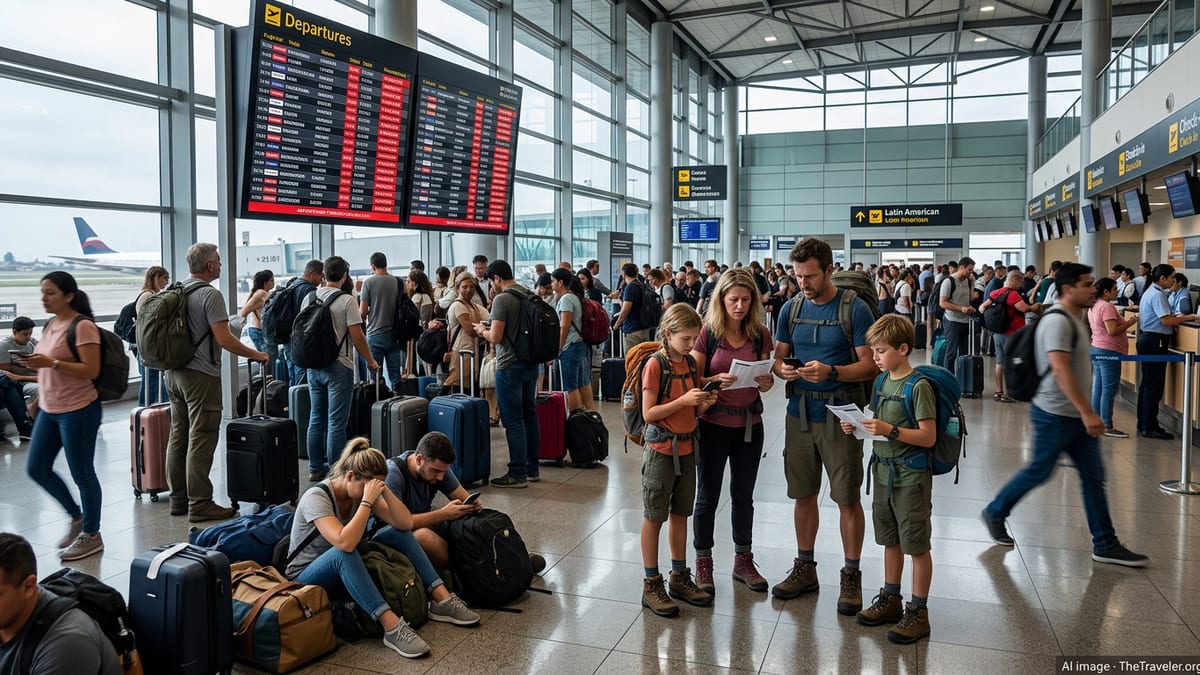
Peru’s two main tourist gateways, Lima’s Jorge Chávez International Airport and Cusco’s Alejandro Velasco Astete International Airport, have been grappling in recent weeks with a cluster of cancellations and delays that is stranding visitors at hotel lobbies and departure gates. On January 22, 2026, at least 28 flights operated by LATAM Peru and Sky Airline were canceled or heavily delayed across the country, with disruptions concentrated in Lima and Cusco and passengers reporting overnight stays and missed connections onward to other South American capitals.
The pattern intensified into March, as regional air-traffic challenges added pressure on schedules. Industry analysts note that while South America has seen steady growth in passenger numbers this year, operational resilience has not kept pace, making Peru particularly vulnerable when a single airline or hub experiences problems. Neighboring countries, including Colombia, Argentina and Chile, have also reported a spike in cancellations this month, with Lima repeatedly appearing among the most affected airports.
At Lima, cancellations have hit a mix of domestic and international services, including routes to Houston, Bogotá, Arequipa and Trujillo. For travelers, the result has been long queues at service desks, limited rebooking options and uncertainty over when they will be able to continue their journeys to Machu Picchu, the Sacred Valley or onward destinations such as Santiago and Buenos Aires.
In Cusco, a critical domestic link for visitors who transit through Lima, the cancellation of early morning and late afternoon flights has proved especially disruptive. Tour operators say that even a single scrapped service can ripple across multi-day itineraries, forcing last-minute rearrangements of guided hikes, rail tickets to Aguas Calientes and hotel reservations in the region.
Tourists Stranded in Transit to Machu Picchu
For many visitors, the cancellations have translated into unplanned stopovers and, in some cases, lost access to once-in-a-lifetime experiences. Travel agencies in Lima and Cusco report clients sleeping on airport benches, scrambling to change permit dates for the Inca Trail, or paying out of pocket for extra nights in city hotels while they wait for an available seat.
Machu Picchu, reached primarily by flying into Cusco and then continuing by road and rail, is especially vulnerable to even short-term aviation disruption. Tourists who miss their scheduled arrival into Cusco often find that carefully sequenced connections to the Sacred Valley and train services cannot simply be pushed back by 24 hours, particularly during busy weeks in March and April when capacity is tight. Some agencies say they have had to cancel or compress trips entirely, with visitors spending fewer days in Peru than planned and cutting side excursions to places like Lake Titicaca or the Amazon.
Local authorities and businesses in Cusco note that this season’s air-travel problems compound other recent transport setbacks, including heavy rains that forced temporary flight rescheduling and earlier rail disruptions around Machu Picchu. The result is a tourism supply chain that remains vulnerable, even as international arrivals recover strongly from the shocks of the past several years.
Hotels in both Lima and Cusco report a rise in last-minute bookings tied directly to flight disruptions. Some upscale properties near the airports are offering distressed-passenger rates, while budget guesthouses in the historic centers say stranded backpackers are arriving late at night with little information from their airlines about when they will be able to move on.
Knock-On Effects Across South America’s Tourism Circuit
The turmoil in Peru’s skies is reverberating well beyond the country’s borders. Lima is a major connector for South America, serving as a hub for regional itineraries that link North America and Europe to multiple Andean and Southern Cone destinations. When flights from Lima to Cusco or onward to cities such as Bogotá and Buenos Aires are canceled, entire multi-country vacations can unravel.
Regional travel specialists say this spring’s pattern of cancellations has already resulted in more trip insurance claims, re-routed tickets and shortened stays. Some travelers appear to be opting for simpler circuits that involve fewer domestic flights, favoring single-country trips to Argentina or Chile over more complex Peru-centered itineraries with multiple internal legs.
Tourism authorities in Peru have sought to reassure visitors that the country remains open and welcoming, underscoring that the majority of flights are operating as scheduled and that airports are functioning normally most days. Still, the perception of volatility in connections to Cusco and Machu Picchu has become a concern for operators selling packages across South America, who say they must now build in greater buffer times and set clearer expectations with clients about the risk of sudden schedule changes.
Airline disruptions are also adding pressure to regional carriers that already face higher operating costs, tight margins and the challenge of serving remote high-altitude airports. Aviation analysts warn that unless infrastructure, staffing and contingency planning are strengthened, Peru’s position as a preferred gateway to South America’s interior could be tested by rival hubs that promise smoother connections.
Airlines Under Scrutiny as Passengers Seek Accountability
The wave of cancellations has prompted renewed scrutiny of airlines’ communication and customer-care practices in Peru. Passengers have reported receiving limited advance notice of schedule changes, with some only learning of cancellations after arriving at the airport. Others describe inconsistent information from call centers, airport staff and mobile apps, complicating efforts to secure rebooked seats or refunds.
Consumer advocates say the situation highlights gaps in how carriers serving Peru handle disruption compared with standards in North America and Europe. While local regulations outline basic obligations in cases of cancellations or significant delays, enforcement can be uneven, and many foreign visitors are unsure of their rights or how to lodge complaints once they leave the country.
Industry observers note that busy spring schedules, combined with tight aircraft utilization by regional airlines, leave little room for error. A technical issue, crew shortage or adverse weather event affecting even a small number of aircraft can quickly escalate into dozens of cancellations across multiple days. With tourism demand surging back to pre-pandemic levels, many carriers are operating near capacity, limiting their flexibility to quickly re-accommodate displaced passengers.
In response to recent criticism, some airlines have begun issuing more detailed advisories about potential disruptions and emphasizing the importance of up-to-date contact information in reservations. Travel agents, meanwhile, are urging clients to book longer connection times in Lima, avoid tight same-day links to early morning Cusco departures and consider flexible tickets where possible.
Local Economies Feel the Strain
Beyond the inconvenience for individual travelers, the cancellations are creating headaches for businesses that depend heavily on predictable tourist flows. In Cusco, where tourism underpins much of the local economy, guides, drivers and small hotel owners say that last-minute no-shows and shortened stays can erase weeks of expected income, especially for family-run operations with little financial cushion.
Restaurant owners in popular districts of Cusco and Lima report more erratic foot traffic, with some evenings busier than expected as stranded travelers seek meals and others markedly subdued when delayed flights arrive after kitchen hours. Tour companies that specialize in multi-day treks and cultural tours explain that they shoulder additional administrative costs as staff work late into the night to rearrange schedules, rebook transport and reassure anxious clients.
Peru’s national tourism strategy counts on continued growth in high-value visitors to areas such as Cusco, the Sacred Valley and the southern Andean route. If flight disruptions become recurrent during key travel months like March, April and May, local officials worry that word of mouth and social media could discourage potential visitors who are comparing South American destinations for future trips.
For now, industry groups are calling for closer coordination between airlines, airport operators and tourism authorities to improve contingency planning and passenger communication. As spring progresses and demand builds toward the mid-year high season, the resilience of Peru’s air links to Lima and Cusco will be closely watched not only by stranded travelers, but by tourism-dependent communities across the Andes and beyond.