

More news on this day
Thousands of travelers were left sleeping on terminal floors and scrambling for scarce tickets this week as a wave of flight cancellations in Peru disrupted air links between Lima, Cusco and key South American hubs, snarling one of the region’s busiest tourism corridors at the start of the peak travel season.
Get the latest news straight to your inbox!
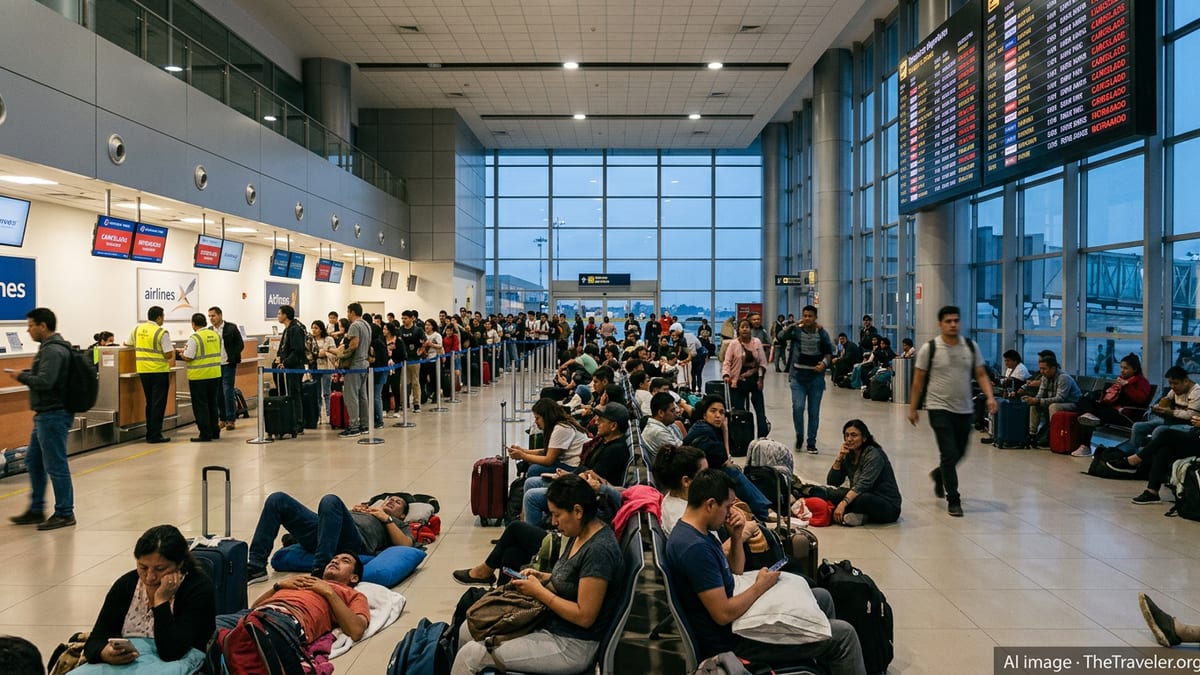
Wave of Cancellations Hits Key Peru Routes
Airlines operating through Lima’s Jorge Chávez International Airport and Cusco’s Alejandro Velasco Astete Airport have scrubbed and rescheduled dozens of flights since the start of the week, citing a mix of operational issues, staffing constraints and wider transport unrest. Services linking Lima with Cusco, Arequipa, Trujillo, Bogotá and long-haul destinations such as Houston have all been affected, leaving passengers stranded at both ends of the country’s primary domestic route.
On Tuesday and Wednesday, cancellations by major regional carriers on Lima routes to both domestic and international destinations rippled through the network, with knock-on delays pushing some departures into the early hours or the following day. At Cusco’s high-altitude airport, often operating close to its weather and capacity limits even in normal times, multiple Lima-bound flights were delayed or pulled from the schedule, overwhelming rebooking desks and check-in lines.
Ground staff at Lima reported unusually heavy crowds in the departures hall as rebooked passengers converged on a reduced schedule, while arriving travelers struggled to find onward connections to Peru’s southern Andes. Many international visitors landing in the capital for trips to Machu Picchu discovered that their short domestic hop to Cusco had vanished from departure boards, forcing them to queue for vouchers or last-minute seats at walk-up prices.
Although some airlines described the disruption as a temporary operational adjustment, the scale and timing of the cancellations have highlighted the fragility of Peru’s air network at a moment when tourism demand is rebounding and infrastructure is under increasing pressure.
Stranded Passengers Face Long Lines and Few Options
Inside both Lima and Cusco airports, the human impact of the crisis has been on stark display. Families with children camped around power outlets, backpackers laid out on jackets and blankets, and elderly travelers waited in wheelchairs beside snaking customer-service lines that stretched past shuttered cafes and duty-free counters.
Many passengers reported being notified of cancellations only after arriving at the airport or while already in transit, leaving them to improvise accommodation, meals and transport in unfamiliar cities. Others were checked in and waiting at the gate when screens abruptly flipped to “cancelled,” sending entire planeloads of travelers back to the ticket counters to compete for limited alternatives.
At Lima, where international connections are tightly banked, the cancellation of a single long-haul flight meant hundreds of travelers needed hotel rooms and new itineraries simultaneously. Some secured rebooking within 24 hours, but others, particularly those on complex multi-airline tickets, were told the next available seats out of Peru could be several days away. In Cusco, with a much smaller pool of daily departures, travelers described chaotic scenes as canceled Lima flights left them stranded at 3,400 meters above sea level with few clear updates.
Social media posts from stranded tourists circulated widely, with photos of crowded terminals in both cities and accounts of travelers being moved from counter to counter seeking answers. While some airlines provided hotel vouchers, food and ground transport, others offered only basic assistance or directed passengers to contact customer service channels that were already jammed.
Strikes, Infrastructure Strain and a Fragile Tourism Lifeline
The latest aviation turmoil comes against a backdrop of recurring transport strikes, social unrest and infrastructure constraints that have repeatedly tested Peru’s tourism sector in recent years. Nationwide transport stoppages and regional protests have previously blocked road access to airports and rail links to Machu Picchu, causing abrupt service suspensions and mass evacuations of tourists from the southern Andes.
At Lima’s airport, a combination of rising passenger numbers, tight runway and terminal capacity and periodic technical issues has made the hub especially vulnerable to cascading disruption. Even minor interruptions to runway lighting or air-traffic procedures can trigger airport-wide delays, while any reduction in staffing levels among ground handlers or control personnel quickly translates into backlogs for check-in, baggage and departures.
In Cusco, geography compounds the challenge. The airport’s high-altitude location and surrounding mountains limit operating windows, and adverse weather or visibility often force restrictions on takeoffs and landings. When flights are canceled or diverted, there are few nearby alternatives, leaving tourists bound for the Sacred Valley and Machu Picchu heavily dependent on a narrow schedule that can unravel quickly when national transport tensions flare.
Industry analysts note that Peru’s reliance on a small number of carriers on core domestic routes amplifies the impact when even a handful of flights are dropped from the timetable. With tourism a cornerstone of the economy in regions such as Cusco, every extended disruption not only strands travelers but also cuts hotel occupancy, tour departures and local revenue at a time when communities are still recovering from earlier political and health crises.
Airlines and Authorities Struggle to Reassure Travelers
Airlines serving Peru moved quickly to emphasize that safety and regulatory compliance remain their top priorities, while acknowledging the frustration felt by passengers facing last-minute changes. Some carriers opened additional customer-service counters, extended call-center hours and promised fee-free rebooking or refunds for those affected by the cancellations.
Airport authorities in Lima and Cusco urged passengers to arrive early, stay in close contact with their airlines and allow extra time for security and check-in. They also highlighted ongoing investments in airport modernization and capacity upgrades, arguing that infrastructure improvements will gradually make the system more resilient to shocks. Yet for many of the travelers stuck in terminals this week, those assurances did little to alleviate the immediate stress of missed tours, forfeited hotel nights and uncertain return flights.
Travel advisors and consular officials have reiterated guidance for visitors to Peru to build more buffer time into itineraries that involve domestic flights, especially when connecting to long-haul departures. They also recommend monitoring local news and official advisories for information on strikes, demonstrations or technical issues that could affect access to airports or the operation of flights.
Consumer advocates, meanwhile, have called on airlines to improve transparency around disruption planning, arguing that more proactive communication about potential schedule changes would help passengers make informed decisions before they find themselves stuck at the gate. They also stress the importance of clearly explaining compensation rules and care obligations so that stranded travelers understand what support they can reasonably expect when cancellations cascade through the system.
Future of Peru’s Air Connectivity Under Scrutiny
The latest wave of cancellations has intensified debate over how Peru can safeguard its air connectivity as demand grows and external pressures mount. Industry groups warn that high operating costs, rising airport fees and political uncertainty risk discouraging airlines from adding new routes or maintaining marginal services, which could leave travelers with fewer choices and higher fares in the long term.
Tourism businesses in Lima, Cusco and along the route to Machu Picchu are pressing for closer coordination between airlines, airport operators and government agencies to ensure that contingency plans are in place when future disruptions arise. Proposals range from strengthening minimum service guarantees on key domestic links to investing in alternative regional airports and diversifying transport options so that visitors are not entirely dependent on a single corridor.
For now, the immediate priority is clearing backlogs and getting stranded travelers where they need to go. Extra sections and upgauged aircraft have been deployed on some routes out of Lima and Cusco as carriers work to move passengers left behind by earlier cancellations. As operations gradually normalize, attention is likely to shift to lessons learned from another bruising week for South American air travel and what it will take to keep Peru’s skies open and reliable for the millions of people who rely on them each year.