

More news on this day
Passengers traveling through Peru’s key gateways of Lima, Cusco and Arequipa on February 20 are facing a fresh wave of cancellations and delays, as carriers including LATAM Peru, United Airlines, Flybondi and several regional operators trim schedules and push back departures across some of the country’s busiest domestic and international routes.
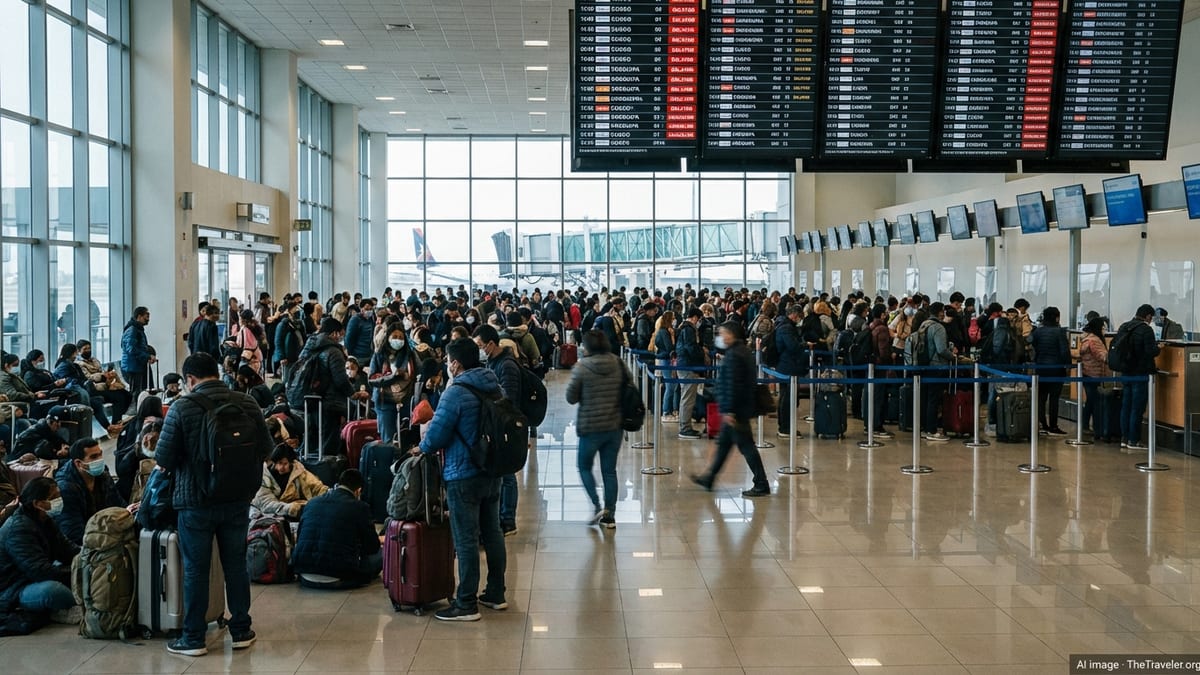
Wave of Disruptions Across Peru’s Main Air Hubs
The latest round of disruption began building overnight into Friday as airlines updated their operations into and out of Jorge Chávez International Airport in Lima, Alejandro Velasco Astete International Airport in Cusco and Alfredo Rodríguez Ballón International Airport in Arequipa. By mid-morning local time, airline status boards and flight tracking services were showing more than a dozen outright cancellations and a growing list of delayed services on domestic trunk routes and key regional links.
The impact is being felt most sharply on the country’s busiest domestic corridors, particularly Lima to Arequipa and Lima to Cusco, which carry a large share of both business travelers and tourists heading to Machu Picchu and southern Peru. Several LATAM Peru services on these routes have had departure times pushed back, while isolated cancellations and schedule changes are affecting other local carriers and foreign airlines serving Lima as a regional hub.
International connections have not been spared entirely. Flights linking Lima with major South American and North American cities have seen intermittent delays, catching in-transit passengers who were relying on tight connections to continue onward to Cusco, Arequipa and smaller Peruvian destinations. The overall effect is a patchwork of schedule changes that is making it harder for travelers to predict when they will actually arrive.
Delayed Departures on Lima–Arequipa and Lima–Cusco Routes
On Friday morning, LATAM Peru’s operations on the Lima to Arequipa corridor provided an early indication of how the day would unfold. One high-frequency service, flight LA2113 from Lima to Arequipa, was updated with a new departure time that was more than twenty minutes later than originally scheduled, reflecting a broader pattern of creeping delays across the domestic network as aircraft and crews rotated through busy airports.
Another Lima to Arequipa departure, flight LA2123, remained scheduled to leave Lima on time during the morning but comes at the end of a week in which the same flight has endured a mix of late departures and arrivals on multiple days. Historical performance data for the route show that the service has struggled with punctuality, posting a relatively low rate of on-time departures and frequent late arrivals even before Friday’s wave of disruptions.
The Lima to Cusco corridor, another critical link for Peru’s tourism sector, has also seen adjustments as airlines filter delays through their networks. Although many flights are still operating, updated timetables for this month show that carriers have been rebalancing capacity and departure times, leaving travelers more vulnerable to missed connections when any one service runs late. In practical terms, even a single delay on a morning departure from Lima can cascade through later Cusco flights, compressing turnarounds on aircraft and gates.
Arequipa–Cusco Services Highlight Network Strain
Schedules between Arequipa and Cusco illustrate how fragile regional connectivity can become when operations are under strain. On Friday, LATAM’s morning flight LA2324 from Arequipa to Cusco did depart, but tracking services showed the aircraft leaving later than planned and only recovering part of the lost time while en route. While the delay was modest, it underscores the thin margins on short domestic hops that serve as feeder flights to Peru’s main tourism centers.
Travelers connecting in Cusco onto trains and tours to Machu Picchu are particularly sensitive to these schedule slippages. Even when aircraft ultimately land close to their revised estimated times, passengers often find that ground transport, guided excursions and onward domestic flights have far less flexibility. That can turn what appears on paper to be a manageable delay into a full day lost from a tightly planned itinerary.
Additional Arequipa flights have also been affected over the past ten days, including services back to Lima that have seen timetable changes and departure revisions. While not all of these adjustments are directly connected to Friday’s disruptions, they reflect the cumulative effect of a busy high season in which aircraft utilization is high and recovery time from even minor operational issues is limited.
Lima’s Role as a Regional Hub Amplifies the Impact
Jorge Chávez International Airport in Lima serves as Peru’s primary international gateway and a regional hub for LATAM and several foreign airlines. When operations tighten at Lima, the ripple effects quickly extend to secondary airports such as Cusco and Arequipa. Flights from cities including Los Angeles, Buenos Aires, La Paz and Santa Cruz feed into Lima, where passengers then connect onward to domestic destinations, creating complex webs of interdependent schedules.
Even when long haul flights arrive close to schedule, modest congestion in the early morning or late evening banks can put pressure on ground handling, immigration and baggage systems. On Friday, the combination of slight delays on inbound regional services and capacity constraints on the ground contributed to a domino effect in which outbound domestic departures were pushed back, and aircraft rotations became more compressed.
Airlines are responding by building in more conservative block times and, in some cases, proactively trimming flight frequencies on selected days to create slack in the system. However, these adjustments come at a cost in the form of cancellations and rescheduled flights, which is what many travelers are now encountering as they navigate the airports of Lima, Cusco and Arequipa.
Airlines Issue Advisories and Rebooking Options
LATAM Peru, the country’s largest carrier, has urged passengers to check the status of their flights before heading to the airport and to leave additional time for check in and security screening. The airline is directing travelers to use its mobile app and digital channels to manage rebookings and to monitor last minute changes to departure gates and boarding times, a sign that operations may continue to shift throughout the day.
International airlines serving Lima, including United Airlines and low cost carriers such as Flybondi that operate links between Peru and neighboring countries, are likewise advising passengers to verify their itineraries closely. Although not every airline has publicly detailed the full extent of cancellations, multiple carriers have quietly updated their schedules and, in some cases, are offering flexible change policies or fee waivers for affected dates and routes.
Passengers who booked through online travel agencies or tour operators may face an additional layer of complexity, since any change or cancellation often needs to be processed through the original point of sale. Industry experts recommend that travelers affected by Friday’s disruptions collect documentation of delays, boarding passes and any written notices from the airline to support future refund or compensation requests where applicable under carrier policies.
Tourism Hotspots Feel the Strain
The timing of the disruption is particularly sensitive for Peru’s tourism sector. February sits within a busy period for both international visitors and domestic travelers, with demand driven by summer holidays in the Southern Hemisphere and school breaks in parts of South America. Cusco and the broader Sacred Valley region are among the top destinations, and delays at the city’s airport can quickly ripple into the operations of hotels, tour companies and rail services to Machu Picchu.
Arequipa, known for its colonial architecture and as a jumping off point for the Colca Canyon, is also seeing heightened visitor numbers. Even a small number of cancellations or heavily delayed flights can mean that groups arrive late at night instead of mid-afternoon, compressing sightseeing plans and forcing hoteliers and guides to adjust schedules on short notice.
In Lima, early morning and late evening waves of arrivals concentrate pressure on airport infrastructure and urban transport links. Delayed flights reaching the capital after midnight or in the pre-dawn hours make it harder for travelers to access ground transportation and can lengthen transfer times to downtown districts such as Miraflores and Barranco. For many visitors, the first impression of Peru is therefore shaped as much by airport disruptions as by the city itself.
What Travelers Should Expect in the Coming Days
While Friday’s pattern of delays and cancellations is most visible on February 20, the operational knock on effects could extend into the weekend as airlines work to reposition aircraft and crews. With schedules already tightly packed, any additional weather issues, technical inspections or air traffic restrictions could further challenge punctuality at Lima, Cusco and Arequipa.
Travelers heading to Peru in the next several days should expect potential gate changes, revised departure times and, in some cases, last minute cancellations, particularly on high frequency domestic routes where carriers may consolidate lightly booked flights. Those with critical connections, such as onward international departures or prepaid tours in Cusco and Arequipa, are advised to build in longer buffers and to consider traveling a day earlier when possible.
Industry observers note that while the current disruptions are significant, they are not on the scale of a complete operational shutdown. Most flights are still operating, and airlines are attempting to prioritize services with the highest passenger loads and connectivity. Nonetheless, the uneven pattern of delays and cancellations requires travelers to stay alert and flexible, with an emphasis on real time information rather than printed itineraries.
Resilience and Persistent Vulnerabilities in Peru’s Air Network
The events of this week highlight both the resilience and the vulnerabilities of Peru’s aviation system. On one hand, airlines have demonstrated the ability to maintain most services despite operational headwinds, using schedule tweaks and selective cancellations to keep the majority of flights running. On the other hand, the concentration of traffic through Lima and the limited redundancy at secondary airports mean that even moderate disruptions can quickly be felt by passengers heading to Peru’s main tourism gateways.
Infrastructure upgrades, including ongoing improvements at Lima’s airport and planned enhancements in Cusco and Arequipa, aim to give airlines and air traffic controllers more room to manage busy peaks and irregular operations. Until those projects are fully completed and integrated, however, travelers are likely to continue experiencing occasional bouts of disruption, particularly during high season periods when traffic volumes approach or exceed normal capacity limits.
For now, passengers caught in Friday’s travel snarl across Peru are relying on flexible planning, digital tools and patient coordination with airlines and tour providers to salvage their journeys. As operations stabilize over the coming days, attention will turn to how carriers and airport authorities can reduce the likelihood that a similar wave of delays and cancellations will again ripple through Lima, Cusco and Arequipa at the height of the country’s travel season.