

More news on this day
Severe weather sweeping across the eastern United States, combined with wider air-traffic system disruptions, has triggered hundreds of cancellations and delays at Philadelphia International Airport, stranding travelers and snarling connections to key domestic hubs from Atlanta and Chicago to Dallas and Denver.
Get the latest news straight to your inbox!
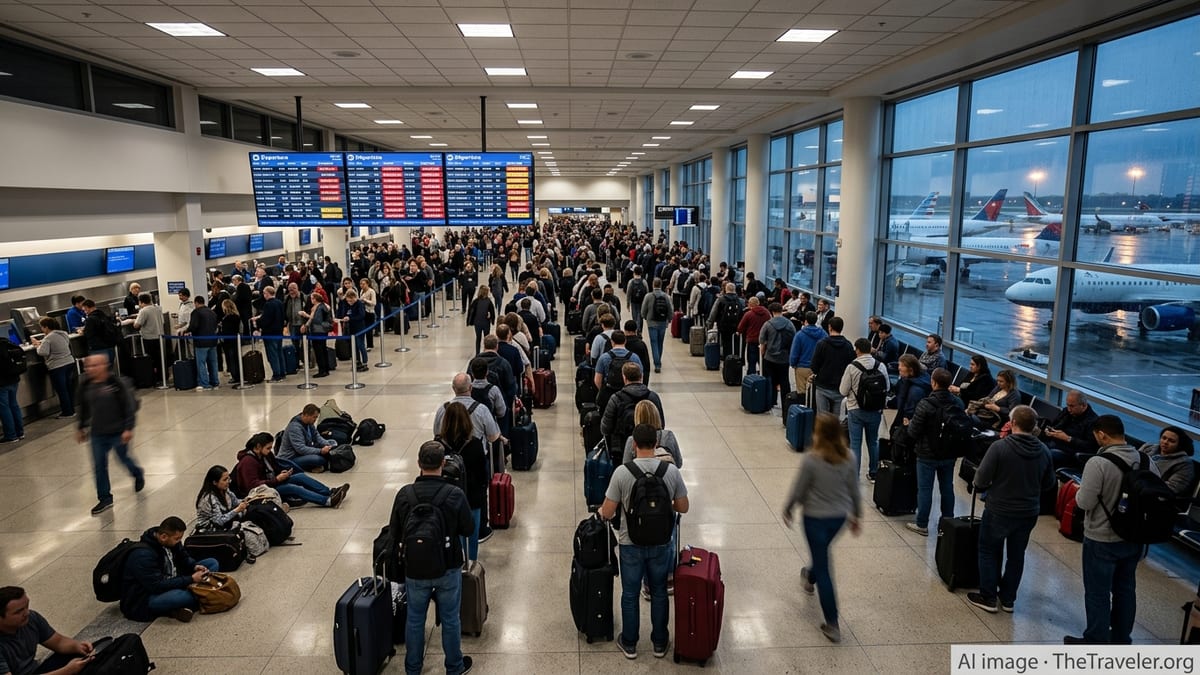
Storm System and Network Strain Collide
The current wave of disruptions comes on the heels of a powerful March storm complex that has hammered large parts of the Midwest and East Coast with snow, heavy rain and high winds. Publicly available weather and aviation data show that the system has repeatedly triggered ground stops and traffic flow restrictions along the busy Northeast and Mid-Atlantic corridor, directly affecting operations at Philadelphia International Airport (PHL).
Flight-tracking data indicate that over recent days U.S. carriers have canceled more than a thousand flights nationwide on multiple days, with Philadelphia among the hardest-hit mid-Atlantic airports as storms shifted east. As aircraft and crews have been displaced, cancellations at PHL have compounded, with knock-on effects for connecting flights across the country.
Industry analysis in recent months has also highlighted how increasingly volatile weather is amplifying operational stress at already busy hubs such as PHL and Chicago O’Hare, where annual delay counts run into the tens of thousands. That backdrop has heightened the impact when a large storm coincides with peak travel periods, as is happening now during the spring break rush.
Key US Destinations Most Affected
The cancellation wave at Philadelphia is rippling outward to many of the country’s most important domestic gateways. Flight-status boards on Thursday show disrupted service on routes linking PHL with Atlanta, Chicago, Dallas-Fort Worth, Denver, Charlotte, Orlando and several New York–area airports, among others.
These routes form the backbone of the U.S. hub-and-spoke system, meaning a canceled departure from Philadelphia often eliminates not only a single nonstop flight but also multiple onward connections for travelers headed to the West Coast, the Mountain West and smaller regional cities. In practice, that can strand passengers far from their final destination even when weather at their origin or endpoint appears relatively calm.
Published coverage of recent storm-related travel woes shows similar patterns whenever severe conditions move through the eastern half of the country: hubs such as Atlanta, New York, Chicago and mid-Atlantic airports see clusters of cancellations that cascade through airline networks over 24 to 48 hours. The current Philadelphia disruptions fit that established pattern, with airlines prioritizing limited operations on trunk routes and trimming frequencies where needed.
Inside Philadelphia International: Long Lines and Shifting Checkpoints
The situation inside the terminal has been complicated by changes at security checkpoints. Recent public discussions and local coverage have described Transportation Security Administration checkpoint closures and consolidations at PHL, which have funneled large crowds through fewer screening lanes during busy morning and evening peaks.
Travelers posting updates from the airport over the past week have reported early-morning lines stretching through parts of the check-in hall on some days, while others describe relatively typical wait times when arriving well ahead of departure. The variability reflects how quickly conditions can change when a new wave of delayed and rebooked passengers reaches the terminal at once.
The combination of weather-driven cancellations, rolling delays and altered checkpoint configurations has created a perception of chaos for many passengers navigating PHL this week. Even when individual airlines manage to operate a mostly on-time schedule for a given bank of flights, crowding at security or congested gate areas can make the overall experience feel markedly more stressful than usual.
What Stranded Passengers Should Know
Travel consumer advocates note that when flights are canceled for weather or air-traffic control constraints, U.S. carriers are generally required to offer a rebooking option on the next available flight but are not obligated to provide hotel vouchers or meal compensation. That reality is playing out at Philadelphia as passengers weigh whether to wait for a later departure, seek alternative routings through other hubs or abandon trips entirely.
Publicly available guidance from airlines and federal agencies emphasizes that affected travelers should use mobile apps or websites to confirm whether their flight is operating before heading to the airport. During widespread disruption events, digital self-service tools and text alerts are often updated faster than airport display boards, which can lag behind rapidly shifting operational decisions.
Experts in air travel also highlight that same-day options can narrow quickly once a storm system disrupts early-morning operations. As a result, passengers departing from or connecting through Philadelphia are being encouraged by airline advisories and travel forums to monitor their bookings closely, consider voluntary changes within published travel waivers and, where possible, allow extra time between connections.
How Long the Disruptions Could Last
Forecasts indicate that the broader March storm complex is in the process of weakening as it moves off the East Coast, but residual impacts on airline operations can linger for days. Aircraft and crew positioning remain out of normal alignment, and airlines must work flight by flight to restore schedules while also operating new rotations for the days ahead.
Recent major winter events earlier in 2026 provide a guide: in several cases, national media coverage documented thousands of cancellations on the worst day of a storm and a multi-day recovery period afterward, even once skies had cleared. Philadelphia’s current wave of cancellations sits within that broader pattern of system-wide weather shocks followed by slow normalization.
For travelers, that means ongoing uncertainty in the short term, especially on densely traveled routes between PHL and other major hubs. Smoother operations typically return gradually as airlines rebuild their networks and as any remaining weather or airspace constraints ease. Until then, anyone planning to fly through Philadelphia in the coming days is likely to face crowded terminals, limited seat availability and the possibility of last-minute changes to their itinerary.