

More news on this day
Passengers at Philadelphia International Airport faced a day of mounting frustration on March 6 as at least 124 departures and arrivals were delayed and six flights were canceled, disrupting American Airlines, regional carrier PSA Airlines, United Airlines and Southwest Airlines services across some of the busiest corridors in the United States.
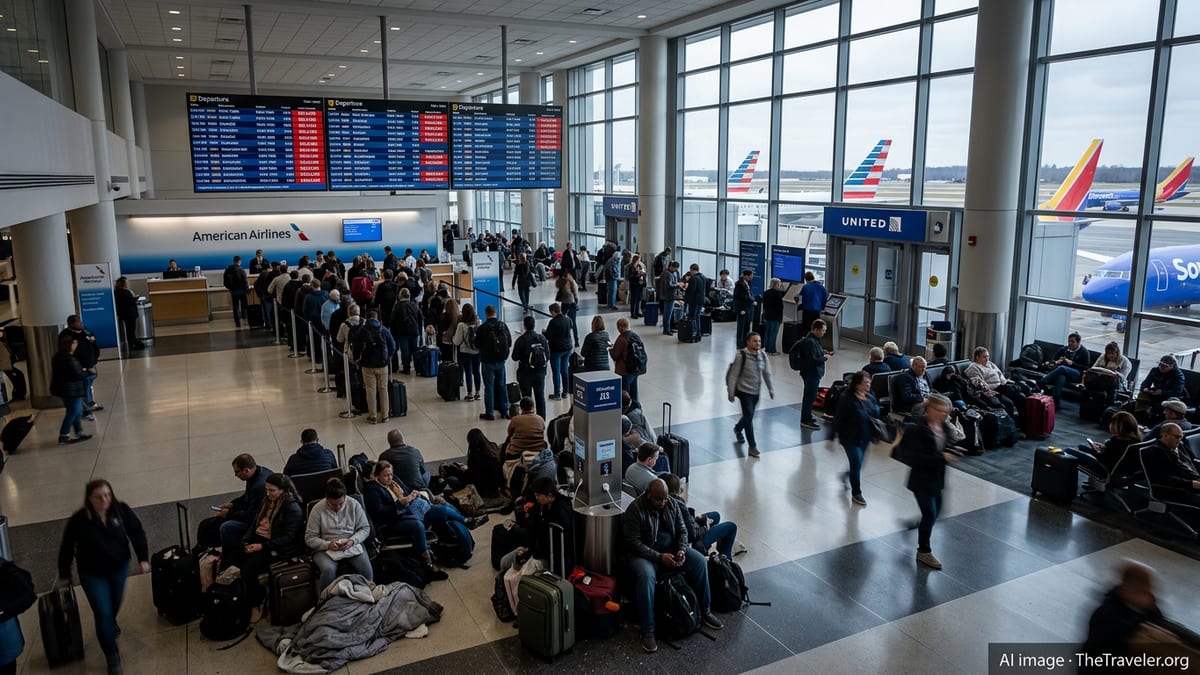
Major Carriers Hit as Operations Snarl at PHL
The disruption at Philadelphia International Airport unfolded through the morning and early afternoon, as rolling delays spread across multiple concourses and gate areas. American Airlines, which operates a major hub at the airport, bore the brunt of the problems, with a significant share of its narrowbody operations to major East Coast and Midwestern cities pushed back well beyond their scheduled departure times.
PSA Airlines, a regional affiliate that feeds American’s hub network with shorter routes, was also heavily affected, compounding the impact on passengers attempting to connect in Philadelphia. Travelers reported sudden gate changes, repeated departure pushes in 30 to 60 minute increments and, in several cases, last minute notifications that their flights were canceled after hours spent in the terminal.
United Airlines and Southwest Airlines, both of which maintain competitive schedules on some of the same domestic routes, also reported a wave of delays. While each carrier cited operational constraints and air traffic flow programs as contributing factors, many passengers said they received limited real time information about when they could realistically expect to depart.
By midafternoon, the tally at Philadelphia stood at approximately 124 delayed flights and six outright cancellations across the four airlines, according to a composite of airport status boards and independent flight tracking data. The figures placed PHL among the more heavily disrupted large airports in the U.S. on Friday.
Key Routes Between Major U.S. Cities Disrupted
The operational troubles in Philadelphia quickly rippled across the domestic network, particularly on high demand routes linking major business and leisure markets. Flights between Philadelphia and New York area airports faced repeated holds, affecting travelers with onward international connections as well as those on short shuttle style trips along the Northeast Corridor.
Service to and from Chicago was also impacted, magnifying an already difficult day at that hub as separate disruption was recorded at Chicago O’Hare. Passengers connecting between Chicago and the Mid Atlantic reported missed onward flights and were forced to queue at crowded customer service desks to seek rebooking on later departures.
Southbound flights from Philadelphia to Miami and other South Florida gateways experienced substantial knock on effects. Some travelers heading for weekend cruises or resort stays in South Florida said they were told to expect multi hour delays, while others were rerouted through alternate hubs such as Charlotte or Dallas in an effort to keep them moving.
Links to Atlanta and other southeastern cities were similarly strained, particularly on regional jets operated by PSA Airlines under the American Eagle banner. With limited spare aircraft and crews available in the regional fleet, schedule recovery along these shorter segments proved slow, leaving passengers facing longer than expected waits at the gate.
Weather, Congestion and Knock On Effects Across the Network
The disruption in Philadelphia came as a wider pattern of operational stress affected parts of the national air travel system. Overcast, low ceiling conditions in the Mid Atlantic combined with tight airspace and runway capacity led to flow control measures that slowed departures and arrivals throughout the morning.
Elsewhere, a late season snow event in the central United States contributed to additional delays and cancellations at key hubs, adding further strain to crew and aircraft rotations. Flight tracking data showed hundreds of delayed flights at large inland airports, with several of the same carriers operating through Philadelphia also coping with weather related disruptions in Denver and Chicago.
These overlapping challenges meant that an aircraft or crew delayed early in the day on one segment could not be turned quickly enough for subsequent legs. At Philadelphia, that translated into rolling delays that accumulated into multi hour waits by midday, with limited ability for airlines to substitute spare aircraft or reposition crews in time to protect early afternoon departures.
The result was a cascade of missed connections and rebookings extending well beyond the flights explicitly canceled. Travelers whose itineraries originally included tight connections through Philadelphia to secondary markets reported being offered reroutes through alternative hubs or next day options when no same day seats remained.
Passengers Stranded Overnight and Seeking Assistance
For many passengers, the most immediate impact of Friday’s disruption was the prospect of being stranded in the terminal or in nearby hotels overnight. With six cancellations recorded at PHL across the four airlines, entire planeloads of travelers suddenly found themselves without a same day way out, particularly on late afternoon and evening departures to New York, Chicago and smaller Midwestern and Southern cities.
Social media posts from inside the airport showed long lines at airline customer service counters and rebooking kiosks, with some passengers reporting waits of more than an hour to speak to an agent. Others said they were encouraged to use airline mobile apps or call centers, though call wait times also lengthened as the day went on.
Anecdotal reports indicated that while some travelers were offered hotel and meal vouchers, others were told to rely on their own arrangements depending on the reason coded for their delay or cancellation. In practice, that left many uncertain about what assistance they were entitled to receive and whether they could claim reimbursement after the fact.
Families traveling with young children and elderly passengers appeared to be among the most affected, as they struggled to secure seating near power outlets, access to food and, in some cases, last minute accommodations in a city where nearby hotels began to fill with displaced travelers.
What Travelers Can Do as Disruptions Continue
With airlines still working through the backlog of delayed aircraft and crews, operational ripples from Friday’s problems in Philadelphia are expected to linger into the weekend. Travel experts advise that passengers with upcoming departures to or through PHL monitor their flight status closely, starting at least 24 hours before departure and again on the day of travel.
They also recommend building in longer connection times when possible, particularly on itineraries that rely on regional partners such as PSA Airlines or that link multiple weather sensitive hubs. Where schedules allow, taking an earlier flight in the day can provide a buffer if delays start to accumulate across the network.
For those already caught in the disruption, consumer advocates note that U.S. Department of Transportation guidance encourages airlines to provide prompt updates about significant schedule changes and to assist passengers in reaching their final destination, even if that requires rebooking on another carrier in some circumstances. Travelers are urged to retain receipts for meals, transportation and lodging in case they qualify for reimbursement or goodwill compensation.
While Friday’s events at Philadelphia International Airport illustrate how quickly normal operations can unravel when weather, congestion and operational constraints collide, they also underscore the importance for travelers of staying flexible, informed and proactive when irregular operations strike.