

More news on this day
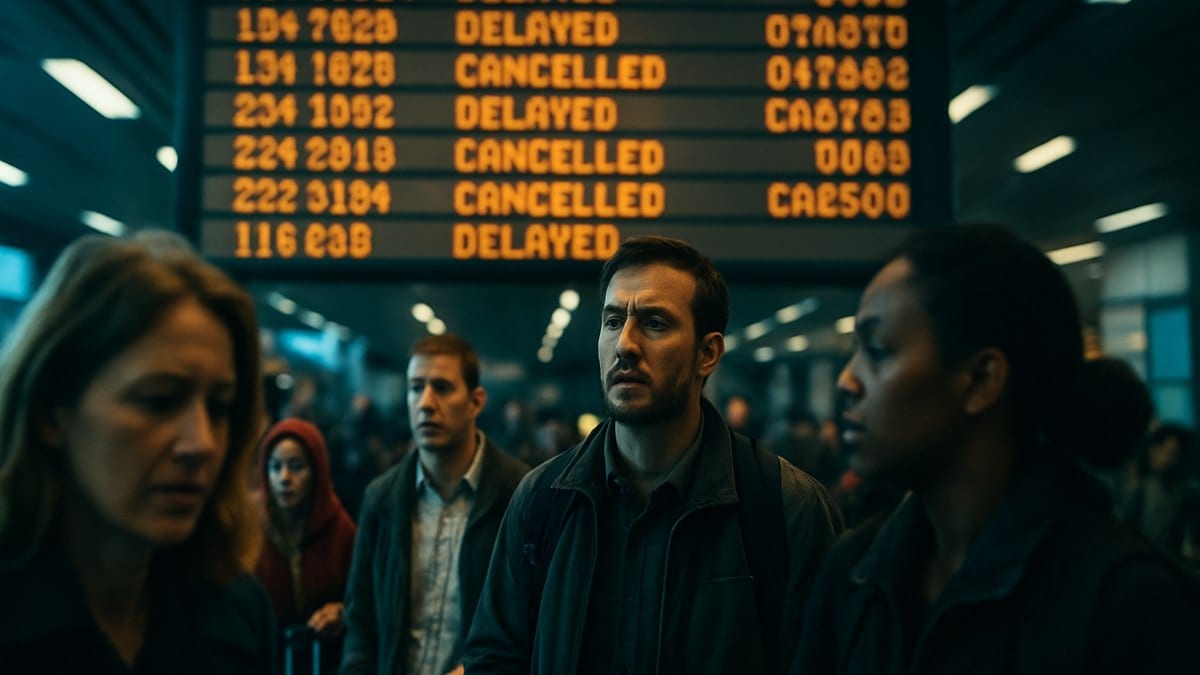
Travelers at Philadelphia International Airport faced a bruising day of disruption as 124 flights were delayed and six were canceled, snarling connections to New York, Boston and other key Northeast destinations and leaving thousands scrambling to rebook spring journeys.
Get the latest news straight to your inbox!
Disruptions Peak at a Major Mid Atlantic Hub
Publicly available flight tracking data for early April indicate that Philadelphia International Airport recorded one of its heaviest days of disruption of the spring travel period, with 124 delayed departures and arrivals alongside six outright cancellations. Aviation reports describe long lines at check in and security as passengers absorbed a wave of rolling schedule changes that intensified through the afternoon and evening.
The bulk of the delays were concentrated among three major carriers that maintain significant operations in Philadelphia: American Airlines, Southwest Airlines and United Airlines. Coverage of the day’s operations notes that these airlines collectively account for a large share of domestic traffic at the airport, magnifying the impact when schedules falter. With many affected flights bound for other busy hubs, particularly in the Northeast corridor, the operational strain in Philadelphia quickly rippled outward.
Philadelphia serves as both an origin point and a key connecting gateway, especially for travelers moving between the Mid Atlantic and New England. As delays mounted, passengers on multi leg itineraries faced missed connections and forced overnights, while those with point to point tickets contended with late arrivals and compressed layovers at already congested terminals elsewhere.
Analysts following national aviation data note that the Philadelphia totals for the day fit into a broader pattern of elevated disruption across the United States during the first week of April, with several major hubs reporting triple digit delay counts and dozens of cancellations as airlines contend with tight schedules and heavy seasonal demand.
Northeast Corridor Routes Hit Hard
Routes linking Philadelphia with New York and Boston were among the most severely affected, according to published coverage of the day’s operations. These corridors are linchpins of business and leisure travel in the Northeast, and disruptions on this axis can quickly spill into the wider network as aircraft and crews arrive late for subsequent legs.
Reports indicate that multiple flights between Philadelphia and New York area airports, including connections feeding into LaGuardia and Newark via regional partners, operated behind schedule or were canceled outright. Travelers bound for New York found themselves rerouted through intermediate hubs or shifted to later departures, often arriving hours past their original itineraries.
Service to Boston, another critical Northeast business market, also came under pressure. The Philadelphia Boston corridor is typically supported by high frequency schedules throughout the day, but when delays compound, that frequency can become a liability, with even small timing disruptions cascading into larger gaps in service. Passengers on evening flights in particular faced the risk of missing final departures of the day and being forced to wait until morning to continue their trips.
Because many Philadelphia originated flights continue onward from New York and Boston to other domestic and transatlantic destinations, the knock on effects extended well beyond the region. Aviation trackers recorded disrupted itineraries for travelers heading to the Midwest, the South and Europe as missed connections and aircraft repositioning complicated recovery efforts.
American, Southwest and United Under Pressure
American Airlines, Southwest Airlines and United Airlines, the three carriers most closely associated with the day’s disruption in Philadelphia, each play distinct roles in the airport’s route map. American maintains a large hub presence, Southwest operates an extensive point to point network and United connects Philadelphia to its own hubs through a series of trunk and feeder routes.
Operational statistics compiled from the day’s flying show that all three carriers logged elevated delay counts. Industry coverage emphasizes that while outright cancellations stayed relatively limited at six flights in total, the sheer volume of late departures and arrivals created a challenging environment for schedule recovery. In many cases, a delay of one or two hours on a morning flight translated into missed aircraft rotations and crew timing constraints by late day.
Observers of airline performance trends note that major U.S. carriers have entered 2026 with schedules calibrated closely to high demand, leaving relatively little slack in aircraft and crew availability. That approach can keep planes full and revenue high when operations run smoothly, but it also means that any disturbance whether from weather, congestion or equipment imbalances can result in outsized disruption.
Publicly accessible performance data across recent months suggest that the three carriers involved in the Philadelphia disruptions have faced recurring challenges during peak travel periods, particularly around holidays and heavy leisure weekends, as networks attempt to balance aggressive utilization with the realities of crowded airspace and fluctuating staffing levels.
Weather, Airspace and Structural Strain
While a single cause rarely explains a day of widespread disruption, aviation analysts point to a combination of factors that likely contributed to the Philadelphia delays and cancellations. Early April weather across the Northeast has been characterized by shifting frontal systems, low clouds and periodic rain, all conditions that can trigger ground stops or reduce arrival and departure rates at busy fields.
At the same time, the broader region encompassing Philadelphia, New York and Boston remains one of the most complex pieces of airspace in the country. When capacity restrictions are put in place at one major hub, traffic is often metered across several neighboring airports to prevent bottlenecks, creating secondary delays even where local weather appears manageable.
Transportation research published over the past year has also underscored the structural nature of delay risk at large hubs. Studies highlight that a relatively small group of high volume airports, including Philadelphia and Boston, account for a disproportionate share of national delay minutes, in part because they sit at the intersection of dense regional networks and long haul routes. When a disruption takes hold at one of these nodes, it can reverberate across multiple airlines and regions for days.
Industry observers additionally point to ongoing staffing and infrastructure challenges, from limited gate availability during peaks to persistent air traffic control constraints, as underlying contributors to the kind of multi airport, multi airline disruptions seen in the latest Philadelphia episode.
What Travelers Experienced and How Airlines Responded
Passengers caught inside the disruption at Philadelphia reported extensive waits at customer service counters and crowded gate areas as they sought alternative options. With many same day flights already heavily booked for the spring travel period, rebooking often meant accepting later departure times, additional connections or arrival into alternate airports in the New York and Boston regions.
Travel industry coverage notes that airlines turned to a familiar toolkit to manage the fallout, including offering no fee itinerary changes for some affected routes, placing travelers on partner or interline flights where possible and prioritizing families and those with international connections for limited open seats. However, the scale of the disruption limited how quickly all passengers could be accommodated.
For some travelers, the disruption resulted in unplanned overnight stays in Philadelphia or connecting cities. Hotels near the airport and in central Philadelphia experienced a noticeable uptick in same day bookings, according to local travel reporting, as stranded passengers opted to wait out the delays rather than spend extended hours in terminal seating areas.
Consumer advocates continue to urge travelers to build additional time into itineraries that pass through Philadelphia, New York or Boston, noting that high traffic volumes and the kind of cascading delays seen in this latest episode are likely to remain features of peak season travel in the region. They also recommend monitoring flight status frequently on day of departure, keeping essential items in carry on bags and considering earlier flights in the day, which statistically have a better chance of operating close to schedule.