

More news on this day
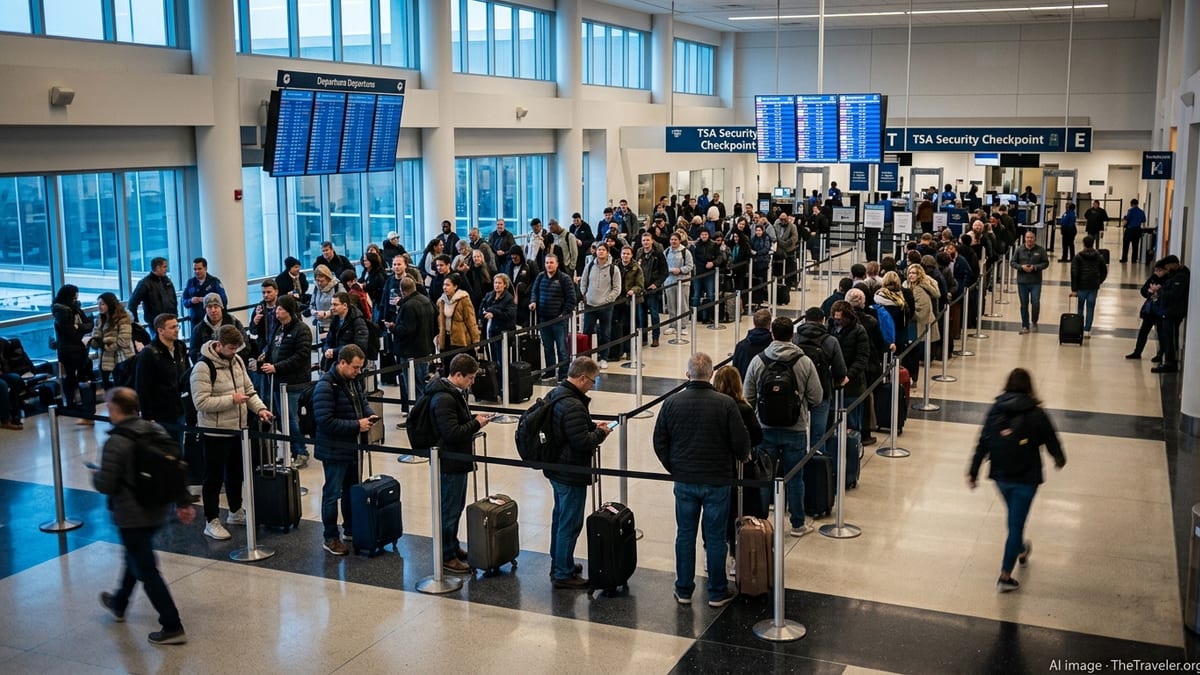
Philadelphia International Airport is wrestling with mounting security delays as the ongoing partial U.S. government shutdown squeezes Transportation Security Administration staffing, raising fears that worsening checkpoint bottlenecks could begin to disrupt flight schedules for spring travelers.
Get the latest news straight to your inbox!
Shutdown Fallout Reaches Philadelphia’s Security Lanes
Philadelphia is feeling the national turbulence as a funding lapse for the Department of Homeland Security, in place since mid February 2026, continues to pressure airport operations across the country. Publicly available information on the current shutdown shows that TSA officers are required to work but are not being paid, a pattern seen in previous funding standoffs that often leads to higher absences and departures. National data cited in recent coverage indicates that hundreds of officers have already left the agency since the latest shutdown began.
At Philadelphia International Airport, those national trends are translating into real time stress at security checkpoints. Local travelers have shared accounts of sharply lengthening lines, particularly during the early morning and late afternoon peaks. Informal wait time reports in mid March describe routinely exceeding the traditional two hour guidance for domestic departures on the busiest days, as fewer open lanes struggle to handle spring break demand.
Travel forums and social media posts referencing Philadelphia point to intermittent checkpoint closures as TSA consolidates screening staff into fewer lanes, a tactic used in earlier shutdowns to keep operations running with thinner teams. Flyers report that when a checkpoint closes, crowds are funneled through remaining screening points, causing backups that can snake deep into the terminal corridors and raise anxiety about missed flights.
The pressure is arriving just as leisure travel ramps up for March Madness, spring holidays and early international trips. Industry analysts note that any structural strain on security checkpoints at a mid sized hub like Philadelphia can quickly spill over into the wider network, as delayed departures disrupt the tight aircraft rotations that airlines rely on to keep schedules intact.
National TSA Staffing Crisis Raises Risk of Grounded Flights
The disruption in Philadelphia is part of a broader national crunch. Recent coverage of the shutdown’s impact on aviation highlights a rapid increase in unscheduled absences and resignations among TSA officers, with federal figures showing more than 300 screeners leaving the workforce within the first month of the funding lapse. Reports also describe double digit percentage jumps in call outs at some major airports, forcing security managers to triage where and when they can keep lanes open.
Analysts who monitor on time performance caution that the combination of reduced staffing and surging passenger volumes is already contributing to longer processing times at security, even before weather or technical issues are factored in. As checkpoints slow down, airlines must decide whether to hold departures for passengers stuck in line or depart on schedule with empty seats, a choice that can ripple across the day’s operation.
While Philadelphia has not yet experienced widespread mass cancellations solely attributed to local TSA delays, industry observers warn that the risk of grounded flights increases as staffing erosion continues. If key checkpoints at hub airports such as Atlanta and New York are forced to curtail operations, the resulting network congestion can easily reach Philadelphia, pushing delays into the multi hour range and stranding connecting passengers.
Aviation economists point out that previous shutdowns created similar patterns, with air traffic controllers and security staff working without pay while support functions, hiring and training pipelines were frozen. Over time, those structural stresses have translated into measurable increases in security related delays nationwide, particularly during peak travel periods when even minor disruptions can tip the system into gridlock.
What Travelers at Philadelphia International Are Experiencing
For passengers on the ground at Philadelphia International, the shutdown’s impact is most visible at the entrance to security. Travelers describe arriving the customary two hours early for a domestic flight, only to find that early morning queues already stretch far beyond the usual stanchion mazes. Some report that the line barely moves for long stretches when only a handful of screening lanes are staffed.
In recent days, local conversations have highlighted unannounced closures or reduced hours at certain checkpoints, including those serving some domestic terminals. When this happens, travelers arriving at their usual entry point are redirected across the terminal to alternate checkpoints, adding walking time and confusion on top of the longer screening process. For families traveling with children or carrying bulky luggage, these last minute detours increase stress and the risk of arriving late at the gate.
Passengers also note that standard priority programs are under strain. While TSA PreCheck lanes at Philadelphia generally remain open, the benefits of expedited screening can be blunted if the general security queue overwhelms the shared entry area or if staffing shortages narrow the number of dedicated PreCheck positions. Reports indicate that some travelers with trusted traveler status are still facing waits longer than they have seen in years.
The cumulative effect is a shift in local travel habits. Some Philadelphia based passengers now aim to arrive three hours before departure, even for short haul domestic flights, while others are reconsidering optional trips altogether. The perception that a routine flight might involve navigating unpredictable security lines, rolling delays and missed connections is beginning to reshape how residents plan business and leisure travel out of the city.
How Airlines and the Wider System Are Coping
Airlines operating at Philadelphia are adjusting to the new reality of uncertain security throughput. Operational updates in recent days highlight a greater emphasis on proactive communication, with carriers urging travelers to arrive earlier than usual and to monitor real time updates in airline apps. Gate agents and customer service staff are working with constrained options when passengers arrive late from security, juggling rebookings and tight aircraft turnarounds.
Nationally, carriers are facing simultaneous challenges. Published reports from aviation tracking services over the past week document thousands of cancellations and delays across the United States, driven by a combination of severe late winter storms and a strained federal workforce. When weather forces ground stops or diversions, the already stretched security system must absorb irregular passenger flows, further slowing screening at airports like Philadelphia when flights finally begin to move again.
Industry trade groups have been vocal in recent public statements about the financial risks that prolonged shutdown related disruptions pose to airlines, airports and the travel and tourism sector. With spring and summer peak seasons approaching, they are warning that repeated funding lapses undermine confidence in the reliability of the nation’s air transportation network, which depends on predictable staffing levels at TSA and related agencies to function smoothly.
Aviation analysts stress that airlines have limited control over what happens at government run security checkpoints. While carriers can adjust schedules, add staff at check in and streamline boarding, they cannot directly solve a federal funding standoff. As a result, even airlines with robust operations at Philadelphia remain vulnerable to bottlenecks at TSA checkpoints and in the broader air traffic system when government operations are partially shuttered.
What Philadelphia Flyers Can Do Right Now
With the shutdown still unresolved as of mid March 2026, travelers using Philadelphia International face a period of elevated uncertainty. Travel experts recommend building much more buffer time into airport routines, especially for early morning and late afternoon departures when checkpoint queues tend to peak. Arriving at least three hours early for domestic flights and even earlier for international departures is increasingly viewed as a prudent safeguard rather than an overreaction.
Passengers are also turning to digital tools to navigate the disruption. Airline apps, airport social media feeds and crowd sourced wait time trackers can provide a snapshot of conditions at Philadelphia before leaving for the airport, allowing flyers to adjust departure times from home or work. Packing light, organizing carry on items for faster screening and confirming terminal and checkpoint assignments in advance can further shave minutes off the process.
Travel planners advise that, where possible, passengers consider booking longer connection windows on itineraries that route through other busy hubs, since delays at Philadelphia security can cascade into missed onward flights. For critical trips such as weddings, important meetings or international tours, some residents are even exploring alternative departure airports in the region, weighing the inconvenience of extra ground travel against the perceived reliability of different security operations.
For now, Philadelphia’s air travelers are navigating a landscape shaped by political gridlock in Washington, a strained federal aviation workforce and seasonal weather volatility. Until federal funding is restored and staffing stabilizes, anyone flying out of the city should prepare for the possibility that the bottleneck at the security lane could be the factor that determines whether their flight departs as planned or is left waiting on the tarmac.