

More news on this day
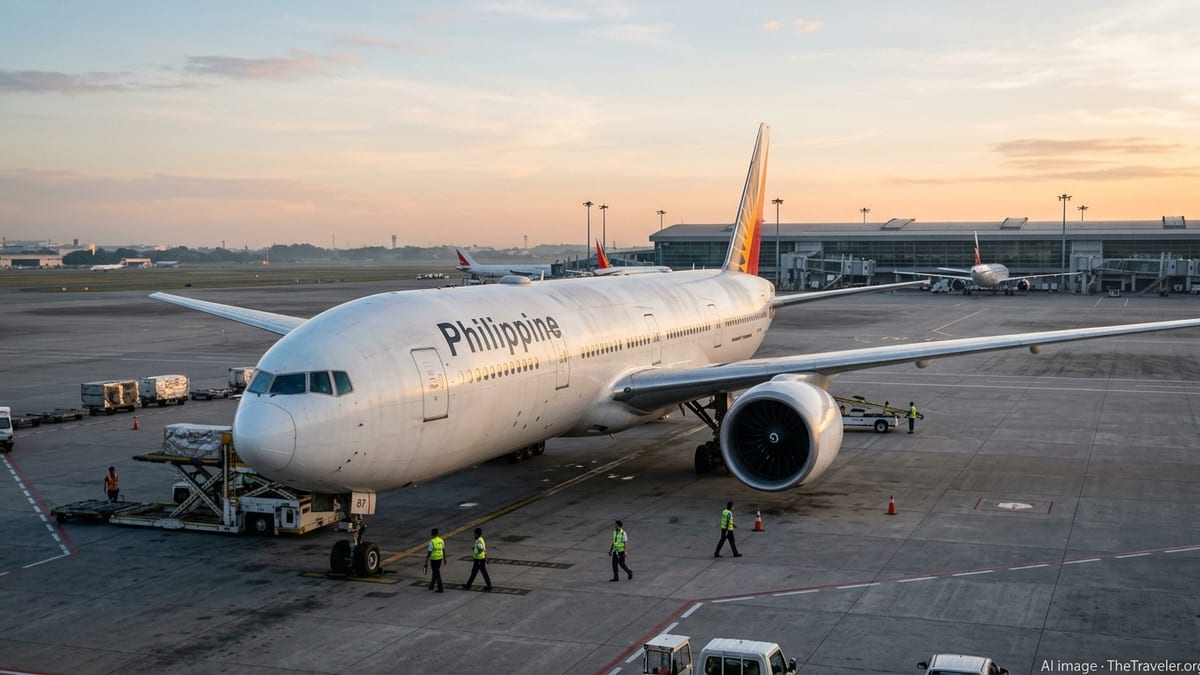
Philippine Airlines has renewed its long-term maintenance support agreement with AFI KLM Engineering & Maintenance for the GE90 engines powering its Boeing 777-300ER fleet, a move that reinforces operational reliability on key long-haul routes while underscoring the flag carrier’s gradual post-pandemic rebuild.
Get the latest news straight to your inbox!
Strategic Renewal for Flag Carrier’s Long-Haul Workhorse
According to published coverage, the renewed agreement keeps AFI KLM E&M as Philippine Airlines’ primary support provider for GE90 engines, which power the airline’s Boeing 777-300ER aircraft. These widebodies remain central to the carrier’s long-haul operations, particularly on high-density transpacific and Middle East routes where payload and range performance are critical.
Publicly available information indicates that the extended arrangement covers a comprehensive suite of engine maintenance services, including shop visits, on-wing support, engineering expertise, and access to spare engines. The objective is to stabilize maintenance costs over the duration of the contract while ensuring engines are available when required, limiting disruptions from unscheduled removals.
The decision aligns with Philippine Airlines’ broader fleet and network strategy, which balances the deployment of newer-generation aircraft with the continued use of proven twin-engine widebodies. By securing GE90 support on a long-horizon basis, the carrier gains clearer visibility on maintenance planning and can better match capacity to forecast demand on its most profitable international markets.
Industry observers note that the renewed partnership also reflects the airline’s focus on reliability as it competes for long-haul passengers in a region seeing intensified activity from Gulf, North Asian, and low-cost long-haul operators.
AFI KLM E&M Strengthens Its GE90 Aftermarket Footprint
AFI KLM E&M has built a position as one of the principal independent maintenance, repair, and overhaul providers for the GE90 engine family, supported by a dedicated test facility at Paris Charles de Gaulle and an established track record with multiple 777 operators worldwide. Public documentation from the group highlights its strategy of serving as a viable alternative to the original manufacturer for overhauls and performance restoration work on the engine type.
By renewing its ties with Philippine Airlines, AFI KLM E&M reinforces its presence in the Asia-Pacific widebody aftermarket, an area where demand is supported by both legacy flag carriers and emerging regional players. The deal complements existing long-term partnerships the MRO provider has with other GE90 customers, underpinning economies of scale in tooling, parts provisioning, and engineering expertise.
Reports indicate that AFI KLM E&M’s offering for GE90 operators combines traditional shop-based maintenance with digital engine monitoring, on-site teams, and tailored work scopes that aim to extend time on wing. For airlines in geographically dispersed networks such as Philippine Airlines, this mix of services is intended to reduce the cost and operational impact of sending engines overseas for heavy checks.
The latest agreement also signals confidence in AFI KLM E&M’s ability to support the GE90 through the remaining life cycle of global 777-300ER fleets, even as newer aircraft and engine types gradually enter service.
Ensuring Reliability on Key Philippine Airlines Routes
Philippine Airlines continues to position its Boeing 777-300ER aircraft on trunk long-haul sectors where schedule integrity is closely watched by both corporate and leisure travelers. The GE90 engine, recognized as one of the most powerful in commercial service, is central to meeting payload and range requirements on these routes, particularly those linking Manila with North America and the Middle East.
Renewed engine support is therefore more than a back-office technical arrangement. It influences day-to-day operations through engine availability, turnaround times on overhauls, and the ability to plan temporary engine swaps or leases during peak periods. Publicly available information on GE90 maintenance programs shows that predictable and coordinated shop visits are essential to avoiding last-minute aircraft substitutions or flight cancellations.
For passengers, the benefits are likely to be felt indirectly in more stable schedules and reduced disruption on long-distance routes where replacement capacity can be difficult to source at short notice. For the airline, improved reliability supports revenue management and brand positioning as it rebuilds international connectivity from its Manila hub.
Analysts point out that securing long-term arrangements on critical technical assets such as engines can also help Philippine Airlines navigate volatility in fuel prices, demand cycles, and competitive pressures, since operational disruptions often carry knock-on financial penalties far beyond the cost of an individual repair.
Technical and Economic Rationale Behind GE90 Support
The GE90 remains a cornerstone engine type for many 777-300ER operators worldwide, even as newer platforms enter fleets. Its maintenance profile involves complex overhaul work, high-value spare parts, and long lead times, which makes access to a mature, global support network particularly significant for carriers outside the main engine manufacturing hubs.
For Philippine Airlines, partnering with AFI KLM E&M offers access to a facility capable of testing and overhauling large numbers of engines annually, according to publicly documented capabilities, which can translate into shorter cycle times and more competitive pricing. The arrangement also leverages the provider’s in-service experience across a diverse customer base, informing work scopes that seek to balance reliability with maintenance cost.
From an economic standpoint, long-term engine support agreements are generally structured to smooth heavy expenditure over multiple years. Rather than bearing the full financial impact of major overhauls as they arise, airlines commit to an extended relationship with a specialist provider, often under power-by-the-hour or similar frameworks. This approach can support cash flow planning and provide a measure of protection against unexpected technical issues.
Industry commentary suggests that for mid-sized carriers, access to such arrangements is increasingly important as they compete against larger groups with extensive in-house maintenance capabilities. The renewed GE90 support deal helps narrow this gap for Philippine Airlines by anchoring a critical element of its technical operations with a large-scale, experienced MRO partner.
Implications for the Wider Asia-Pacific MRO Market
The renewed partnership between Philippine Airlines and AFI KLM E&M arrives at a time when Asia-Pacific engine maintenance demand is gradually shifting. While new-generation narrowbody engines are attracting much of the recent investment, legacy widebody engines such as the GE90 still represent a substantial share of shop visit requirements across the region.
Observers note that arrangements like this one underscore the continuing relevance of mature widebody platforms and extend the runway for associated MRO services. As long-haul travel in and out of Asia continues to recover, airlines are weighing the cost of introducing entirely new fleets against optimizing the performance of existing aircraft and engines that are already depreciated but still operationally capable.
The Philippine Airlines agreement further illustrates the trend of regional carriers looking beyond domestic maintenance providers to global specialists when dealing with complex engines. This approach can complement local capabilities, channeling highly technical overhaul work to large dedicated facilities while retaining lighter tasks and line maintenance closer to home bases.
In the longer term, the concentration of GE90 overhaul expertise in a handful of major centers, including AFI KLM E&M’s European facilities, is likely to shape pricing, capacity, and lead times for airlines worldwide. For now, the renewed support deal gives Philippine Airlines a defined framework in which to plan GE90 operations, supporting the stability of its long-haul network and signaling a continued role for the 777-300ER within its evolving fleet.