

More news on this day
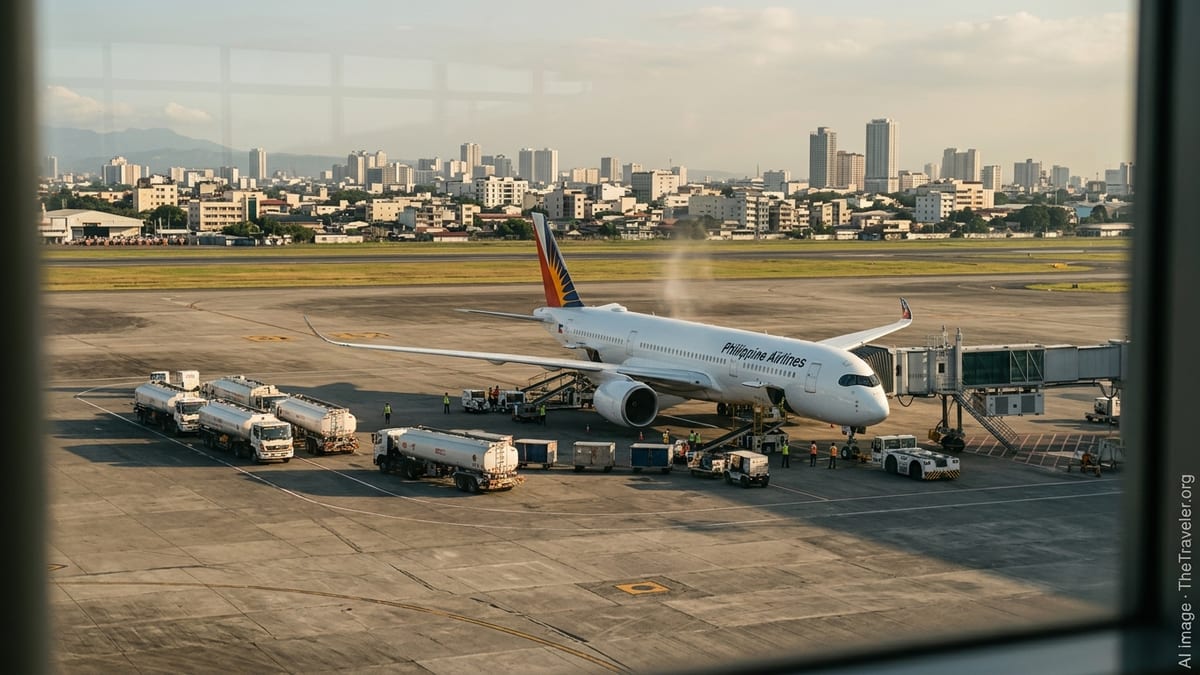
Philippine Airlines has moved to secure a substantial buffer of jet fuel supplies as global energy markets react to tensions in the Middle East, aiming to keep long haul flights operating for tourists, overseas Filipino workers and homecoming families amid growing concerns over potential disruptions.
Get the latest news straight to your inbox!
Fuel Security Steps As Global Tensions Hit Jet Prices
Publicly available industry data show that jet fuel prices have surged sharply in recent weeks as conflict in key oil producing areas heightens worries over supply, shipping routes and refinery output. Reports from aviation and energy observers indicate that airlines face both higher costs and the risk of intermittent shortages if the situation drags on, particularly in regions that rely heavily on imported fuel.
Against this backdrop, Philippine Airlines has confirmed through published advisories and media coverage that it has secured enough jet fuel to maintain scheduled operations for the foreseeable future, including its network of long haul flights. The move is presented as a proactive measure to shield passengers from abrupt schedule cuts even as other carriers review capacity and reroute services around affected air corridors.
The airline’s strategy aligns with broader guidance from aviation analysts, who have been highlighting the importance of fuel hedging, diversified sourcing and advance purchase agreements as prices climb. By locking in a meaningful cushion of supply, Philippine Airlines is aiming to reduce exposure to short term volatility and to keep international links open for Filipinos and visitors who depend on regular connectivity.
Recent commentary from local business media also underscores how quickly profitability can erode when fuel costs spike beyond key thresholds, especially for carriers with extensive long haul operations. Ensuring that core routes remain supplied is therefore emerging as both an operational and financial priority for the flag carrier.
Long Haul Lifelines for OFWs and Returning Families
Philippine Airlines’ long haul network is a critical lifeline for millions of overseas Filipino workers based in North America, the Middle East, Europe and Australia, as well as for families planning long awaited homecomings. Direct services between Manila and destinations such as Los Angeles, San Francisco, New York, Toronto, London and key Gulf hubs are heavily used during peak travel seasons and major holidays.
Published traffic data and government labor statistics consistently show that the Philippines ranks among the world’s largest sources of migrant workers, with air travel serving as the essential bridge between host countries and home communities. Any prolonged disruption to fuel supplies that forced cancellations on these trunk routes would quickly ripple through family plans, remittance flows and tourism spending.
By locking in a sizable buffer of jet fuel, Philippine Airlines is seeking to preserve these long haul connections even as other airlines trim frequencies or reconfigure networks in response to higher costs. Travel industry reports note that demand for flights to and from the Philippines remains strong, particularly from Filipinos abroad who often book months in advance for reunions and vacations.
The airline’s decision is also likely to be closely watched by travel agents and tour operators that package long haul flights with resort stays, cruises and domestic island itineraries. Continued reliability on flagship routes gives them more confidence to promote Philippine destinations to both returning Filipinos and foreign visitors.
Managing Capacity, Costs and Potential Reroutes
The latest turbulence in fuel markets adds to an already complex operating environment for airlines, with some carriers forced to divert flights around sensitive airspace, lengthening journey times and burning more fuel per sector. International coverage of the situation points to growing use of alternative routings over the Caucasus, Central Asia, or the Red Sea and North Africa for certain long haul services.
Philippine Airlines has previously adjusted Middle East operations in response to security assessments, including selective cancellations and diversions. The newly secured fuel buffer gives the carrier more room to manage such adjustments without resorting to wholesale cuts on its wider international network, according to industry-focused reporting that tracks flight schedules and route changes.
However, securing fuel does not eliminate the pressure from higher prices. Domestic business coverage has highlighted that Philippine carriers, including the flag carrier, are operating close to profitability thresholds that can be quickly undermined if the cost of jet fuel stays elevated. This dynamic suggests that while capacity may be preserved in the near term, airlines may still need to recalibrate growth plans, defer some expansion or intensify cost savings elsewhere.
Regulatory information on fuel surcharges in the Philippines indicates that carriers have limited flexibility to pass on spikes in costs through additional fees, subject to approval by aviation regulators. In practice, this means that fuel buffers and prudent procurement strategies are becoming central tools for managing risk, alongside revenue initiatives and possible fare adjustments on selected routes.
Reassuring Travelers Amid Talk of Shortages
Social media threads and community forums in recent days have amplified speculation about potential fuel shortages and their impact on flights, adding to traveler anxiety ahead of the busy summer season. Some posts have warned of possible cancellations if local fuel stockpiles are strained, while others have questioned whether airlines would be able to protect international schedules.
In this context, Philippine Airlines’ public assurance that it has secured sufficient jet fuel for its operations functions as a targeted message to nervous passengers, especially those booked on long haul services. Reports summarizing the airline’s statement emphasize that critical international routes remain supported by existing fuel arrangements, even as the broader energy situation remains fluid.
Travel agencies and online booking platforms are already seeing the effect of uncertainty, with anecdotal reports of passengers checking alternative dates, carriers and routing options. Clear signals from major airlines about their fuel preparedness help temper the risk of a sudden shift in bookings driven by fear rather than actual schedule changes.
While industry observers caution that no carrier is completely insulated from a prolonged global supply squeeze, the early steps taken by Philippine Airlines are being framed as an attempt to stabilize expectations. For many travelers, the assurance that flights are backed by a secured fuel buffer may be as important as the specific departure time or aircraft type.
Tourism and Economic Stakes for the Philippines
The effort to ring fence long haul operations with a robust fuel buffer comes at a pivotal time for the Philippine tourism sector. Official visitor arrival figures released over the past year point to a steady recovery toward, and in some cases beyond, pre pandemic levels, driven by demand from traditional markets such as South Korea, the United States and Japan, as well as from overseas Filipinos returning for holidays.
Tourism authorities have been promoting the country’s beaches, dive sites and cultural destinations with campaigns that rely heavily on the availability of direct international air links. Any perception that flights to the Philippines might be unreliable due to fuel constraints could dampen this momentum, making the stability offered by Philippine Airlines’ fuel measures particularly important.
Economists quoted in regional business coverage have also highlighted how energy price shocks filter through to consumer prices, transport costs and overall economic confidence. For an archipelagic country that depends on air connectivity for both tourism and trade, assuring continuous long haul capacity is part of a broader effort to keep economic activity on track despite external shocks.
As the global energy situation continues to evolve, analysts expect more carriers in Asia and beyond to disclose their own fuel strategies, whether through hedging, diversified sourcing or operational adjustments. For now, Philippine Airlines’ decision to secure a substantial jet fuel buffer stands out as a visible step to protect essential long haul links for tourists, overseas workers and families planning long awaited journeys home.