

More news on this day
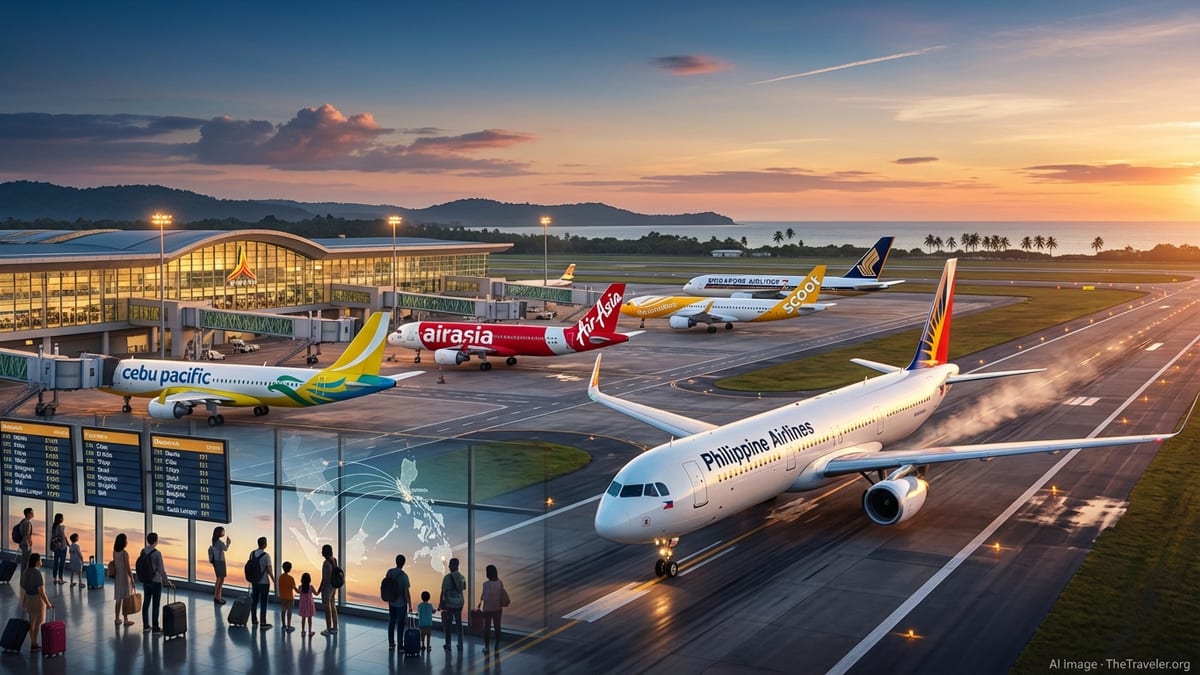
Philippine Airlines is moving decisively to reclaim its position on the regional stage, aligning itself with Cebu Pacific, AirAsia and Singapore Airlines at the heart of Southeast Asia’s tourism resurgence.
As governments court visitors with easier visas, new routes and aggressive marketing, carriers across the region are racing to add capacity, deepen partnerships and capture a larger share of what has become one of the world’s fastest growing travel markets.
More News
- TSA Rolls Out $45 ConfirmID Fee for Travelers Without REAL ID at Security
- Flying Blue Launches February 25% Promo Rewards on Transatlantic and Regional Routes
- United Fast-Tracks Starlink Wi‑Fi Across Fleet, Free for MileagePlus Members
Tourism Boom Reshapes Southeast Asia’s Aviation Landscape
Across Southeast Asia, tourism has rebounded strongly from the pandemic slump, bolstered by pent up demand, rising middle class incomes and the reopening of major source markets such as China, Japan, South Korea, Europe and North America. The Philippines, Thailand, Vietnam, Indonesia and Malaysia are all reporting rapid growth in foreign arrivals, with beaches, dive spots and cultural sites once again filling with international visitors.
The Philippines in particular has turned tourism into a central economic pillar. Government data show inbound tourism receipts climbing to a record high in 2024, outpacing even pre pandemic levels and accounting for a growing share of national output. Officials credit improved air connectivity, targeted campaigns in key markets and a sharp rise in seat capacity from local and foreign airlines.
That robust demand is reshaping airline strategies. Rather than simply restoring pre pandemic schedules, carriers are now building denser, more tourism oriented networks, adding non stop links between secondary cities, resort destinations and regional hubs. Low cost carriers are leading the charge, while full service airlines such as Philippine Airlines and Singapore Airlines are reinforcing premium long haul and regional trunk routes that feed high spending travelers into Southeast Asia’s resort corridors.
Philippine Airlines Repositions as a Regional Connector
After focusing for years on long haul services and key trunk routes, Philippine Airlines is stepping up its regional ambitions. The flag carrier has been increasing frequencies on intra Asian routes, adding capacity into Japan, South Korea and Southeast Asian neighbors and using Manila and Cebu as gateways to the country’s most popular islands. The airline has also capitalized on strong demand from North America, with nonstop services feeding tourists into the Philippines who then disperse onward to secondary destinations on domestic legs.
Industry data highlight how these network moves intersect with tourism policy. Routes from the United States and Japan, for example, have seen solid growth as campaigns promoting sun and beach trips, diving and cultural heritage tours gain traction. New and enhanced nonstop flights from the US West Coast, including additional services to Manila, are helping convert interest into bookings by cutting travel times and simplifying connections.
Philippine Airlines has been working to upgrade its fleet and product as it competes with the region’s leading carriers. Refreshed cabins on long haul aircraft, improved on time performance and growing code share alliances within Asia allow the airline to market itself not only as a point to point carrier but as a credible option for multi stop leisure itineraries that combine the Philippines with other Southeast Asian destinations.
Cebu Pacific Doubles Down on Hubs and Island Tourism
Cebu Pacific, the Philippines’ largest carrier by passenger volume, has emerged as one of the most aggressive players in the tourism recovery. The airline has rapidly expanded capacity out of Cebu, Clark and other secondary hubs, using low fares and dense schedules to link domestic islands with regional cities. Recent figures show Cebu Pacific ramping up flights and seats through its Cebu hub by double digit percentages, capturing roughly half of the local market and reinforcing Mactan Cebu International Airport’s role as a major gateway.
The carrier’s push aligns neatly with national tourism priorities. By increasing frequencies to domestic beach and adventure spots and overlaying them with international links from Japan, Korea and across Southeast Asia, Cebu Pacific is effectively stitching together multi destination holiday corridors. Routes such as Cebu to El Nido, along with additional services to other island gateways, are designed to funnel foreign visitors directly into resort areas without requiring a backtrack through Manila.
Cebu Pacific’s growth story is also one of scale. The airline flew close to 20 million passengers over the first three quarters of 2025, with management targeting close to 30 million travelers and an all time high fleet size of around 100 aircraft to support rising demand. That expansion is enabling more competitive fares across the network and reinforcing its position as a key driver of both domestic and inbound tourism.
AirAsia Bets on Hyper Connectivity and Price Sensitive Travelers
AirAsia has long branded itself as the airline of ASEAN and is using that identity to its advantage as regional tourism surges. The group has significantly boosted weekly flights across Southeast Asia, mounting more than 3,200 services per week on a network that spans Malaysia, Thailand, Indonesia, the Philippines and Cambodia, and connecting onwards to destinations in Australia, East Asia and South Asia.
Recent operating results from Thai AirAsia illustrate the scale of the recovery. The Thai affiliate carried more than 20 million guests in 2024, growing double digits year on year with load factors exceeding 90 percent and a fleet of 60 aircraft serving dense domestic and international routes. Similar patterns are being seen in other AirAsia units, which are adding capacity on high demand tourism sectors linking hubs like Bangkok, Kuala Lumpur and Bali with beach towns and heritage cities across the region.
The group continues to focus on price sensitive leisure travelers, using promotions, travel passes and digital platforms to stimulate demand. Subscription products targeted at ASEAN exploration, along with partnerships with tourism organizations, are designed to encourage repeat visitation and multi country itineraries. For destinations such as the Philippines, where AirAsia’s local affiliate operates key domestic and short haul international routes, that strategy helps keep the country firmly integrated into Southeast Asia’s tourism flows.
Singapore Airlines Anchors Premium Demand into the Region
While low cost carriers dominate the volume end of Southeast Asia’s tourism boom, Singapore Airlines plays an outsized role in attracting higher yielding visitors. The carrier has rebuilt its global network and is once again using Singapore’s Changi Airport as a premier gateway for travelers from Europe, North America and North Asia heading to beach resorts and cultural circuits around the region.
Singapore Airlines and its low cost arm Scoot collectively offer extensive connectivity into major tourist hotspots in Thailand, Indonesia, Vietnam, Malaysia and the Philippines. Travelers from long haul markets often fly into Singapore and then connect onwards to regional destinations on a single itinerary, benefitting from seamless baggage handling, coordinated schedules and common loyalty programs. This model is particularly attractive for multi country itineraries that blend urban stays in Singapore with island escapes or nature focused trips elsewhere in Southeast Asia.
The airline’s sustained investment in new aircraft, premium cabins and digital services has also strengthened the broader tourism value chain. High spending visitors drawn by Singapore Airlines’ long haul offering often extend their trips to neighboring countries, where they connect onto partner airlines or low cost affiliates to reach emerging destinations, including secondary cities in the Philippines.
Philippines Rides Record Tourism Revenues and Wider Connectivity
The growing alignment of Philippine Airlines, Cebu Pacific, AirAsia and foreign carriers like Singapore Airlines is underpinning a new phase in the Philippines’ tourism development. Government figures indicate that inbound tourism receipts in 2024 surpassed all previous highs, confirming the sector’s full recovery and underscoring its role in job creation and regional development.
Crucially, the growth is no longer concentrated solely in Metro Manila. Expanded capacity through Cebu and Clark, as well as new links to island airports, is redistributing visitor flows to more provinces. This dispersal supports local businesses, from small hotels and homestays to dive operators and transport providers, and aligns with official efforts to position the Philippines as a multi gateway destination.
The interplay between policy and airline strategy has become central. Infrastructure upgrades, slot reforms and incentives for new services are being mirrored by airline decisions to add aircraft, open new routes and build schedules that support both domestic leisure travel and international arrivals. That ecosystem is allowing the Philippines to compete more directly with long established destinations such as Thailand and Indonesia for tourists from within Southeast Asia and beyond.
Competitive Pressures and Sustainability Concerns Emerge
The rapid expansion of capacity across Southeast Asia is not without challenges. As Philippine Airlines, Cebu Pacific, AirAsia and Singapore Airlines all vie for market share, competition on key routes has intensified. Fare wars on certain city pairs, especially where low cost carriers overlap with full service airlines or where multiple budget carriers operate, are putting pressure on yields even as load factors remain robust.
At the same time, airports and regulators are grappling with congestion and sustainability concerns. Manila’s main gateway is undergoing a complex transition as turboprop flights are redirected to secondary hubs, while other airports around the region weigh runway upgrades, terminal expansions and environmental measures to manage growth responsibly. For island and coastal destinations, balancing rising visitor numbers with the protection of fragile ecosystems is becoming a central policy debate.
Airlines are responding in part through fleet modernization, shifting to more fuel efficient aircraft such as A321neos and A330neos that reduce emissions per passenger while adding capacity. They are also working with tourism boards on campaigns that promote longer stays and higher value travel, which can help spread economic benefits without relying solely on ever increasing passenger counts.
Outlook: Philippine Airlines Joins a New Power Bloc in ASEAN Tourism
Looking ahead, Philippine Airlines’ push to strengthen its regional network places it firmly within a new power bloc of carriers shaping Southeast Asia’s tourism landscape. Alongside Cebu Pacific’s scale, AirAsia’s low fare connectivity and Singapore Airlines’ premium reach, the flag carrier’s evolving strategy signals that the Philippines intends not only to host more tourists but to participate actively in routing tourism flows across ASEAN.
Industry analysts expect further capacity additions over the next two years, particularly on connections between the Philippines and key markets such as Japan, South Korea, Australia and neighboring Southeast Asian states. Partnerships, code shares and potential new alliances will likely deepen as airlines seek to optimize networks and offer travelers more seamless multi stop journeys.
For travelers, the effect is already visible in more choices, shorter journey times and a wider array of price points. For destinations, it represents both an opportunity and a test. If managed well, the combined expansion of Philippine Airlines, Cebu Pacific, AirAsia and Singapore Airlines could cement Southeast Asia’s status as one of the world’s most dynamic tourism regions, with the Philippines playing a central role.
FAQ
Q1. How is Philippine Airlines contributing to Southeast Asia’s tourism boom?
Philippine Airlines is increasing capacity on key regional routes, adding more services between Manila, Cebu and major Asian cities, and using its long haul network from North America and other markets to feed tourists into Philippine destinations and onward connections across Southeast Asia.
Q2. What makes Cebu Pacific a key player in the region?
Cebu Pacific operates the largest Philippine network by destinations and has aggressively expanded from hubs like Cebu and Clark, linking domestic islands with international cities and offering low fares that stimulate both local and foreign tourism demand.
Q3. How is AirAsia influencing travel patterns in Southeast Asia?
AirAsia has built a dense, low cost network across ASEAN, operating thousands of weekly flights that connect major hubs with emerging tourist destinations. Its pricing strategy, promotions and digital platforms make multi country itineraries more accessible for budget conscious travelers.
Q4. What role does Singapore Airlines play in regional tourism?
Singapore Airlines anchors premium long haul demand into Southeast Asia, carrying high spending travelers from Europe, North America and North Asia into Singapore, where they connect to regional destinations using Singapore Airlines, Scoot or partner airlines.
Q5. Why is the Philippines becoming more competitive as a tourism destination?
The Philippines has reached record tourism revenues, improved air connectivity through multiple hubs, upgraded infrastructure at key airports and implemented marketing campaigns in major source markets, helping it compete more directly with regional tourism leaders.
Q6. How are secondary hubs like Cebu and Clark affecting travel to the Philippines?
Expanded services from Cebu and Clark allow airlines to bypass Manila for certain itineraries, giving travelers more direct access to resort islands and provincial cities and reducing congestion at the capital’s main airport.
Q7. Are there concerns about overcapacity or fare wars in Southeast Asia?
Yes, intense competition on popular routes has pressured fares, especially where low cost and full service airlines overlap. While this benefits travelers, it challenges airlines to manage profitability as they add capacity.
Q8. How are airlines in the region addressing environmental and congestion issues?
Carriers are investing in newer, more fuel efficient aircraft, supporting airport expansions and air traffic improvements, and working with governments on measures that balance tourism growth with environmental protection and infrastructure limits.
Q9. What does the tourism rebound mean for local communities in the Philippines?
Rising visitor numbers support jobs in hospitality, transport, retail and tours, especially in island and provincial areas. However, communities and authorities also face the task of ensuring sustainable development and protecting natural and cultural assets.
Q10. How might Southeast Asia’s tourism market evolve over the next few years?
Analysts expect continued growth, with more non stop routes between secondary cities, deeper airline partnerships and a stronger focus on higher value, experience driven travel, positioning airlines like Philippine Airlines, Cebu Pacific, AirAsia and Singapore Airlines at the center of regional development.