

More news on this day
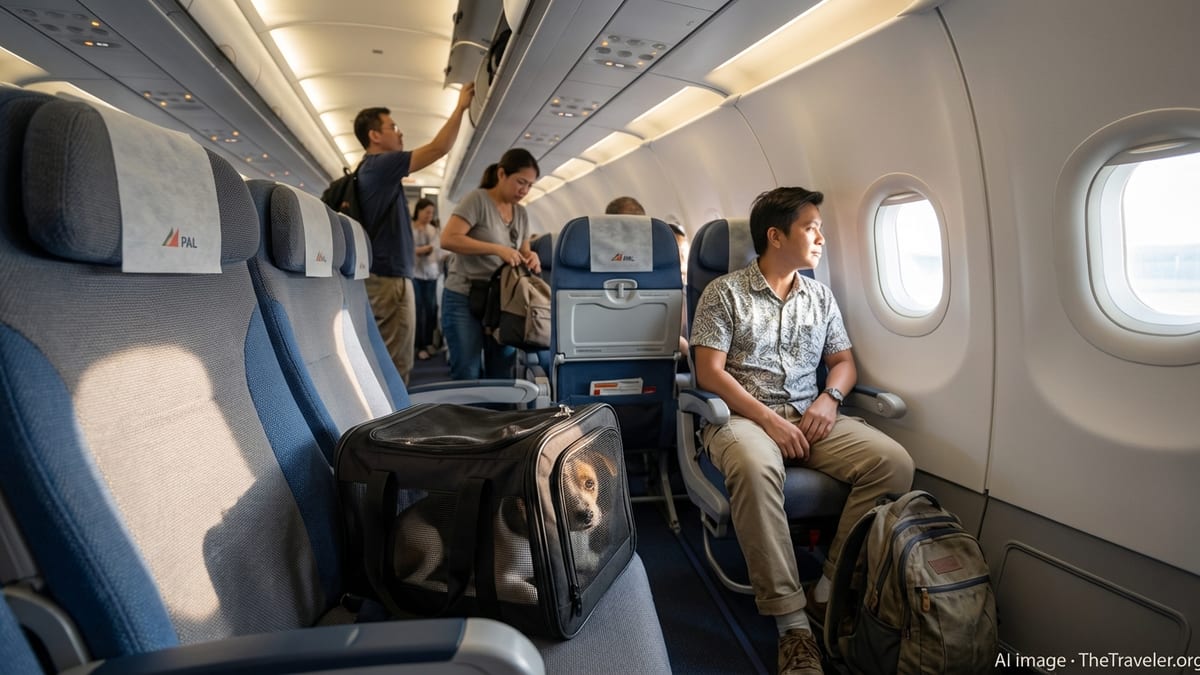
Philippine Airlines has expanded its FurPAL in-cabin pet program to cover every domestic route in its network, allowing small dogs to fly alongside their owners and reshaping how pet lovers travel across the Philippines.
Nationwide Rollout of PAL’s FurPAL Program
Philippine Airlines confirmed on February 19 that its FurPAL service, first introduced in late 2025 on a handful of tourist routes, is now available on all domestic flights across its network. The move means travelers can bring their small dogs into the cabin on journeys linking major hubs such as Manila and Cebu, as well as island gateways including Boracay, Bohol, Siargao, Davao, and Bacolod.
The program, which carries an additional fee of 2,500 pesos one way, is offered as an add-on to a regular ticket and must be selected during the booking process. The airline positions FurPAL as an optional service designed for passengers who want to avoid sending their pets to the cargo hold and prefer to keep them within sight for the entire flight.
Philippine Airlines describes the expansion as a response to strong demand from travelers who consider pets part of the family. After testing the service on popular leisure routes beginning in November 2025, the carrier says uptake and feedback were sufficiently positive to justify rolling it out nationwide from mid-February 2026.
The flag carrier also notes that the FurPAL framework is closely integrated into existing safety, health, and customer-service protocols to ensure that the presence of animals in the cabin does not compromise comfort or operational standards for other passengers.
How the In-Cabin Pet Service Works
Under the FurPAL program, only small dogs are currently permitted in the cabin, with eligibility based on strict weight, age, and health criteria. Philippine Airlines specifies that each dog, including its carrier, must not exceed 10 kilograms, and must be at least eight to twelve weeks old and fully weaned, depending on the specific advisory. The rules are meant to ensure that animals are robust enough to handle air travel and can be comfortably accommodated under standard cabin seating.
Each paying adult passenger can bring one small dog, and each flight has a limit on the total number of pets that can be accepted, typically up to three dogs per service, depending on aircraft type. This cap allows crew to manage cabin space and passenger comfort while introducing pets in a controlled way.
Bookings are processed through the airline’s website or authorized channels, where travelers select FurPAL in the “travel extras” or “travel boost” section during checkout. The airline treats the pet reservation as distinct from standard cabin baggage, and passengers are reminded that strollers or larger accessories must be checked in rather than carried into the cabin.
Upon check-in at the airport, staff verify that all documentation is in order and visually inspect the pet and its carrier. Once approved, the carrier is tagged and the passenger is assigned a designated window seat so the carrier can be properly stowed under the seat in front, complying with safety regulations and minimizing disturbance to other travelers.
Rules, Fees, and Carrier Requirements for Fur Parents
Philippine Airlines is emphasizing that FurPAL is not a free-form pet policy but a tightly regulated service. The 2,500 peso one-way fee applies in addition to the passenger’s fare and any other add-ons, and does not replace normal check-in or hand-carry allowances. The airline clarifies that dogs and their carriers are considered separate from standard cabin baggage, which means travelers still need to adhere to existing weight and size limits for their personal items.
Carriers must meet specifications set by the airline. Soft-sided, fully enclosed, and leak-proof designs are required, with a solid base that can hold an absorbent pee pad. Dimensions may not exceed approximately 17 inches by 11 inches by 9.5 inches, and the pet must be able to stand, turn around, and lie down comfortably inside. The carrier must also have at least two ventilation panels to maintain adequate airflow for the animal during the flight.
Once on board, dogs must remain completely inside their carriers for the entire journey, from boarding until after landing and deplaning. Philippine Airlines does not allow pets to be removed, held on laps, or seated on the passenger’s chair at any time. Crew are instructed to ensure that carriers remain positioned under the seat in front of the owner, rather than in the aisle or on an adjacent seat, in order to comply with safety rules and facilitate evacuation procedures if needed.
The airline also reiterates that sedation of pets is strictly prohibited. Veterinarians have long warned that sedatives can interfere with an animal’s ability to regulate breathing and balance in changing cabin-pressure conditions. PAL instead advises owners to consult vets for non-sedative strategies, such as acclimating pets to their carriers before travel, scheduling flights at calmer times of day, and avoiding heavy meals immediately before departure.
Health, Documentation, and Safety Protocols
To be accepted under FurPAL, each dog must meet health and documentation requirements aligned with Philippine regulations. Passengers are required to present a veterinary health certificate issued shortly before departure, an updated anti-rabies vaccination record, and a shipping permit from the Bureau of Animal Industry. Philippine Airlines also requires passengers to sign a waiver, release, and declaration form confirming that their pets are fit to travel.
These documents must be presented at check-in along with the passenger’s own travel identification. Ground staff check expiry dates, vet signatures, and the pet’s visible condition before issuing final clearance. Travelers who fail to produce complete paperwork may be denied boarding for their pets, even if they have already paid the FurPAL fee.
The airline says the documentation regime is designed to protect both animals and people, limiting the risk of disease transmission and ensuring that animals are physically capable of enduring air travel. Conditions such as recent surgery, respiratory illness, or aggressive behavior can lead to a pet being refused carriage under the policy.
Philippine Airlines underscores that the new service is layered atop its existing cabin safety measures. The carrier highlights the use of hospital-grade HEPA filters on board, which are capable of removing the vast majority of airborne particles, and routine interior cleaning with medical-grade, eco-friendly agents between flights. These measures, it argues, help address concerns from passengers who may be allergic or sensitive to animal dander.
Impact on Domestic Tourism and Pet-Friendly Travel
The expansion of FurPAL is expected to make domestic trips more accessible for pet-owning households who previously had to choose between boarding their dogs, leaving them with relatives, or canceling travel plans. Tourism stakeholders believe that the move could boost demand for pet-friendly resorts, homestays, and transport services in island destinations traditionally popular with Filipino families.
Hotels and resorts in Boracay, Bohol, Siargao, Palawan, and Northern Luzon have already been expanding pet-friendly offerings in recent years, responding to a younger generation of travelers who view pets as integral members of the household. The ability to bring small dogs directly into the aircraft cabin could encourage more long-weekend getaways and spur demand in the shoulder seasons.
Local tourism offices and hospitality groups are watching closely to see how the nationwide rollout affects booking patterns. If successful, travel analysts say FurPAL could help diversify the domestic tourism base beyond traditional family and corporate segments, with “fur families” increasingly factoring into planning for festivals, events, and destination marketing campaigns.
Industry observers also note that the program arrives at a time when airlines in Asia and beyond are rethinking their role in the broader pet economy. From specialized pet hotels near airports to bundled travel-and-boarding packages, carriers are exploring ways to differentiate themselves and cultivate stronger loyalty among niche but growing customer groups.
How PAL Compares With Other Airlines
Within the Philippines, pet policies have long drawn a sharp distinction between service animals and companion animals. Most carriers previously only permitted trained service dogs to stay in the cabin, with all other pets typically relegated to the cargo hold as checked baggage. Philippine Airlines has presented FurPAL as a first-of-its-kind dedicated in-cabin service for small dogs offered by a Philippine carrier on regular domestic routes.
Globally, PAL’s move aligns it with a small but growing number of airlines that allow pets to sit in the cabin under specific size and carrier restrictions. In many cases, these international programs impose similar requirements around health certificates, maximum weights, leak-proof carriers, and under-seat stowage, suggesting that PAL has drawn on industry best practices in designing FurPAL.
Aviation experts point out that allowing companion animals into the cabin adds layers of complexity for crew, from managing possible allergies among other passengers to handling nervous or vocal pets. By limiting the number of dogs per flight and tying eligibility to strict protocols, Philippine Airlines aims to show that it can accommodate pet-owning travelers without undermining the overall passenger experience.
Analysts also highlight that PAL’s approach separates companion pet travel from long-running debates over emotional support animals in other markets. The airline continues to differentiate between formally trained service animals and pets traveling under FurPAL, with each category governed by distinct rules, forms, and boarding procedures.
What Passengers Should Expect at the Airport
For travelers planning to use FurPAL, the airline advises arriving at the airport earlier than usual to allow extra time for document checks and pet inspection. At check-in, staff verify paperwork, weigh the dog and carrier together if needed, and confirm that the carrier meets dimension and ventilation requirements. Passengers may be asked to briefly open the carrier so staff can observe the animal’s condition.
Once the pet has been cleared, its carrier receives a special tag noting that it is authorized for in-cabin travel. Passengers then proceed through security checks, where they may be required to follow screening procedures for both themselves and the pet, as directed by aviation and security authorities.
At the boarding gate, passengers traveling with dogs are often invited to board earlier to give them time to settle into their designated seats. Cabin crew provide guidance on how the carrier should be placed under the seat and remind owners that the pet must remain inside with the opening fully secured for the duration of the journey.
After landing, passengers are instructed to remain seated until the aircraft has parked and the seatbelt sign is turned off before repositioning carriers or opening them. The airline encourages owners to wait until they reach the arrivals hall or a designated pet relief area before allowing their dogs out of the carrier, both for safety reasons and to maintain an orderly disembarkation process.
Looking Ahead: Possible Expansion to Cats and Other Pets
Philippine Airlines has indicated that while FurPAL currently focuses exclusively on small dogs, the program is likely to evolve. The carrier has signaled that cats may be included in future phases once operational details such as allergy management, carrier standards, and documentation requirements are fully aligned with regulatory guidelines.
Any expansion to additional species would require further coordination with the Bureau of Animal Industry, veterinary associations, and airport operators to address health, sanitation, and passenger-comfort concerns. The airline is expected to review data from the first months of the nationwide rollout, including incident reports and customer feedback, before making decisions on broadening eligibility.
For now, Philippine Airlines is presenting the nationwide deployment of FurPAL as a milestone in its recovery and a marker of how customer expectations have shifted in the post-pandemic travel landscape. As more Filipinos consider their pets central to family life, the carrier is betting that making room for dogs in the cabin will win loyalty among travelers who have long struggled with the question of what to do with their pets when they head to the airport.
Travelers are being urged to review the full guidelines before booking and to consult their veterinarians about their animals’ readiness to fly. With new options now available across the domestic network, many pet owners are already rethinking where and how they can explore the Philippines with their four-legged companions at their side.