

More news on this day
Philippine Airlines is positioning Manila alongside Cebu, Iloilo and Tacloban as central pillars of a refreshed network for 2026, combining new and seasonal routes, domestic frequency shifts and a wide-ranging fleet upgrade anchored on next-generation long-haul aircraft.
Get the latest news straight to your inbox!
Manila Strengthens Role as Primary Long-Haul Gateway
Publicly available information shows that Manila Ninoy Aquino International Airport remains the backbone of Philippine Airlines’ long-haul strategy as the flag carrier prepares for 2026. Recent schedule disclosures point to continued ramp-up of services on transpacific routes, including the expanding Manila–Seattle operation, which is set to reach five weekly flights from late November 2025 and feed connections deeper into North America through partner carriers.
Industry coverage indicates that Manila will also anchor a broader push into seasonal and niche markets around the Asia-Pacific region. The carrier is set to maintain or revive selective seasonal links, including Japan services such as Manila–Sapporo during the 2025–26 winter period, positioning Manila as the primary connection point for both inbound tourists and overseas Filipinos returning home during peak travel windows.
Analysts note that Manila’s congestion remains a structural challenge, but network planners appear to be using upgauging, schedule refinements and connectivity via other Philippine cities to extract additional capacity. These measures are designed to support the airline’s long-haul expansion while easing operational pressure on the capital’s main hub.
Cebu, Iloilo and Tacloban Take Larger Roles in Domestic Network
Beyond Manila, Philippine Airlines is signaling an elevated role for Cebu, Iloilo and Tacloban in its domestic strategy for 2026. Aviation trade publications report that the airline has been incrementally boosting point-to-point services from Cebu, including new and restored intra-Visayas routes, to reduce dependence on Manila as the primary transfer point for travelers moving between secondary cities.
In Iloilo, local travel reporting for the 2025–26 peak season describes a notable capacity uplift, with selected Manila–Iloilo frequencies upgraded from narrowbody jets to Airbus A330 widebody aircraft between December 2025 and late March 2026. This upgauging adds seats on one of the country’s busiest domestic corridors and effectively treats Iloilo as a key spoke in the network, especially during holiday peaks when demand from overseas Filipinos surges.
Published coverage also points to enhancements in Eastern Visayas, where additional Manila–Tacloban flights have been scheduled across the 2025–26 period, building on earlier frequency increases on that route. These steps, combined with Cebu’s expanding schedule, suggest that Philippine Airlines intends to use multiple Philippine cities, not only the capital, as anchors for its domestic and regional connectivity in 2026.
New and Seasonal Routes Shape 2026 Connectivity
Reports from travel and aviation outlets indicate that Philippine Airlines is layering new and seasonal routes around its core network in the lead-up to 2026. On the long-haul side, the expansion of Manila–Seattle service underscores a strategy of deepening coverage in North America, where the airline already links the Philippines with several gateways including Los Angeles, San Francisco, New York, Honolulu and others.
Closer to home, the return of seasonal Manila–Sapporo flights for winter 2025–26 complements an established Japan portfolio from both Manila and Cebu. Trade press summaries suggest that the airline has also been active in adding or reinstating services to selected destinations in China, India and Southeast Asia over the 2024–25 period, contributing to a denser short- and medium-haul network that will feed into long-haul departures in 2026.
Separate local and regional reporting highlights that Philippine Airlines is also looking at smaller but strategically important links, such as proposed services from Manila to Palau and enhanced connectivity from provincial cities. These planned and seasonal routes, although limited in frequency, broaden the carrier’s footprint and provide additional options for both leisure and business travelers using Manila, Cebu, Iloilo and Tacloban as their starting points.
Fleet Upgrades: A350-1000 Delivery Underpins Long-Haul Growth
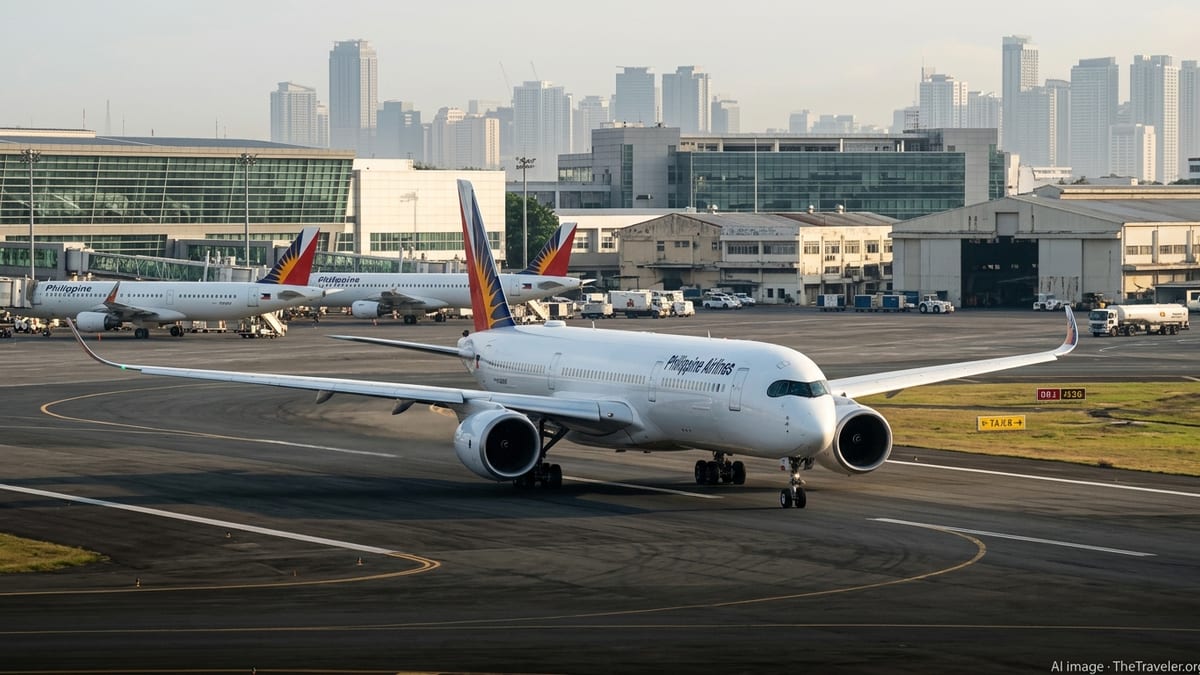
Philippine Airlines’ fleet renewal is a central driver of its 2026 plans. Airbus and independent aviation databases show that the carrier has taken delivery of its first Airbus A350-1000, making it one of a small group of airlines operating the largest variant of the A350 family. The aircraft is part of a firm order for nine units, with further deliveries scheduled into the second half of the decade.
Industry analyses describe the A350-1000 as the backbone of the airline’s next-generation long-haul fleet, with range and efficiency suited to nonstop transpacific and potential transpolar services from Manila. The type is expected to progressively assume flagship roles on routes to North America and possibly Europe, supplementing and, over time, replacing older widebody aircraft such as certain Boeing 777-300ER and Airbus A330 units.
Maintenance and support agreements recently extended between Philippine Airlines and Airbus, covering the A350-1000, A330 and A320 family fleets, further underline the long-term nature of the renewal program. Alongside a separate orderbook for Airbus A321neo regional jets, these investments indicate an ambition to fine-tune capacity, match aircraft types more closely to route demand and improve overall fuel efficiency heading into 2026.
Domestic Adjustments Align With Global Ambitions
While much attention focuses on widebody deliveries and long-haul routes, domestic adjustments across the Philippines are playing a complementary role in Philippine Airlines’ 2026 blueprint. Publicly available schedules and trade coverage show that the carrier has been recalibrating frequencies on multiple Manila routes, including services to Butuan, Cagayan de Oro, Legazpi, Dumaguete and Tacloban, often adding weekly flights or deploying larger aircraft during peak seasons.
These changes appear designed to ensure that Manila, Cebu, Iloilo and Tacloban can function as reliable feeders for long-haul departures while also serving strong local demand. Higher-capacity aircraft on dense routes, additional peak-season rotations and selected new point-to-point links help to reduce connection times and give travelers more flexibility in building itineraries that combine domestic and international legs.
Observers note that by pursuing domestic fine-tuning and strategic fleet renewal in parallel, Philippine Airlines is attempting to balance immediate operational needs with longer-term expansion. As 2026 approaches, Manila’s role as the primary intercontinental launchpad is being reinforced, while Cebu, Iloilo and Tacloban gain visibility as integral components of a more distributed Philippine network that aims to support the carrier’s growing global footprint.