

More news on this day
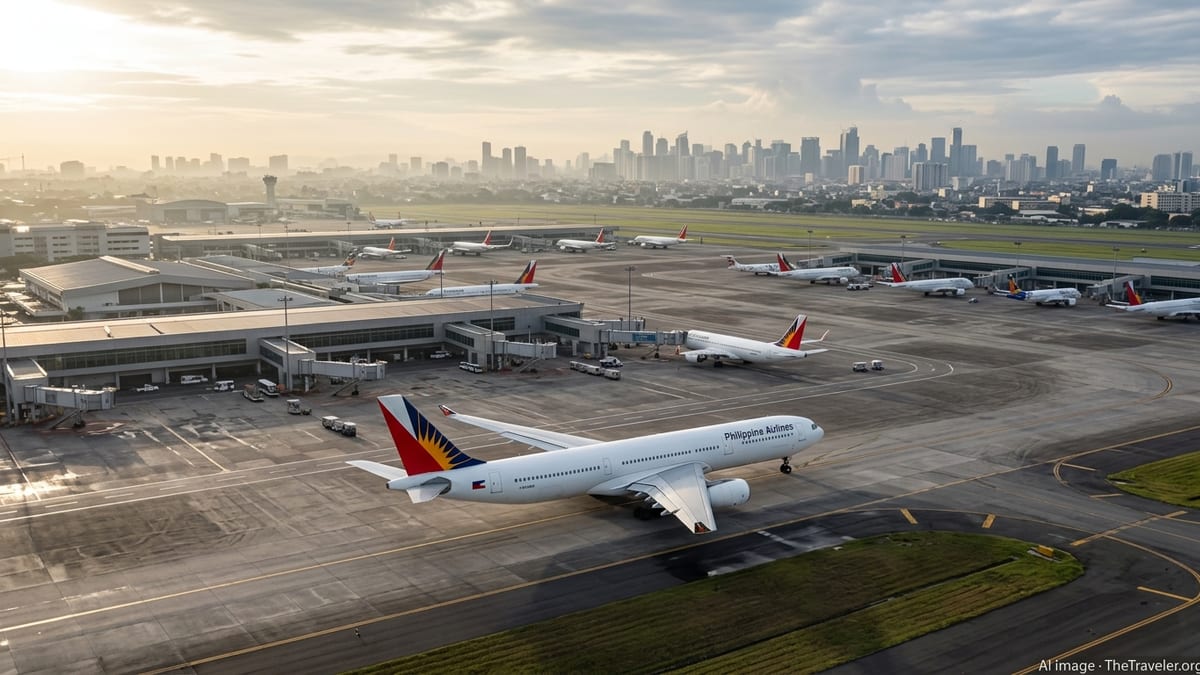
Philippine Airlines is positioning 2026 as a year of strategic expansion, unveiling new international links from Manila, domestic schedule adjustments, and a wave of fleet upgrades designed to reinforce its role as the Philippines’ global flag carrier.
Get the latest news straight to your inbox!
New International Links Put Manila at the Center of 2026 Growth
Publicly available information indicates that Philippine Airlines is sharpening its focus on Manila as a long haul gateway, with new and returning routes scheduled to come online in 2026. Recently announced nonstop services from Manila to destinations such as Saipan in the Northern Mariana Islands and Palau are due to begin around the start of the summer season at the end of March 2026, widening the carrier’s reach across the Western Pacific.
These island links complement ongoing growth on major transpacific corridors. Published timetables and recent coverage show that Philippine Airlines has been steadily increasing capacity on North American routes from Manila, including additional frequencies to cities such as Seattle and sustained services to US West Coast and East Coast gateways. The 2026 schedule is expected to lean on these links as cornerstones of the airline’s global footprint.
Regional and seasonal routes from Manila into Northeast Asia are also part of the strategy. Flights to Japanese destinations, including Sapporo and other key cities, have been ramped up seasonally through early 2026, reflecting strong outbound leisure demand and a rebound in inbound tourism. Together, these moves confirm Manila’s role as the primary springboard for Philippine Airlines’ international ambitions, even as secondary hubs gain more significance.
Cebu, Iloilo and Tacloban Gain Prominence in the Domestic Network
Alongside Manila’s expanding long haul role, Philippine Airlines is elevating Cebu, Iloilo and Tacloban within its domestic system. According to recent timetable documents and local business coverage, the airline is increasing Manila connections to these cities in the winter 2025 to 2026 season, with Manila to Cebu, Iloilo and Tacloban all seeing higher weekly frequencies compared with previous years.
Cebu continues to function as the main secondary hub, with hundreds of weekly domestic round trips linking Visayas and Mindanao destinations. Reports show expanded schedules from Cebu to leisure hotspots such as Siargao, Puerto Princesa and Caticlan, allowing travelers from across the Philippines and overseas to bypass Manila for island-to-island journeys. This structure supports the broader goal of decongesting the capital while spreading tourism flows more evenly.
Iloilo and Tacloban, while smaller, are emerging as important spokes in this network. Philippine Airlines has been adding capacity on Manila to Iloilo flights and boosting service on Manila to Tacloban, especially around peak travel periods. These adjustments are designed to better match demand from returning overseas Filipinos and growing domestic tourism, while strengthening the resilience of the airline’s network across the central Philippines.
Turboprop Shift Out of Manila Redraws Domestic Connectivity
A key structural change for 2026 is the removal of turboprop operations from Manila. According to airline statements reported by local business media, Philippine Airlines and its regional affiliate are set to discontinue all turboprop services to and from the capital from March 29, 2026, rerouting those flights to alternative hubs including Clark, Cebu and Iloilo.
The shift is expected to free up constrained runway slots at Manila’s main airport for higher-capacity jet operations, including additional flights on trunk routes such as Manila to Cebu, Iloilo and Tacloban. At the same time, passengers in smaller communities will increasingly connect through regional hubs instead of Manila, altering traditional travel patterns but potentially shortening total journey times for some itineraries.
For Cebu, Iloilo and Tacloban, this transition could translate into more consistent schedules and improved onward connectivity, as aircraft and crews are based closer to the routes they serve. Industry observers note that the move aligns with broader regional trends, where domestic turboprop networks are anchored in secondary hubs while capital city airports prioritize jets and international operations.
Widebody and Narrowbody Upgrades Support Long Haul Ambitions
Philippine Airlines’ network plans are closely tied to a multiyear fleet modernization program that extends through 2026 and beyond. Publicly accessible manufacturer information confirms that the airline took delivery of its first Airbus A350-1000 in late 2025, becoming one of a handful of carriers to operate the long range widebody. The aircraft type is slated to operate ultra long haul nonstop services from Manila to major North American cities and potentially future routes to Europe.
Alongside the new widebodies, the carrier is preparing to introduce additional Airbus A321neo aircraft from 2026, after deferring some deliveries during the pandemic period. These next generation narrowbodies are expected to serve high-demand regional and medium haul markets from Manila and Cebu, improving fuel efficiency while offering more consistent cabin products across the network.
Reports on the airline’s refurbishment program indicate that several existing aircraft are being upgraded with refreshed cabins between 2025 and 2027. The combination of new A350-1000 deliveries, incoming A321neo jets and refurbished widebodies is intended to give Philippine Airlines more flexibility to adjust capacity and product levels across its expanding route map.
Competitive Landscape and Outlook for Travelers in 2026
The 2026 strategy unfolds against an increasingly competitive Philippine aviation market, where low cost rivals are also adding capacity on key domestic and regional routes. Cebu, Iloilo and Tacloban are seeing overlapping expansions from multiple carriers, intensifying competition on fares and schedules. Industry analysis suggests that Philippine Airlines is responding by sharpening its focus on connectivity, premium long haul services and coordinated hub structures rather than pure volume growth.
For travelers, the changes point to a broader range of options when flying to, from and within the Philippines in 2026. From Manila, more nonstop choices to North America, the Western Pacific and Northeast Asia are coming into view. From Cebu, Iloilo and Tacloban, enhanced domestic links and new one-stop international itineraries via Manila or regional hubs are expected to make multi-city and island-hopping trips easier to plan.
As timetables for the second half of 2026 are finalized, observers will be watching how Philippine Airlines deploys its growing fleet and whether further route announcements extend its reach in North America, the Middle East or Europe. For now, the combination of Manila-focused long haul growth, strengthened roles for Cebu, Iloilo and Tacloban, and a modernizing fleet signals a renewed push by the flag carrier to secure a larger share of regional and global travel flows.