

More news on this day
Air travel across the Pacific is entering a new growth phase in 2026 as Philippine Airlines, Cebu Pacific and United Airlines unveil new routes, added frequencies and reshaped networks that promise to change how travelers move between North America, Europe and Asia.
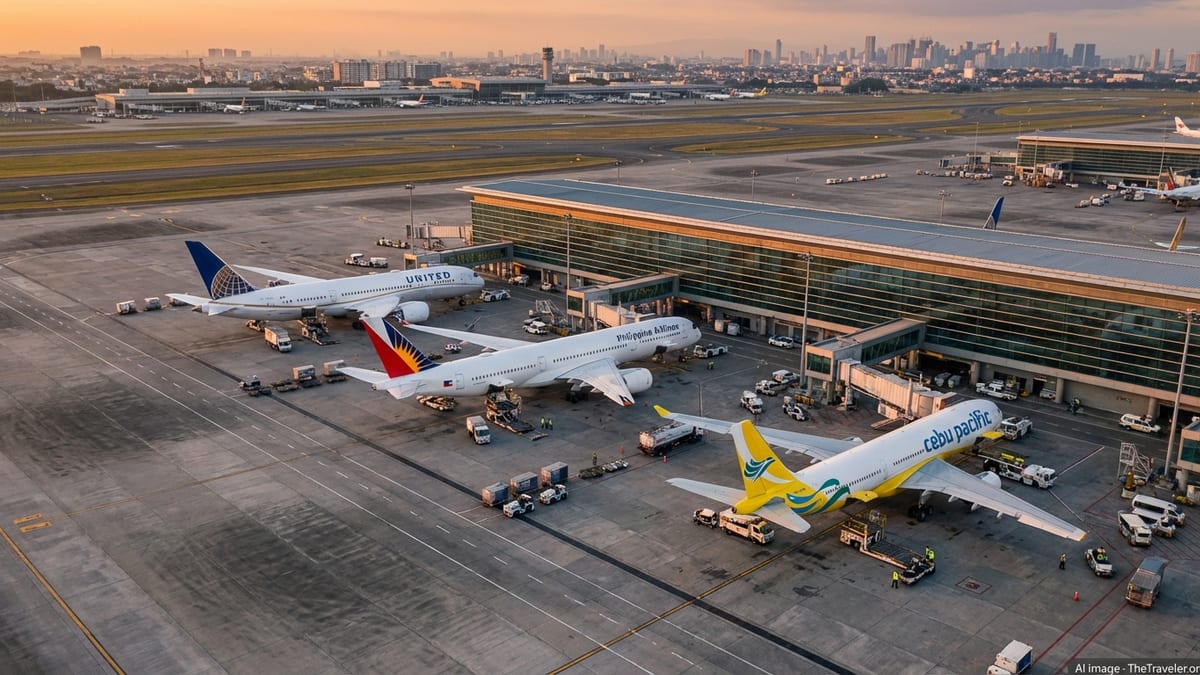
Philippine Airlines Accelerates International Rebound
Philippine Airlines is entering 2026 with one of its most ambitious expansion waves since the pandemic, positioning Manila as a stronger hub between North America, Asia and the Pacific islands. After boosting flights to Australia, North America and key Asian cities for the 2025 holiday season, the flag carrier is now locking in new and returning routes that solidify its role as the country’s primary long-haul connector.
For the peak travel window from mid December 2025 to mid January 2026, the airline doubled its Manila–Perth services from three to six weekly and upgraded Manila–Melbourne to a daily operation, while deploying larger Airbus A330 aircraft on select Manila–Brisbane and Melbourne flights to capture surging demand. Additional capacity was also directed to the United States, with higher frequencies to Seattle joining an already dense North America schedule that includes Los Angeles, San Francisco, New York, Guam and Honolulu.
The next major milestone arrives on March 29, 2026, when Philippine Airlines relaunches direct Manila–Saipan flights. The twice weekly service makes Saipan the carrier’s seventh U.S. destination and strengthens links between the Philippines, the Northern Mariana Islands and onward points in Asia and North America via Manila. Introductory fares and overnight schedules are aimed at both overseas Filipino travelers and leisure passengers seeking beach and diving holidays in the Western Pacific.
Together, the added frequencies and new Saipan service underscore Philippine Airlines’ strategy of using 2026 as a consolidation year, tightening its grip on transpacific and regional markets while capitalizing on sustained demand from overseas Filipino communities and returning tourists.
Cebu Pacific Reshapes Domestic Gateways Around Clark
Low cost giant Cebu Pacific is taking a different path to 2026 growth by reconfiguring its domestic network and decongesting Manila. In a move that will significantly alter how passengers access island destinations, the airline and its turboprop affiliates will shift remaining Manila based turboprop operations to Clark International Airport from March 29, 2026.
The change follows Cebu Pacific’s acquisition of boutique operator AirSWIFT, which currently links Manila and El Nido with up to seven daily ATR flights. Under the new structure, those Manila–El Nido services will be replaced with six daily Clark–El Nido flights, creating a new northern Luzon gateway for Palawan bound travelers. Sister carrier Cebgo will also move to Clark, operating two daily flights to Busuanga and a daily service to Naga, all with turboprop aircraft.
By pivoting turboprop activity away from Manila and into Clark, Cebu Pacific is betting that travelers will accept a slightly longer ground journey in exchange for more reliable operations and growth headroom. The shift is expected to ease pressure on Manila’s congested runway and terminals, while giving Clark a higher profile as a secondary hub for both domestic tourism and potential future international links.
For passengers, the practical impact is a wider spread of options across Luzon. Clark’s catchment area includes Central and Northern Luzon provinces as well as parts of Metro Manila, and new Clark based services shorten travel times for many regional passengers who previously had to backtrack through the capital to reach resort destinations such as Palawan and Busuanga.
United Airlines Bets Big on 2026 Transatlantic and Transpacific Demand
United Airlines is matching the Philippine carriers’ momentum with its own record setting expansion for 2026, particularly across the Atlantic and Pacific. Building on a series of announcements through late 2025 and early 2026, the U.S. major is layering new European, Asian and North American routes onto an already dense long haul network.
From its Newark hub, United will launch new seasonal services in 2026 to Bari in southern Italy, Split on Croatia’s Dalmatian coast, Glasgow in Scotland and Santiago de Compostela in Spain’s Galicia region, while also adding a third daily flight to Tel Aviv. The new routes, many with three to four weekly frequencies, target a mix of leisure demand and diaspora traffic to secondary cities that lack year round nonstops from the United States.
On the Pacific side, the carrier is expanding San Francisco’s role as a bridge to Asia and Oceania. In late 2025 it announced new one stop services from San Francisco to Bangkok and Ho Chi Minh City, operated via Hong Kong with Boeing 787 9 aircraft, and a new nonstop to Adelaide that begins December 11. Those routes will be in full swing for the 2026 peak seasons, alongside an enhanced Manila schedule that includes a second daily flight from San Francisco, tightening United’s grip on the U.S.–Philippines market.
United is also tightening its North American web. The airline has confirmed 14 new North American routes for summer 2026, including daily year round Denver–Albany service launching April 30, 2026, Houston–Hartford flights, and new spokes from Los Angeles. Additional domestic and near international links starting in January and throughout 2026 are designed to feed its long haul hubs and give travelers more one stop options to Europe and Asia.
Chicago and New Hubs Power United’s Domestic Growth
The expansion is not confined to the coasts. United is turning Chicago O’Hare into an even more powerful domestic launchpad in 2026 after securing five additional gates through the airport’s annual reallocation process. That gate win paved the way for 10 new domestic destinations, many of them unique to United from Chicago, such as Santa Barbara, Eugene, Monterey and St. George.
Most of the new O’Hare routes will launch with daily frequencies in spring and summer 2026, complementing seasonal weekend service to leisure hotspots like Aruba, Nassau and Hilton Head. The growth cements United’s position as O’Hare’s largest carrier by seats and underpins thousands of new local hires to support the busier schedule.
In parallel, United’s 2026 winter schedule adds new daily and weekly services from Houston, Newark, Chicago and Los Angeles to 15 domestic and international destinations, including several in Central America. By boosting flights to cities such as Guatemala City and San Salvador while resuming Tel Aviv from Chicago and Washington, the carrier is responding to robust demand for both visiting friends and relatives travel and sun seeking leisure trips.
For smaller markets like Albany, Denver’s new nonstop connection and United’s overall domestic build up translate into more one stop access to far flung points in Europe, Asia and Latin America, reinforcing the airline’s strategy of knitting secondary cities more tightly into its global network.
What the 2026 Route Race Means for Travelers
Taken together, the 2026 plans of Philippine Airlines, Cebu Pacific and United Airlines signal an industry that is no longer merely recovering but actively reshaping traffic flows. Philippine Airlines is leaning into its geographic advantage as a midway point between North America and Southeast Asia, Cebu Pacific is rethinking domestic access through secondary gateways such as Clark, and United is fanning out from U.S. hubs to reach both emerging and established destinations worldwide.
Travelers stand to gain from more nonstop options, better connections and increased competition on key corridors. Additional Manila–North America frequencies and the return of Manila–Saipan make it easier for overseas Filipinos to travel home, while Clark’s new turboprop links open alternative routings for domestic tourists. In the United States and Europe, new United routes to coastal Italian and Croatian cities, to Spain’s pilgrimage heartland and to secondary Scottish and Nordic gateways broaden the range of summer and shoulder season choices.
Yet the wave of new capacity also puts pressure on airlines to fill seats in a market where costs remain high and demand could soften if economic conditions change. For now, though, the 2026 schedules point to a confident bet that travelers will keep chasing new routes, new gateways and new ways of crossing the Pacific and Atlantic as air networks become denser than ever.