

More news on this day
As international travel demand accelerates into 2026, the Philippines is intensifying tourism and aviation partnerships with South Korea, the United States, and Japan, aiming to secure a larger share of long-haul and regional travelers while making it easier for global visitors to connect through Manila and secondary Philippine gateways.
Get the latest news straight to your inbox!
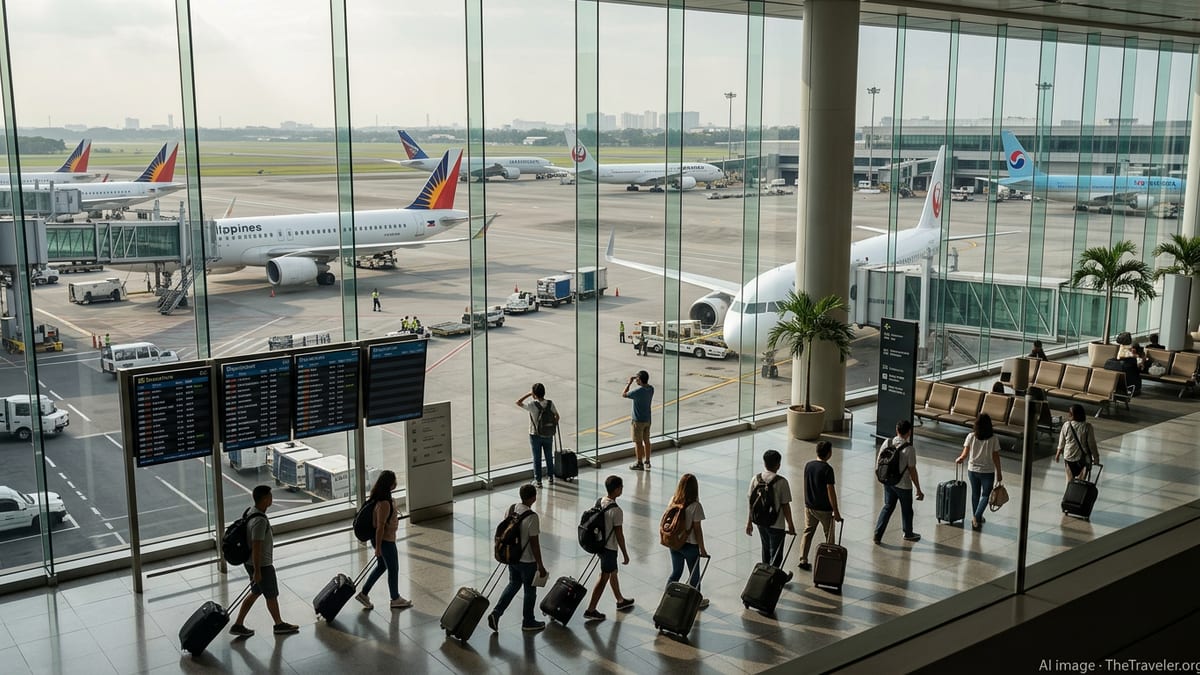
Stronger Air Links As Travel Demand Rebounds
Publicly available aviation and tourism data indicate that international arrivals to the Philippines have been rising steadily since borders fully reopened, helped by a broader recovery in East Asia and the Pacific. South Korea remains the country’s top source market, with more than 1.7 million South Koreans visiting in 2024 according to figures published by the Philippine Bureau of Immigration, underscoring the importance of air connectivity on the Korea–Philippines corridor.
On the Japan route, travel industry reports point to a surge in Filipino visitors to Japanese cities such as Tokyo, Osaka, and Sapporo. Data released by the Japan National Tourism Organization show Filipino arrivals surpassing pre-pandemic levels in 2024, while additional capacity is being prepared for winter routes linking Manila and Hokkaido from late 2025 to early 2026. This two-way growth is reinforcing Manila’s role as both a feeder market for outbound Filipinos and a hub for Japanese visitors exploring Philippine beach and dive destinations.
Links with the United States are also tightening, particularly via transpacific connections through Seoul, Tokyo, and Manila. Tourism Promotions Board documents describe a pipeline of familiarization trips and marketing programs with US-based travel agents and tour operators, designed to package Philippine islands with stopovers in Northeast Asia. For global travelers, this translates to more itinerary choices that combine multiple countries in one long-haul trip.
Industry analysts note that these overlapping aviation networks among the Philippines, South Korea, Japan, and the United States are being built just as travelers show strong interest in multi-country Asia itineraries. Increased seat capacity, seasonal services, and renewed codeshare partnerships are expected to shape fare levels and routing options through 2026.
South Korea Eases Access As Filipinos And Transit Travelers Surge
South Korea has moved aggressively to regain visitors, including travelers from and via the Philippines. Recent coverage in regional outlets highlights extended visa-processing fee waivers for Filipino group tourists, as well as simplified documentation rules that took effect in February 2026. These steps are framed by Korean authorities as tools to keep inbound tourism momentum strong after several record months for regional arrivals.
In addition to group schemes, South Korea continues to expand visa-free and transit programs at key airports. Incheon International Airport offers short-term visa-free stays for eligible third-country transit passengers participating in approved stopover or city tour programs, allowing travelers on routes such as United States–Seoul–Manila or Australia–Seoul–Cebu to spend up to several days in Korea without a traditional tourist visa, provided carrier and routing conditions are met.
Other Korean gateways, including Yangyang and Muan, host targeted visa-free initiatives for group tourists from select markets, among them the Philippines, according to embassy and tourism board advisories. Travel forums and recent travel features emphasize, however, that rules differ by airport and by nationality, and that direct flights and accredited travel agencies are often required to qualify.
For global travelers using the Philippines as a starting point or stopover on Northeast Asia itineraries, these Korean measures can reduce both cost and paperwork. However, requirements remain highly specific, making it important to verify eligibility with airlines and official consular or immigration channels before departure, especially as temporary exemptions and pilot programs are frequently updated.
Japan–Philippines Tourism Corridor Gains Momentum
Japan’s tourism rebound has a clear Philippine dimension. Data cited by Philippine business media show more than 818,000 Filipino visitors to Japan in 2024, driven by demand for seasonal experiences such as cherry blossoms, autumn foliage, and winter sports, as well as pop culture and shopping. Japan’s tourism authorities report double-digit year-on-year growth from the Philippines, reinforcing it as one of the fastest-rising Southeast Asian source markets.
On the inbound side, Japanese travelers are returning to Philippine destinations, particularly beach and diving spots in Cebu, Bohol, Palawan, and Siargao. The Philippine Department of Tourism has highlighted ongoing route-development efforts with Japanese and Philippine carriers, with additional flights connecting Tokyo and Osaka to Manila and Cebu. These services are designed to offer more weekend-friendly schedules and better links to domestic flights onward to resort islands.
Diplomatic engagement has run in parallel with aviation cooperation. Reports on high-level visits between Manila and Tokyo describe tourism and air connectivity as key pillars of the broader economic relationship, alongside infrastructure and investment projects supported by Japanese agencies. Engagements with Japanese airports and travel associations are framed as efforts to maintain strong seat capacity and marketing support for Philippine destinations in regional brochures and booking systems.
For international travelers, the strengthened Japan–Philippines corridor creates more options for open-jaw itineraries, such as flying into Tokyo and out of Manila, or combining Okinawa and Cebu on a single trip. Travelers can expect ongoing adjustments to schedules and seasonal routes, especially around Japan’s peak travel windows and the Philippine dry season from roughly December to May.
United States Market And Long-Haul Partnerships
The United States remains one of the Philippines’ most valuable long-haul tourism markets, supported by a large Filipino diaspora and strong business ties. Public documents from the Tourism Promotions Board detail joint campaigns with US travel associations and tour operators, including familiarization trips showcasing Philippine dive sites, heritage cities, and emerging ecotourism areas. These initiatives are intended to translate airline capacity into higher visitor numbers and longer stays.
While nonstop flights between the Philippines and the United States continue to form the backbone of transpacific travel, connecting services via Japan and South Korea are a major part of the market. US travelers increasingly mix stays in Tokyo, Seoul, or Busan with time in Manila, Cebu, or Boracay, taking advantage of competitive fares and dense schedules offered by Asian and Philippine carriers.
Analysts note that broader geopolitical coordination among the United States, Japan, and South Korea has indirectly supported aviation and tourism cooperation, encouraging closer regulatory dialogue and joint promotion of safe and seamless travel corridors. For the Philippines, positioning itself as a friendly, English-speaking hub in this triangle has become a key narrative in tourism branding campaigns targeting US and Canadian travelers.
For global visitors, this means that itinerary planning tools and online booking platforms are increasingly surfacing multi-country options that stitch together US gateways, Northeast Asia hubs, and Philippine islands. Travelers who are flexible on dates and routings may find attractive combinations, especially outside major holiday peaks.
What Global Travelers Should Watch In 2026
For visitors planning trips that include the Philippines, South Korea, Japan, and the United States in 2026, several trends stand out. First, travel demand across these markets is robust, which can push up prices in peak periods but also incentivize airlines to add capacity, launch seasonal routes, and experiment with stopover products. Monitoring schedule updates in the months before departure can reveal new options not available when trips are first conceived.
Second, entry rules remain dynamic. South Korea’s evolving mix of fee waivers, simplified applications, visa-free transit, and group programs, as well as Japan’s ongoing discussions around streamlined procedures for certain travelers, point to a policy environment that is generally supportive of tourism but subject to frequent fine-tuning. Global travelers planning to route through Manila, Incheon, Narita, or Haneda are advised to consult official government and airline advisories close to their travel dates.
Third, regional tourism meetings, including recent ASEAN-plus dialogues involving China, Japan, and South Korea held in Cebu in early 2026, have reaffirmed priorities such as improving connectivity, promoting multi-destination travel, and accelerating digitalization in tourism services. These policy directions suggest continued investment in airports, route development, and cross-border marketing, all of which are likely to benefit visitors considering complex itineraries.
Finally, sustainability and visitor management are emerging as shared themes. Philippine tourism agencies increasingly highlight community-based tourism and nature conservation, while partners in Japan and South Korea promote travel to lesser-known regions beyond marquee cities. For travelers, this can translate to a broader range of authentic experiences, provided they are prepared to look beyond the most familiar destinations and to keep a close eye on evolving transportation options that make such side trips feasible.