

More news on this day
The Philippine government is moving to soften the impact of rising fuel costs on travelers by proposing temporary cuts to airport fees ahead of the Holy Week rush, a peak period for domestic and international flights across the country.
Get the latest news straight to your inbox!
Government Weighs Targeted Airport Fee Reductions
Transportation officials said they are reviewing specific airport charges in an effort to keep airfares from climbing sharply during Holy Week, when millions of Filipinos travel to their home provinces or take vacations. Acting Transportation Secretary Giovanni Lopez told reporters in Manila that his department has asked the Civil Aviation Authority of the Philippines to study temporary reductions in landing and takeoff fees, among other aeronautical charges, at key gateways.
Lopez said the proposal is designed as a short-term relief measure that can be implemented quickly if approved by regulators, with the goal of moderating ticket prices on both domestic and international routes. The study is expected to look at which fees can be trimmed without compromising safety, maintenance or essential airport services, and how long any discount scheme could remain in place during the peak travel season.
Officials indicated that the recommendations could be ready for board-level discussion as early as next week, leaving a narrow but workable window for implementation before Holy Week departures begin to crest. The Department of Transportation has framed the review as part of a broader package of responses to higher fuel prices that are feeding through to transport costs nationwide.
Airlines Under Pressure From Fuel and Airport Charges
The proposed fee cuts come amid mounting pressure on carriers, which have argued that they are absorbing not just volatile fuel costs but also a series of higher airport-related charges. Industry groups have pointed to increases in passenger service charges, terminal fees and aeronautical fees at several airports over the past two years, warning that these have narrowed margins and left airlines with little choice but to pass some costs on to passengers.
Philippine carriers have recently urged the government to address what they describe as an uneven cost burden, saying that airport fees and infrastructure constraints contribute significantly to elevated domestic fares. They have also noted that caps on fuel surcharges limit their ability to fully recover higher jet fuel expenses, especially on thinner provincial routes where competition is limited and aircraft often fly with spare capacity.
A temporary reduction in airport fees for the Holy Week travel window would not eliminate these pressures, but it could provide airlines with room to keep base fares and surcharges relatively stable at a time when demand is seasonally strong. Analysts say the move could also help carriers maintain high load factors during the period, supporting both revenues and operational efficiency.
What the Plan Could Mean for Travelers
For travelers, any approved airport fee cuts are likely to show up indirectly in the form of more stable or slightly lower all-in ticket prices compared with what would otherwise be expected during a peak holiday period. While airlines ultimately decide how much of their cost savings to pass on to passengers, transportation officials have made clear that the intended beneficiaries of the proposal are ordinary Filipino travelers facing tighter budgets.
In practice, the size of any reduction per ticket would depend on how steep the temporary discounts are, which airports are covered, and whether the relief applies across the board or only on certain routes and timeframes. Even modest reductions could make a difference for families booking multiple tickets or for overseas Filipino workers flying home for Holy Week on limited budgets.
Travel advisers say passengers should still expect elevated demand and busy terminals, but they may see more competitive promotional fares and fewer last-minute price spikes if the cuts are approved in time. They recommend booking early, monitoring airline announcements and being flexible with travel dates within Holy Week to capture any lower-fare options that emerge.
Balancing Revenue Needs With Public Relief
Any decision to trim airport fees, even temporarily, poses a delicate balancing act for the government and airport authorities, which rely on these charges to fund operations, upgrades and safety-critical infrastructure. The Civil Aviation Authority operates dozens of airports across the archipelago, many of which require significant investment to extend runways, modernize terminals and improve navigation systems.
Officials have acknowledged that revenue sacrifices tied to Holy Week fee discounts would need to be carefully calibrated and time-bound so as not to derail ongoing improvement projects or compromise service standards. They argue, however, that the short-term loss could be offset in part by higher passenger volumes if more people choose to fly because fares remain within reach.
The debate also comes as other policy measures move through the pipeline, including legislative efforts to reform or even abolish certain travel-related taxes in order to spur tourism and make air travel more accessible. These overlapping initiatives underscore the government’s broader attempt to reconcile fiscal realities with the political and economic imperative of keeping travel affordable for a wide swath of the population.
Holy Week Travel Rush Tests Airport Readiness
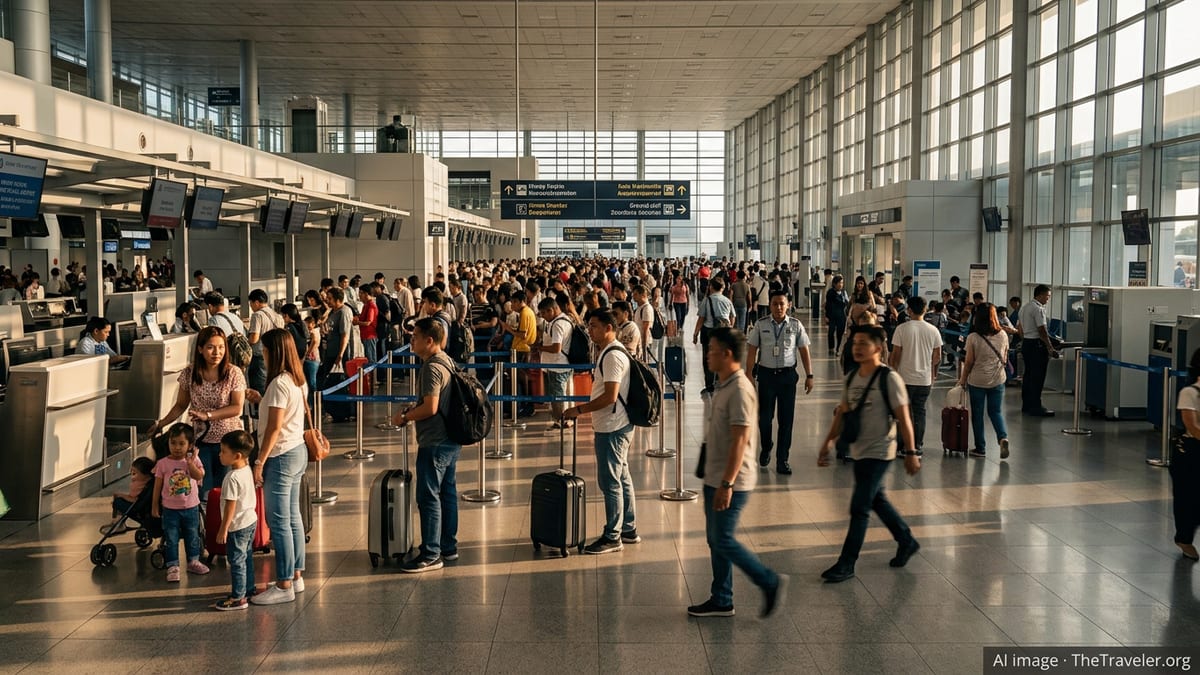
Holy Week is traditionally one of the busiest travel periods of the year in the Philippines, with terminals in Manila, Cebu, Clark and major provincial hubs experiencing sharp spikes in passenger traffic. Authorities are preparing for a renewed surge this year as demand continues to recover and more Filipinos take advantage of eased health restrictions and growing route networks.
The proposed fee cuts are unfolding alongside more familiar preparations such as additional security deployments, extended terminal operating hours, and advisories urging passengers to arrive early for their flights. Transportation and aviation officials are also coordinating with airlines to manage runway slots and gate assignments, aiming to minimize delays that tend to worsen when flight schedules are tightly packed.
How quickly the airport fee proposal moves from study to implementation will help determine its real-world impact on Holy Week travelers. If approved in the coming days, the initiative could become a visible test of the government’s pledge to share the burden of higher fuel costs with both the aviation industry and the flying public, offering at least modest relief as millions of Filipinos take to the skies for the peak holiday exodus.