

More news on this day
The Philippines is entering 2026 with strengthening visitor numbers from South Korea, the United States, Japan, Canada, Australia and the United Kingdom, as recent data and forecasts point to renewed appetite for the country’s beaches, cities and islands among long-haul and regional travelers.
Get the latest news straight to your inbox!
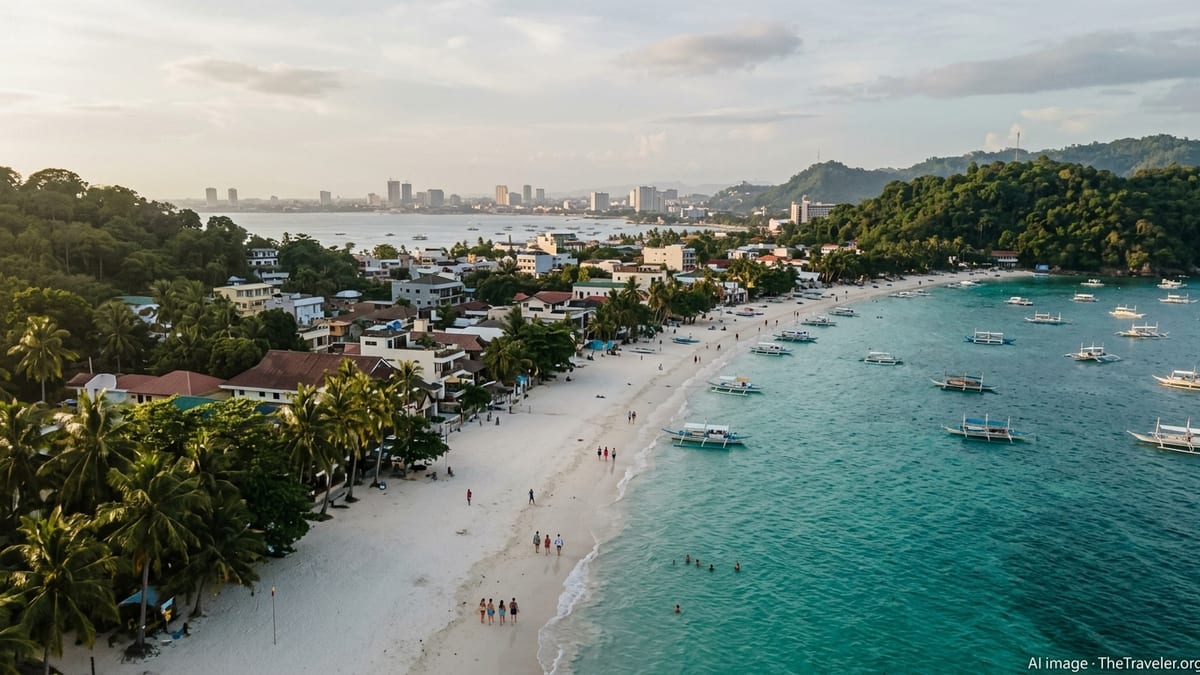
Key Markets Power the Philippines’ Tourism Rebound
Publicly available tourism statistics show that South Korea has retained its position as the Philippines’ largest foreign source market since before the pandemic and continued to lead in 2024 and early 2025, accounting for roughly a quarter of all international arrivals. Department of Tourism data reported by Philippine media for 2024 and the opening months of 2025 indicate that South Korean visitors surpassed 1.5 million in 2024 and remained the single biggest contributor to inbound numbers in 2025, reflecting strong air connectivity and high demand for beach and diving holidays.
The United States has consistently ranked second, with nearly one million American arrivals reported in 2024 and several hundred thousand more in the first part of 2025. Coverage in business and mainstream outlets notes that US travelers are drawn both by leisure options and the country’s large Filipino diaspora, which underpins steady visits to Manila, Cebu and other urban hubs, alongside side trips to resort areas.
Japan, Canada, Australia and the United Kingdom round out the current core markets driving the rebound. Tourism summaries for 2024 show Japan in the top four by visitor volume, while Australia and Canada delivered solid growth and together contributed almost half a million visitors. The United Kingdom, although smaller in absolute numbers, remains an important long-haul market with relatively high per-trip spending, according to international tourism market analyses.
National tourism overviews for 2024 estimate that travel and tourism contributed close to 9 percent of Philippine gross domestic product, still below 2019 levels but improving, with foreign visitor spending passing the equivalent of 13 billion US dollars. Analysts suggest that if present trends from these six key markets hold through 2026, the Philippines could edge closer to or even exceed its pre-pandemic benchmarks.
Beaches, Cities and Islands at the Center of Visitor Demand
Reporting across regional and global travel publications indicates that coastal destinations remain the main draw for visitors from South Korea, the United States, Japan, Canada, Australia and the United Kingdom. Well-known islands such as Boracay, Palawan and Siargao continue to feature prominently in booking trends and destination lists, with particular interest in white-sand beaches, water sports and diving sites.
At the same time, interest in urban and cultural experiences is rising. Manila, Cebu and Davao are increasingly promoted as twin-center options, combining city breaks with onward travel to nearby islands. Tourism profiles highlight Manila’s shopping districts and heritage sites, Cebu’s mix of city life and easy access to Bohol and nearby marine reserves, and Davao’s role as a gateway to Mindanao’s highland landscapes.
Secondary and emerging destinations are also benefiting from the broader recovery. International features in 2025 spotlighted areas such as Bicol for volcano and coastal tourism, Northern Luzon for mountain scenery and heritage towns, and lesser-known islands that appeal to repeat visitors from markets like South Korea and Australia seeking quieter alternatives to the country’s headline resorts.
With coastal tourism estimated to contribute about a quarter of all tourism revenue, policymakers and industry groups are focusing on managing demand in fragile island environments while dispersing visitors to a wider set of locations. This is shaping investment in airports, roads and port facilities intended to make more of the archipelago accessible to foreign travelers by 2026.
Infrastructure and Airport Upgrades Ahead of 2026
Transport infrastructure developments are a central element of the Philippines’ tourism strategy as visitor volumes rise. Public documentation on aviation projects shows continued upgrades at Ninoy Aquino International Airport in Manila, with a private concessionaire overseeing improvements to terminal operations and preparations for higher passenger throughput in the lead-up to major regional meetings scheduled in 2026.
Other airports serving tourism hotspots are also seeing investment. Official and industry reports highlight ongoing work at Mactan-Cebu International Airport under new private management, domestic airport projects such as the facility in Bukidnon that is expected to handle larger aircraft by around 2026, and expansion and modernization plans in secondary gateways including Bicol and Siargao to accommodate more island-bound flights.
On the ground, road and expressway projects link urban centers with surrounding provinces and port areas. Planned and ongoing expressways around Manila, in North and Central Luzon, and near Davao are designed to shorten land travel times from airports to tourist destinations, a factor viewed by analysts as critical for attracting time-sensitive travelers from North America, Europe and East Asia.
While not all projects will be complete by the start of 2026, a significant share of upgrades is scheduled to come online in late 2025 and throughout 2026. Travel industry observers expect these incremental improvements to make multi-stop itineraries within the country more feasible, particularly for visitors from the United States, Canada, the United Kingdom and Australia who typically have longer stays and higher per-trip budgets.
Entry Rules, Routes and Practicalities for 2026 Trips
Publicly available government information indicates that visa-free entry policies for many nationalities remain an important competitive advantage for the Philippines in 2026. Citizens of a broad list of countries, including the United States, most of Europe, Australia, Canada, Japan, South Korea and the United Kingdom, are generally able to enter for short tourist stays without a visa, subject to passport validity and onward travel requirements.
For travelers from India and select other markets, regional reporting notes that visa facilitation arrangements tied to existing visas from economies such as the United States, Japan, Australia, Canada, the Schengen Area, Singapore and the United Kingdom have been introduced or expanded, allowing qualifying visitors to enter the Philippines visa-free for limited periods. These measures are positioned as part of a wider effort to simplify access and tap into growing middle-class travel demand across Asia.
Airline and tourism industry coverage for 2024 and 2025 points to a gradual restoration of pre-pandemic capacity on routes from Seoul, Tokyo, Osaka, Sydney, Melbourne, Vancouver, Toronto, Los Angeles, San Francisco, New York and London, with both Philippine and foreign carriers operating key links. Additional seasonal and charter services are expected to respond to demand from South Korea and Japan in particular, reflecting their role as leading source markets.
Travelers planning 2026 trips are being encouraged by tour operators and travel media to monitor airline schedules and fare trends closely, as adjustments to route networks and the redistribution of some island-bound flights to secondary hubs such as Clark can affect connections to resort destinations. Observers emphasize the benefit of allowing additional time between international and domestic legs, especially when combining multiple islands in a single itinerary.
What International Visitors Should Watch in 2026
Looking ahead through 2026, analysts and tourism stakeholders are watching several themes that could shape the experience of visitors from South Korea, the United States, Japan, Canada, Australia and the United Kingdom. One is pricing and value, particularly in headline destinations such as Boracay, where local debates over fees and carrying capacity have encouraged some travelers to consider alternatives like Bohol and parts of Palawan.
Another is sustainability and climate resilience. The Philippines is exposed to typhoons and changing weather patterns, and industry commentary underscores the importance of flexible planning, travel insurance and awareness of seasonal conditions, especially for trips scheduled during the wetter months. At the same time, community-based and eco-focused projects are being promoted as ways to channel tourism benefits to local residents while protecting marine and coastal ecosystems.
The broader competitive landscape in Southeast Asia also matters. Neighboring countries such as Thailand, Indonesia and Vietnam have launched aggressive campaigns to capture long-haul markets with direct flights, digital nomad schemes and beach-focused marketing, prompting Philippine stakeholders to refine their own branding around islands, culture and English-speaking hospitality.
Despite these pressures, the combination of a recovering global travel market, infrastructure upgrades, relatively open entry rules and strong interest from core markets suggests that the Philippines is set to remain a prominent option for travelers in 2026. For visitors from South Korea, the United States, Japan, Canada, Australia and the United Kingdom, the focus is increasingly on stitching together beach, city and island experiences into varied itineraries that make the most of the country’s diverse geography.