

More news on this day
The Philippines’ Department of Tourism is spearheading a unified national drive to accelerate cruise tourism growth, tying together new port infrastructure, streamlined operations and inter-agency coordination to position the archipelago as a leading cruise destination in Asia.
Get the latest news straight to your inbox!
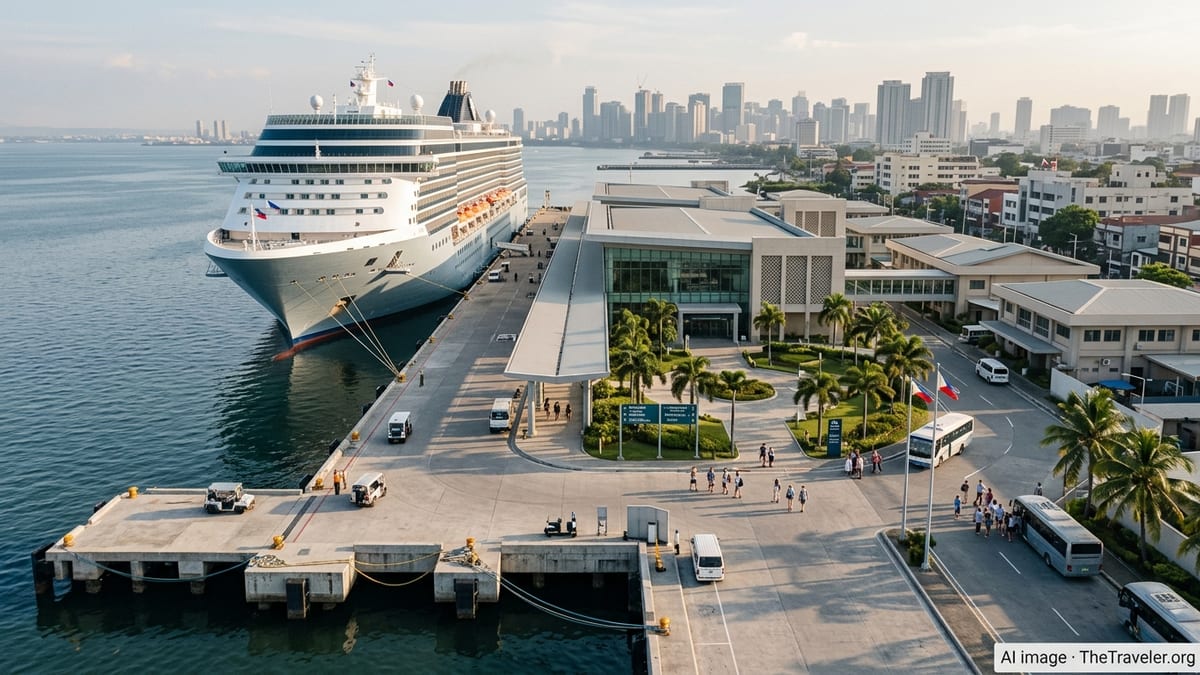
National Strategy Targets Stronger Cruise Tourism Growth
Publicly available information from the Department of Tourism shows that cruise development is now embedded in the National Tourism Development Plan 2023 to 2028 and the National Cruise Tourism Development Strategy and Action Plan. These frameworks identify cruise tourism as a high-potential segment that can disperse visitors across secondary destinations and extend stays beyond traditional resort hubs.
Reports indicate that the Philippines handled around 100 cruise calls in 2024 and is targeting a roughly 30 percent increase in ship arrivals in 2025, building on renewed interest from regional and global cruise lines. Forecasts released by the Department of Tourism point to at least 136 cruise calls through the end of 2025 and as many as 127 confirmed calls already lined up for 2026, underscoring operators’ confidence in the market.
Government data and industry coverage further show that cruise passenger numbers are rebounding quickly. The Philippine Ports Authority recorded a more than 60 percent jump in cruise passenger arrivals in 2024, to over 140,000 travelers, with projections that volumes could exceed 185,000 passengers in 2025. Officials have identified cruise tourism as a key tool for increasing foreign arrivals and visitor spending following the pandemic downturn.
The Department of Tourism has linked the cruise strategy to broader national goals, including job creation, regional development and higher tourism receipts. By aligning investment priorities and regulatory reforms around cruise ports, the agency aims to strengthen the country’s position amid intensifying competition from neighboring Southeast Asian destinations.
Major Port Investments Anchor the Infrastructure Push
The unified drive is anchored in a wave of new and upgraded port projects tailored to cruise operations. Philippine Ports Authority updates highlight ongoing or completed cruise-focused infrastructure in destinations such as Coron in Palawan, Aklan, Puerto Galera in Oriental Mindoro, Camiguin and Jubang Port in Dapa, Surigao del Norte. These facilities are being equipped with dedicated berths, improved passenger terminals and upgraded safety and navigation systems to handle larger international vessels.
Published coverage on port development shows that the government is also advancing plans for a dedicated international cruise terminal on the shores of Manila Bay, with an estimated project cost in the multibillion-peso range. The facility is envisioned to serve as the country’s primary home port for international cruises, expanding the capacity of Manila South Harbor and addressing long-standing concerns over limited amenities for passengers who remain on board during port calls.
Regional gateways are likewise part of the infrastructure push. Projects in Puerto Galera and other resort destinations are aimed at tapping strong demand for beach, diving and island-hopping itineraries, while investments in ports in Northern Philippines seek to open new cruise corridors closer to East Asian markets. An emerging cruise terminal in Legazpi, Albay, intended to accommodate large vessels with a modern causeway and passenger complex, is expected to position the Bicol region as another marquee stop for international ships.
Government planning documents and international assessments of the maritime sector note that these port projects are being framed within a broader blueprint for resilient, efficient and climate-aware port infrastructure. This includes integrating disaster-resilient design standards, enhanced connectivity with airports and road networks, and digital tools to improve vessel scheduling and passenger handling.
Streamlined Operations and Inter-Agency Coordination
The Department of Tourism’s unified drive extends beyond construction to the way cruise tourism is managed across agencies. Publicly available information on recent policy steps shows that the government plans to reconstitute the Cruise Tourism Development Committee in 2026 to strengthen coordination among entities such as the Department of Tourism, Philippine Ports Authority, Maritime Industry Authority, Bureau of Quarantine, and local governments.
According to published coverage, this inter-agency body is tasked with implementing the National Cruise Tourism Development Strategy, harmonizing port standards and developing consistent passenger service protocols. The aim is to reduce bottlenecks in ship clearances, align health and safety procedures, and provide cruise lines with a predictable regulatory environment when planning itineraries and home-porting decisions.
The Department of Tourism is also using policy tools to lower entry barriers for cruise visitors. Official releases indicate that the Philippines launched a targeted visa waiver initiative for eligible cruise passengers, aligned with the cruise development strategy and the goal of increasing foreign tourist arrivals. This mechanism is designed to simplify formalities for short-stay passengers who disembark for shore excursions, particularly in ports without large immigration facilities.
Closer coordination with the Department of Transportation, the Tourism Infrastructure and Enterprise Zone Authority and the Philippine Coast Guard is reportedly being used to align maritime safety rules, navigational standards and tourism-oriented investments. Recent high-level meetings among these agencies and the ports authority have focused on synchronizing timelines for port upgrades, ship deployment and marketing campaigns to maximize the impact of new infrastructure.
Rising Global Profile Backed by Awards and Market Interest
The Philippines’ renewed emphasis on cruise tourism is being reinforced by growing recognition in regional industry circles. The country was named Best Ports of Call at the 2024 Asia Cruise Awards and had earlier been recognized as Asia’s Best Cruise Destination, according to industry event coverage and Department of Tourism announcements. These accolades are being used as a springboard for international marketing under the country’s “Love the Philippines” branding.
Industry reports note that the awards reflect positive feedback on port calls to destinations such as Manila, Puerto Princesa and Boracay, which remain among the country’s busiest cruise gateways. Operators have been highlighting the Philippines’ combination of urban experiences, heritage sites and tropical landscapes, as well as the potential for multi-port itineraries that connect several islands in a single voyage.
Cruise Industry News and other trade outlets report that the Department of Tourism is working to diversify the cruise product to appeal to both expedition and family-oriented markets. Expedition and small-ship operators are being encouraged to develop routes into more remote islands and marine protected areas, while mainstream lines are being courted to deploy larger family-friendly vessels once port depth, berthing capacity and shore-side facilities are upgraded.
Market projections compiled by government and industry sources indicate that, if targets for 2025 and 2026 are met, the Philippines could record its largest number of cruise calls and passengers in more than a decade. This would narrow the gap with established cruise hubs in the region and strengthen the case for further investment in home-porting, provisioning and ship maintenance services.
Opportunities and Challenges for Coastal Communities
The unified cruise tourism drive is expected to have direct implications for coastal communities across the archipelago. By dispersing cruise itineraries beyond a few flagship destinations, the Department of Tourism aims to spread tourism revenue to smaller ports and nearby towns, including local tour operators, transport providers, restaurants and craft producers.
Local government planning documents and tourism development plans highlight opportunities to integrate cruise passengers into existing tourism circuits, such as heritage walks, reef and wreck diving, culinary tours and community-based ecotourism. These initiatives are being framed as ways to encourage longer stays, repeat visits and more even distribution of tourism income within regions.
Analysts point out that rapid cruise expansion also presents challenges. Port communities are under pressure to upgrade waste management, crowd control and environmental protection measures, particularly in fragile marine and island ecosystems. National strategies emphasize the need to align cruise growth with sustainability goals, including limits on visitor numbers in sensitive areas and stricter compliance with maritime emissions and wastewater rules.
As the Department of Tourism and partner agencies move to unify their efforts, observers note that consistent implementation, continued investment and responsive local planning will be crucial. How effectively the Philippines manages these factors over the next several years is likely to determine whether its ambitious cruise tourism targets translate into long-term benefits for destinations and residents along its extensive coastline.