

Phnom Penh is a city where your choice of hotel shapes your entire experience. The Cambodian capital sprawls along the Mekong and Tonle Sap rivers, with distinct districts that cater to very different kinds of travelers.
From riverfront heritage hotels with colonial charm to sleek serviced apartments in expat-heavy neighborhoods, and from backpacker hostels near the markets to family resorts with pools hidden behind leafy walls, where you stay will influence how you move around, what you eat, and how you see the city.
Understanding Phnom Penh’s Layout and Hotel Scene
Phnom Penh’s accommodation is concentrated in a handful of central districts that radiate out from the Royal Palace and the riverfront. The Daun Penh district forms the historic core, with the palace, National Museum, riverside promenade and many of the city’s classic hotels.
South of here, Chamkar Mon and its BKK neighborhoods are the modern, expat-heavy heart of the city, packed with mid-range and upscale options, serviced apartments, and boutique hotels with pools. Further out, areas around the Russian Market and Olympic Stadium offer better value and more local atmosphere, though at the cost of longer tuk-tuk rides to major sights.
For visitors, this means there is no single “best” place to stay, but rather a set of trade-offs between convenience, character, nightlife, comfort and budget. Riverside and the Royal Palace area deliver proximity to major attractions and sweeping river views, but they are also the busiest, most touristy parts of town.
If you are still deciding whether the city fits your travel style, this overview of Phnom Penh worth visiting helps clarify expectations. BKK1 and neighboring Bassac focus on lifestyle, dining and comfort, while the Russian Market and Central Market areas are about value and local life. Understanding how these pockets differ will help you choose the right hotel for your travel style.
The city’s transport network makes moving between districts fairly easy. Tuk-tuks, ride-hailing apps and inexpensive city buses mean you are rarely more than 20 minutes from the palace or riverside, even if you pick a more residential base. But Phnom Penh’s intense heat, patchy sidewalks and frequent traffic jams make it worth paying attention to what you can realistically walk to from your hotel, especially if you plan to sightsee on foot.
Riverside & Royal Palace: For First-Time Visitors and View Seekers
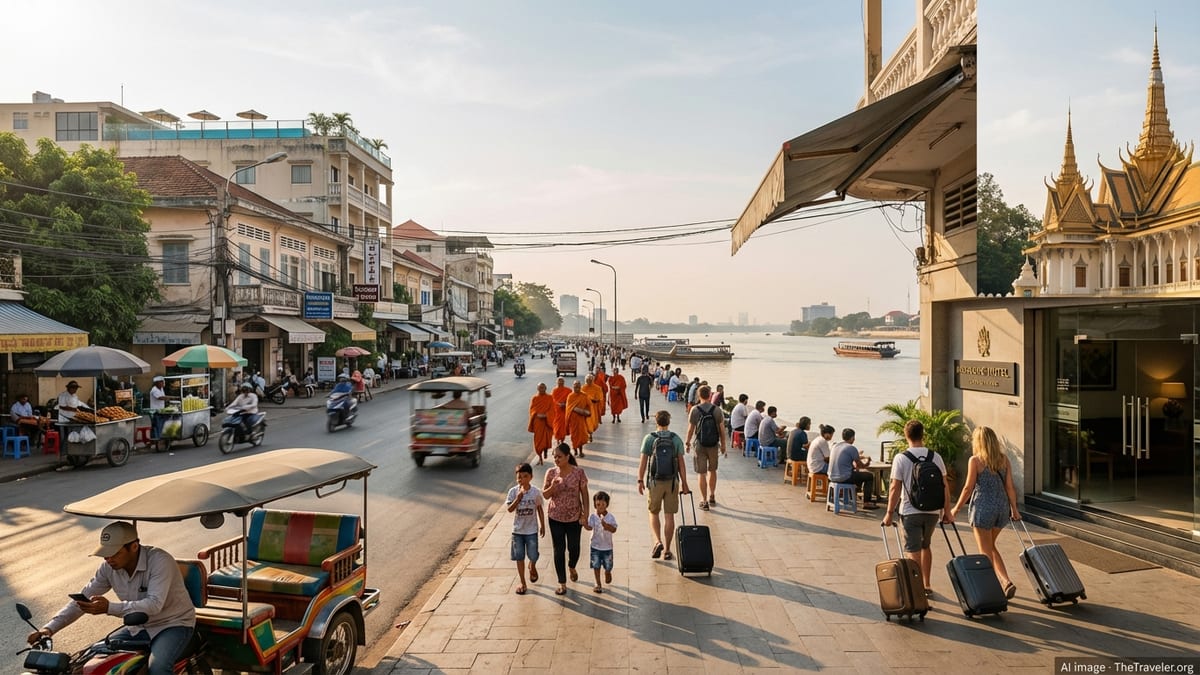
Riverside, centered on Sisowath Quay and the promenade that runs along the Tonle Sap River, is the most instantly recognizable part of Phnom Penh. This is where locals gather for evening walks, where street vendors sell grilled skewers and fresh sugarcane juice, and where many first-time visitors book their hotel. Staying here puts you within walking distance of the Royal Palace and Silver Pagoda, the National Museum, Wat Phnom, the Night Market, and the departure points for short sunset boat cruises on the river.
Accommodation along the riverfront runs the gamut from simple guesthouses tucked down side streets to chic boutique hotels with rooftop pools and sky bars looking out over the confluence of the rivers. In the blocks immediately facing the water, you will pay a premium for the view and the address. Choosing accommodation becomes easier once you understand the main things to do in Phnom Penh and how they are spread across the city. Step a few streets inland and prices generally fall, while noise from bars and traffic tends to drop as well. This pattern is important if you want the convenience of the area without the late-night soundtrack.
The mood of the riverfront changes dramatically over the course of a day. Early mornings can feel almost meditative, with joggers on the promenade and saffron-robed monks collecting alms. By late afternoon, cafes fill, the air cools slightly and the river reflects the setting sun. After dark, nightlife takes over in pockets of the district, especially near streets with backpacker hostels and bars. Solo travelers who enjoy a social scene may appreciate staying close to this energy, while light sleepers and families might choose a hotel farther south near the palace or on quieter streets behind the main road.
Riverside and the Royal Palace area suit short stays and classic sightseeing. If you have one or two nights in Phnom Penh and want to step out of your hotel and immediately feel the city’s pulse, this is the best base. It is also a strong choice for travelers booking organized tours, as many operators offer pickup from central hotels in this corridor. The main drawbacks are higher costs, aggressive touts in some riverfront sections, and a more touristy feel than other neighborhoods.
BKK1 & Bassac: For Food Lovers, Expats and Longer Stays
Southwest of the Royal Palace, the BKK1 neighborhood and the adjacent Bassac area form the modern, cosmopolitan core of Phnom Penh. This part of Chamkar Mon district is where many embassies, NGOs and international companies are based, and it has grown into the preferred area for expats and longer-term visitors. For travelers, that translates into an abundance of stylish cafes, brunch spots, cocktail bars, yoga studios and international restaurants, along with a broad spectrum of hotels and serviced apartments.
BKK1 in particular is known for its tree-lined streets, mid-rise apartment blocks and boutique hotels that hide leafy courtyards and swimming pools behind high walls. Compared with Riverside, it feels less hectic and more residential, yet you are still only a short tuk-tuk ride from the palace or the river. Side streets around the Independence Monument and the so-called “308” cluster near the river are especially popular for dining and nightlife, making this an ideal base if your idea of a good evening involves craft coffee, wine bars or contemporary Cambodian cuisine.
Accommodation in BKK1 and Bassac ranges from international chains and design-forward boutique hotels to more modest guesthouses and serviced apartments aimed at digital nomads. Many properties emphasize amenities that appeal to repeat visitors and remote workers, such as reliable high-speed Wi-Fi, co-working style lounges, fitness rooms and generous rooms equipped with kitchenettes. For families, BKK1 offers several kid-friendly boutique hotels with pools and interconnecting rooms, all within a short walk of familiar food options and convenience stores.
The main trade-off when staying in BKK1 or Bassac is that you lose the ability to walk to most major tourist sights. The Royal Palace, the riverfront and museums sit a five to fifteen minute ride away depending on traffic. For many visitors, this is a small price to pay for the cleaner, quieter streets, greater sense of security and higher standard of accommodation commonly found here. If you are planning a visit of several days or more, or you simply value comfort and good dining over immediate proximity to the river, this is one of the best areas to book a hotel.
Central Market & Daun Penh Backstreets: For Shoppers and Urban Explorers
Just northwest of the palace and riverfront, the area around Central Market (Psar Thmei) and the backstreets of Daun Penh offers a more balanced, local-feeling base. The iconic yellow Central Market hall is one of Phnom Penh’s most recognizable landmarks, and its surrounding streets are packed with shops selling everything from jewelry and electronics to textiles and household goods. Nearby Orussey Market adds another layer of bustle, with a more local clientele and a maze of narrow alleys and stalls.
Hotels in this zone tend to be mid-range city properties and smaller boutique hotels tucked onto side streets. Many cater to business travelers and domestic tourists, with practical amenities like meeting rooms, pools and breakfast buffets. Compared with Riverside, this area is less focused on nightlife and more on day-to-day commerce, which can make it a good compromise for travelers who want to be central without being right in the riverfront tourist bubble.
From a practical perspective, staying around Central Market gives you quick access to both the historic core and to key transport routes. Major boulevards radiating from this area make it straightforward to reach BKK1, the Russian Market, or the city’s bus lines, and you can still walk or take a short tuk-tuk ride to the Royal Palace, Wat Phnom and the river. Side streets here can feel chaotic, with dense traffic, overhead wiring and constant activity, but they also offer a more authentic glimpse of everyday Phnom Penh.
This district suits travelers who enjoy exploring markets, taking photos of street life and trying basic local eateries without straying too far from a comfortable hotel. Shoppers will appreciate being able to dip in and out of Central Market during the day, returning to their room to rest or cool off. If you want a central address, reasonable prices and a more local flavor than Sisowath Quay, consider the areas behind the riverfront and around the big markets.
Russian Market & Southern Districts: For Budget Travelers and Local Vibes
South of BKK1, the neighborhoods around the Russian Market (Toul Tom Poung) and onward toward BKK2, BKK3 and the Olympic Stadium provide some of the best-value accommodation in Phnom Penh. Once firmly backpacker territory, these districts have evolved into mixed residential and commercial areas that blend expat hangouts with everyday Cambodian life. Streets around the Russian Market in particular host a growing collection of cafes, bars and small hotels, while still feeling very different from the polished core of BKK1.
Hotels and guesthouses here are generally more affordable than those closer to the river or in BKK1. Budget travelers will find simple rooms above cafes, small boutique properties with compact pools, and serviced apartments aimed at longer stays. The trade-off for these lower rates is distance. Most major tourist sights sit a fifteen to twenty minute tuk-tuk ride away, and walking is not especially pleasant in the heat, particularly on busy roads leading north.
For travelers who prioritize budget and local atmosphere over postcard views, these neighborhoods can be rewarding. The Russian Market itself is a sprawling, semi-covered complex where stalls sell clothing, souvenirs, fabrics and household goods, while food courts and side streets offer an array of Cambodian dishes. Nearby streets are filled with small eateries, fruit sellers and workshops. In the evening, pockets of nightlife and live music emerge, but the character is more low-key than the riverside bar strip.
This part of town is especially appealing if you have already visited Phnom Penh before, or if you are spending enough time in the city to settle into a routine. Digital nomads and long-term visitors often base themselves here to enjoy lower rents and a more grounded sense of place. Just be aware that not every street feels equally pleasant after dark, and that traffic can be heavy during rush hours. When booking, aim for well-reviewed properties on quieter side streets rather than main thoroughfares.
Best Areas for Different Travel Styles
Because Phnom Penh’s districts each have distinct personalities, it helps to match your accommodation choice to the kind of trip you are planning. A couple on a short city break will have different needs from a family seeking a pool and kid-friendly facilities, or a solo backpacker focused on cost and nightlife. Thinking in terms of travel style will make all the hotel options easier to navigate.
If this is your first time in Cambodia’s capital and you have only a night or two, the Riverside and Royal Palace area remains the most straightforward base. You can see many of the classic sights on foot, easily join boat cruises and evening walks along the river, and book tours that include pickup at central hotels. This is also where you will find some of the city’s legacy properties, from historic hotels with lush gardens to modern high-rises with rooftop bars that deliver sweeping river views.
For travelers prioritizing comfort, dining and nightlife over direct access to monuments, BKK1 and Bassac are usually the better match. These neighborhoods lend themselves to slower-paced stays, with mornings in cafes, afternoons by the pool, and dinners in a different restaurant each night. They are particularly suitable for couples, remote workers and frequent travelers who prefer international comforts mixed with pockets of local life. The slightly higher prices here often reflect upgraded facilities and services.
Budget-focused visitors and backpackers may gravitate toward the streets just behind the riverfront and around Central Market, or look further south near the Russian Market. In these pockets, guesthouses and hostels offer lower nightly rates while still keeping you reasonably connected to the rest of the city. You will likely trade some polish and quiet for affordability and a more improvisational experience, especially at night when bars and music venues get going.
Families, Couples, and Solo Travelers: Tailoring Your Base
Families visiting Phnom Penh generally benefit from staying in quieter, safer-feeling neighborhoods that still offer easy access to key attractions. BKK1 and selected parts of Daun Penh behind the palace are especially practical, thanks to their mix of leafy side streets, family-friendly cafes and hotels with pools. Properties in these areas often feature larger rooms, family suites or interconnecting layouts, as well as shaded gardens where children can play away from traffic.
Parents should consider how they plan to balance sightseeing with downtime. The city’s humidity and heat can be draining, particularly for younger children, so having a hotel pool and on-site restaurant becomes much more than a luxury. BKK1’s proximity to casual international dining, supermarkets and pharmacies can also remove stress from mealtimes and errands. While riverside hotels may tempt with their views, the heavier traffic and late-night noise in parts of that district can be less ideal for young families.
For couples, the choice often comes down to vibe. Those who want a classic city-break feel, with evening walks by the river, cocktails overlooking the water, and easy access to the palace and museums, will be happiest in Riverside or within a few blocks of the Royal Palace. Couples who prefer a more low-profile, lifestyle-oriented stay may lean toward boutique hotels in BKK1 or on quieter streets near Independence Monument, where they can retreat from the tourist crowds after a day of sightseeing.
Solo travelers should weigh both safety and social opportunities. Well-lit, central neighborhoods such as Riverside, BKK1 and the streets around Central Market are popular for a reason: they provide a mix of hostels, guesthouses and hotels with shared spaces where meeting other travelers is relatively simple. Staying near the riverfront or in a well-reviewed hostel between Central Market and BKK1 can be ideal if you want nightlife within reach and fellow travelers to explore with, while still being able to return to a relatively comfortable base at the end of the night.
Transport, Practicalities, and Booking Tips
No matter where you stay in Phnom Penh, understanding how you will move around the city can significantly improve your experience. Tuk-tuks remain the most common way for visitors to get between districts, and ride-hailing apps make it easier to get transparent fares without haggling. The city’s bus network has expanded in recent years, with more than twenty routes covering outlying districts, but for most short-term visitors, tuk-tuks and taxis remain the primary modes.
Traffic can be unpredictable, particularly during morning and evening rush hours and in the streets radiating from major markets. When choosing a hotel, consider not only distance to key sights, but also how many busy intersections you will need to cross to reach them. For example, BKK1 might be only a few kilometers from the Royal Palace, but travel time can vary dramatically depending on the time of day. Hotels close to major boulevards sometimes offer faster access, but they can also be noisier than those hidden on residential side streets.
When comparing hotels online, pay close attention to recent guest reviews that mention noise, Wi-Fi reliability, water pressure and air conditioning. These practical details can matter more than a rooftop bar or a designer lobby after a day in Phnom Penh’s heat. It is also worth confirming whether your room has windows and natural light, as some budget properties in dense areas offer internal rooms only. Families and light sleepers should look for clear mention of double glazing or quiet rooms at the back of the property.
Booking in advance is strongly recommended during Cambodia’s peak dry season from November to February, when demand for centrally located hotels is highest. If you are visiting in the wetter green season, you may find more flexibility and occasional last-minute deals, particularly in larger properties and in residential neighborhoods such as BKK1 and the Russian Market area. Wherever you book, check whether airport transfers are available, as traffic on the road between the airport and central districts can be heavy at busy times of day.
The Takeaway
Phnom Penh offers a wide range of hotels that cater to different budgets and travel styles, but the city’s distinct neighborhoods make it especially important to choose where you stay with care. Riverside and the Royal Palace area suit first-time visitors who want to step directly into the city’s historic core, stroll along the riverfront and enjoy easy access to major sights and boat trips. BKK1 and Bassac appeal to travelers seeking comfort, good food and a neighborhood feel, with boutique hotels and serviced apartments that work well for longer stays, families and remote workers.
If you prefer a more local atmosphere and better value, the areas around Central Market and the Russian Market provide practical alternatives, trading river views for markets, street food and a closer look at everyday life in the Cambodian capital. Each of these zones is connected by tuk-tuks and ride-hailing services, but Phnom Penh’s climate and traffic make walking distance and street environment important considerations when choosing your base.
Ultimately, the best district for you will depend on how you plan to spend your time: sightseeing around the palace and museums, working from cafes and co-working spaces, shopping and restaurant-hopping, or simply relaxing by a hotel pool between excursions. By matching your hotel choice to your priorities, you can turn Phnom Penh from a challenging stopover into a rewarding, multilayered stay in one of Southeast Asia’s most compelling capitals.
FAQ
Q1: What is the best area to stay in Phnom Penh for first-time visitors?
For most first-time visitors, the Riverside and Royal Palace area is the best base. It puts you within walking distance of major sights such as the Royal Palace, National Museum and Wat Phnom, as well as the riverfront promenade and sunset boat cruises. You will pay a bit more than in other districts, but you gain convenience and a strong sense of place.
Q2: Which neighborhood is best for families with children?
BKK1 is generally the most practical area for families. It offers a good selection of mid-range and upscale hotels with pools, family rooms and quieter side streets, plus easy access to international restaurants, supermarkets and pharmacies. From there, you can reach the palace and museums by short tuk-tuk ride while returning to a calmer environment at the end of the day.
Q3: Where should budget travelers and backpackers stay?
Budget travelers often choose streets just behind the riverfront, around Central Market, or near the Russian Market. These areas have a mix of hostels, simple guesthouses and small hotels at lower prices than the riverfront or BKK1, while still providing decent access to the main sights by tuk-tuk. Expect simpler rooms and more nightlife noise in some pockets, especially near backpacker bars.
Q4: Is Phnom Penh safe for solo travelers, and which areas feel safest?
Phnom Penh is generally manageable for solo travelers who take normal city precautions. Well-lit, central neighborhoods such as Riverside, BKK1 and the streets around Central Market tend to feel safer because they stay busy into the evening and have a strong presence of hotels, restaurants and tuk-tuks. As in any large city, keep valuables out of sight and be cautious in poorly lit side streets at night.
Q5: How long does it take to get from the airport to central hotels?
Travel time from Phnom Penh International Airport to central areas usually ranges from 30 to 60 minutes by taxi or tuk-tuk, depending on traffic and your exact destination. BKK1 and Riverside are both straightforward to reach, but peak-hour congestion can add delays. Many hotels can arrange transfers, which is convenient if you arrive late or prefer a fixed fare.
Q6: Do I need to stay near the river to enjoy the main sights?
You do not need to stay right on the river, but being within a short ride of the Royal Palace and Sisowath Quay is helpful. Hotels in BKK1, Bassac, Central Market and parts of Daun Penh are all close enough that you can reach the riverfront in ten to twenty minutes by tuk-tuk. If you prioritize quieter streets or better value, those districts can be good alternatives while still allowing easy visits to the river.
Q7: Are there good options for long-stay and remote workers?
Yes, BKK1, Bassac and the Russian Market area are popular with long-stay visitors and remote workers. These neighborhoods feature serviced apartments, co-working spaces and cafes with reliable Wi-Fi. Many properties offer monthly rates, kitchens or kitchenettes, laundry facilities and work-friendly common spaces, making them more comfortable for extended stays than standard hotel rooms.
Q8: Which area has the best nightlife in Phnom Penh?
Riverside has the most traditional cluster of bars and backpacker nightlife, especially on streets just back from Sisowath Quay. BKK1 and Bassac offer a more contemporary mix of cocktail bars, wine bars and late-opening restaurants, popular with expats and younger Cambodians. If nightlife is a key part of your trip, choose a hotel within walking or short tuk-tuk distance of these pockets, but consider noise levels when booking.
Q9: What should I look for when choosing a hotel in Phnom Penh?
In Phnom Penh’s climate, the essentials are strong air conditioning, reliable Wi-Fi, hot water and good reviews for cleanliness. A swimming pool can be a major plus, especially during the hottest months. It is also wise to look at recent guest comments about noise, safety and staff helpfulness, and to confirm the hotel’s exact location relative to main roads and attractions.
Q10: Is it easy to get around the city from any neighborhood?
Most central neighborhoods are reasonably well connected by tuk-tuks and ride-hailing apps, so it is generally easy to get around. However, distances can feel longer than they look on a map due to heat and traffic. Staying in Riverside, BKK1, Central Market or the Russian Market area will keep you within practical reach of major sights, but you should still plan extra time for journeys during rush hours and when crossing busy intersections.