

More news on this day
In Vietnam’s northern limestone heartland, Ninh Binh is positioning itself as a new capital of culinary tourism, with plans for 2026 placing pho and rice‑noodle culture at the center of a growing festival calendar.
Get the latest news straight to your inbox!
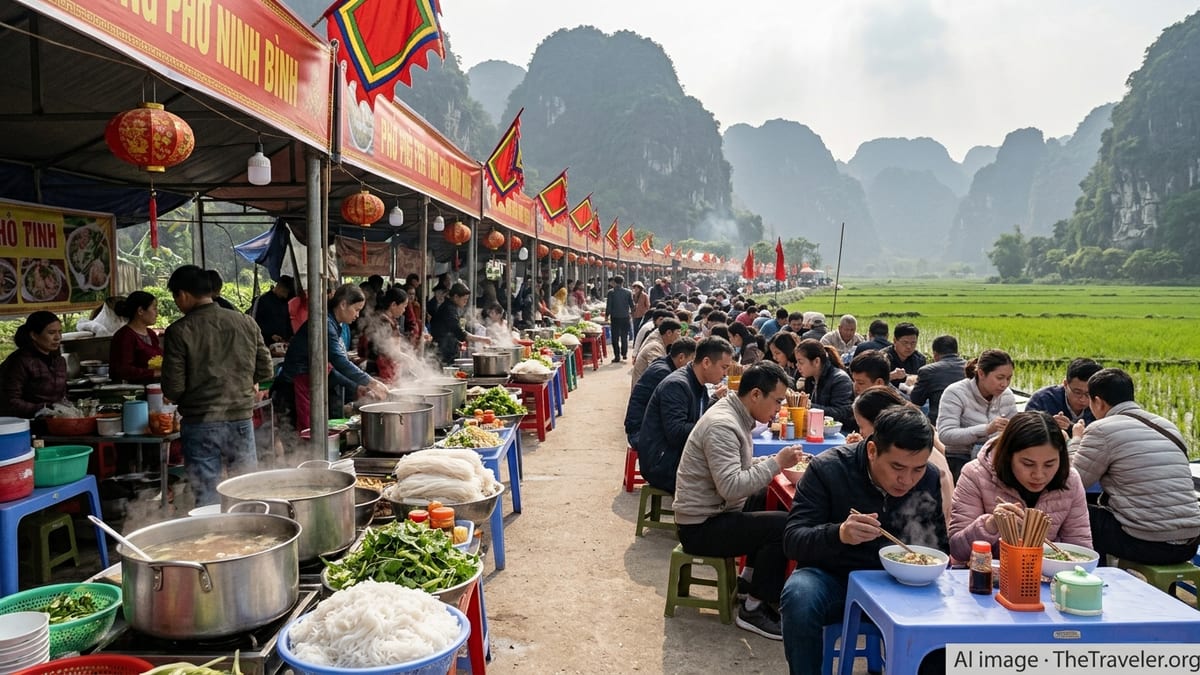
From Regional Food Fair to National Pho Showcase
Recent festival seasons in Ninh Binh have signaled an ambitious shift toward large-scale culinary events that weave local heritage with national food icons. Publicly available information on the Ninh Binh Food and Tourism Festival 2025 describes a multi-venue program built around rice-based specialties, with pho emerging as a central storyline in the province’s tourism strategy.
Coverage of the late-2025 Cuisine Tourism Festival highlights a theme centered on rice noodle cuisine and the “honoring of the rice grain,” framing pho, bun and other noodle dishes as cultural assets as much as everyday foods. This positioning lays the groundwork for 2026 programming that places Vietnam’s most recognizable soup at the intersection of gastronomy, storytelling and regional branding.
Within this framework, pho-focused activities are expected to grow from one element in a broader program into a grand spectacle in their own right. The evolving model suggests that future editions in 2026 will deepen the focus on pho’s origins, regional variations and artisanal techniques, using the dish as an entry point into the broader culinary landscape of Ninh Binh and the expanded northern delta region.
The Soul of Pho in an Ancient Landscape
Ninh Binh’s bid to elevate pho arrives in a destination already renowned for cinematic scenery. The province’s karst peaks, rice paddies and river caves, especially around Trang An and Tam Coc, provide a dramatic natural backdrop for open-air food stages, tasting streets and night markets devoted to noodle soups and traditional rice dishes.
Festival plans and recent practice suggest that organizers are using this landscape as part of the narrative, presenting pho not only as a dish in a bowl but as the product of river valleys, rice fields and craft communities. Reports on the 2025 festival season describe multiple wards hosting complementary events, indicating a template in which pho-related programming in 2026 can be spread across several neighborhood hubs linked by tourism routes.
For visitors, this combination of scenery and cuisine is likely to be a key draw. Travel reporting already portrays Ninh Binh as an alternative to more crowded destinations such as Ha Long Bay, and the addition of a marquee pho-centered festival in 2026 positions the province as a place where travelers can pair boat trips and cycling tours with evening tastings of regional broths and noodle styles.
Building on the Bun and Pho Festival Momentum
The concept of a grand pho spectacle in 2026 builds directly on recent noodle-focused events. Public information on the 2025 Bun and Pho Festival in Ninh Binh notes thousands of visitors crowding tasting areas dedicated to rice noodle and vermicelli dishes, with pho sharing the spotlight alongside other forms of noodle cookery. That event was framed as a continuation of earlier pho festivals in 2024 and 2025, indicating a maturing format that can support a larger, more internationally visible celebration in 2026.
Descriptions of these recent festivals emphasize heritage preservation, particularly in relation to documented “folk knowledge” around pho in northern Vietnam. By drawing attention to pho as an officially recognized element of intangible cultural heritage, the Ninh Binh festival framework signals that any 2026 pho spectacular will likely maintain a strong educational and cultural component alongside entertainment and food commerce.
That heritage lens is also shaping how pho is presented to visitors. Program outlines reference storytelling zones, demonstrations, and curated “pho stories” that trace the dish from its street-side origins to its modern role as a symbol of Vietnamese identity. In 2026, similar elements are expected to return in expanded form, offering travelers deeper context behind each bowl they taste.
Culinary Tourism, Crowds and Local Economies
Attendance figures from recent events suggest that a dedicated pho-focused festival in 2026 would have a substantial tourism impact. Reports on the Ninh Binh Food and Tourism Festival 2025 indicate that more than one hundred thousand visitors attended over a nine-day period, filling tasting streets and cultural spaces that linked food with traditional Tet-themed experiences.
Local media coverage describes the festival model as a tool to connect craft villages, cooperatives and small producers with visitors from across Vietnam and abroad. At previous events, dozens of craft villages and regional booths have showcased signature dishes, rice products and local specialties, using pho and noodle dishes as headline attractions that guide crowds toward lesser-known recipes and ingredients.
If that pattern continues into 2026, a pho-centered spectacle is expected to generate economic benefits across accommodation, transport and rural supply chains. The format also appears designed to encourage longer stays, as visitors combine festival evenings with daytime excursions to pagodas, karst viewpoints and river cruises, amplifying the value of each arrival.
What Travelers Can Expect in 2026
While detailed program schedules for 2026 have yet to be widely publicized, existing documentation on Ninh Binh’s culinary festivals provides a strong indication of what travelers are likely to encounter. Multi-day events spanning late December and early January have become a pattern, suggesting that pho-centered programming in 2026 will anchor the New Year season with tasting zones, night markets and cultural performances.
Visitors can look for a mix of regional pho styles, from clear northern broths with delicate seasoning to richer variations influenced by central and southern kitchens. Based on recent festival descriptions, organizers are expected to pair these dishes with folk cake stalls, rice-based snacks and spaces dedicated to traditional Tet customs, positioning pho as the centerpiece of a wider exploration of Vietnamese foodways.
For international travelers planning Vietnam trips around 2026, Ninh Binh’s emerging status as a pho festival hub offers a compelling alternative to more familiar city-based food tours. With its blend of limestone peaks, temple landscapes and an increasingly elaborate calendar of rice-noodle celebrations, the province is preparing to let visitors savor both the flavors and the soul of Vietnam in one concentrated experience.