

More news on this day
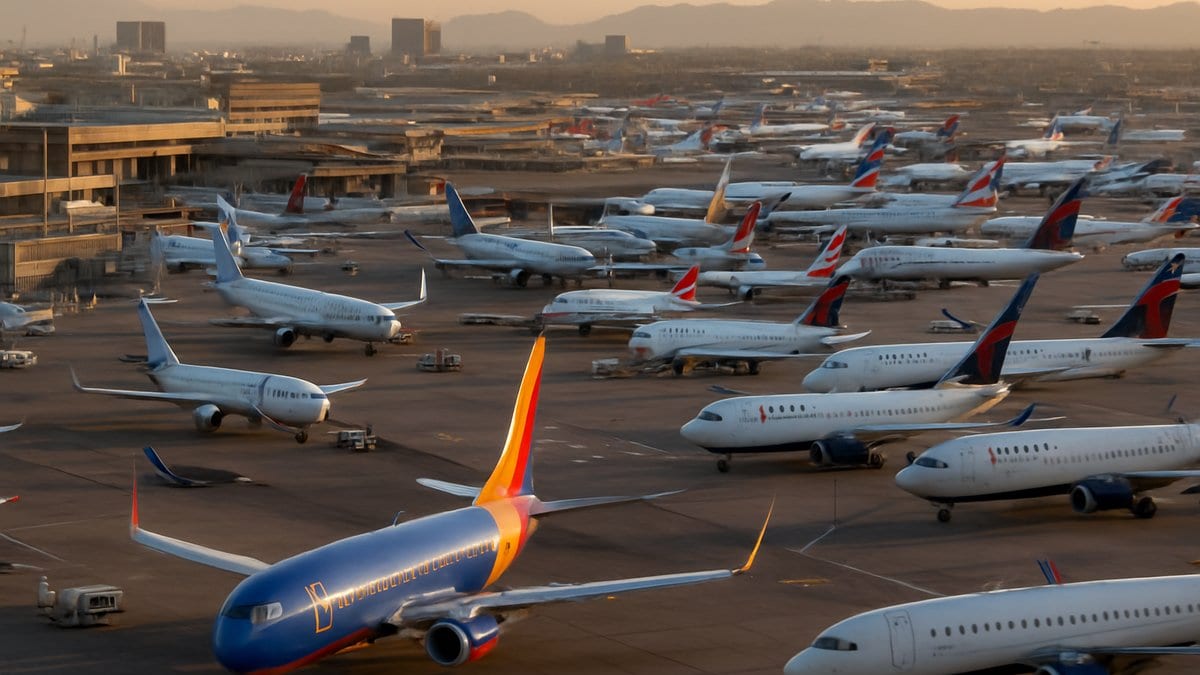
Phoenix Sky Harbor International Airport became one of the most congested points in the U.S. air system this week as publicly available tracking data showed more than 160 combined delays and cancellations in a single day, disrupting operations for major carriers and leaving travelers navigating hours of uncertainty in packed concourses.
Get the latest news straight to your inbox!
A Peak-Day Pileup at a Critical Desert Hub
Reports drawing on flight-tracking dashboards and airport operations data indicate that American Airlines, Southwest Airlines and JetBlue bore the brunt of the latest disruption wave at Phoenix Sky Harbor, collectively accounting for more than 160 delayed and canceled departures and arrivals. The concentrated disruption unfolded on April 3, coinciding with a broader spike in U.S. delays that affected hundreds of flights nationwide.
At Sky Harbor, the gridlock built through the day as early schedule slippages cascaded into the afternoon and evening. When aircraft and crews miss their planned slots, later rotations lose their assigned planes and pilots, forcing airlines to reshuffle equipment or cancel flights outright. By late day, travelers bound for major domestic markets such as New York, Chicago and Los Angeles were facing extended waits, rebookings or unexpected overnight stays.
Publicly available coverage of the April 3 disruption describes crowded gate areas, extended lines at customer service counters and tight capacity on available later departures. Even as some flights managed to depart within an hour of schedule, others were held on the ground, diverted to alternate airports or withdrawn from the timetable, underscoring how vulnerable a high-volume hub can be when strain builds simultaneously across multiple routes.
Weather, Congestion and Construction Collide
While Phoenix typically enjoys relatively stable flying weather, the latest disruption did not unfold in isolation. Recent days brought rounds of adverse conditions in other regions, including thunderstorms, high winds and low-ceiling clouds at key hubs such as Chicago and New York. Traffic management initiatives in those cities, including metered arrivals and periodic ground delay programs, reduced throughput and created bottlenecks that fed back into Sky Harbor-bound and Sky Harbor-originating flights.
Travel industry analysis notes that when an aircraft departing Phoenix is scheduled to connect into a weather-affected hub, even a short constraint at the destination can force crews to wait for new departure times or alternate routings. Those small timing shifts ripple backward into the Phoenix schedule, pushing back boarding, tug operations and pushback slots. Over the course of a busy day, the cumulative effect can mean dozens of late departures and missed connections.
Local infrastructure conditions around the airport are adding another layer of complexity. City planning documents and airport advisories show that roadway restrictions tied to Sky Harbor Boulevard improvement projects have been underway since early 2026, limiting lane capacity at times and slowing ground access to terminals. During disruption days, the combination of heavier-than-usual vehicle traffic, ride-hailing congestion and ongoing construction amplifies the sense of gridlock for passengers trying to reach or leave the airport.
Part of a Wider Pattern of U.S. Airline Strain
The Phoenix gridlock is unfolding against a national backdrop of elevated flight disruption throughout early 2026. Aggregated data compiled by aviation-focused outlets for April 3 points to several hundred cancellations and more than 3,500 delays across the United States, touching major hubs in Texas, the Midwest, the Northeast and the Southeast. Sky Harbor’s surge of more than 160 disrupted operations represents a significant share for a single airport on a day of already stressed national traffic.
Industry reporting on the first quarter of 2026 describes airlines working to meet strong demand with networks that remain sensitive to shocks. Staffing shortfalls in some specialties, such as regional pilots, ground handlers and maintenance crews, have left less buffer to absorb irregular operations. When storms or air traffic flow constraints hit a handful of critical hubs, knock-on effects cascade along spoke routes, including the dense web of services linking Phoenix with secondary and tertiary cities.
Recent case studies of large-scale airline outages, from severe winter storms to high-profile technology failures, illustrate how quickly disruption totals can escalate into the hundreds or thousands of flights canceled or delayed over several days. While the latest Phoenix episode is smaller in scale than those systemwide meltdowns, the underlying dynamics are similar: intense peak travel demand, tight aircraft utilization, and a national air traffic system that often reacts to weather and capacity challenges rather than staying comfortably ahead of them.
Travelers Face Packed Terminals and Limited Options
For travelers on the ground in Phoenix, the statistics behind more than 160 disrupted flights translated into crowded concourses, busy restrooms and limited seating near power outlets. Publicly shared images and accounts from recent Sky Harbor disruption days depict passengers seated on floors near gate podiums, lines stretching down terminal corridors and long waits for food and beverage outlets operating at or near capacity.
As delays mounted, many passengers found rebooking options constrained. When multiple airlines reduce service simultaneously at a hub, later flights to heavily trafficked destinations like the East Coast and Midwest can fill quickly, leaving only indirect routings or next-day departures. Some travelers opted to reroute through alternate hubs in Denver, Las Vegas or Dallas, while others shifted onto early-morning departures once airlines stabilized operations.
Consumer guidance from travel advocates emphasizes that in the U.S. market, compensation and assistance typically depend on the cause of a disruption and the individual policies of each carrier. Federal rules require airlines to provide refunds when a flight is canceled and a passenger chooses not to travel, but there is no single nationwide standard obligating meal vouchers or hotel stays when irregular operations stem from weather or broader system constraints. As a result, passengers in Phoenix on April 3 faced varying levels of support, ranging from simple schedule changes to limited overnight assistance.
What the Phoenix Gridlock Signals for the Months Ahead
The latest wave of disruption at Phoenix Sky Harbor offers an early-season stress test for the airport and its tenant airlines before the peak summer travel period. Operational statistics published by local aviation authorities show that Sky Harbor continues to rank among the country’s busiest airports by passenger volume, with strong growth on both domestic and international routes. Maintaining reliability at such a high-throughput facility will become increasingly important as construction work, weather volatility and national airspace congestion intersect in the months ahead.
Analysts focusing on network resilience suggest that carriers may need to build more slack into crew and aircraft schedules at key hubs, including Phoenix, to reduce the risk that a single day of adverse conditions elsewhere can trigger cascading delays. That could involve slightly longer scheduled turn times, additional reserve crews or more conservative aircraft rotations, though such measures can also limit capacity and affect fares.
For travelers planning to pass through Sky Harbor this spring and summer, the April gridlock is a reminder to treat connection times conservatively and monitor flight status frequently. Publicly available tools from airlines and independent tracking services provide near-real-time updates on delays and gate changes, while airport advisories outline any ongoing roadway restrictions that might affect arrival times at the terminal. As the latest disruption showed, even a desert hub known for clear skies can become a chokepoint when more than 160 flights fall out of rhythm with the rest of the national network.