

More news on this day
Travelers at Phoenix Sky Harbor International Airport faced a difficult start to the weekend on April 11, 2026, as 163 flight delays and at least two cancellations disrupted tightly packed schedules across the national air network.
Get the latest news straight to your inbox!
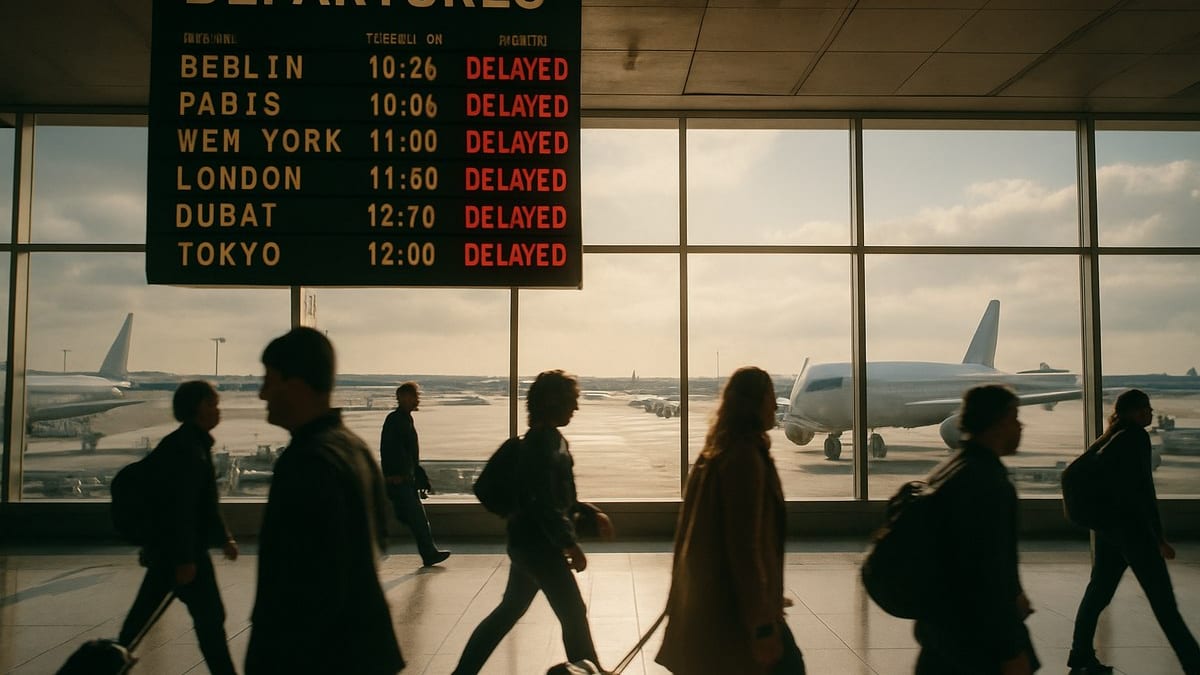
Busy Desert Hub Grapples With Wave of Flight Disruptions
Publicly available data and industry reports indicate that Phoenix Sky Harbor International Airport, one of the nation’s busiest hubs, saw 163 delayed departures and two canceled flights on April 11. The disruption affected a mix of domestic and limited international routes, with services to major destinations such as Los Angeles, Chicago, New York, Dallas, and San Francisco among those impacted.
Travel and aviation tracking outlets describe a scene of rolling delays rather than an outright shutdown, with aircraft pushed back from gates only to wait for departure slots and inbound flights arriving late and compressing gate availability. The pattern mirrors recent nationwide strain at major U.S. airports, though the Phoenix disruption on April 11 was notable for its concentration at a single hub over the course of the day.
Operational statistics from Phoenix Sky Harbor show that the airport typically handles close to 1,000 flights and well over 100,000 passengers per day. Against that backdrop, a surge of more than 160 delayed flights represents a significant share of the day’s schedule and is sufficient to create visible congestion at check-in counters, security checkpoints, gate areas, and baggage carousels.
The April 11 event follows several days of elevated disruption levels at large U.S. airports, suggesting that the Phoenix delays were part of a broader pattern of operational stress across airline networks rather than an isolated local issue.
Multiple Airlines and Key Routes Affected
According to published coverage focused on April 11 operations at Phoenix Sky Harbor, the delays and cancellations were spread across several major carriers, including American Airlines, Southwest Airlines, JetBlue Airways, and other domestic operators. Services on high-frequency corridors to coastal hubs and large midcontinent cities bore much of the impact as late-arriving aircraft and crew reassignments cascaded through already busy schedules.
Data from recent days shows that Phoenix has been playing an important role in connection flows between the West Coast, the Mountain West, and major hubs in Texas and the Midwest. When operations tighten at Phoenix, passengers traveling between secondary cities often feel the disruption in the form of missed or shortened connections, rebookings, and extended time on the ground waiting for available seats.
Routes linking Phoenix with airports such as Los Angeles International, Chicago O’Hare, John F. Kennedy in New York, Dallas-Fort Worth, and San Francisco International featured prominently in delay tallies on April 11. These flights serve a mix of business travelers, leisure passengers, and those beginning or ending longer international journeys, amplifying the practical consequences of any schedule disruption.
While only a small number of outright cancellations were recorded at Phoenix on April 11, the volume of delayed flights meant that many passengers still arrived hours later than planned. Reaccommodation efforts also led to fuller subsequent departures, extending the knock-on effects into later time bands.
Recent Weather and Network Strain Set the Stage
Flight-disruption summaries from earlier in the week point to a combination of adverse weather episodes and tight airline scheduling as contributing factors behind the April 11 backlog. In the days leading up to the Phoenix event, major hubs including Las Vegas, Denver, Houston, Atlanta, and Washington experienced hundreds of delays and numerous cancellations, putting crews and aircraft out of position.
Analyses by aviation rights and travel advisory organizations note that when multiple hubs experience heavy delays in quick succession, even an airport with generally strong on-time performance such as Phoenix can see rapid deterioration in its own punctuality. Late inbound flights reduce the margin of error for departure banks, and any additional disruption, such as localized thunderstorms or temporary air traffic flow restrictions, can tip operations into widespread delay.
Earlier in the year, Phoenix Sky Harbor also saw disruptions linked to national weather systems that affected routes stretching from Texas to the Northeast. While conditions on April 11 in Phoenix were not described as severe, the airport’s role as a connecting hub meant that weather or congestion elsewhere in the network could still ripple into local timetables.
Industry statistics compiled over recent months continue to place Phoenix among the more reliable large U.S. airports in terms of on-time performance. The April 11 disruption therefore stands out as an exception in an otherwise comparatively stable operational record, though it underscores how even resilient hubs remain vulnerable when national networks come under pressure.
Impact on Travelers at Terminals and on the Road
Accounts from recent weekends indicate that Phoenix Sky Harbor’s surrounding road network has itself been under strain due to scheduled freeway work. State transportation updates describe closures and lane reductions on key arterial routes near the airport, including overnight and weekend shutdowns designed to accommodate construction, with officials previously warning that these changes could slow access to terminals.
On a typical day, congestion on approach roads can compound the stress of flight delays by lengthening travel times between the city and the airport. When hundreds of flights are disrupted, increased vehicle traffic from drop-offs, pick-ups, ride-hailing services, and airport shuttles can make it more difficult for passengers to arrive early or depart promptly after landing.
Inside the terminals, large delay clusters often lead to longer lines at food outlets and restrooms, more competition for power outlets and seating, and busier customer service counters as travelers seek rebooking assistance. Aviation-focused media coverage of the April 11 event suggests that Phoenix experienced this familiar pattern, with stranded passengers facing extended waits and crowded gate areas as airlines worked through the backlog.
Travelers connecting through Phoenix that day also encountered the risk of missed onward flights as domestic delays compressed short connection windows. Those able to rebook frequently found themselves moved to later services that were already heavily booked from previous disruption days, further stretching capacity.
What Passengers Can Do During Similar Disruptions
Consumer advocacy and air travel guidance outlets consistently recommend that passengers take a proactive approach when large numbers of delays are reported at a major hub such as Phoenix. Monitoring airline apps and airport information boards, confirming gate assignments, and signing up for flight-status alerts can help travelers adjust plans more quickly when schedules change.
When significant delays develop, publicly available guidance emphasizes the importance of reviewing an airline’s policies on rebooking, meal vouchers, and overnight accommodation. While compensation rules vary depending on the cause of a disruption and the region, passengers can often secure meal assistance or alternative routing when delays extend to several hours or result in missed connections, particularly if seats are available on partner airlines or later departures.
Air travel analysts also highlight practical steps such as carrying essential items, medications, and chargers in hand luggage, allowing extra time for security screening during known congestion periods, and maintaining flexibility on seat assignments and routing. At a large, relatively efficient hub like Phoenix Sky Harbor, these strategies can make it easier to take advantage of newly opened seats or last-minute schedule adjustments when backlogs begin to clear.
The events of April 11 at Phoenix underline the value of preparing for the possibility of disruption even at airports with strong on-time reputations. As national air traffic remains busy and operational margins tight, travel experts suggest that passengers planning to pass through Phoenix in the coming weeks remain attentive to schedule updates and build additional time into their itineraries.