

More news on this day
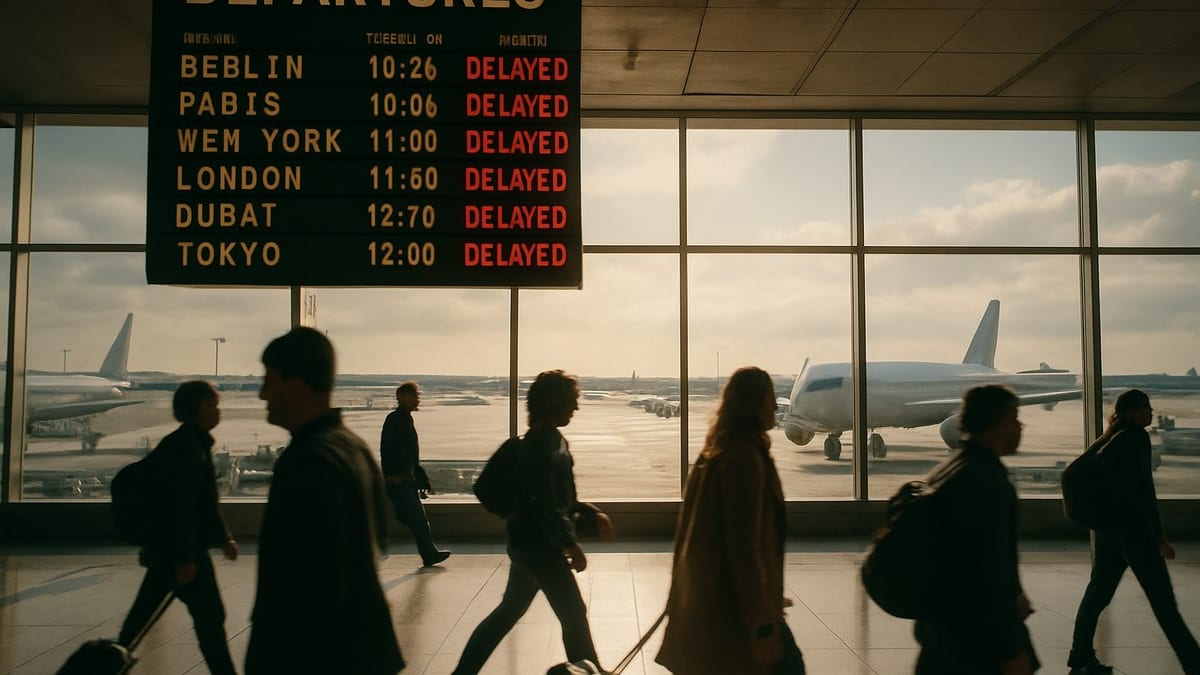
Travelers passing through Phoenix Sky Harbor International Airport on April 11 faced an unusually challenging day, as 163 flights were reported delayed or canceled, disrupting schedules across the national air network.
Get the latest news straight to your inbox!
Weather and Airspace Constraints Ripple Through Operations
Preliminary data from aviation tracking dashboards and airline status pages indicate that a combination of deteriorating weather and airspace flow restrictions played a central role in the disruptions at Phoenix Sky Harbor on April 11. Low clouds and shifting visibility in the morning hours appeared to slow arrivals into the Valley, while afternoon buildups contributed to further spacing requirements for aircraft.
Flight performance summaries for the day show elevated average delay times on both arrivals and departures, consistent with past instances when low ceilings or fast-changing conditions have limited runway capacity at Sky Harbor. Although the airport remained open throughout, the rate at which aircraft could land and depart was reduced periodically, forcing airlines to hold flights at origin airports, re-time departures from Phoenix, or cancel select frequencies altogether.
Publicly available information from Federal Aviation Administration traffic management logs suggests that short-lived ground delay programs and flow restrictions into the Phoenix terminal area were used at various points on April 11 to manage congestion. These measures, which limit how many flights can arrive in a given window, often create a cascading effect in which even short disruptions translate into missed connections and rolling delays for the rest of the day.
Historical reports on Sky Harbor’s performance emphasize that the airport typically maintains strong on-time metrics compared with other large U.S. hubs, so a spike of 163 affected flights stands out as a notable deviation from its usual reliability.
Impact on Travelers Across Domestic and Connecting Routes
The disruption at Phoenix had effects well beyond the city’s limits, as Sky Harbor functions as a major connecting hub for flights across the western United States and to destinations nationwide. Airline status boards and tracking services showed clusters of delays among morning and early afternoon departures to key markets including Southern California, the Pacific Northwest, Texas, and several Midwestern cities.
Passengers on itineraries that relied on tight connections through Phoenix were particularly vulnerable. When an incoming leg arrived late, downstream flights often departed without some connecting travelers, who were then forced to rebook on later services. In several cases, published schedules show that travelers from smaller regional airports faced multi-hour re-accommodation windows because replacement flights to their destinations operated only a few times per day.
The ripple effect was visible on long-haul domestic routes as well. Aircraft assigned to transcontinental flights or high-demand corridors such as Phoenix to Seattle and Phoenix to Chicago required additional time on the ground for re-sequencing, which in turn pushed departure times further into the evening. For some travelers, this meant missed evening plans or late-night arrivals at hotels and vacation rentals.
Social media posts and forum discussions from the day highlighted crowded gate areas, extended waits for updated departure times, and increased lines at customer service counters as carriers worked through rebooking options. While many flights ultimately departed, the overall experience for a sizable share of passengers was marked by uncertainty and fatigue.
How Airlines Managed the Disruptions
According to publicly available operations data, airlines serving Phoenix Sky Harbor responded to the April 11 constraints with a mix of tactical schedule adjustments. Common strategies included slowing the rate of inbound flights during the most capacity-constrained periods, swapping aircraft types to better match demand and available crews, and proactively canceling a limited number of frequencies where recovery options were limited.
On the ground, airline apps and notification systems became the primary source of information for many passengers. Mobile alerts, gate display updates, and push notifications about rebooked itineraries helped some travelers adjust in real time, even as delay estimates shifted throughout the day. However, user reports also pointed to lag times between operational decisions and public updates, leading to confusion at certain gates when boarding times were moved repeatedly.
Aircraft and crew positioning presented a further challenge. When a Phoenix-based aircraft was delayed on an earlier leg, the subsequent flights assigned to that plane often departed late as well. In some cases, airlines appeared to consolidate lightly booked departures and redirect aircraft to higher-demand routes, a standard practice during disruption events but one that can leave passengers on affected flights with fewer immediate alternatives.
Despite the strain, available information suggests that most carriers restored near-normal operations by late evening on April 11, with remaining delays largely confined to the last bank of departures and a subset of late-night arrivals.
Context: A Rarely Severe Day at a Typically Reliable Hub
Performance reports compiled by aviation analytics firms in recent months have generally ranked Phoenix Sky Harbor among the more reliable large airports in the United States, citing its relatively streamlined layout and investments in real-time monitoring technology. These assessments emphasize that the majority of days see only modest delay levels compared with more weather-prone hubs.
In that context, a single day with 163 disrupted flights stands out less as a sign of chronic issues and more as an illustration of how quickly conditions can deteriorate in a tightly balanced national air system. Even at airports that typically maintain high on-time rates, a mix of weather, airspace constraints, and traffic surges can combine to overwhelm buffer times built into schedules.
Earlier studies of Sky Harbor’s operations have also underscored the influence of seasonal weather patterns in the region. Summer heat, monsoon storms, and occasional low cloud decks have each been linked in past coverage to targeted ground stops or delay programs. The April 11 disruptions appear consistent with that broader pattern in which infrequent but intense events produce short bursts of congestion.
Aviation observers note that the airport’s overall track record suggests it is likely to remain a dependable hub for most travelers, even as episodes like April 11 highlight the importance of resilient scheduling and rapid-response planning for both airlines and airport operators.
Tips for Passengers Facing Future Disruptions at Phoenix
While the April 11 event came as an unwelcome surprise for many travelers, it also reinforces practical steps that passengers can take to better navigate disruption days at Phoenix Sky Harbor. Travel guidance shared by airlines, frequent flyers, and airport-focused publications consistently recommends building extra time into itineraries, especially when traveling through large hubs that serve as connection points.
For those with tight onward connections, booking slightly longer layovers can provide a critical margin when weather or airspace constraints slow arrivals. Travelers are also encouraged to download their airline’s mobile app, enable notifications, and monitor both flight status and gate changes throughout the day. These tools often provide earlier indications of potential issues than departure boards in the terminal.
On the day of travel, checking aviation tracking services or news updates before leaving for the airport can alert passengers to emerging ground delay programs or weather-related constraints at Sky Harbor or at origin airports. In the event of a significant delay or cancellation, rebooking through digital channels may be faster than waiting in line at a service counter, particularly during peak disruption periods.
For Phoenix-based travelers specifically, arriving slightly earlier than usual during unsettled weather or peak travel weekends can reduce stress at security checkpoints and give additional flexibility if flights begin boarding earlier or later than scheduled. While no amount of preparation can fully eliminate the risk of disruption, informed planning can soften the impact when days like April 11 disrupt the usual rhythm of operations at one of the country’s busiest desert hubs.