

More news on this day
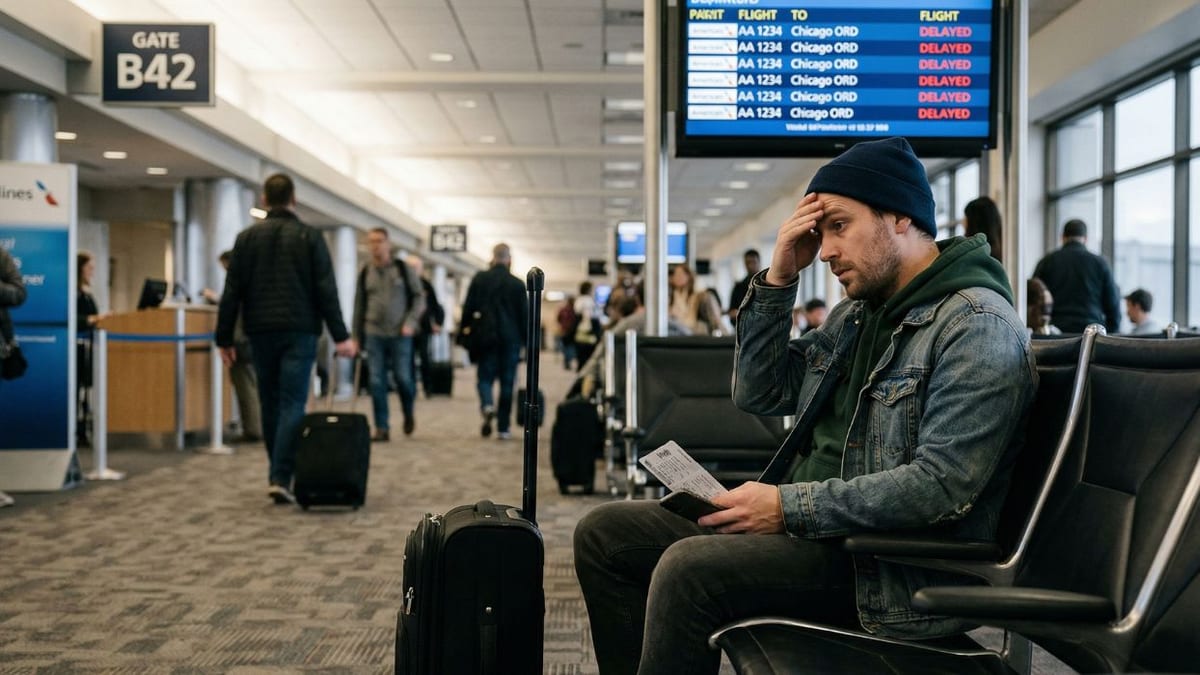
Weekend travel plans unraveled for thousands of passengers on April 11 as Phoenix Sky Harbor International Airport logged 163 delayed flights and two cancellations, disrupting American Airlines, Southwest Airlines and JetBlue routes to major hubs including Chicago, New York and Los Angeles.
Get the latest news straight to your inbox!
Severe Disruption at Phoenix Hub Ripples Across the Network
Publicly available operational data and industry monitoring reports indicate that Phoenix Sky Harbor faced one of its most challenging days of the spring travel period on Saturday, with delays affecting a wide cross-section of domestic and connecting services. A consolidated update from aviation-focused outlets described 163 delays and two cancellations tied to the airport, with American Airlines, Southwest Airlines and JetBlue among the most impacted carriers on the schedule.
The disruption at Phoenix came as part of a broader pattern of instability across the US aviation network in early April, with multiple hubs reporting elevated delay volumes. However, Phoenix’s role as a major connection point for the Southwest and Mountain West magnified the local impact, particularly for passengers bound for coastal destinations such as Chicago, New York and Los Angeles.
While the official federal delay map showed no extended ground stop in place by midafternoon, flight-tracking dashboards captured rolling gate holds, late inbound aircraft and tightened crew availability as key operational pinch points. These factors combined to push many departures well past their scheduled times, creating the perception of a systemwide slowdown for travelers in Phoenix and at downline airports.
Industry summaries noted that the day’s figures at Phoenix aligned with a wider trend this month in which individual hubs generate triple-digit delays without necessarily triggering nationwide alerts. For passengers, however, the distinction offered little comfort as missed connections and rebooked itineraries extended travel times by hours.
American, Southwest and JetBlue Face Pressure on Key Routes
American Airlines, which maintains a significant presence at Phoenix through its mainline and regional operations, saw a dense block of its departures affected, including flights toward Chicago and New York. Network statistics compiled by travel industry publications in recent days show American already carrying a considerable share of delay volume across US hubs, and the Phoenix disruption added new pressure at the height of a busy weekend travel window.
Southwest Airlines also experienced substantial operational strain, with recent data from national delay tallies highlighting the carrier as one of the largest contributors to same-day disruptions across the country. At Phoenix, Southwest’s high-frequency services to Los Angeles and other Southern California airports faced staggered pushback times, narrowing connection windows for passengers continuing onward to Chicago and New York on later legs.
JetBlue, which operates a smaller but strategically important schedule through Phoenix toward New York and other transcontinental markets, was drawn into the broader disruption as rotation plans were adjusted. According to published coverage of the day’s operations, knock-on effects from delayed arrivals made it harder to keep tightly timed eastbound departures on schedule, particularly for evening services targeting overnight or early morning arrivals on the East Coast.
Across the three airlines, the immediate impact was felt most acutely on links to major hubs that were themselves dealing with congestion. Recent national delay summaries show Chicago O'Hare, Los Angeles International and New York’s primary airports repeatedly ranking among the country’s busiest for late operations, making same-day recovery more difficult when Phoenix-originating flights ran behind schedule.
Chicago, New York and Los Angeles Absorb Secondary Delays
Travel industry reports tracking April performance across major US hubs show that Chicago, New York and Los Angeles have all been managing elevated volumes of delayed arrivals and departures. On the same weekend that Phoenix recorded 163 delays, separate datasets highlighted Chicago O’Hare with more than 300 delays in a single 24-hour period, while Los Angeles International and New York’s John F. Kennedy Airport also logged triple-digit disruptions.
When delayed Phoenix departures bound for these hubs joined already congested arrival banks, they contributed to what aviation analysts describe as “secondary delays,” where late inbound aircraft compress turnaround times and strain crews and ground operations. This dynamic was particularly visible on Phoenix flights feeding Chicago and New York, where inbound slippage can push connecting departures later into the evening.
For travelers, the combined effect was a cascade of rolling schedule changes. Passengers originating in Phoenix and intending to connect through Chicago or New York to smaller Midwestern and East Coast cities faced a growing risk of missed connections as the day progressed. At Los Angeles, where both American and Southwest operate dense short-haul networks, delayed Phoenix arrivals translated into hurried aircraft turns and occasional gate swaps, further complicating wayfinding for passengers inside the terminal.
Consumer-rights resources monitoring the weekend’s disruptions noted that average delay times at some major hubs this week have approached or exceeded an hour, pushing many itineraries beyond typical buffer times. In practical terms, even a modest delay leaving Phoenix could become a serious problem once compounded by congestion at the arrival airport.
Passengers Confront Long Waits and Limited Alternatives
Reports from flight-tracking services and airport information boards indicated that many Phoenix passengers experienced delays stretching from 45 minutes to several hours, particularly on midmorning and afternoon departures. As the schedule compressed, airlines worked through standard playbooks that included rolling departure estimates, voluntary rebooking options and, in some cases, hotel or meal support where delays approached overnight or extended-stranding thresholds.
Travel advisories published by passenger-assistance organizations in recent days have encouraged flyers to anticipate such scenarios at busy hubs by building longer connection times into itineraries and favoring earlier departures where possible. The conditions at Phoenix fit this broader guidance, with travelers who started the day on early morning flights often faring better than those booked on afternoon departures when cumulative delays were at their peak.
For those already in transit when the disruption intensified, options were limited. High seat loads typical of April weekend travel left relatively few alternative same-day routings from Phoenix to Chicago, New York or Los Angeles, especially for passengers trying to keep groups together. Some travelers chose to wait out extended gate holds in Phoenix rather than risk misaligned connections in already congested hubs.
Public information from travel insurance and advocacy groups also underscored the complexity of compensation rules in such events. Because many delays are tied to factors categorized as operational constraints or weather in other parts of the system, direct cash compensation is often not guaranteed, although airlines may still be responsible for providing rebooking assistance and certain forms of care during longer disruptions.
What the Phoenix Disruption Signals for Spring Travel
The scale of Saturday’s delays at Phoenix Sky Harbor provides an early-season indicator of how fragile spring and summer travel can be when several major hubs are simultaneously under strain. Recent national statistics compiled by aviation data providers show that single days with more than 3,000 delayed flights across the United States are becoming more common, especially when weather systems overlap with tight airline scheduling and air traffic control constraints.
In that context, Phoenix’s 163 delays and two cancellations stand out less as an isolated event and more as one node in a wider network that has been operating close to capacity. Chicago, New York and Los Angeles sit at the center of that network, so disruptions on Phoenix-originating services into those cities can quickly reverberate out to smaller destinations and subsequent travel days.
For travelers planning trips in the coming weeks, industry observers recommend paying close attention to recent on-time performance trends at both origin and destination airports and factoring in the risk of compounding delays when routing through the busiest hubs. The events at Phoenix suggest that even on days without headline-grabbing nationwide ground stops, localized surges in delays can be enough to reshape travel plans across multiple states.
As airlines and airports analyze the weekend’s data, adjustments to schedules, crew planning and buffer times may follow. For now, Phoenix Sky Harbor’s troubled day serves as a reminder that in a tightly interconnected air travel system, a cluster of delays at a single hub can have outsized consequences for passengers trying to move between the Southwest and the nation’s largest cities.