

More news on this day
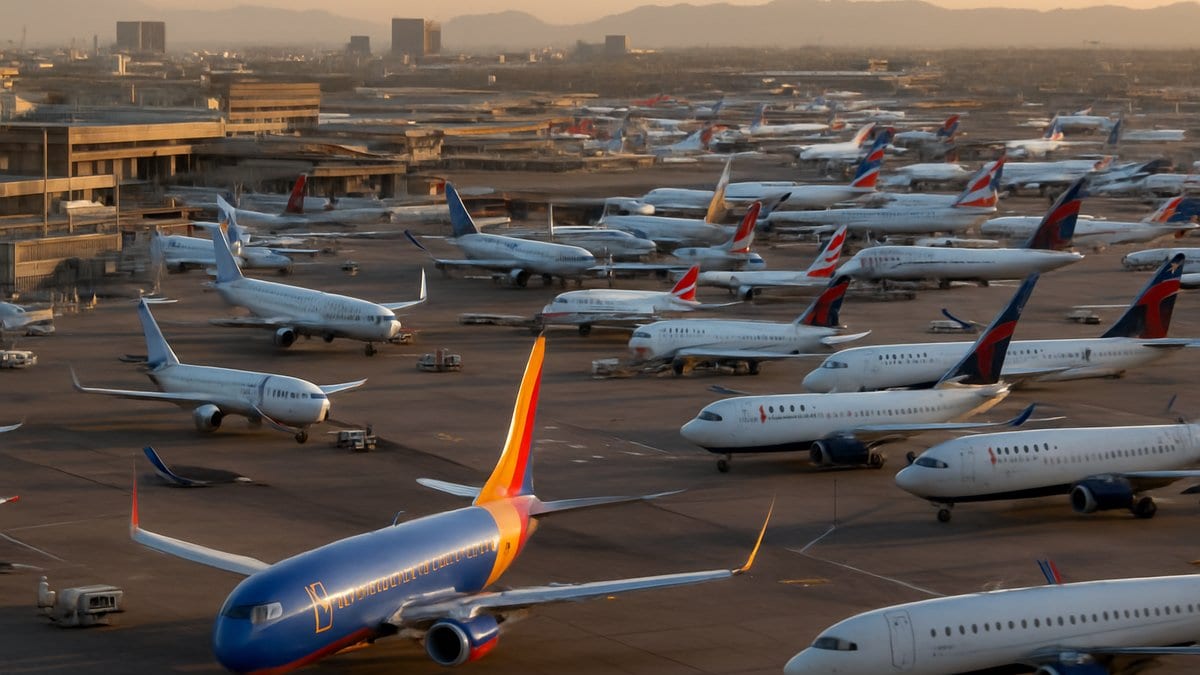
Phoenix Sky Harbor International Airport endured one of its toughest days of 2026 as more than 160 flight delays and cancellations snarled departures, crowded terminals and exposed how fragile spring travel has become across U.S. airline networks.
Get the latest news straight to your inbox!
Peak-Day Chaos Hits a Key Desert Hub
Publicly available flight-tracking data for April 3 indicates that American Airlines, Southwest Airlines and JetBlue collectively logged 163 delayed departures and seven outright cancellations at Phoenix Sky Harbor. The disruptions primarily affected routes to major business and leisure destinations such as New York, Chicago, Los Angeles and other coastal gateways, turning an otherwise clear-weather day in the desert into a gridlock event for air travel.
Reports show that the bulk of the problems built up through the late morning and afternoon departure banks, when tightly timed connections and fully booked aircraft left little room to absorb schedule slips. As departure times slid back in 30 to 90 minute increments, banks of passengers accumulated at gates, setting off long lines at customer service desks and stretching seating capacity in already busy concourses.
Flight-status feeds and airport dashboard information suggest that many affected services eventually departed, but with delays long enough to cause widespread missed connections across airline networks. For passengers whose flights were canceled outright, rebooking options appeared constrained by high load factors associated with spring break and early April leisure travel, forcing some travelers to accept next-day or multi-stop itineraries.
Within the region, the timing of the Phoenix disruption placed additional strain on schedules already challenged by operational bottlenecks at other hubs. Data compiled across the national system for the same day show several hundred cancellations and thousands of delays nationwide, underscoring that Sky Harbor’s gridlock was part of a broader pattern rather than an isolated event.
How 160 Delays Ripple Across the National Network
A single day with more than 160 delayed or canceled departures at one hub may sound modest in percentage terms relative to total traffic, but flight operations specialists and aviation analysts routinely note that such clusters can behave like a network shock. Each delayed aircraft at Phoenix often has multiple downstream legs later in the day, meaning that a single disruption can cascade into missed crew connections, out-of-position aircraft and further delays hundreds or even thousands of miles away.
Information compiled from national tracking services for April 3 illustrates that Sky Harbor’s problems did not occur in isolation. On the same date, U.S. airlines collectively reported hundreds of cancellations and several thousand delays nationwide, with hubs such as Dallas Fort Worth, Chicago O’Hare and Boston also experiencing significant schedule strain. In that context, Phoenix functioned both as an origin of disruption and as a receiver of shockwaves from issues elsewhere in the network.
Point-to-point and hybrid carriers, including Southwest and JetBlue, appeared particularly exposed to this type of cascading impact. Public analyses of their operations highlight that when aircraft are scheduled to touch multiple cities across a single day, delays in the early segments can propagate quickly, leaving minimal opportunity to recover. Phoenix’s role as a major desert crossroads on east-west and north-south flows made it especially vulnerable to the timing of this disruption wave.
Regional affiliates and contract carriers serving Sky Harbor also faced pressure, according to aggregated delay data. When mainline flights arrive late, regional departures often lose their scheduled slots or are held to protect tight connections, which can push delays deeper into the evening and into smaller communities that rely on those flights for onward links to the national system.
Operational Pressures Behind the Gridlock
While clear skies prevailed over Phoenix during the latest mass disruption, operational factors converged to choke capacity. Published coverage of recent national trends points to a combination of lingering crew imbalances from earlier storms, tight turnaround schedules at high-demand hubs and infrastructure constraints that limit how quickly airlines and airports can recover once delays reach a certain threshold.
At Phoenix Sky Harbor, the airport’s role as a connecting hub for multiple major carriers means runway availability, gate access and ramp capacity are finely calibrated to planned schedules. When inbound flights from weather-affected cities arrive late, aircraft can encounter bottlenecks at the gate, forcing them to wait on taxiways or in holding areas until parking positions free up. That, in turn, delays the next wave of departures, even when local weather is favorable.
Industry analyses also emphasize how crew duty-time rules interact with delays. If a flight’s departure time slips far enough beyond its scheduled window, pilots and flight attendants can hit legal duty limits, necessitating last-minute crew swaps or cancellations. With airlines already operating near the edge of their available staffing on busy travel days, relatively small schedule disruptions can push an operation over the tipping point.
In Phoenix, a sequence of recent minor weather-related interruptions across the country appears to have contributed to a backlog of out-of-position aircraft and crews. When the April 3 peak day arrived, that residual fragility left carriers with limited buffers, amplifying the impact of even routine ground holds or minor technical checks into significant knock-on delays.
Passenger Experience: Crowded Concourses and Long Waits
Travelers moving through Phoenix Sky Harbor during the disruption encountered congestion at nearly every step of the journey. Social media posts and user-generated accounts described lengthy queues at check-in counters, crowded security lines and standing-room-only gate areas as delayed flights stacked up, keeping passengers in the terminal for hours beyond their planned departure times.
Reports indicate that ground transportation and landside traffic also came under stress as the day wore on. Ride-hailing pickup zones and parking garage exits experienced heavier-than-usual demand as travelers adjusted plans, met delayed family members or decided to abandon same-day connections. Similar conditions have been described at Sky Harbor during earlier disruption events, suggesting that airport access infrastructure is increasingly tested whenever large-scale airline delays occur.
Inside the terminals, concessionaires and food outlets appeared to be operating at or beyond capacity during peak disruption hours. Publicly visible information from prior events at Phoenix and other hubs shows that airport vendors frequently experience surges when passengers are stranded for extended periods, as travelers seek meals, charging outlets and quiet spaces to rebook or contact family.
For those who missed connections or faced cancellations, options varied widely depending on airline policies and fare types. Consumer advocates consistently note that, under U.S. regulations, passengers are entitled to refunds when a flight is canceled and they choose not to travel, but compensation for hotels, meals and incidental expenses is often governed by each airline’s voluntary commitments rather than uniform federal rules. During major disruption days such as this one, that patchwork can leave travelers with uneven levels of support.
What the Phoenix Meltdown Signals for Spring Travel
The latest gridlock at Phoenix Sky Harbor arrives amid a broader pattern of irregular operations affecting U.S. air travel in early 2026. Recent analyses of national flight performance data point to repeated waves of delays tied to severe weather, airspace constraints and lingering staffing and fleet imbalances, with different hubs taking turns as the focal point of each new disruption.
Aviation and climate research has also highlighted the long-term vulnerability of desert and Sun Belt airports to weather and heat-related pressures. Studies of Phoenix operations in previous summers have documented the need for adjusted schedules, longer takeoff runs and occasional weight restrictions when temperatures soar, all of which can reduce operational flexibility. While the latest disruption was not primarily heat-driven, it unfolded at an airport that already has to navigate seasonal extremes and infrastructure constraints.
For travelers planning spring and summer trips through Phoenix, the April 3 event offers a cautionary snapshot of how quickly conditions can deteriorate when the national system is already strained. Travel experts routinely recommend monitoring flight status closely in the 24 hours before departure, building extra buffer time into connections and considering earlier flights in the day, which generally face fewer knock-on delays.
Airlines operating at Phoenix are also under renewed pressure to demonstrate resilience, with public discussion increasingly focused on schedule padding, fleet flexibility and investments in ground handling and customer care. As Sky Harbor’s latest gridlock shows, a single day with around 160 disrupted flights can reverberate far beyond the desert, reshaping travel plans and testing confidence in the broader air travel system.