

More news on this day
Phoenix Sky Harbor International Airport experienced a wave of disruptions with 116 flight delays and three cancellations, affecting major carriers such as Southwest Airlines, Frontier Airlines and American Airlines on routes to key domestic hubs including Los Angeles, Chicago, New York and other U.S. cities, according to real-time tracking data and airport status reports.
Get the latest news straight to your inbox!
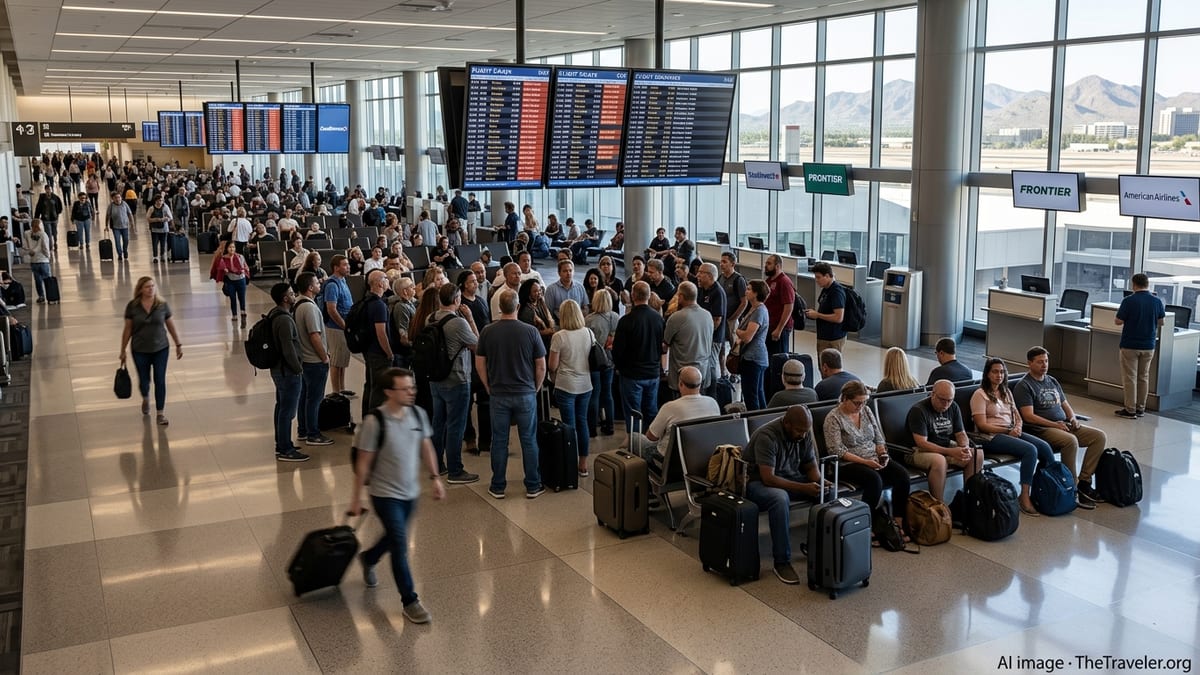
Operational Ripple Effects Across Major U.S. Routes
Publicly available flight-tracking data shows that the delays at Phoenix Sky Harbor were concentrated on some of the airport’s busiest domestic corridors, notably services to Los Angeles, Chicago and New York. These routes are heavily used by both leisure and business travelers, intensifying the impact when schedules slip. Even modest hold times on departures can create a cascade of missed connections across airline networks.
Southwest, Frontier and American Airlines, three of the largest operators at Sky Harbor, all saw flights affected. While many services departed eventually with late pushbacks, a smaller number of outright cancellations forced passengers to seek rebooking on later departures or alternative routings through other hubs.
The pattern of disruption reflects how even a limited number of schedule changes at a major desert hub can reverberate throughout the national air system. Flights from Phoenix often feed into banked connections at coastal and Midwestern hubs, so a delay of an hour or more can lead to onward itineraries being rescheduled or reprotected.
Data from recent months highlights Phoenix’s importance as a connecting point within airline networks. Traffic statistics from the city’s aviation department show that Southwest, American and Frontier collectively move millions of passengers through Sky Harbor each year, underscoring how operational issues on a single day can touch travelers on many different itineraries.
Weather, Airspace Management and Scheduling Pressures
Recent disruption patterns at Phoenix have often been tied to a combination of weather and airspace management measures. Reports indicate that low cloud ceilings and periods of reduced visibility have previously triggered ground delays or short-lived ground stops affecting arrivals to Sky Harbor, slowing the rate at which aircraft can safely land and depart.
Even when conditions at Phoenix appear clear from the terminal, air traffic control initiatives elsewhere in the national airspace can ripple into Arizona. Airlines serving Sky Harbor route many flights through busy Western and Central U.S. corridors, and constraints in those regions can back up departures and arrivals, contributing to the tally of local delays.
Operational data from federal transportation reports illustrates how delays are typically categorized: events linked to airline-controlled factors such as maintenance or crew availability, weather-related constraints and broader national aviation system issues. The mix of causes can vary by day, but the result for travelers is often similar, with departure times pushed back and gate boards showing rolling schedule changes.
High travel demand also plays a role. Published coverage on Phoenix air travel trends notes that Sky Harbor has recorded strong passenger volumes in recent years, reflecting both the region’s population growth and its popularity as a sun destination. Dense schedules at peak hours mean there is less slack in the system when an airline or the air traffic network encounters a disruption.
How Southwest, Frontier and American Passengers Were Affected
Southwest passengers at Phoenix tend to benefit from the carrier’s relatively high frequency of service to cities like Los Angeles, Denver and Las Vegas. When delays occur, this can give the airline more options to rebook travelers onto later flights the same day, though peak departures may still leave fewer available seats for last-minute changes.
Frontier’s more limited schedule from Phoenix can make irregular operations feel more acute. Budget carriers often operate fewer daily frequencies on each route, and when a flight is significantly delayed or canceled, travelers may face longer waits before the next available departure. Recent consumer accounts from previous months have highlighted frustration with rolling delay extensions and late-notice cancellations, underscoring the stakes when disruptions occur on low-frequency routes.
American Airlines maintains a sizable operation at Sky Harbor, with services connecting Phoenix to major hubs such as Chicago and New York. When disruptions hit, the airline can sometimes route passengers through alternate connecting cities, but that may mean longer itineraries and arrival times that slip into late evening or the following day for some travelers.
Across all three carriers, same-day travel plans were most vulnerable. Travelers with tight connections at onward hubs risked misconnecting and needing hotel accommodations or rebooked flights. Those arriving in destination cities late at night also faced challenges with ground transport and lodging, especially where local transit or rental car counters operate on limited hours.
What Travelers Can Do When Phoenix Delays Mount
The spike in delays and limited cancellations at Phoenix Sky Harbor serves as a reminder for travelers to build in buffers when planning connections, particularly during seasons known for weather volatility. Publicly available federal data and airline performance summaries consistently show that some level of delay is a routine feature of U.S. aviation, even on clear days.
Experts who analyze aviation data frequently recommend that passengers departing from busy hubs like Phoenix use real-time flight-tracking tools and airport status dashboards in parallel with airline apps. These resources can provide early signals of ground delays, arrival rate reductions or emerging weather systems that may affect departure times.
Travelers booked on carriers with fewer daily flights, such as ultra-low-cost airlines, may wish to consider the trade-off between lower fares and reduced schedule flexibility. When only a small number of weekly flights operate on a given route, a single long delay or cancellation can translate into an overnight stay or a full-day shift in travel plans.
For those headed to major cities like Los Angeles, Chicago and New York, the concentration of service by multiple airlines can offer alternatives during irregular operations. Same-day options on competing carriers sometimes remain available, particularly outside peak holiday periods, though often at higher last-minute fares.
Sky Harbor’s Role in a Stretched National Air Network
The latest disruptions at Phoenix Sky Harbor highlight the airport’s role within a national aviation system that is operating close to capacity. As a central Southwest hub handling large volumes for airlines such as Southwest, American and Frontier, the airport sits at a crossroads for traffic moving between the West Coast, the Midwest and the East Coast.
Recent airport statistics show that carriers at Phoenix have continued to rebuild and grow schedules following the pandemic-era downturn, with many routes now operating at or above pre-crisis levels. This growth supports local tourism and business travel but also leaves airlines with less margin when crew availability, maintenance or air traffic constraints occur.
While the 116 delays and three cancellations recorded on the latest disruption day do not represent a full-scale meltdown, the figures illustrate how a relatively contained operational challenge can still affect hundreds or even thousands of travelers. Missed meetings, shortened vacations and extra nights in hotels are common downstream results when departure boards shift from green to yellow and red.
For Phoenix residents and visitors alike, the episode underscores the value of monitoring flight status closely, allowing more time at the airport when conditions are volatile and considering flexible booking options where possible. As national demand for air travel remains strong, similar days of concentrated disruption at major hubs such as Sky Harbor are likely to recur, even when the skies over the desert appear calm.