

More news on this day
Operations at Phoenix Sky Harbor International Airport were significantly strained on April 11, as publicly available tracking data showed 163 flights delayed or cancelled, disrupting travel plans for thousands of passengers moving through one of the nation’s busiest hubs.
Get the latest news straight to your inbox!
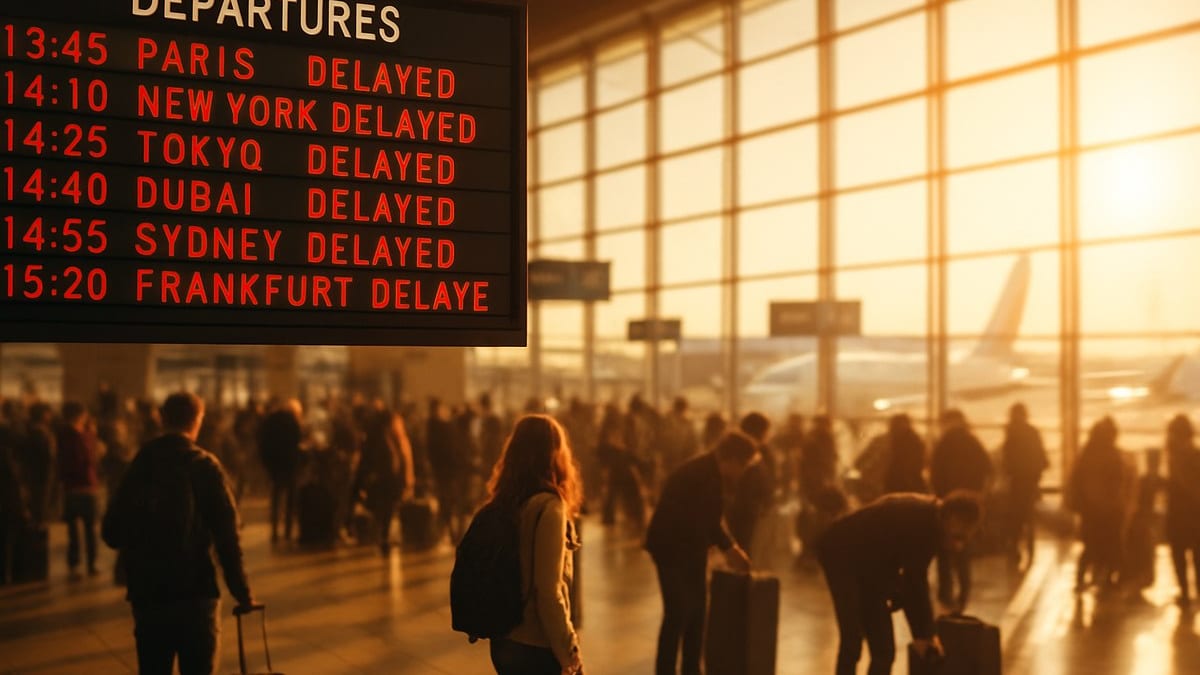
High Volume Day Turns Into Systemwide Snarl
The disruptions at Phoenix Sky Harbor on April 11 unfolded across both arrivals and departures, with delays building through the morning and peaking in the afternoon travel rush. Flight-tracking dashboards indicated that dozens of departures left later than scheduled, while arriving traffic stacked up in holding patterns or was slowed at its point of origin.
Reports from aviation data platforms show that the majority of affected services were domestic routes linking Phoenix with major hubs in the Midwest, West Coast and Mountain West. Short-haul connections to regional airports were particularly vulnerable, as even minor schedule changes in Phoenix quickly cascaded into missed connections and downstream delays at smaller fields.
While the total of 163 disrupted flights represents only a portion of Sky Harbor’s daily schedule, the concentration of those delays in peak periods magnified the impact. Passenger flows through security checkpoints, boarding gates and baggage claim areas became uneven, with some terminals experiencing long lulls followed by sudden surges as clusters of late aircraft arrived within tight windows.
Indirect impacts were felt beyond Arizona, as several flights originating in other states were held at their departure airports because of rate reductions into Phoenix. These upstream controls meant that a significant share of the day’s delays never appeared on the Phoenix departure boards, even though they were directly tied to conditions at Sky Harbor.
Weather, Airspace Congestion and Tight Schedules
Published coverage and aviation community reports indicate that a combination of weather and air traffic management contributed to Phoenix’s disruptions on April 11. Low cloud ceilings and changing wind patterns have repeatedly prompted traffic flow restrictions at Sky Harbor in recent weeks, and similar conditions appeared to play a role in slowing operations during this latest episode.
When visibility or ceiling levels deteriorate, controllers reduce the rate at which aircraft can safely arrive and depart. Even modest cutbacks in allowable movements per hour can quickly back up a schedule that is already tightly choreographed. Flights may be assigned controlled departure times, resulting in aircraft waiting at the gate or on taxiways until a slot into Phoenix’s airspace becomes available.
Phoenix’s position as a major connecting hub also amplifies the effect of any slowdown. A brief ground delay program or minor weather disturbance that might be absorbed at a smaller airport can ripple through multiple banks of connecting flights at Sky Harbor. Late-arriving aircraft then cycle forward into subsequent departures, carrying delay minutes deeper into the day.
Recent seasons have brought additional strain from heat and dust events in the region. Historical climate summaries for the airport show an upward trend in early spring temperatures, and local observers have highlighted more frequent days of reduced visibility from dust and haze. While April 11 did not feature a single dramatic weather headline, the pattern fits a broader backdrop of conditions that periodically erode the airport’s operating margins.
Traveler Experience: Crowded Gates and Missed Connections
As the April 11 delays accumulated, travelers reported crowded gate areas, long lines at customer service desks and busy terminal concourses. Social media posts from passengers described rolling departure times for outbound flights, with aircraft pushed back from the gate only to remain in place awaiting updated release times from air traffic control.
Missed connections became a recurring theme, particularly for passengers relying on short layovers at Sky Harbor. Even a delay of 30 to 45 minutes on an inbound leg proved enough to strand travelers whose follow-on flights departed on time or with only minor holds. Rebooking options were more limited on evening departures, as many routes to secondary markets operate only once per day.
Baggage handling systems were also placed under pressure as late flights arrived in clusters. Reports indicate that bags on some disrupted services took longer than usual to reach carousels, adding to the frustration for travelers who had already spent extra time in the air or on the tarmac. Airport advisories have previously encouraged passengers passing through Phoenix during unsettled periods to allow additional time for both check-in and baggage collection.
Despite the challenges, core airport services, including concessions and ground transportation, continued to operate, providing some relief for those facing extended waits. Ride-hailing pickup zones at both Terminal 3 and Terminal 4 saw intermittent surges as groups of delayed flights arrived nearly simultaneously, but there were no indications of major interruptions to road access or parking facilities.
Context: Ongoing Delay Pressures at a Major U.S. Hub
The April 11 disruptions fit into a broader pattern of delay pressures at large U.S. airports, with Phoenix frequently cited in national analyses of congestion. A recent federal review of air travel performance highlighted Sky Harbor among airports that collectively account for a substantial share of ground-based passenger delay hours, reflecting the volume of flights funneled through a relatively constrained airspace.
Publicly available airport statistics illustrate how Sky Harbor’s traffic has rebounded and, in some categories, surpassed pre-2020 levels. Monthly summaries show millions of passengers moving through the facility, with April traditionally marking the transition from the busy spring travel period into the hot-weather season. As airlines continue to densify schedules and upgauge aircraft, even slight disruptions can have outsized impacts on gate availability and turnaround times.
Local aviation observers note that the airport’s operating environment is further shaped by regional weather patterns, including early-season heat, occasional low-ceiling events and the approach of the summer monsoon period. Each of these elements can intermittently constrain runway use and visibility, prompting tools such as ground delay programs or traffic management initiatives that slow the flow of aircraft into Phoenix.
Studies and airport planning documents have also raised concerns about how continued growth in passenger numbers will interact with national air traffic control staffing levels and aging infrastructure. While airlines and the airport have invested in terminal upgrades and technology, the April 11 disruptions underscore how vulnerable even modernized facilities remain to a combination of tight scheduling and external shocks.
What Travelers Can Do on High-Risk Days
Travel experts and frequent flyers observing the April 11 situation point to several strategies that can help passengers reduce their exposure to similar disruption days at Phoenix. One consistent recommendation is to favor morning departures whenever possible, since early flights are less affected by accumulated delays and have more rebooking options if schedules begin to slip.
Another common suggestion is to build extra connection time into itineraries involving Sky Harbor, particularly during the spring and summer months when weather-related flow restrictions are more likely. Opting for longer layovers can provide a buffer against modest delays, improving the odds that both passengers and checked baggage make it onto onward flights.
Monitoring multiple information sources is also useful on days when irregular operations emerge. While airline apps and gate displays provide official flight status updates, aviation tracking sites and the airport’s own advisories can offer early signs of developing congestion, such as a rising number of inbound delays or reports of reduced arrival rates.
For travelers already caught in disruptions like those seen on April 11, experts emphasize the value of acting quickly once a significant delay appears inevitable. Contacting airlines through digital channels, rather than waiting in physical lines, can speed up rebooking, while being flexible about nearby airports or alternative routings increases the range of available options.