

More news on this day
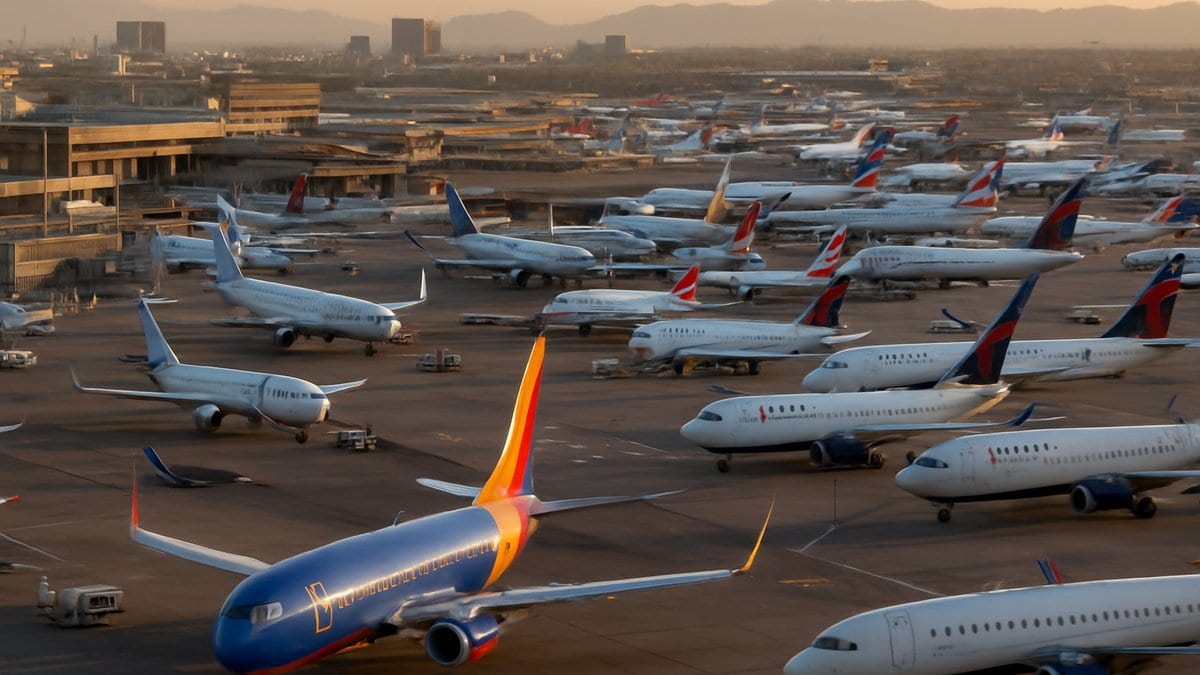
Phoenix Sky Harbor International Airport, one of the busiest hubs in the American Southwest, has been thrust into the spotlight after more than 160 flight disruptions in a single stretch left travelers facing hours-long waits, missed connections, and an airport operating at the edge of its capacity.
Get the latest news straight to your inbox!
Data Shows a Sudden Spike in Desert Delays
Publicly available operational data for late March 2026 indicates a sharp rise in disruptions at Phoenix Sky Harbor, with more than 160 combined delays and cancellations recorded across multiple days as spring traffic surged. One detailed breakdown from an aviation-focused outlet cited 137 delays and two cancellations on a single peak travel day, underscoring how quickly the situation deteriorated once bottlenecks formed at key departure banks.
While national figures show thousands of delayed flights spread across the United States on many recent days, the concentration of more than 160 schedule hits at a single desert hub has made Phoenix a particular pressure point. Reports highlight that even modest numbers of outright cancellations, when paired with triple-digit delays, can overwhelm gate space, aircraft rotations, and customer service desks in a matter of hours.
Sky Harbor’s role as a connecting hub for both regional and long-haul services amplified the disruption. Delayed departures from Phoenix cascaded into missed connections at airports such as Chicago, New York, and Atlanta, with aircraft and crews arriving late to their next assignments. Travel commentary notes that itineraries that once relied on tight 45- to 60-minute connections through Phoenix suddenly became among the riskiest options in the domestic network.
For travelers, the gridlock translated into crowded concourses, long lines at rebooking counters, and mounting frustration as updated departure times repeatedly slipped. Social media posts from passengers described extended waits on the tarmac and in gate hold areas as airlines tried to sequence departures around congestion and weather-driven constraints elsewhere in the system.
Weather, Staffing, and Spring Break Demand Converge
Reports from aviation trackers and regional travel outlets point to a convergence of factors behind Phoenix’s recent troubles, rather than a single catastrophic event. Periods of unstable weather across the West and Midwest introduced rolling ground delays and airborne holding patterns, while earlier in March, dust and wind events in Arizona had already exposed Sky Harbor’s vulnerability to sudden reductions in visibility and crosswinds.
At the same time, staffing challenges have persisted in critical functions at the airport. Coverage focusing on Sky Harbor has repeatedly highlighted pressure points at check-in counters, security screening lanes, and gate operations. Even small gaps in staffing can slow the flow of passengers and aircraft, increasing the turnaround time for each flight and making it harder to recover when schedules begin to slip.
Layered on top of these operational constraints is the sheer volume of spring travel. March and early April coincide with overlapping spring break calendars across the United States, pushing Phoenix traffic higher as visitors fan out to Sedona, the Grand Canyon, and desert resorts. One recent analysis of Arizona tourism noted that thousands of passengers bound for regional destinations saw itineraries disrupted when Sky Harbor delays rippled outward to smaller airports and tour departures.
These combined forces produced what travelers experienced as an “ultimate desert gridlock,” where even a brief pause in arrivals or departures could create long queues of aircraft waiting for pushback, taxi clearance, or a landing slot. Once that queue formed, airlines faced difficult choices about which flights to prioritize and how to reassign limited crews within federal duty-time limits.
Airlines Juggle Schedules as Hub Operations Strain
According to published coverage from aviation data aggregators, several large carriers that dominate Phoenix operations have borne the brunt of the recent disruptions. American Airlines, Southwest Airlines, Delta Air Lines, and various regional partners all reported clusters of delayed departures and arrivals, with some carriers instituting extended gate holds and revised departure banks to manage congestion.
Southwest, which operates a dense schedule of short-haul routes into and out of Phoenix, has been particularly exposed to timing issues. Travel analysis indicates that when a single wave of departures from Sky Harbor runs late, the same aircraft can carry those delays into multiple subsequent legs, compounding the disruption throughout the day. Regional affiliates flying under the banners of major airlines have also struggled, as thinner schedules provide fewer backup options when an individual flight is delayed or canceled.
Some route adjustments have begun to surface in parallel with the disruption. Online discussions referencing airline schedule changes suggest that certain secondary routes touching Phoenix, including smaller-city links and select mid-continent services, are being reevaluated or reduced heading into May. Industry observers interpret these adjustments as both a response to shifting demand and a way to create additional slack in hub operations that have shown signs of strain.
Network-wide, carriers are leaning more heavily on rolling rebooking, same-day change waivers, and interline arrangements to keep passengers moving around the snarls in Phoenix and other weather-affected hubs. However, when delay counts crest into the triple digits at a single airport, these mechanisms offer only partial relief, particularly for travelers on the last flights of the day or those heading to smaller destinations with limited frequencies.
Nationwide Turbulence Magnifies Phoenix Pain
The gridlock at Sky Harbor has not occurred in isolation. National tracking platforms show that in the closing days of March and the first days of April, the United States aviation system experienced repeated waves of disruption linked to thunderstorms, late-season winter storms, and capacity restrictions at major coastal hubs. On some days, more than 3,000 flights were delayed nationwide, with several hundred cancellations layered on top.
In this context, Phoenix’s 160-plus disruptions represent a single local manifestation of a broader pattern of strain across the aviation grid. When storms or traffic management initiatives slow operations at hubs such as Dallas, Chicago, or New York, the effects quickly reach Sky Harbor via inbound aircraft that arrive hours behind schedule. Once those aircraft are late, even clear desert skies do little to prevent the timetable from unraveling.
Analysts emphasize that Sky Harbor’s strategic location as a crossroads between the West Coast, the Mountain West, and the central and eastern United States makes it especially sensitive to turbulence elsewhere in the network. The same attributes that make Phoenix an efficient connecting point under normal conditions mean that when other hubs falter, the shockwaves often converge there.
For passengers, the practical result is that a disruption labeled as “weather” or “traffic management” in another region can feel indistinguishable from a local Phoenix problem. A traveler starting in Arizona might never encounter the storm system that triggered the initial delay, but still experience missed connections, overnight stays, and the scramble to rebook on already crowded alternative flights.
What Travelers Can Learn From Sky Harbor’s Gridlock
The recent spate of disruptions at Phoenix Sky Harbor offers several lessons for travelers planning itineraries through desert hubs during peak seasons. Travel experts reviewing the data note that itineraries with very short connection windows through Phoenix are becoming increasingly risky when national delay totals climb into the thousands, particularly during spring break and major weather events.
Booking patterns also come under scrutiny. Public guidance from travel and consumer outlets suggests that travelers transiting Phoenix should consider scheduling earlier departures in the day, when operations have more room to absorb disruptions before curfews and crew duty limits take hold. Nonstop routes, even with slightly higher fares, may provide far more reliability than connecting itineraries that rely on precise timing at Sky Harbor.
Some analysts also point to the role of travel insurance and flexible tickets, especially for trips that hinge on time-sensitive events such as cruises, tours, or international connections. Recent coverage on Arizona tourism disruptions indicates that claims for missed tours and activities are increasingly tied to flight delays and cancellations originating at or passing through Phoenix.
For now, operational dashboards show Sky Harbor functioning closer to normal, but the episode of 160-plus flight disruptions has added Phoenix to the list of airports that travelers watch closely during periods of national aviation stress. As the busy summer season approaches, airlines and passengers alike will be testing whether lessons learned from this desert gridlock can prevent a repeat performance when the next wave of storms or staffing strains arrives.