

More news on this day
The global phosphorus trichloride market is on track to approach an estimated 3.8 billion dollars by 2035, as growing agrochemical demand, specialty chemical innovation and investments from key producers such as BASF, LANXESS and Arkema reshape a critical corner of the chemical value chain.
Get the latest news straight to your inbox!
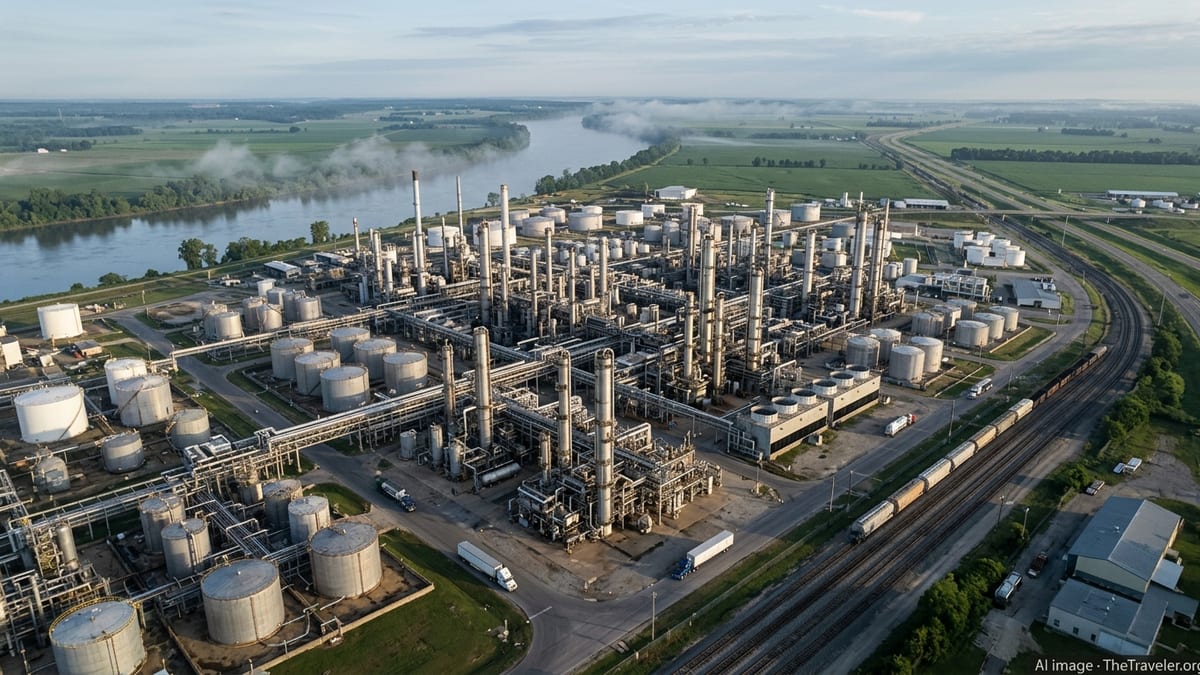
Steady Global Growth Anchored in Agrochemicals and Specialty Uses
Recent market assessments indicate that phosphorus trichloride, already one of the largest end uses of elemental phosphorus, is moving from a niche intermediate toward a more strategically visible product class as volumes and value rise over the coming decade. Global analyses generally place the sector in the low- to mid-single-digit compound annual growth range through the mid-2030s, lifting the market from roughly the mid-two-billion-dollar level in the mid-2020s toward the upper three-billion-dollar range by 2035.
Underlying this expansion is robust demand from agrochemical producers, which rely on phosphorus trichloride to manufacture organophosphorus pesticides and herbicides. Industry reports describe agrochemicals as the single largest application, often representing more than half of global consumption, as farmers and input suppliers respond to food security pressures and changing climate conditions by intensifying crop protection strategies.
Specialty chemical manufacturers are emerging as a second engine of growth. Phosphorus trichloride is a starting material for a broad family of phosphorus-based performance additives, including flame retardants, plasticizers and phosphite antioxidants used in plastics, coatings and advanced materials. As downstream clients seek tailored additives for lightweight packaging, construction components and electronics, demand for higher-purity and customized phosphorus trichloride derivatives is expected to climb.
Market researchers also point to pharmaceuticals and life sciences as a steadily expanding niche. Phosphorus trichloride is used in synthesizing active pharmaceutical ingredients and intermediates, and a growing pipeline of complex molecules is supporting additional incremental demand, particularly in North America, Europe and parts of Asia Pacific with established pharma hubs.
Regional Dynamics Highlight Asia Pacific and US Momentum
Geographical patterns in the phosphorus trichloride market broadly mirror global chemical and fertilizer trends, with Asia Pacific holding the largest share and North America and Europe contributing substantial value. Data-driven studies describe Asia Pacific as accounting for more than two-fifths of global revenues in the mid-2020s, supported by large agrochemical and fertilizer industries in China and India and a sizable regional specialty chemicals base.
In North America, demand is expected to grow at a faster-than-global pace from the second half of the 2020s, helped by technology upgrades, reshoring in chemicals and pharmaceuticals, and continued investment in crop protection products. United States market analyses project phosphorus trichloride value to climb from just over 700 million dollars in the mid-2020s toward around one billion dollars by 2035, illustrating how a single mature market can still add significant volume through process optimization, digitalization and higher-value applications.
Europe, led by Germany, France and the Benelux countries, retains a significant share of global capacity and consumption, although growth is described as steadier rather than rapid. The region’s advanced chemical infrastructure, strict regulatory regimes and emphasis on safer, more sustainable formulations are pushing producers to refine phosphorus trichloride production and handling while still supporting strong demand in crop protection, plastics additives and industrial intermediates.
Emerging markets in Latin America, the Middle East and parts of Africa are tracking global trends more gradually. Expanding agricultural acreage, investments in local formulation plants, and rising imports of specialty chemicals suggest these regions will contribute incremental demand, though from a smaller base compared with Asia or North America.
BASF, LANXESS and Arkema Consolidate Their Specialty Positions
Global diversified chemical groups are expected to play a central role in steering phosphorus trichloride growth toward higher-value segments. BASF, LANXESS and Arkema are all active in phosphorus chemistry and downstream specialties, with product portfolios that span flame retardants, plasticizers, stabilizers, polymer additives and advanced materials that often trace back to phosphorus trichloride intermediates.
BASF’s broad base in agricultural solutions, performance materials and plastic additives positions the group as a major indirect driver of phosphorus trichloride consumption. As the company invests in more efficient catalysts, process intensification and lower-emission plants, market observers see scope for more integrated phosphorus value chains that support both volume growth and margin expansion.
LANXESS has built a strong footprint in flame retardant and plastic additive chemistries, sectors that frequently depend on phosphorus-based intermediates to meet stringent fire safety and durability standards. Industry coverage highlights growing demand for high-performance materials in transportation, construction and electronics, all of which increase the need for sophisticated additives derived from phosphorus trichloride and related products.
Arkema, with its emphasis on specialty materials and coatings, also contributes to the upstream pull for phosphorus trichloride through its range of plastic additives, technical polymers and performance coatings. Analysts note that as Arkema and its peers pivot toward more sustainable and bio-based formulas, phosphorus-containing additives that deliver performance at lower treat rates can remain attractive, extending the relevance of phosphorus trichloride in evolving product lines.
Supply, Safety and Regulatory Pressures Shape Investment
Despite the encouraging demand outlook, the phosphorus trichloride market operates under significant supply, safety and regulatory constraints. Production relies on elemental phosphorus, which is energy intensive to obtain and concentrated in a limited number of regions. Market references increasingly point to supply security and logistics resilience as critical factors influencing pricing and long-term contracts, particularly for large agrochemical and specialty chemical buyers.
Phosphorus trichloride is a fuming, corrosive liquid that reacts vigorously with water, and it is classified under international control regimes because it can be used in the production of certain chemical warfare agents. These characteristics make safe handling, dedicated infrastructure and compliance with transport and storage rules mandatory. Public documentation from regulators and industry associations underscores ongoing investments in containment systems, personnel training and monitoring technologies to manage environmental and occupational risk.
At the same time, regulatory bodies across major markets are tightening standards on both pesticides and flame retardants, two of the primary downstream outlets for phosphorus trichloride derivatives. Companies are directing research and development budgets toward lower-toxicity, more selective molecules and toward formulations that minimize environmental persistence. While such shifts can retire some legacy products, they often spur the introduction of new phosphorus-based chemistries that maintain or even deepen the role of phosphorus trichloride as a starting material.
These complex drivers mean that capacity expansions are being planned cautiously, often linked to long-term offtake agreements or integrated projects that pair upstream phosphorus chemistry with captive downstream manufacturing. This approach aims to balance growth opportunities with the need for disciplined capital allocation and robust compliance frameworks.
Specialty Chemical Trends Point to Higher-Value Phosphorus Applications
Broad trends in the specialty chemicals sector are also influencing the outlook for phosphorus trichloride. Market reports describe specialty chemicals as a trillion-dollar industry that is expanding faster than basic bulk chemicals, driven by demand for tailored performance, improved durability and more efficient resource use across construction, mobility, packaging and electronics.
In this context, phosphorus trichloride’s role as a gateway to complex organophosphorus molecules gains strategic weight. Flame retardant systems designed for electric vehicles and lightweight building panels, stabilizers that extend the life of recycled plastics, and advanced additives for high-voltage cables or photovoltaic modules are all examples of end uses where phosphorus-based chemistries can create competitive differentiation.
Traveling across key chemical regions, from Europe’s industrial corridors and the United States Gulf Coast to the Yangtze River Delta and western India’s chemical clusters, the same pattern emerges: producers are pivoting toward more specialized, higher-margin products built on established intermediates such as phosphorus trichloride. As these hubs modernize plants, adopt cleaner power and deepen integration with local agrochemical and materials industries, the projected climb toward a global market of around 3.8 billion dollars by 2035 appears increasingly within reach.