

More news on this day
Phu Quoc International Airport is emerging as one of Vietnam’s most closely watched aviation projects, with new international airline partnerships, planned capacity expansion, and upgraded retail and passenger facilities positioning the island gateway as a rising hub for global leisure travel and investment.
Get the latest news straight to your inbox!
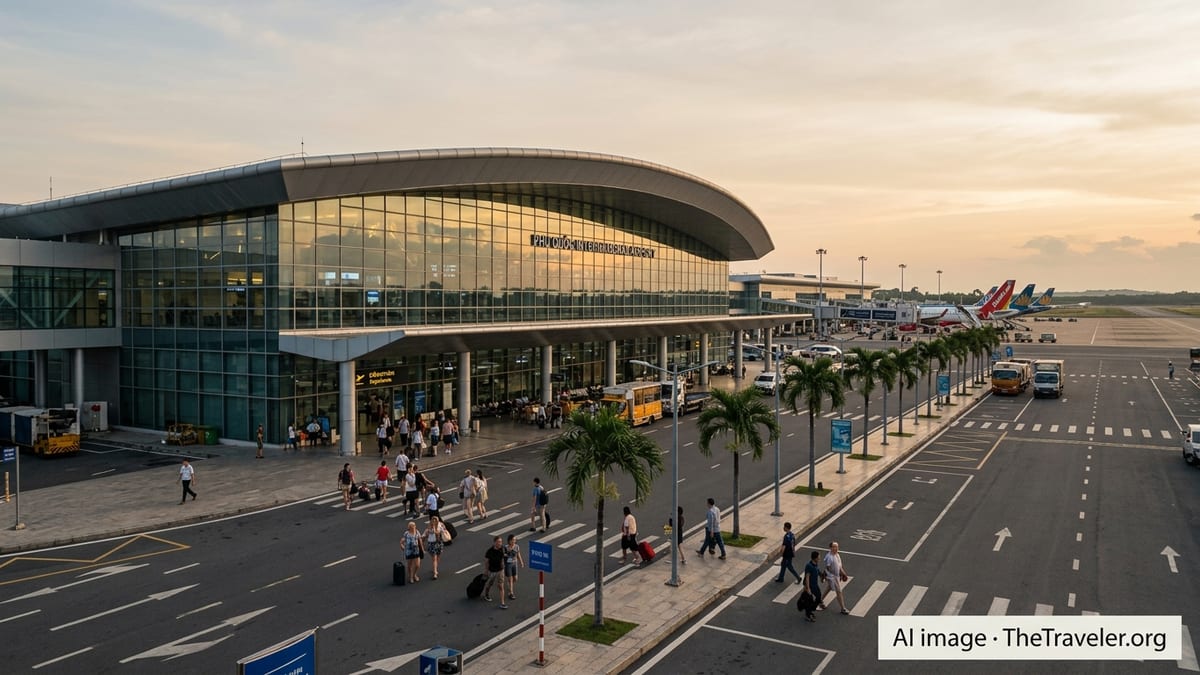
Strategic Upgrades to Support Surging Passenger Demand
Phu Quoc International Airport has seen a sharp rebound in traffic as Vietnam’s aviation market recovers, with recent peak periods underscoring the need for larger and more modern infrastructure. During the 2025 Lunar New Year travel season, the airport handled hundreds of thousands of passengers over just a few days, signaling strong international interest in the island and its high-end resorts.
Publicly available investment reports indicate that a multi-phase expansion for Phu Quoc Airport is now in motion, with a planned capacity increase targeting up to 20 million passengers per year over the second half of this decade. The project is associated with major Vietnamese developer Sun Group, which is expected to play a central role in upgrading terminal infrastructure, airfield capacity, and surrounding commercial areas in coordination with state entities.
Vietnam’s broader airport development master plan anticipates sustained double-digit growth in air travel, and Phu Quoc is among the key tourism gateways being prioritized outside the country’s traditional hubs of Hanoi and Ho Chi Minh City. Planning documents and market assessments suggest that expansion at Phu Quoc will be closely aligned with national goals to disperse tourist flows, reduce pressure on congested urban airports, and unlock new regional growth corridors.
The airport’s expansion is also being framed around resilience and operational efficiency, including additional apron space, improved taxiways, and upgraded systems to handle larger aircraft and more frequent international services. These investments are expected to support both scheduled and charter operations linking Phu Quoc with major source markets across Asia and potentially Europe.
International Airline Partnerships and Route Development
New and expanded airline partnerships are central to Phu Quoc’s strategy to elevate its global profile. Travelers to the island already benefit from a network of services operated by Vietnamese and foreign carriers, with direct flights connecting Phu Quoc to key regional cities such as Singapore and major domestic hubs that act as global connectors.
One of the most closely watched developments is the rise of Sun PhuQuoc Airways, a new carrier associated with the island’s integrated tourism ecosystem. According to public statements and regulatory disclosures, the airline received an expanded air operator certificate in late 2025, allowing it to launch international routes within the wider Asia and Middle East region. The move is expected to bring more point-to-point connectivity to Phu Quoc, reducing reliance on transfers through Hanoi and Ho Chi Minh City.
Industry coverage indicates that Vietnam’s civil aviation authorities are encouraging airlines to route more international services through secondary tourism airports, including Phu Quoc, to diversify entry points into the country. This policy approach, combined with the growth of low-cost carriers and new full-service partnerships, is likely to translate into a broader mix of seasonal, charter, and year-round flights tailored to beach, golf, wellness, and family travel segments.
As capacity at Phu Quoc increases, aviation analysts expect airlines to experiment with new links to markets such as South Korea, Japan, China, and additional Southeast Asian cities. Over time, this could support longer-haul connections, including potential seasonal services from Europe as tour operators look for alternatives to more crowded beach destinations.
Luxury Retail and an Upgraded Passenger Experience
Phu Quoc’s airport development is tightly linked to the island’s transformation into a luxury tourism destination, with airport terminals seen as a showcase for high-end hospitality and retail. Emerging plans and promotional materials point to an expanded mix of duty-free boutiques, premium fashion and cosmetics brands, and curated local products that mirror the offerings found in major regional hubs.
The goal is to position the terminal not only as a functional transit point but also as an extension of the island’s resort ecosystem, where passengers can experience spa-style amenities, refined dining, and immersive cultural displays before departure. Concepts under discussion in industry briefings include improved business lounges, fast-track immigration and security channels, and tailored services for group, family, and luxury travelers.
Enhancements to wayfinding, digital signage, and bilingual or multilingual information are also expected to be part of the next phase of upgrades. These improvements would help international visitors navigate the airport more easily, reduce congestion at key pinch points, and support a smoother transfer experience for passengers connecting through Vietnamese hubs.
In parallel, operators are increasingly focused on sustainability and design quality, with attention to natural light, green spaces, and energy-efficient systems that reflect global best practices in airport architecture. Such features are intended to differentiate Phu Quoc from older facilities elsewhere in the country and to strengthen its appeal in competitive rankings of traveler satisfaction.
Economic Impact and Tourism Growth for Phu Quoc and Beyond
The transformation of Phu Quoc International Airport carries wide-ranging implications for tourism and the local economy. The island has already emerged as one of Vietnam’s premier beach destinations, and expanded air capacity is expected to draw higher-spending visitors, extend average length of stay, and encourage year-round travel rather than purely seasonal peaks.
Economic assessments from Vietnamese securities and research firms link the airport expansion to broader investment flows in hotels, entertainment complexes, marinas, and real estate. As connectivity improves, industry observers anticipate a new wave of resort developments, conference and incentive travel facilities, and experiential offerings such as theme parks, golf courses, and eco-tours that leverage Phu Quoc’s coastal and marine assets.
On the employment side, the upgrade is forecast to create thousands of direct and indirect jobs in aviation services, ground handling, retail, food and beverage, logistics, and tourism. Local businesses stand to benefit from increased demand for supplies, transport, and professional services, while the island’s workforce gains access to new training and career pathways in a globally oriented sector.
For Vietnam’s wider economy, Phu Quoc’s evolution into a more robust international gateway supports national strategies to climb the value chain in tourism, attract foreign exchange earnings, and reinforce the country’s reputation as a diversified Southeast Asian aviation market. If planned investments proceed on schedule, the airport is likely to play a growing role in dispersing visitor flows, anchoring new international partnerships, and providing a competitive alternative to established regional resort hubs.