

More news on this day
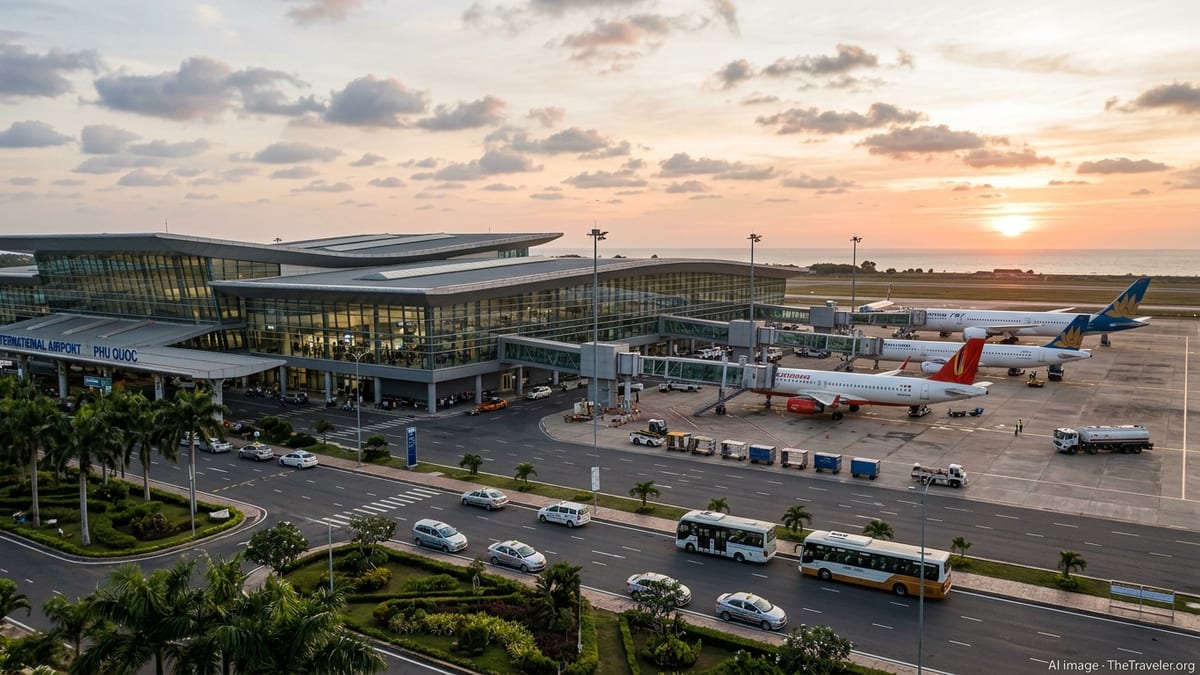
Vietnam’s Phu Quoc International Airport is moving into a new phase of development, combining large-scale infrastructure upgrades, global aviation partnerships, and an expanded luxury retail offering in a bid to transform the island into a leading international tourism and economic hub.
Get the latest news straight to your inbox!
Strategic Expansion Aligned With Vietnam’s Airport Master Plan
Phu Quoc International Airport has been identified in Vietnam’s national airport development master plan as one of the country’s key international gateways through 2030 and toward 2050, reflecting its rising role in the nation’s tourism strategy. The airport currently handles several million passengers a year, but official planning documents outline capacity increases first to around 10 million passengers by 2030 and then to higher levels by mid century as demand grows.
Recent planning and investment proposals indicate that the airport will be expanded under a public private partnership model, with national authorities encouraging Kien Giang province to accelerate procedures for new terminals, additional aircraft stands, and upgraded airfield systems in time for the APEC Summit Week scheduled to take place on Phu Quoc in 2027. The development roadmap includes keeping the existing terminal in operation while adding a second terminal and reserving land for future expansion so that the airport can scale with sustained tourism growth.
Commentary from industry analysts and infrastructure updates show that Phu Quoc is being positioned alongside Hanoi’s Noi Bai, Ho Chi Minh City’s Tan Son Nhat, Da Nang, Cam Ranh, and Long Thanh as part of a network of international airports intended to underpin Vietnam’s next phase of tourism and trade expansion. This coordinated approach is designed to spread visitor flows more evenly across the country while reinforcing Phu Quoc’s status as a southern island hub.
New Operator Model and International Airline Partnerships
From January 1, 2026, Phu Quoc International Airport entered a new operating phase under Sun Airport Joint Stock Company, part of Vietnam’s Sun Group. Publicly available corporate announcements state that the company has been licensed to operate the airport, with expectations that the model will bring greater flexibility in commercial development and service upgrades, aligning the facility more closely with international standards for privately managed hubs.
Separately, a strategic cooperation agreement between Sun Group and Airports Corporation of Vietnam outlines collaboration on ground services and operational support at airports where Sun Group’s aviation brand plans to fly. Industry reports describe this alignment as a way to knit together air services, resort assets, and on the ground experiences across Sun Group’s portfolio, with Phu Quoc positioned as a central node in that ecosystem.
At the route level, Phu Quoc continues to deepen its international connectivity. Recent coverage highlights the resumption of direct seasonal services from Russia and other Commonwealth of Independent States markets during the 2025 to 2026 winter season, alongside charter and scheduled operations by carriers from South Korea, Thailand, and regional hubs. These routes are seen as building blocks for a broader network that could eventually reach India and other long haul markets once infrastructure and terminal capacity are in place.
Luxury Retail, F&B, and Experiential Spaces Take Center Stage
As part of its transformation plan, Phu Quoc International Airport is expected to significantly expand its commercial footprint, with a strong emphasis on duty free retail, premium fashion, and curated food and beverage outlets that reflect both global brands and local culture. Investor presentations and local business media coverage point to ambitions for an upgraded terminal environment that serves not only as a transit point but also as a showcase for the island’s growing luxury resort scene.
The shift is in line with broader regional trends in airport development, where non aeronautical revenue from retail, dining, and services plays an increasingly important role in financing infrastructure and enhancing passenger experience. In Phu Quoc’s case, the plan is to connect airport offerings with the island’s high end beach resorts, entertainment complexes, and branded residences, encouraging travelers to begin their resort experience from the moment they arrive.
Prospective developments include expanded duty free zones, upgraded lounge products, wellness and spa corners, and pop up showcases for local artisans and gourmet producers. While specific brand lineups have not yet been detailed in public documents, planning materials emphasize a blend of international luxury labels with Vietnam made products, aiming to distinguish Phu Quoc from more generic regional hubs.
Passenger Experience Innovations and Sustainable Operations
Phu Quoc International Airport has already gained attention in recent years for early moves to refine the passenger experience, including a shift away from constant loudspeaker announcements in favor of digital information displays to reduce noise in the terminal. Future phases of the expansion are expected to build on this direction, incorporating more self service options, streamlined security and immigration flows, and improved wayfinding to accommodate larger volumes of international travelers.
According to sector analyses and planning documents, the upgraded terminal configuration is likely to feature additional contact gates with passenger boarding bridges, expanded immigration zones, and upgraded baggage systems to support wide body aircraft and peak charter operations. There is also a focus on integrating smart airport solutions such as automated check in kiosks, real time flight information displays, and potentially biometric supported processes, in line with trends at other major airports in the region.
Environmental considerations are also entering the design conversation. Vietnam’s broader aviation strategy emphasizes more efficient energy use, noise management, and optimized airfield layouts. For Phu Quoc, this may translate into improved stormwater management for the coastal location, energy efficient terminal façades and lighting, and better public transport connectivity to limit congestion from road traffic between the airport and key resort areas.
Tourism and Economic Impact for Vietnam’s “Pearl Island”
Tourism planners in Vietnam increasingly describe Phu Quoc as a potential regional hub for leisure, meetings, and high end resort travel. The airport expansion and new operator model are seen as critical levers for realizing that vision, with projections in local planning documents linking higher air capacity to rising visitor numbers, longer stays, and greater foreign exchange earnings.
The preparations for hosting the APEC Summit Week in 2027 are giving additional impetus to the construction timeline, as authorities and investors move to ensure that the airport can accommodate large numbers of government delegations, business leaders, and media. Analysts note that infrastructure built to meet this short term demand is intended to serve long term growth by raising Phu Quoc’s global profile and giving airlines more confidence to open year round routes.
Beyond tourism, the expanded airport is expected to support broader economic activity, including logistics, high value agriculture, and services linked to the island’s growing population. Improved connectivity can make Phu Quoc more attractive for conferences, incentive travel, and investment projects, creating a virtuous circle in which better flight options feed new development, which in turn justifies further airport enhancements. For travelers, the outcome is likely to be an island gateway that combines international scale infrastructure with resort style comfort, embedded within one of Southeast Asia’s most rapidly evolving beach destinations.