

More news on this day
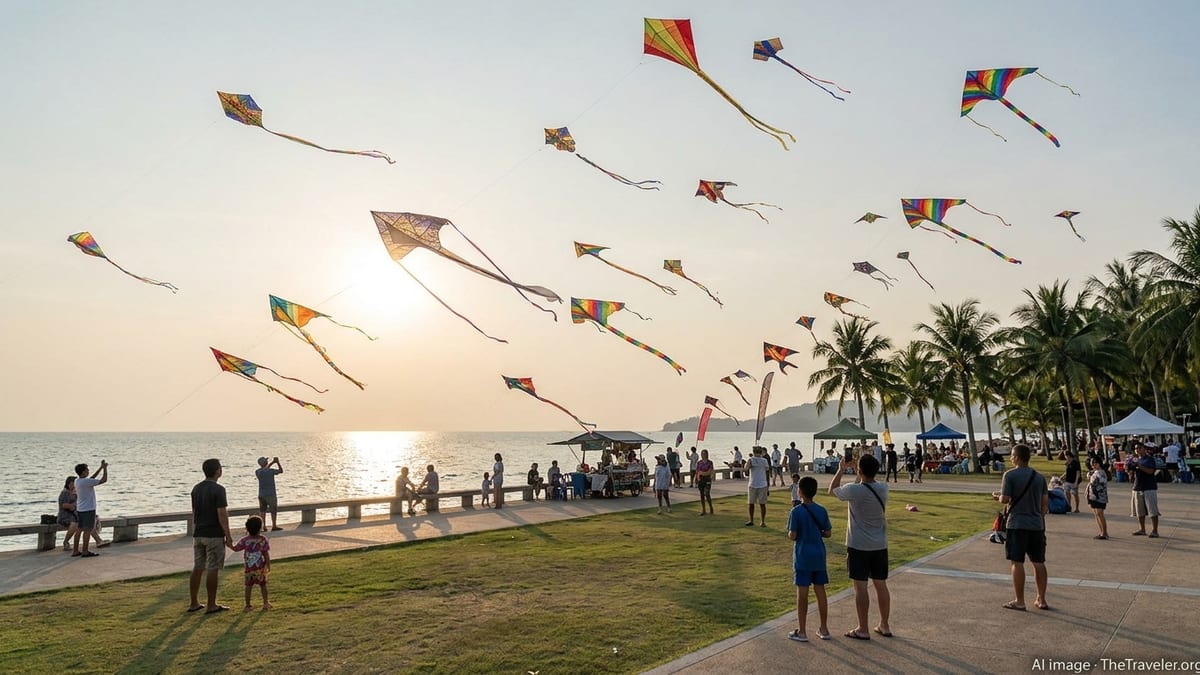
Phuket’s sky is becoming a canvas as kite-themed events take flight across the island in 2026, signalling a new strategy to pair cultural heritage with high-value tourism growth.
Get the latest news straight to your inbox!
A New Kite Landmark in Phuket’s Event Calendar
While Phuket has long relied on its beaches and nightlife to draw visitors, 2026 is emerging as a year when the island’s skyline becomes part of the attraction. A contemporary kite exhibition titled “Flying Vision” at Saphan Hin in February 2026 has put kites at the centre of a broader arts and culture push, aligning with the ongoing Thailand Biennale Phuket 2025. Publicly available event information describes large-scale artistic kites, interactive installations and workshops set against the waterfront, positioning kite culture as both performance and participatory art.
The timing is notable. Tourism Authority data and local reporting for the 2025–2026 high season indicate that Phuket is actively using festivals, art projects and sports events to lengthen stays and boost spending, especially in the wake of global travel disruptions. Kite-focused programming now sits alongside established draws such as the Phuket Vegetarian Festival and New Year festivities, suggesting that air, light and motion are becoming new visual signatures for the island’s branding.
Unlike long-running temple fairs or street festivals rooted in specific neighbourhoods, the kite initiatives are being framed as island-wide experiences that connect coastal parks, beachfronts and cultural sites. Observers note that this creates more reasons for visitors to explore beyond Patong and into areas such as Saphan Hin, Old Town and local community spaces, dispersing tourism benefits more evenly across the island.
Although Phuket’s 2026 kite activities are still more modest than Thailand’s largest kite gatherings, the decision to integrate them into an international art biennale signals ambition. It suggests that festival planners see sky-focused events as a way to differentiate Phuket from competing beach destinations while tapping into the global popularity of kite festivals.
Thailand’s Kite Boom Sets the Regional Context
Phuket’s experiments are unfolding amid a broader resurgence of kite festivals across Thailand. Recent seasons have seen major events in Cha Am, Pathum Thani and Pattaya, where giant character kites, illuminated night shows and international teams have helped turn coastal skies into seasonal attractions. Media coverage of Pattaya’s 2026 “Kite on the Beach” event, for instance, highlights strong visitor numbers and its role as an informal opener to the summer tourism period.
The pattern is clear: kites are being used as relatively low-impact, high-visibility tools to animate seafronts and public parks. They require open space rather than heavy infrastructure, and they translate well on social media, where images of colourful canopies and illuminated displays travel quickly through travel communities. Phuket’s 2026 kite programming appears to be drawing on this national momentum, using artistic and heritage angles to position itself slightly differently in the market.
In central Thailand, new festivals such as the Pathum Thani Kite Festival 2026 emphasize traditional Thai designs, craft workshops and community markets. Coverage of these events points to a rising interest in local craftsmanship and regional kite styles, from southern “wau”-inspired shapes to more modern inflatables. By situating Flying Vision within Southern textile and kite traditions, Phuket is connecting local artisans to this growing circuit of national kite gatherings.
For international travelers planning multi-stop trips, this emerging “kite corridor” across Thailand may encourage itineraries that link Bangkok, coastal resort towns and cultural hubs based on festival calendars. Phuket’s ability to secure a distinctive kite identity, rooted in southern culture and contemporary art, will likely influence how prominently it features in these plans.
Culture, Creativity and Community at Saphan Hin
Saphan Hin, a waterfront park area southeast of Phuket Town, has become a focal point for the island’s kite-led programming. Event descriptions for Flying Vision highlight collaborations between southern textile artists and kite makers, as well as live performances and community stalls. The choice of venue is strategic: the promenade offers wide open spaces, sea breezes suitable for kite flying, and easy access from both Old Town and surrounding residential districts.
By turning a public park into an open-air gallery of kites and installations, organizers are blending leisure space with cultural education. Visitors can watch art pieces in motion, participate in kite-making sessions, and sample local food in a single outing. This aligns with Thailand’s growing emphasis on “soft power” tourism, which promotes everyday culture, crafts and cuisine rather than only landmark attractions.
The community-driven format also allows local residents to share in the benefits of the festival economy. Vendors, artisans and performers from Phuket and neighbouring provinces are visibly present in program details, reflecting a shift away from closed, ticketed events and toward open-access experiences that mix tourists and locals. For families and independent travelers, this atmosphere can feel more authentic and less scripted than resort-based entertainment.
If this model proves successful, Saphan Hin could evolve into a recurring stage for kite-focused programming during the high season, with 2026 serving as a testing ground. Stakeholders watching Phuket’s development note that sustained investment in such community venues may help relieve pressure on already busy beaches while keeping tourism spending within local networks.
Tourism Growth and the Economics of the Sky
Phuket entered 2026 with tourism on an upward curve. Tourism reports for the New Year period show arrivals and revenue climbing compared with previous years, supported by new direct flights from long-haul markets and a reinforced line-up of events. Public documents credit the Thailand Biennale Phuket and other cultural programmes with boosting per-visitor spending by encouraging museum visits, guided tours and evening activities beyond the beach.
Kite events add another strand to this year-round tapestry. While individual exhibitions or festivals may be short in duration, they create strong visual moments that can be leveraged in destination marketing. Images of vivid kites over the Andaman Sea, particularly when paired with art installations or night lighting, offer fresh material for travel campaigns targeting families, culture seekers and photographers.
Economically, kite festivals are relatively flexible. They can scale up with international teams, synchronized shows and sponsors, or remain more intimate with community workshops and regional performers. For Phuket, which needs to manage seasonal peaks carefully, this flexibility is valuable. It allows the island to test different formats without committing to major permanent structures, while still offering reasons to visit in shoulder periods.
Analysts following Thailand’s tourism strategy have noted that destinations are increasingly judged not only on their natural assets but also on the originality and sustainability of their events. Phuket’s 2026 kite activities are therefore likely to be assessed in terms of how they influence visitor behaviour: whether they lengthen stays, shift spending into local communities and encourage travel outside the most crowded zones.
Could Kite Festivals Redefine Travel on Phuket?
Whether 2026 will be remembered as the year kite culture reshaped travel on Phuket remains an open question, but early indicators point to a broader reimagining of the island’s identity. The alignment of Flying Vision with the Thailand Biennale, the integration of craft workshops and community markets, and the island’s place within Thailand’s growing map of kite festivals all suggest a pivot toward experience-led, story-rich tourism.
In practice, this could mean visitors planning trips around cultural calendars rather than only weather patterns, with kite festivals sitting alongside events such as Songkran, the Vegetarian Festival and music gatherings. Travel forums already show increasing interest in time-specific experiences, from lantern celebrations to niche sports events, and kite programming may join this list as information becomes more consistent and widely shared.
For Phuket’s tourism planners, the challenge will be to sustain the novelty of sky-focused events without overwhelming local spaces or diluting their cultural roots. Maintaining links to southern Thai kite traditions, supporting artisans and ensuring that free public access remains central will likely be key tests in the years ahead. If these elements hold, Phuket’s colourful 2026 sky may be remembered not only as a spectacle, but as a signal of how the island intends to welcome the next wave of global travelers.