

More news on this day
Phuket is rapidly emerging as Thailand’s new super-hub, as fresh schedules and expanded services in 2025 and 2026 tighten air links between the island and the northern cities of Chiang Mai and Chiang Rai, while strengthening its long-standing partnership with Koh Samui.
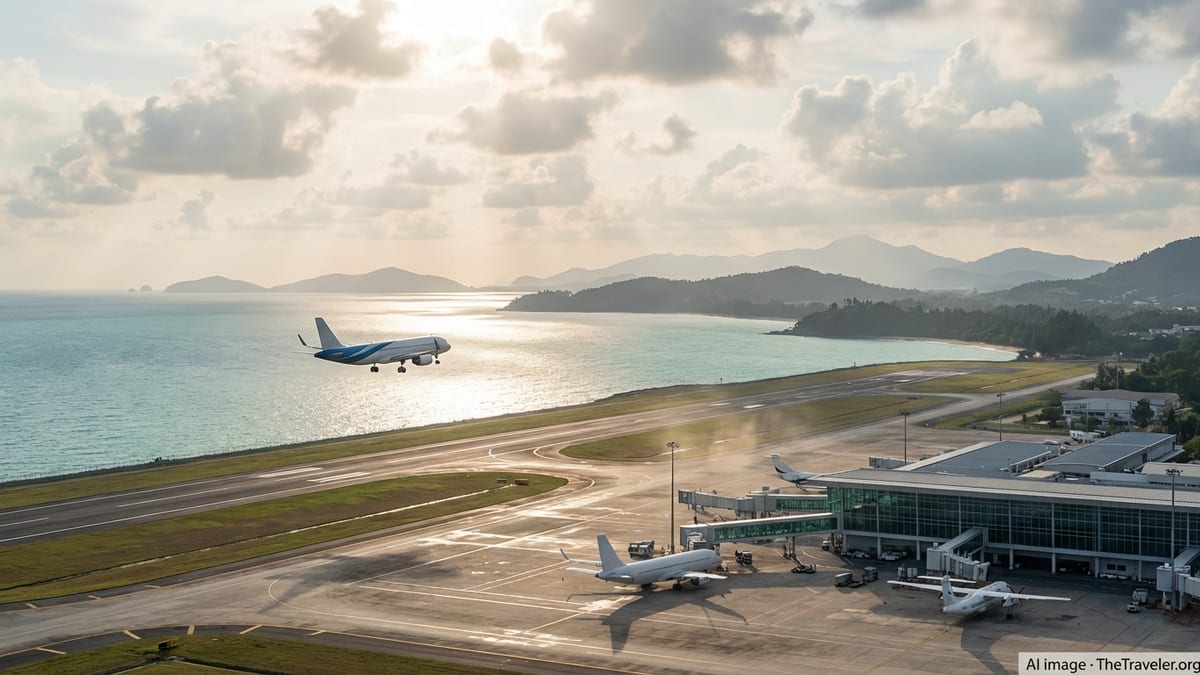
A 2026 Flight Map Built Around Phuket
The latest schedules published for the 2025–2026 season show Phuket consolidating its role at the center of Thailand’s domestic and regional network. While Bangkok remains the country’s primary gateway, increased frequencies to Chiang Mai and Koh Samui, new long-haul arrivals and stronger codeshare arrangements are pushing Phuket into a new league of connectivity.
Bangkok Airways continues to anchor travel between Phuket and Koh Samui, operating multiple daily turboprop services across the short 155 mile route, with timetables already filed into late 2026. Operating ATR 72 aircraft, the airline offers year round links that allow visitors to pair two of Thailand’s most popular beach destinations on a single itinerary without returning via Bangkok.
On the northern side of the country, airlines are steadily rebuilding and expanding networks to Chiang Mai and Chiang Rai, routing more passengers through Phuket and other Thai hubs. Thai AirAsia’s aggressive domestic expansion, along with growing international interest from carriers in India, the Middle East and Europe, is feeding a wave of new itineraries that allow travelers to enter Thailand via Phuket and continue north without backtracking.
Taken together, these moves are creating a 2026 flight map in which Phuket, Chiang Mai, Chiang Rai and Koh Samui function less as isolated tourist spots and more as a connected circuit that can be explored in a single trip.
Bangkok Airways Deepens the Phuket–Koh Samui Link
Bangkok Airways remains the only carrier operating direct flights between Phuket and Koh Samui, and its filed schedules for late 2025 and well into 2026 confirm that this link will stay central to island hopping next year. Timetables show up to three daily services in each direction, typically clustering departures in the morning and around midday to support same day connections to longer haul flights.
From October 2025 through at least October 2026, flight data indicates a stable pattern of one hour sectors on ATR 42 and ATR 72 aircraft, with first departures leaving Koh Samui around 08:00 and arriving into Phuket about 09:00 local time. Return flights from Phuket to Koh Samui are similarly timed, allowing travelers to spend most of the day at either end while still making evening connections.
These flights are heavily integrated into international networks through codeshares with major partners. Passengers arriving into Phuket from Europe or the Middle East can book through itineraries that include onward sectors to Koh Samui on a single ticket, avoiding domestic recheck of baggage and offering a smoother transfer experience. The same structure will continue through the 2026 high season, making it easier for visitors to stitch Phuket and Koh Samui into multi stop journeys that also include the north.
With Phuket set to welcome more widebody arrivals in winter 2026, including new services from London and additional capacity from India, the Samui link is poised to become even more important. Tour operators are already marketing Phuket to Koh Samui combinations as a core component of 2026 beach packages.
Stronger Northern Gateways in Chiang Mai and Chiang Rai
Chiang Mai and Chiang Rai, long popular with culture focused and nature focused travelers, are entering a period of renewed connectivity that will resonate into 2026. Chiang Mai in particular is drawing new attention from regional and long haul airlines that already serve Phuket, including full service carriers evaluating direct links that would complement existing low cost operations.
Low cost and regional airlines have been steadily rebuilding capacity to northern Thailand since 2024, with Thai AirAsia playing a leading role via its hubs in Bangkok, Chiang Mai and Phuket. The airline now operates one of the largest domestic networks in the country, giving travelers multiple daily options to move between Bangkok, Chiang Mai, Phuket and other secondary cities, with more growth outlined for 2025 and 2026.
While direct Phuket–Chiang Mai and Phuket–Chiang Rai services remain more seasonal and operator dependent than the Phuket–Samui shuttle, the broader pattern is clear: airlines are designing schedules that allow international passengers who land in Phuket to connect north through domestic hubs without lengthy layovers. For Chiang Mai, increased capacity from regional carriers and the prospect of additional full service links in 2026 position the city as the main northern anchor in multi stop Thailand itineraries.
Chiang Rai, nearer to the borders with Laos and Myanmar, continues to develop as a secondary northern gateway with growing frequencies from Bangkok. That in turn makes it easier to bolt on visits to the Golden Triangle or Mekong region after time spent in Phuket and on the islands, using a combination of domestic flights and short regional hops.
Infrastructure Investment Underpins the New Network
The strategic uniting of Phuket, Chiang Mai, Chiang Rai and Koh Samui is being reinforced by significant infrastructure investment across Thailand’s aviation system. Phuket International Airport itself is undergoing expansion to lift annual capacity by several million passengers, easing congestion that has persisted since tourism rebounded.
Looking toward the next decade, authorities are also pressing ahead with a second airport for the Phuket region in neighboring Phang Nga province. Planned as Andaman International Airport, the project is designed to take pressure off Phuket, accommodate more widebody flights and open up additional slots for both domestic and regional services, which would support yet more frequencies to northern Thailand and Koh Samui later in the 2020s.
In parallel, long term plans for a new Lanna Airport near Chiang Mai underscore the government’s ambition to turn northern Thailand into a higher capacity aviation hub. Although that project will not open by 2026, the signal to airlines is clear: capacity constraints in the north will gradually ease, encouraging carriers that already serve Phuket or Bangkok to look seriously at Chiang Mai and Chiang Rai.
Together, these developments are redefining the geography of Thai aviation. Instead of one dominant hub in Bangkok, the system is shifting toward a more polycentric map in which Phuket and the northern cities share a larger role in distributing traffic across the country.
What the 2026 Flight Map Means for Travelers
For travelers planning 2026 holidays, the practical impact of these shifts is greater flexibility in designing multi destination trips. A visitor could arrive into Phuket on a long haul service, spend several days on the island, connect directly to Koh Samui on a turboprop shuttle, then fly north to Chiang Mai via Bangkok before exiting Thailand from another gateway.
The steady operation of Bangkok Airways’ Phuket–Koh Samui services, the expanding domestic networks of carriers such as Thai AirAsia and new long haul links into Phuket all reduce the need to pass repeatedly through Bangkok. That saves hours of transit time and opens up more creative routing options for both independent travelers and package holidaymakers.
At the same time, the growing profile of Chiang Mai and Chiang Rai on airline route maps means that northern Thailand is no longer an optional add on. With more capacity and better timed connections anticipated into 2026, the region is emerging as a core part of the country’s tourism strategy alongside Phuket and Koh Samui.
As airlines finalize their winter 2026 schedules over the coming months, the picture is likely to sharpen further. What is already clear from the latest filings and announcements is that Phuket’s role as a unifying hub for Chiang Mai, Chiang Rai and Koh Samui will only strengthen, reshaping how visitors experience Thailand’s beaches, mountains and cultural heartlands in a single seamless journey.