

More news on this day
Just over two hours’ flight from several UK airports, Spain’s Picos de Europa is emerging as one of Europe’s most spectacular yet surprisingly affordable mountain escapes, pairing dramatic limestone peaks with low-cost connections on Ryanair and other budget carriers into nearby northern airports.
Get the latest news straight to your inbox!
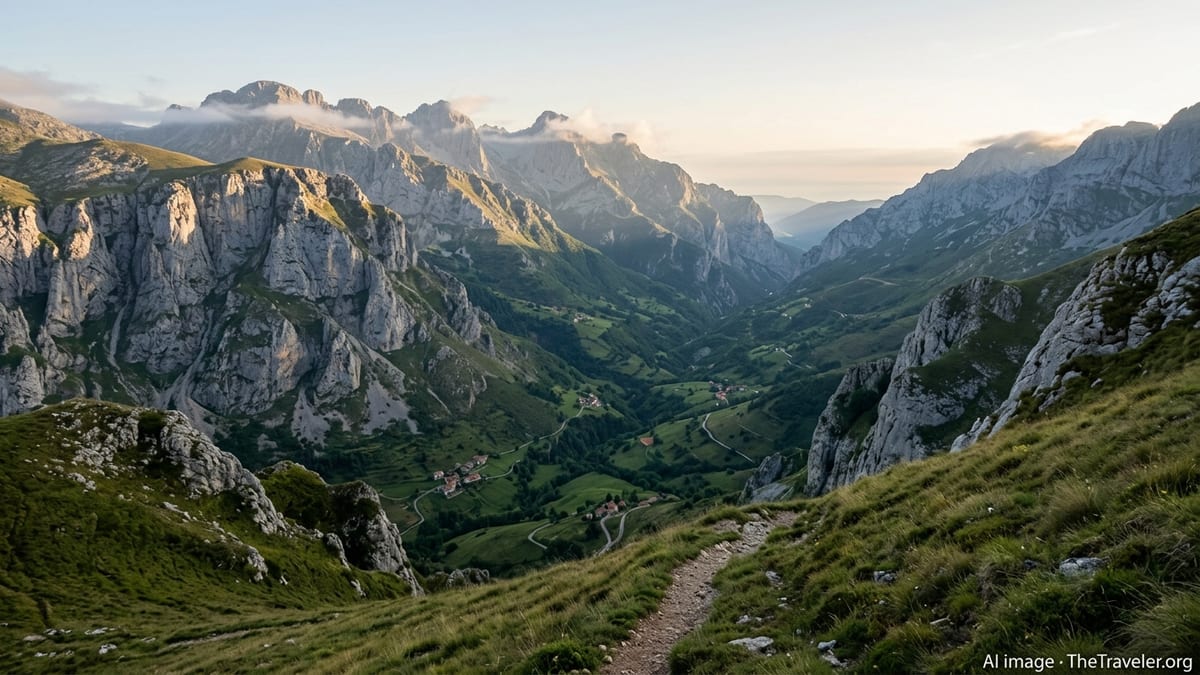
A High-Drama Landscape Hidden Behind Spain’s Green Coast
Picos de Europa National Park lies inland from Spain’s Bay of Biscay, straddling Asturias, Cantabria and Castile and León. Publicly available tourism information describes a compact but wildly varied landscape of jagged limestone summits, glacial cirques and deep river gorges carved by the Cares, Deva and Sella rivers. At its highest points, the range tops 2,600 metres, yet sits only around 30 kilometres from the Atlantic coast.
Travel features and hiking guides highlight the striking contrast between lush valleys dotted with stone villages and the stark, near-alpine scenery above. Well-known beauty spots include the Covadonga Lakes, a pair of high tarns reached by shuttle bus in peak season, and the Cares Gorge path, a former hydroelectric maintenance track now regarded as one of Spain’s most dramatic one-day hikes.
Infrastructure is relatively modest compared with the Alps, which has helped keep the area feeling like a “best-kept secret.” There are no major ski resorts or sprawling resort towns. Instead, visitors base themselves in small centres such as Potes, Cangas de Onís and Arenas de Cabrales, where family-run guesthouses, campsites and simple mountain hotels cater to walkers, climbers and road-trippers.
Despite its remote feel, basic services for visitors are well established. Trailheads, refuges and visitor centres are supported by regional authorities, and updated route information is published ahead of each summer season to reflect snow conditions, maintenance works and conservation measures.
Cheap Flights Put Northern Spain Within Easy Reach
The Picos de Europa do not have their own airport, but they are framed by several northern Spanish gateways used by low-cost airlines. Data published for 2026 schedules indicates that Seve Ballesteros-Santander Airport in Cantabria and Asturias Airport to the west both remain connected to the UK and other European hubs by a mix of budget and legacy carriers, including Ryanair on selected routes.
Corporate releases and schedule guides for 2025 and 2026 show that Ryanair is maintaining a strong presence between the UK and Spain, even as it adjusts capacity on some regional Spanish routes in response to higher airport charges. Budget-focused travel coverage notes that UK-based travellers can often find one-way fares advertised from under 30 euros equivalent on off-peak dates to northern Spanish airports that place them within a two to three-hour drive of the Picos.
Santander is typically the most straightforward entry point for the central and eastern massifs, with road links via the Cantabrian motorway network and mountain roads into Liébana and Cabrales. Asturias Airport, serving the regional capital Oviedo as well as the coastal towns of Gijón and Avilés, offers another viable option for reaching the western Picos and the Cangas de Onís area.
While airline timetables continue to evolve, publicly accessible airport schedules and airline statements suggest that competition among low-cost carriers on UK–Spain routes is keeping average fares in check, especially outside peak school holiday periods. Travel planners therefore point to northern Spain as one of the few remaining parts of “wild Europe” realistically accessible on a tight city-break budget.
Fuente Dé Cable Car and Iconic Hiking Routes
One of the most distinctive access points into the high Picos is the Fuente Dé cable car in Cantabria. Official descriptions of the aerial lift explain that it rises more than 750 metres from the valley floor to a lookout station known as El Cable, delivering visitors directly to a high plateau of bare rock, scree slopes and sweeping views over the Liébana valley.
Current hiking guides outline a network of marked routes beginning at the top station. Popular itineraries include the traverse towards the mountain refuge at Cabaña Verónica and the ascent to Horcados Rojos, a viewpoint overlooking the distinctive peak of Naranjo de Bulnes. Many routes can be completed as day hikes by reasonably fit walkers in good summer conditions, although mountain weather can shift quickly and snowfields may linger on shaded slopes into early season.
Elsewhere in the park, the Cares Gorge trail between Poncebos and Caín remains a highlight for visitors who prefer dramatic scenery to technical scrambling. The path, cut into the cliff high above the river, runs for around 12 kilometres one way. Recent tourist bulletins from nearby towns emphasise the need for suitable footwear, water and early starts during heatwaves, as shade can be limited on some exposed sections.
For lower-level walking, signed circuits around the Covadonga Lakes and valley routes near Potes and Arenas de Cabrales offer easier options. These paths pass through meadows, beech woods and tiny hamlets where traditional stone barns and grazing cattle underline the area’s continued agricultural character.
When to Go and How Much to Budget
Seasonal guides for Picos de Europa generally indicate that June to September is the prime hiking window, with the most reliable combination of open trails, running mountain services and stable weather. Spring and autumn can be rewarding for experienced visitors prepared for rain, changeable temperatures and occasional late or early snow at higher elevations.
In terms of cost, public information from regional tourism offices and recent independent trip reports suggest that northern Spain remains comparatively affordable next to many Alpine regions. Simple rural guesthouses and small hotels can often be found at mid-range prices in villages close to the park boundary, while campsites and refuges keep costs lower for trekkers. Restaurant menus in local towns typically focus on hearty regional dishes, with set menus often priced at levels that appeal to budget-conscious visitors.
Transport within the region adds some expense but remains manageable. Car hire from Santander or Asturias airports gives the most flexibility for exploring remote valleys and trailheads, although fuel and tolls should be factored in. Limited bus services connect key towns and some entrances to the park, and taxi transfers are available for specific hikes, particularly linear routes such as the Cares Gorge, where returning to the starting point by public transport can be time-consuming.
Travel coverage also notes that the overall trip budget often compares favourably with more famous mountain destinations. With low-cost flights from the UK into northern Spain, travellers willing to avoid the busiest holiday weeks can combine affordable transport and mid-range accommodation to experience high-mountain landscapes at a fraction of the price of many Alpine resorts.
An Under-the-Radar Alternative to the Alps
Despite its growing profile in specialist hiking circles, Picos de Europa still receives far fewer international visitors than better-known European ranges. National park communications and local tourism campaigns position the region as a quieter, more traditional alternative, where working farms, small vineyards and centuries-old villages exist alongside waymarked trails and modern visitor facilities.
Compared with the dense lift networks and large resort towns of the Alps, the Picos feel notably less developed. Nightlife is limited, and high-altitude accommodation is largely confined to traditional refuges and a handful of lodges. For many travellers, this is precisely the appeal: a chance to step into rugged landscapes that feel significantly more remote than the journey time from the UK might suggest.
As airlines continue to refine their UK–Spain schedules for the coming seasons, industry analysts expect northern Spain to remain within the orbit of budget carriers, even as some regional airports see capacity reduced or shifted. For now, low fares on Ryanair and its rivals into gateways such as Santander and Asturias keep the Picos de Europa firmly on the radar for value-focused travellers.
For those prepared to trade marquee Alpine names for lesser-known Spanish peaks, the reward is a mountain experience with big-wall drama, deep gorges and sweeping Atlantic light, all within a few hours of leaving a British airport and at a price that remains surprisingly accessible.