

More news on this day
In early spring, the lakeside city of Pinghu in eastern Zhejiang turns soft shades of pink, as thousands of cherry trees frame canals, parks and new cultural spaces that together anchor one of China’s emerging blossom festivals.
Get the latest news straight to your inbox!
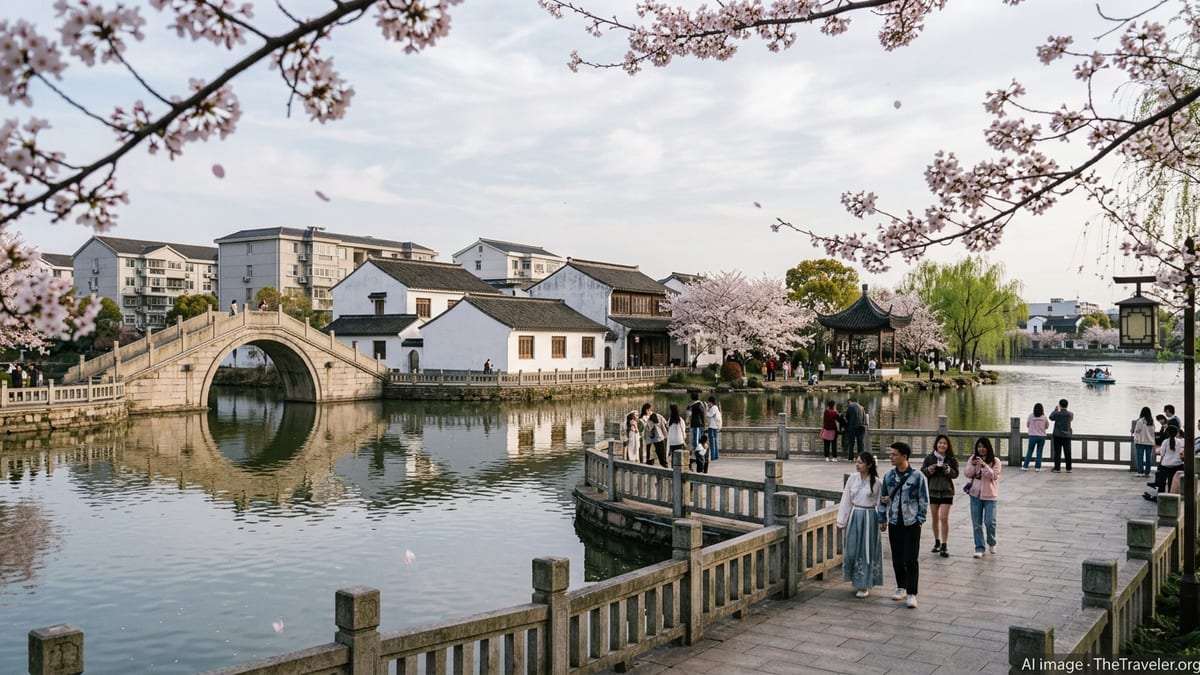
A Growing Cherry Blossom Destination in Zhejiang
Publicly available tourism information shows that Pinghu, on the northern coast of Zhejiang facing Hangzhou Bay, has positioned cherry blossoms as a signature element of its spring travel season. The city’s East Lake scenic area and nearby towns combine waterfront promenades with concentrated plantings of cherry trees, giving visitors a chance to view blossoms both in landscaped parks and along historic waterways.
Reports indicate that since the mid-2010s, the Zhongxi area of Pinghu has developed what is often described as a cherry blossom town, with large-scale roadside and riverside plantings connected to a dedicated Cherry Park. These newer landscapes complement older lakefront viewpoints, expanding the festival footprint beyond a single park into a broader urban and rural corridor.
Regional coverage from Zhejiang-focused outlets highlights Pinghu as part of a wider Yangtze River Delta circuit of spring flower destinations, but notes that the city offers a quieter alternative to the larger and more established cherry blossom hubs in nearby Shanghai and Jiangsu. For domestic travelers arriving from Shanghai or Hangzhou by high-speed rail or expressway, Pinghu’s compact size and relatively short internal travel times add to its appeal for weekend and day trips.
Travel industry commentary suggests that local authorities and businesses have seized on this advantage by coordinating flowering forecasts, event programming and transport guidance, aiming to ensure that visitors encounter peak blossoms alongside a structured set of cultural and leisure activities.
Blossoms Framing Water, Bridges and Old Town Streets
The physical setting is central to Pinghu’s cherry blossom experience. East Lake, created at the confluence of nine rivers, is promoted in municipal tourism materials as a scenic focus where tree-lined banks, causeways and small islands form natural viewing platforms. Carefully designed walking routes lead visitors past restored pavilions and over arched bridges that reflect in the water beneath archways of blossoms.
Descriptions of the lake’s “Top Eight Scenes,” a modern reinterpretation of historical landscape themes, emphasize seasonal change, with “Spring in East Lake” presented as a key motif. In practice, this translates into curated vantage points where cherry trees frame long views across the water or are juxtaposed with traditional-style towers and contemporary waterfront residences.
Beyond the lakefront, Zhongxi’s cherry corridors offer a more immersive, small-town feel. Local guides describe streets where blossoms hang over canals and village-style lanes, allowing for slower walks and close-up photography. In the evenings, selective lighting accentuates the blossoms and surrounding architecture, extending viewing hours and supporting a growing nighttime economy of teahouses, cafes and small restaurants.
Travel bloggers and tour operators increasingly market these contrasting settings as complementary experiences within a single trip: one focusing on broad, open water vistas, the other on intimate, pedestrian-scale encounters with the trees.
Cultural Performances and Intangible Heritage On Show
Recent coverage by Chinese and international media points out that Pinghu’s cherry blossom season is structured as more than an outdoor flower show. The festival period typically features a series of staged cultural performances and hands-on activities that bring elements of traditional Chinese life into the parks and public squares.
Program lineups reported in 2025 coverage included tea art displays, classical instrument recitals and folk dance performances set against rows of blooming trees. Intangible cultural heritage demonstrations, such as traditional handicrafts and regional snacks, are organized as short workshops or open-air stalls, allowing visitors to watch, buy or participate without formal registration.
Tourism planners in the city appear to be using the festival as a showcase for local creative industries. Fashion shows featuring designs inspired by blossoms, small design markets and exhibitions of floral-themed photography are regularly mentioned in promotional material. This approach aligns Pinghu with a broader national trend of linking seasonal nature tourism with creative and cultural consumption.
For many visitors, these cultural layers turn a simple flower-viewing outing into a full-day program that spans performances, shopping and casual dining. The combination also smooths out the visitor flow, offering alternatives when paths near popular viewing points become crowded.
International Visitors and Cross-Cultural Exchange
Reports from broadcasters and regional media in March 2025 noted a visible presence of international visitors at Pinghu’s cherry blossom events, particularly from countries with their own strong cherry blossom traditions. Organized groups and expatriate communities based in the Yangtze River Delta have increasingly added Pinghu to their spring itineraries.
Coverage describes mixed-language signage, bilingual program guides and curated cultural exchange segments as practical responses to this growing diversity of visitors. Performances and demonstrations are often framed with short introductions in more than one language, while volunteers help explain the background of specific rituals, costumes or crafts.
This development supports Pinghu’s ambition to function as an international community within the wider region, reflecting its role as a base for foreign-invested enterprises. Travel analysts note that cherry blossoms, which carry layered symbolism in both Chinese and East Asian cultures more broadly, provide a visually engaging backdrop for soft cultural exchange that feels informal rather than ceremonial.
As more overseas visitors share images and trip impressions on social media platforms, Pinghu’s profile as a cherry blossom destination is expected to rise, reinforcing its position alongside longer-established blossom-viewing cities and potentially extending the season through repeat and off-peak visits.
Planning a Visit: Timing, Access and Visitor Experience
Based on recent festival schedules, Pinghu’s main cherry blossom activities typically begin in the second half of March and continue into April, subject to weather and bloom conditions. Local bulletins and city tourism channels provide regular updates on flowering stages, helping visitors choose optimal dates within the peak period.
From Shanghai, travel guides describe direct highway routes and bus services that reach Pinghu in around one to two hours, depending on traffic, with additional options via rail to nearby hubs followed by short road transfers. Once in the city, shuttle services and walking circuits connect key viewing points around East Lake and Zhongxi, reflecting an emphasis on compact, walkable experiences rather than long-distance internal travel.
Visitor information circulated in recent seasons has highlighted measures aimed at improving comfort and safety, including crowd management at narrow lakeside paths, timed performances to disperse gatherings, and expanded temporary facilities during peak weekends. Environmental messaging encourages guests to stay on marked paths, respect planting areas and limit waste, aligning the festival with broader goals of ecological protection around the lake and rivers.
With each spring, Pinghu’s cherry blossom festival is evolving from a regional flower-viewing occasion into a more structured blend of nature, culture and international exchange. For travelers seeking a manageable, lakeside setting that combines classic Chinese scenery with contemporary cultural programming, the city is emerging as a notable stop within Zhejiang’s increasingly competitive spring tourism calendar.