

More news on this day
Pittsburgh International Airport has made aviation history by becoming the first airport in the world to receive Universal Design certification, a new benchmark in inclusive, human-centered terminal design that aims to make every step of the journey easier for travelers of all ages and abilities.
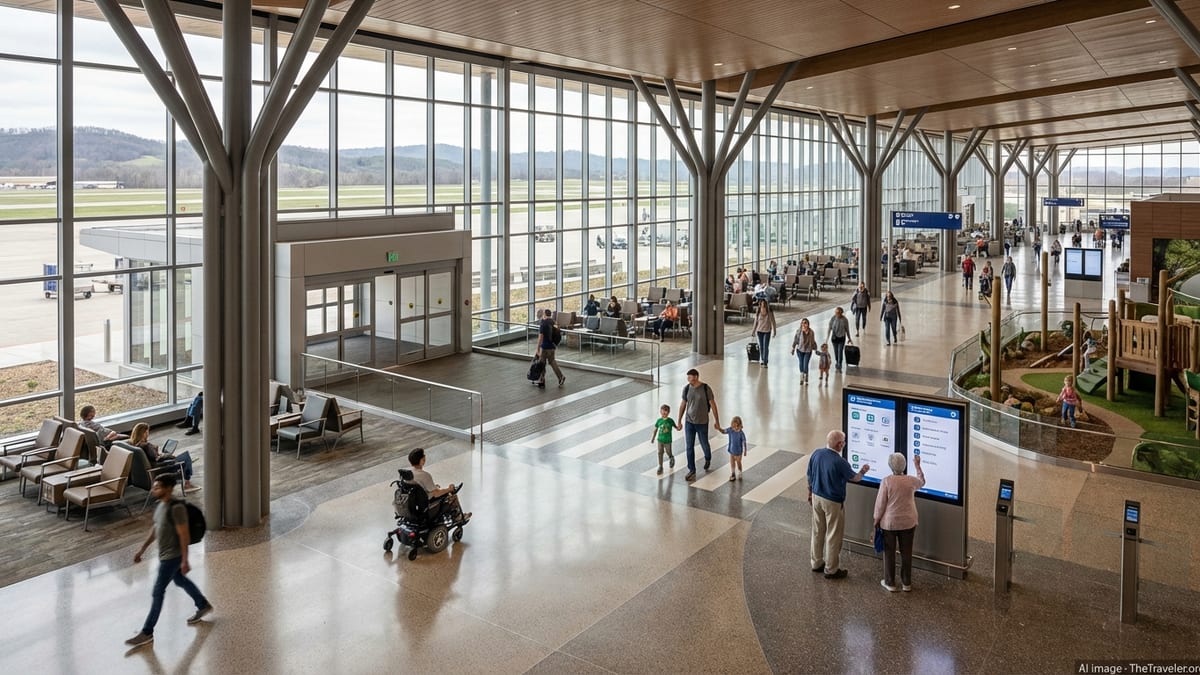
A Global First in Inclusive Airport Design
The certification, awarded in February 2026 by the University at Buffalo’s Center for Inclusive Design and Environmental Access, confirms Pittsburgh International Airport as the world’s first airport to meet rigorous universal design standards across its facilities. The recognition places the western Pennsylvania hub at the forefront of a growing movement to ensure transportation infrastructure works for everyone, not only for people who already travel with ease.
Universal design goes beyond traditional accessibility requirements, which tend to focus largely on compliance for people with disabilities. Instead, it evaluates how seamlessly an environment serves a wide spectrum of needs, including families with young children, older adults, travelers with temporary injuries, people with sensory sensitivities and passengers hauling heavy bags or navigating the airport for the first time.
For Pittsburgh, the designation is also a symbolic milestone. The airport’s leadership has spent the past decade rethinking the facility from the ground up, arguing that a truly modern terminal must be intuitive and stress-reducing for every traveler. The new certification signals that outside experts now view PIT as a model that other airports can study and emulate.
How the New Terminal Anchors Universal Design
The universal design award arrives just months after Pittsburgh International opened its new multilevel terminal, a centerpiece of the airport’s Terminal Modernization Program. The 700,000-plus-square-foot facility brings check-in, security, baggage claim, ground transportation and concessions under one roof, replacing an older split-terminal layout designed primarily around the needs of a single dominant airline.
From the beginning of planning, the airport authority and its design teams centered the project on three principles: nature, technology and community. That framework carried through to the universal design strategy, informing everything from where travelers first step out of a car to how they find their gate and spend their dwell time in the concourses.
Key to the redesign is an origin-and-destination terminal concept, shaped for the way most passengers actually use Pittsburgh today. Rather than serving mainly as a transfer hub, the airport now caters primarily to travelers starting or ending their trips in the region. That shift allowed architects to optimize path-of-travel routes, minimize level changes and eliminate confusing transitions that can be especially challenging for people with mobility limitations, visual impairments or cognitive differences.
The result is a building in which intuitive navigation is considered as important as architectural flair. Wayfinding lines of sight, consistent signage and thoughtfully placed information counters support independent movement, reducing the need to ask for help and restoring a sense of control to nervous or inexperienced travelers.
Features That Redefine an Accessible Journey
While the certification recognizes the terminal as a whole, it is grounded in a host of specific design choices. Many are subtle enough that seasoned flyers might not consciously notice them, yet they can dramatically change the experience for people who previously found air travel overwhelming or physically demanding.
At curbside and in the landside hall, the airport has introduced raised crosswalks that slow vehicles and level out the walking path, reducing tripping hazards and making it easier for wheelchair users and travelers pushing strollers to move between parking, drop-off areas and the terminal doors. Enhanced lighting, contrasting pavement and clearly defined crossings further improve visibility in a zone that is often chaotic at busy airports.
Inside, ticketing counters and service desks feature accessible heights that allow wheelchair users to speak directly with airline staff without straining or being forced to conduct transactions from an awkward distance. Seating and queuing areas are arranged to create rest stops along key routes, recognizing that not every passenger can comfortably stand or walk for long stretches.
Technology supports the physical infrastructure. Digital wayfinding tools provide both visual and audio cues, assisting travelers with limited vision or reading challenges. Clear iconography, large type and intuitive symbols help non-native speakers and infrequent travelers understand directions without needing to parse dense text. Throughout the building, materials, lighting levels and acoustics are calibrated to reduce glare, echo and visual clutter that can heighten anxiety.
Setting a New Standard for Families and Neurodiverse Travelers
The universal design certification also recognizes Pittsburgh’s focus on families and neurodiverse travelers, groups whose needs were frequently overlooked in older terminal models. The airport’s reimagined kids play area, aligned with the new design standards, blends inclusive playground concepts with thoughtful sensory zoning so that children of various ages and abilities can engage safely.
The children’s spaces are organized to offer quieter corners alongside more active play equipment, giving caregivers options when a child becomes overstimulated. Textures, colors and sounds are selected to be engaging without becoming overwhelming, acknowledging that some children thrive on sensory input while others quickly reach their threshold.
These new areas build on the airport’s earlier introduction of a sensory-friendly room, known as Presley’s Place, one of the first comprehensive spaces of its kind in a U.S. airport. Designed for travelers with autism or other sensory sensitivities, the room offers adjustable lighting, sound control and calming features that allow families to decompress before or after a flight. The success of that initiative helped shape the broader universal design approach, demonstrating that relatively small, targeted investments can unlock air travel for families who previously stayed home.
Together, the play zones, family restrooms, lactation rooms and quiet spaces send an important message: families with complex needs are not an afterthought in Pittsburgh’s terminal, but a central user group for whom the building has been deliberately crafted.
From Security to Boarding: Smoother Flow for Everyone
The universal design lens is particularly evident at some of the most stressful pinch points in any airport journey, beginning with the security checkpoint. Pittsburgh’s new terminal consolidates screening into a single, expanded checkpoint with additional lanes and advanced imaging technology, replacing the dual-checkpoint system that once forced passengers to navigate between different buildings.
The consolidated checkpoint is designed to reduce confusion and bottlenecks. Clear queuing patterns, straightforward sightlines and improved pre-screening information help travelers understand where to go and what to expect. Wider lanes and more generous space around screening stations give mobility-device users, families with small children and travelers handling bulky medical equipment the room they need to move at their own pace without feeling pressured by crowds.
Beyond security, gate areas in the modernized terminal incorporate ample seating with varied configurations, allowing passengers to choose quieter corners or more social zones. Power outlets are distributed widely and placed at accessible heights, a crucial feature for travelers who rely on medical devices or communication tools as well as for those simply trying to keep a phone charged during a long day of travel.
The baggage system has also been overhauled. A more efficient layout and shorter conveyor runs are expected to cut wait times and reduce the amount of walking required to reach carousels. The arrival sequence, from jet bridge to carousel to ground transport, has been mapped so that signposting feels continuous and predictable, supporting travelers who can become disoriented after a long flight or in an unfamiliar terminal.
Design Inspired by Pittsburgh’s Landscape and Community
While the universal design certification focuses on function, the airport’s leaders have emphasized that they want the space to feel distinctly rooted in western Pennsylvania rather than like an anonymous transportation node. That local identity is expressed through materials, forms and views that also contribute to passengers’ comfort and orientation.
Tree-like structural columns, wood-finish ceilings and expansive windows bring natural light and regional character into the concourses and central hall. Outdoor terraces, planted with native vegetation, offer fresh air and views of the airfield and surrounding landscape, giving travelers a mental break from interior spaces and providing an alternative to crowded hold rooms.
The use of daylight and sightlines is not purely aesthetic. Exposure to natural light can help regulate travelers’ body clocks and reduce fatigue, while views to the outdoors help people maintain a sense of direction, a subtle but important aid for those who struggle in enclosed environments. The terraces and large panes of glass also support wayfinding, allowing passengers to intuitively grasp where they are relative to runways, parking and drop-off zones.
Local collaboration has been a hallmark of the project. Regional designers, disability advocates, medical professionals and community organizations provided input throughout planning and testing phases. Their feedback informed details that might not be obvious on opening day, such as door hardware choices, flooring transitions and the placement of assistive listening systems, but which together shape a more welcoming experience.
Sustainability, Resilience and Equity in One Hub
Pittsburgh International’s universal design milestone sits alongside another distinction: it is among the first major U.S. airports to be powered entirely by its own natural gas and solar energy microgrid. This independent power system, which came online before the new terminal opened, enhances resilience during regional grid disruptions and has already reduced the airport’s energy costs.
The microgrid and the terminal modernization share a common philosophy. Both treat the airport as critical civic infrastructure that should be environmentally responsible, operationally efficient and socially inclusive. Sustainable construction practices, such as recycling concrete from old airfield surfaces into subbase materials for new roads, were paired with efforts to meet recognized green-building standards for the terminal and multimodal complex.
For travelers, the connection between energy systems and universal design may not be immediately visible. Yet the ability to maintain full operations during power outages is vital for people who depend on medical equipment, refrigeration for medications or reliable elevators and moving walkways. In that sense, resilient infrastructure forms part of the broader commitment to equitable access that the universal design certification is meant to acknowledge.
Airport officials say these initiatives position Pittsburgh as both a test bed and a showcase for how future terminals might balance technology, sustainability and social equity. Rather than treating accessibility and resilience as specialized add-ons, the airport is attempting to weave them into the basic definition of what a high-functioning airport should be.
What Pittsburgh’s Milestone Means for Air Travel
Industry observers note that Pittsburgh’s recognition as the first universally designed airport could influence design briefs and renovation strategies well beyond Pennsylvania. As airlines and airport operators worldwide compete on passenger experience, the expectation that terminals should work for all travelers, not just the most able and experienced, is gaining ground.
For airport planners, the certification offers a concrete framework and a real-world example. Instead of viewing universal design as an abstract ideal, they can study how Pittsburgh translated principles into curbside design, circulation routes, interior finishes and amenities. That may encourage more airports to seek similar assessments for their own projects, raising the baseline for inclusivity across the sector.
For travelers, the changes may feel as simple as shorter walks, clearer signs and calmer spaces for kids. Yet for those who previously avoided flying because of anxiety, physical strain or a lack of accommodation, the impact can be life-changing. Stories emerging from families using sensory rooms, older travelers navigating routes independently and passengers with disabilities who find fewer barriers suggest that universal design can turn an intimidating terminal into a gateway that truly belongs to the whole community.
As Pittsburgh International Airport settles into its new role as a global reference point for inclusive travel, its leaders say they expect ongoing adjustments based on passenger feedback and evolving standards. The certification is not treated as the finish line, but as a validation that the airport is on the right path toward a more humane model of air travel.