

More news on this day
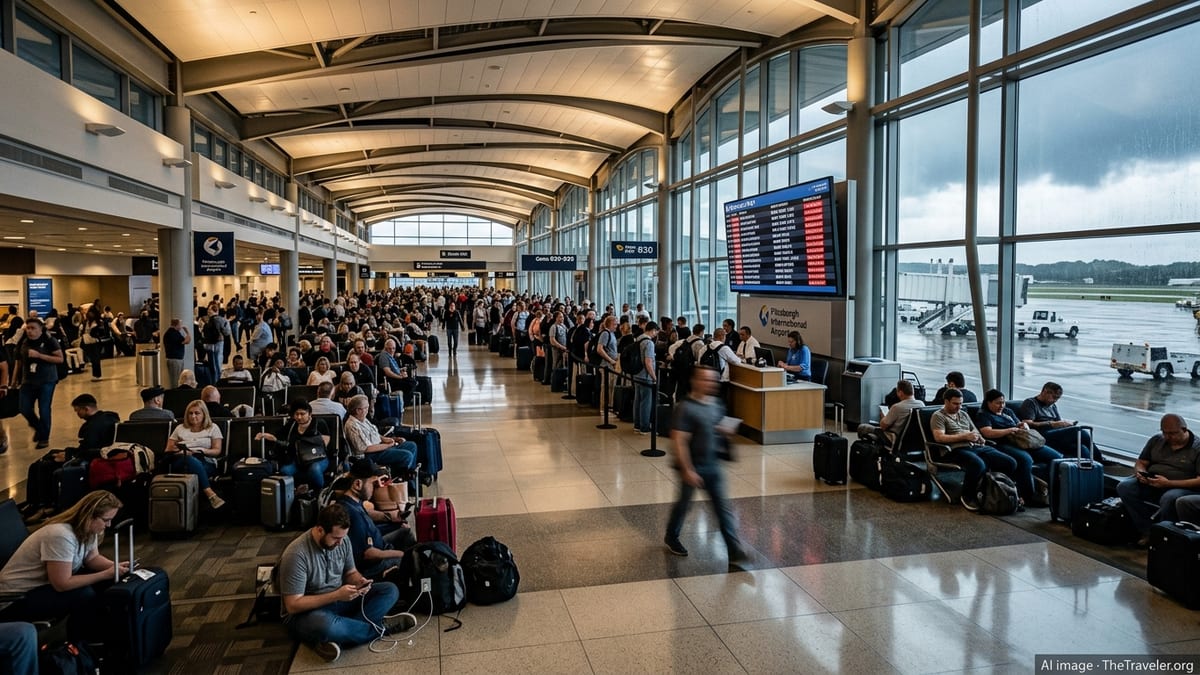
Hundreds of passengers at Pittsburgh International Airport faced cots, long lines and unanswered questions overnight after a wave of weather-related cancellations disrupted flights to New York City, Orlando and Miami, part of a wider East Coast travel meltdown tied to a powerful mid-March storm system.
Get the latest news straight to your inbox!
Severe Weather and Systemwide Disruption Hit Key East Coast Routes
Publicly available flight-tracking data shows that the mid-March storm complex sweeping across the eastern United States has triggered thousands of cancellations and delays at major hubs, including New York-area airports and Florida’s busiest gateways. Pittsburgh, which feeds many of these hubs, has been pulled into the turbulence as airlines preemptively cut late-night and early-morning departures to avoid aircraft and crew being stranded in the worst of the weather.
Flights linking Pittsburgh to New York City, Orlando and Miami have been among the hardest hit. These routes rely heavily on tight connections, high aircraft utilization and on-time operations at congested coastal airports. When storms force ground stops or slow arrivals at those hubs, upstream departures from cities such as Pittsburgh are often canceled outright rather than risk cascading delays later in the day.
The storm has arrived during a peak period for spring break and business travel, further amplifying the impact. Terminals at New York and Orlando have reported heavy crowds, while social media posts and traveler accounts describe long rebooking lines and limited same-day alternatives for passengers originating in Pittsburgh.
Historical patterns from recent winter and early spring storms suggest that recovery can take more than a day, even after weather improves. Airlines must reposition aircraft, reassign crews that have reached duty limits and work through a backlog of passengers who were stranded during the height of the disruption.
Scenes of Confusion Overnight at Pittsburgh International
By late night, the Pittsburgh terminal had shifted from its usual weekday rhythm to something closer to an improvised waiting area. Stranded passengers clustered around charging stations, gate areas and food outlets that remained open, while others stretched out on benches and in quieter corners of the concourses. Overhead displays cycled through waves of red "canceled" notices as additional flights were scrubbed.
Reports from travelers describe a familiar pattern during large-scale disruptions: long queues at check-in counters and service desks, difficulty reaching airline call centers, and mobile apps that showed limited or rapidly changing rebooking options. With multiple carriers affected simultaneously, alternative flights out of Pittsburgh, including those to secondary airports in the New York region or to other Florida cities, quickly filled.
Because many cancellations occurred overnight, some passengers had limited immediate options for ground transportation or nearby lodging. Others opted to stay at the airport in hopes of securing an early-morning standby seat. For families heading to theme parks in Orlando or cruise departures from South Florida, the uncertainty around when they could realistically arrive added another layer of stress.
Airport operations themselves continued, with runways and taxiways open when weather allowed. The primary constraint was the broader airline network: flights could not depart for destinations where inbound traffic was halted or where local conditions remained outside safety thresholds for takeoffs and landings.
Why New York, Orlando and Miami Flights Are So Vulnerable
Flights between Pittsburgh and New York City, Orlando and Miami sit at the intersection of several pressure points in the U.S. aviation system: high demand, congested airspace and exposure to volatile coastal weather. Even on clear days, New York and Florida hubs operate near capacity, leaving little room to absorb additional delays when storms move in.
For New York routes, low cloud ceilings, strong winds and air traffic control flow restrictions can sharply reduce the number of arrivals and departures per hour. Airlines respond by trimming schedules and prioritizing certain flights, which can mean regional links from cities like Pittsburgh are cut first when capacity needs to be reduced.
Orlando and Miami, meanwhile, are especially sensitive during spring break season. Heavy thunderstorm activity can halt ramp operations, pause takeoffs and landings and trigger temporary ground stops. When storms roll through in successive waves, the recovery window between cells can be too short to meaningfully catch up, prompting airlines to proactively cancel entire blocks of flights rather than attempt to operate severely delayed schedules.
These dynamics often leave travelers from mid-sized markets disproportionately affected. Even if conditions at Pittsburgh itself are manageable, constraints at the destination or along the route can lead to widespread cancellations on specific city pairs such as New York, Orlando and Miami.
How to Check If Your Pittsburgh Flight Is Affected
With conditions and airline responses changing hour by hour, the most reliable way to see whether a specific flight is affected is through official airline and airport information channels. Flight status tools that draw directly from airline operational systems typically update more quickly than third-party aggregators during periods of disruption.
Travelers scheduled to depart Pittsburgh today or tomorrow should monitor the status of both their outbound and return trips. In multi-leg itineraries that connect through New York, Orlando or Miami, a cancellation or major delay on any segment can affect the entire reservation. It is important to verify whether a rebooking offer or schedule change applies to all affected legs, not just the first departure.
Many carriers have activated weather-related travel waivers during the current storm system, allowing passengers to change dates, times or in some cases destinations without additional change fees. Public advisory pages outline eligible travel dates, origin and destination airports, and the deadline by which changes must be made. These waivers can provide more flexibility than standard ticket rules, particularly for travelers willing to shift their trips by a day or more.
Those already at the airport may find that queues at staffed counters are lengthy. In such cases, mobile apps and websites are often the fastest way to secure an alternative itinerary. Some passengers also report better results checking available seats on different Pittsburgh departures, including to nearby hubs that are recovering more quickly, and then selecting from those options during the rebooking process.
What Stranded Passengers Can Do Next
Once a flight has been canceled, the immediate priority for most travelers is securing a new way to reach their destination. Airlines generally rebook affected passengers on the next available flight on the same carrier, but during large-scale disruptions, the next available seat may be one or more days away, especially on busy leisure routes to Orlando and Miami.
Publicly available guidance from airlines and consumer groups suggests several practical steps: confirm whether your reservation has already been automatically rebooked, review any flexible change options offered under active weather waivers, and compare options for departing from or arriving at alternate airports within reasonable ground-travel distance of your origin or destination.
Travelers with time-sensitive plans, such as cruise departures or events in New York City, sometimes explore backup arrangements including refundable tickets on other carriers, same-day rail options in the Northeast corridor or driving to larger hubs with more frequent service. These alternatives come with added cost and uncertainty, but can provide additional paths out of a crowded situation at Pittsburgh when airline capacity is constrained.
As the storm system moves away and airspace restrictions ease, airlines are expected to gradually restore normal schedules. However, experience from previous major weather events indicates that residual disruptions can linger into subsequent days. Passengers with upcoming trips involving Pittsburgh and East Coast hubs should continue to monitor their itineraries closely, even if today’s flights appear to be operating on time.