

Travelers who fall in love with Manitoba often talk about the same things: the endless sky, the quiet of open prairie, the glint of lakes on the horizon, and the small communities where grain elevators and curling rinks feel as iconic as any skyline. If that mix of big nature and humble, hard working culture has captured your imagination, there are other corners of North America where you can find a similar spirit. From Canada’s neighboring prairie provinces to the wide open Great Plains of the United States, these are destinations where grasslands still matter, wildlife has room to roam, and rural traditions shape local life.
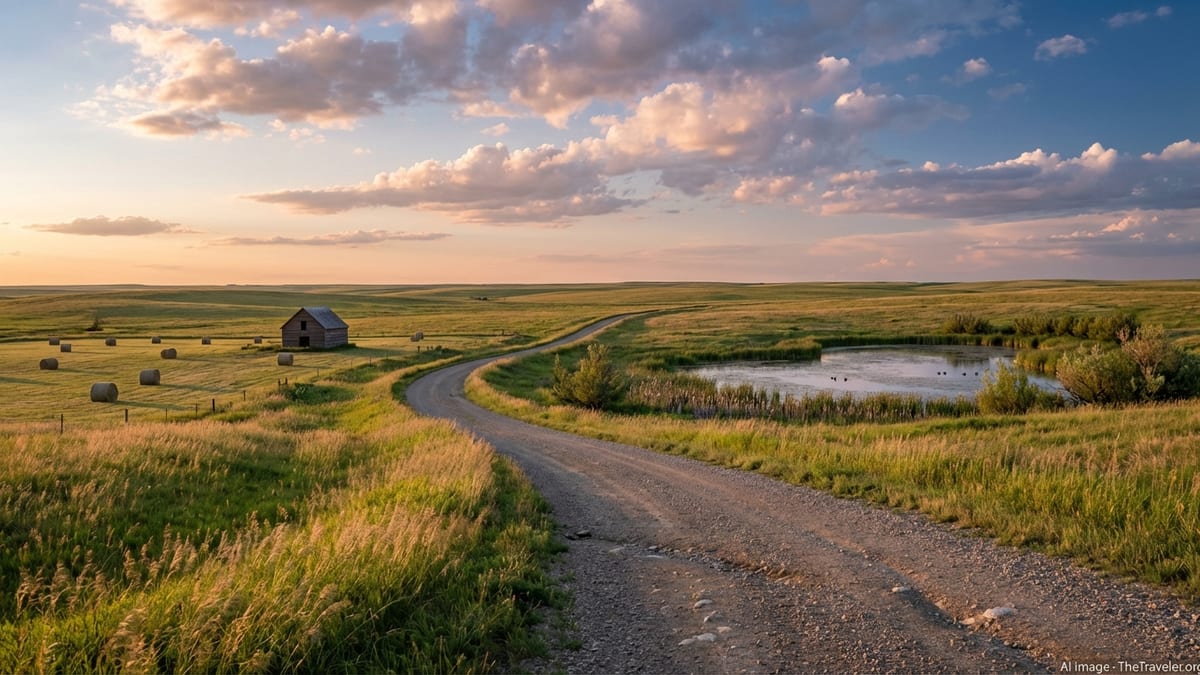
The Essence of Manitoba’s Nature and Prairie Culture
To find places that feel like Manitoba, it helps to understand what makes the province distinct. Geographically, much of southern Manitoba belongs to the Canadian Prairies, a landscape of gently rolling farmland, tall grass remnants, and aspen parkland. It is a meeting ground between true grassland and the boreal forest that stretches north, stitched together by rivers, wetlands, and some of the continent’s largest lake systems. Summers tend to be warm and bright, winters long and cold, and the seasons are marked clearly on the land.
Culturally, Manitoba’s prairie heartland mixes Indigenous history, Métis communities, and generations of settler farmers from places like Ukraine, Iceland, and Germany. Small towns still host agricultural fairs, grain harvests shape the rhythm of late summer, and museums lovingly preserve everything from one room schoolhouses to vintage tractors. Nature is not separate from this culture. Community life is woven around wildlife refuges, provincial parks, and conservation areas where bison, waterfowl, and songbirds share space with lakeside campgrounds and ski trails.
Manitoba is also defined by accessibility. Wild spaces can be surprisingly close to urban centers, as seen in provincial parks just outside Winnipeg or prairie preserves that protect the last fragments of tall grass ecosystems. This blend of big sky openness, approachable wilderness, and grounded rural communities provides the benchmark for identifying similar destinations elsewhere.
With that in mind, the following regions offer travelers a chance to experience landscapes and cultures that echo Manitoba’s character, each with its own twist on the prairie story.
Saskatchewan: Neighboring Prairies and Quiet Lakes
West of Manitoba, Saskatchewan is the most obvious counterpart for travelers seeking similar scenery and culture. Much of the province is classic prairie and parkland, with small towns anchored by grain elevators, grain terminals, and hockey arenas, and agricultural land stretching beyond the last house on Main Street. Like Manitoba, Saskatchewan’s rural communities are shaped by a mix of Indigenous nations and settler histories, including strong Ukrainian, German, and Scandinavian roots that show up in local churches, community halls, and seasonal festivals.
Nature lovers find familiar experiences in the province’s extensive network of provincial and national parks. Grasslands National Park in the south preserves one of Canada’s most intact native prairie ecosystems, with rolling grassland, badlands, and a night sky recognized for its darkness and clarity. Visitors can watch for bison grazing on distant slopes, spot burrowing owls and pronghorn, and explore interpretive drives that explain how ranching and conservation coexist on the prairie. Elsewhere, smaller prairie parks offer hiking, birdwatching, and lakeside camping that will feel immediately recognizable to anyone who has spent time in Manitoba’s rural campgrounds.
Northern and central Saskatchewan, like northern Manitoba, transition into boreal forest and lake country. Provincial parks around large lakes offer sandy beaches, jack pine forests, and excellent canoeing and fishing, often within half a day’s drive of the main cities. These areas share Manitoba’s rhythm of cabin weekends, ice fishing shacks in winter, and summer evenings around campfires along the shore. For travelers, that means the same blend of quiet, practical hospitality and easy access to open water and open sky.
Alberta’s Prairie East and Parkland Corridors
When many people picture Alberta, they think of the Rocky Mountains. Yet a large portion of the province is pure prairie, especially the southeastern region that borders Saskatchewan and stretches toward the United States. Here, open range, grain fields, and badlands echo parts of western Manitoba, but with a slightly drier, more rugged feel. Towns and small cities in this zone retain a strong ranching and farming identity, visible in dusty pickup trucks, regional rodeos, and auction marts that are central to community life.
Natural areas in eastern and central Alberta preserve a mix of grassland and aspen parkland similar to that found in southern Manitoba. Provincial parks and recreation areas protect coulees, river valleys, and wetlands that shelter waterfowl and shorebirds. Travelers can hike or ride along bluff tops with sweeping views over meandering rivers and patchwork fields, then drop into shaded ravines where cottonwoods and willows line the water. This interplay between exposed, windswept uplands and sheltered draws mirrors parts of Manitoba’s agricultural belt, where creeks and wooded ravines break up the plains.
Culturally, Alberta’s prairie region shares many patterns with Manitoba. Grain and energy development have shaped local economies, but communities still take pride in agricultural fairs, 4 H programs, and regional museums that document the transformation from open prairie to farmland. At the same time, Indigenous nations across the plains maintain deep ties to grassland ecosystems, and visitors can increasingly find guided experiences and interpretive centers that highlight pre settlement histories and contemporary cultural life.
For travelers who appreciate Manitoba’s ability to combine working landscapes with accessible wild spaces, Alberta’s eastern half offers a similar experience. It is a place where nature and culture are layered rather than separated, and where a simple drive between towns can feel like a moving panorama of sky, grain, and distant storm clouds.
The U.S. Great Plains: North Dakota, South Dakota, and Minnesota’s Prairie Edge
Crossing into the United States, the northern Great Plains offer some of the closest analogues to Manitoba’s prairie environment. States like North Dakota and South Dakota feature broad expanses of grassland, shelterbelt lined farm fields, and small prairie towns built around grain elevators and rail sidings. The climate is comparable, with cold winters, hot summers, and dramatic seasonal swings that shape everything from crop calendars to wildlife migrations.
Protected natural areas across these states echo the feel of Manitoba’s rural parks and wildlife management areas. National grasslands, wildlife refuges, and state parks conserve native prairies, wetlands, and river breaks where bison, pronghorn, and white tailed deer roam. Visitors can walk among wildflowers in late spring, watch flocks of geese and sandhill cranes during migration, or simply find a quiet backroad lookout for sunset over the plains. Lakes and reservoirs provide opportunities for camping, fishing, and birdwatching that feel familiarly low key and family oriented.
Minnesota, though more often associated with forests and lakes, has a southwestern region that belongs firmly to the prairie. Here, remnants of tall and mixed grass prairie survive in scientific and state natural areas, while small farming communities maintain a culture rooted in grain, cattle, and cooperative rural institutions. Travelers accustomed to Manitoba’s mix of nature preserves and agricultural landscapes will find similar juxtapositions, where a short drive can carry you from a restored prairie tract to a town cafe decorated with local sports photographs and harvest scenes.
Culturally, the northern Great Plains states share Manitoba’s emphasis on outward friendliness combined with a certain reserve. Community events often revolve around county fairs, school sports, and church suppers. Indigenous nations play a central role in the region’s identity, with reservations and communities maintaining languages, ceremonies, and ties to prairie landscapes. Increasingly, visitors can learn about these perspectives through interpretive centers, guided tours, and cultural events that highlight traditional relationships with buffalo, medicinal plants, and grassland ecosystems.
The Tallgrass Prairie Heartlands of Kansas and Oklahoma
Further south, the tallgrass prairie region of Kansas and Oklahoma offers a different but related vision of prairie life. Historically, tallgrass prairie once covered a wide swath of central North America, including parts of what is now southern Manitoba. Today, only scattered fragments remain, and some of the best preserved examples survive in the central United States. For travelers fascinated by Manitoba’s tallgrass remnants and prairie museums, this region is an essential counterpart.
Large protected areas in Kansas and Oklahoma conserve deep rooted grasses that can reach well above waist height in late summer, interspersed with colorful wildflowers and scattered oak groves. These grasslands support bison herds, ground nesting birds, and diverse insect life. Visitors can hike, join guided tours, or drive scenic routes that showcase how tallgrass ecosystems change with the seasons, from fresh green shoots in spring to golden waves in autumn. The open, gently rolling topography and huge sky views feel akin to southern Manitoba, even as the plant communities shift with latitude.
Nearby towns reveal a culture shaped by ranching, small scale farming, and long standing family ties to the land. Historic main streets often have grain elevators, feed stores, and modest brick storefronts that recall prairie communities across Manitoba. Local museums and heritage centers interpret both Indigenous histories and the era of cattle drives, homesteading, and railroad expansion. Travelers interested in the intersection of land use and ecology will find rich stories about how tallgrass prairie has been plowed, grazed, and in some places, restored.
For anyone seeking a deeper understanding of prairie conservation, this region also offers opportunities to see large scale restoration projects, research sites, and collaborations between ranchers, scientists, and Indigenous nations. The work being done here to maintain and recover grasslands offers informative parallels to conservation efforts in Manitoba’s remaining tallgrass remnants.
Prairie Lakes and Parkland of Western Ontario
While Ontario is better known for its forests and the rockier landscapes of the Canadian Shield, its far western reaches touch the same ecological transitions that define parts of Manitoba. In some areas near the provincial border, aspen parkland and prairie influenced ecosystems mingle with lakes, wetlands, and agricultural land. This creates a softer, more wooded version of the prairie experience, but one that still features open skies, wildlife rich wetlands, and small communities with strong farming traditions.
Provincial parks and conservation areas in northwestern Ontario protect boreal forest and lake country, yet pockets of prairie and meadow habitats persist on warmer, drier sites. Travelers used to Manitoba’s mix of grassland, forest fringe, and extensive lake systems will recognize the way shorelines, marshes, and mixed wood stands work together to support migratory birds and large mammals. Campgrounds, canoe routes, and fishing lodges continue the familiar pattern of seasonal outdoor life shaped by freeze up, thaw, and mosquito heavy early summers.
Culturally, many small communities in northwestern Ontario share an outlook with prairie towns further west. Local economies may blend forestry, mining, and agriculture, but community identity is often rooted in the surrounding land and water. Indigenous nations play a foundational role in this region, with deep connections to fishing grounds, wild rice lakes, and travel routes that long predate provincial borders. For travelers interested in Manitoba’s combination of nature and living Indigenous cultures, western Ontario offers a chance to see similar relationships playing out in a slightly different ecological setting.
As you move east, the land becomes more heavily forested and rocky, and the classic prairie feeling fades. Yet within a day’s travel of Manitoba’s border, there are still many places where the same big sky sensibility and lake centered outdoor culture endure.
Argentina’s Pampas: A Southern Hemisphere Echo
For travelers willing to venture far beyond North America, Argentina’s Pampas region provides a striking international counterpart to Manitoba’s prairie lands. The Pampas consist of vast plains that historically supported native grasslands, now largely converted to agriculture and ranching. Like the North American prairies, these plains are known for fertile soils, expansive horizons, and a climate with distinct seasons that shape both farming and daily life.
Modern landscapes in the Pampas show an intricate mosaic of crop fields, pastures, and remnant grassland patches. Small towns and medium sized cities punctuate the plains, often linked by rail and highway networks that echo those of North American grain belts. Travelers accustomed to Manitoba’s rural scenery will find familiar sights in grain silos, farm machinery, and roadside stands of trees planted as windbreaks. The sense of a working landscape, where human use and nature interact continuously, is strong.
Culturally, the Pampas are associated with ranching traditions and the figure of the gaucho, the South American counterpart to the North American cowboy. Rural culture revolves around cattle, horses, and communal gatherings where barbecues and folk music play central roles. While this differs from Manitoba in language and specific customs, there is a shared ethos of resilience, self reliance, and pride in land based livelihoods. Visitors can seek out estancias that offer guest stays, horseback riding, and insight into how ranch families manage both livestock and remaining grasslands.
Nature oriented travelers can also look for reserves and private conservation projects that protect Pampas grasslands and wetlands, home to a range of bird species and native plants. As in Manitoba, there is growing recognition of the ecological value of these plains and efforts to balance production with conservation. Experiencing the Pampas offers a global perspective on prairie life, highlighting both the universality of grassland cultures and the distinct flavors each region brings to the table.
Planning a Prairie Focused Trip Inspired by Manitoba
Once you start looking for destinations that echo Manitoba, a pattern emerges. These are not typically places of flashy resorts or tightly packed attractions. Instead, they are regions where the landscape itself is the main draw, and where culture is found in the everyday life of small towns, roadside diners, and farm supply stores. Planning a trip to such areas means adjusting expectations to savor space, slowness, and subtlety.
Seasonality is an important consideration. Much like Manitoba, many prairie regions are most comfortable to explore from late spring through early autumn. This is when wildflowers bloom, days are long, and backroads are more easily navigable. Early spring and late fall bring migrating birds and more dramatic weather, while winter can offer its own stark beauty for those prepared for snow, cold, and shorter daylight. Aligning your visit with local events, such as agricultural fairs, harvest festivals, or regional cultural celebrations, can deepen your experience of prairie life.
Logistics are relatively straightforward but require some planning. Distances can be long between communities, and public transportation often sparse. Renting a car or planning a self drive route is usually the most practical way to explore. Accommodation options tend to center on modest motels, family run inns, campgrounds, and in some regions, farm or ranch stays. Booking ahead is wise in peak seasons, especially near popular lakes, parks, and festival sites.
Finally, an openness to conversation is one of the best tools a traveler can bring. In many prairie communities, local knowledge is passed over coffee in small cafes, at gas stations, or in visitor centers stocked with community brochures. Asking about favorite birdwatching spots, lesser known viewpoints, or nearby heritage sites can reveal experiences that do not appear in standard guidebooks. This informal network of recommendations mirrors the way many Manitobans share their favorite lakes, trails, and town festivals, and it can turn a simple drive across the plains into a series of memorable encounters.
The Takeaway
Manitoba’s appeal lies in more than any single landmark. It is found in the sweep of its skies, the interplay of prairie and forest, and the quiet resilience of towns built around elevators, arenas, and co ops. For travelers drawn to that combination of nature and community, the good news is that similar experiences await in many corners of the world, from neighboring prairie provinces and northern Great Plains states to the tallgrass heartlands further south and even the plains of the southern hemisphere.
What unites these places is a shared respect for land that can be both generous and demanding, and for cultures that have learned to navigate harsh winters, summer storms, and economic shifts without losing their core identity. Exploring them offers a chance to understand prairie life as a global phenomenon, not just a local curiosity. Whether you are standing among tall grasses in Kansas, watching bison move across a Saskatchewan pasture, or chatting with a ranch family in the Pampas, you are tapping into a larger story about how people live with open landscapes.
Ultimately, traveling to places like Manitoba is less about finding an exact duplicate and more about recognizing familiar patterns in new forms. If you appreciate wide horizons, wildlife rich grasslands, and communities that still feel closely tied to agriculture and the seasons, then these destinations will resonate. They invite you to slow down, look closely, and let the prairie, in all its variations, shape your sense of space and time.
FAQ
Q1. What makes a destination feel similar to Manitoba?
Destinations that resemble Manitoba typically combine open prairie or parkland landscapes, strong agricultural communities, accessible lakes or wetlands, and a culture shaped by both Indigenous and settler histories.
Q2. Are Saskatchewan and Alberta really that different from Manitoba?
Saskatchewan and the prairie and parkland regions of Alberta share many similarities with Manitoba in climate, agriculture, and culture, though local histories and landscapes vary by region.
Q3. Which U.S. states feel most like southern Manitoba?
The northern Great Plains, especially North Dakota, South Dakota, and the prairie edge of Minnesota, offer landscapes and small town cultures that many travelers find closely resemble southern Manitoba.
Q4. Where can I experience tallgrass prairie similar to Manitoba’s?
Remnants of tallgrass prairie survive in parts of Manitoba and northwestern Ontario, but some of the most extensive tallgrass landscapes and restoration projects can be found in Kansas and Oklahoma.
Q5. Is prairie travel mostly about wildlife or culture?
Prairie travel tends to blend both. Wildlife rich grasslands, wetlands, and lakes sit alongside working farms, ranches, and towns, so nature and culture are closely intertwined rather than separate.
Q6. How should I prepare for the weather in prairie regions?
Prairie weather can be highly changeable, with strong winds, sudden storms, and big temperature swings, so packing layers, sun protection, and rain gear is essential in most seasons.
Q7. Are there good options for camping in prairie style destinations?
Yes, many prairie regions have well developed networks of public campgrounds in parks, wildlife areas, and near lakes, often with a mix of basic sites and serviced spots for trailers.
Q8. Can I learn about Indigenous cultures when visiting prairie regions?
In many prairie areas, Indigenous nations offer cultural centers, guided experiences, and events that share perspectives on land, language, and traditions connected to grassland and parkland environments.
Q9. Do I need a car to explore places similar to Manitoba?
Because distances are often long and public transport limited, having a car or joining a guided tour is usually the most practical way to visit parks, small towns, and rural attractions.
Q10. What is the best season to experience prairie landscapes at their peak?
Late spring through early autumn is often ideal, with wildflowers, migratory birds, and comfortable temperatures, although winter can be rewarding for those prepared for snow and cold.