

Minnesota’s nickname as the Land of 10,000 Lakes only hints at what outdoor travelers love about it: a patchwork of clear-water lakes, dark conifer forests, small resorts and cabins, and four distinct seasons that reward paddlers, anglers, hikers, and snow lovers alike. If you are drawn to Minnesota’s blend of lake country charm, accessible wilderness, and low-key towns wrapped around the water, you will find that same spirit in a handful of other destinations across North America.
What Makes Minnesota’s Lake Country So Appealing
Before looking for places like Minnesota, it helps to pin down what makes it special. For many travelers, the draw is not just the count of lakes but how close water feels to everyday life. Lakes line the roads, ring small downtowns, and sit behind family cabins. Public access points, state parks, and multiuse trails make it easy to slip a kayak into the water before breakfast or cast a line at sunset without needing a guide or long drive.
Climate and landscape play a role too. Much of northern and central Minnesota lies over ancient glacial terrain, which left behind kettle lakes, rolling moraines, and mixed forests of pine, birch, and maple. Summers are warm but rarely oppressive on the water, and winters bring reliable snow to many regions, turning the same lakes into ice fishing villages and networks for snowmobile and ski trails.
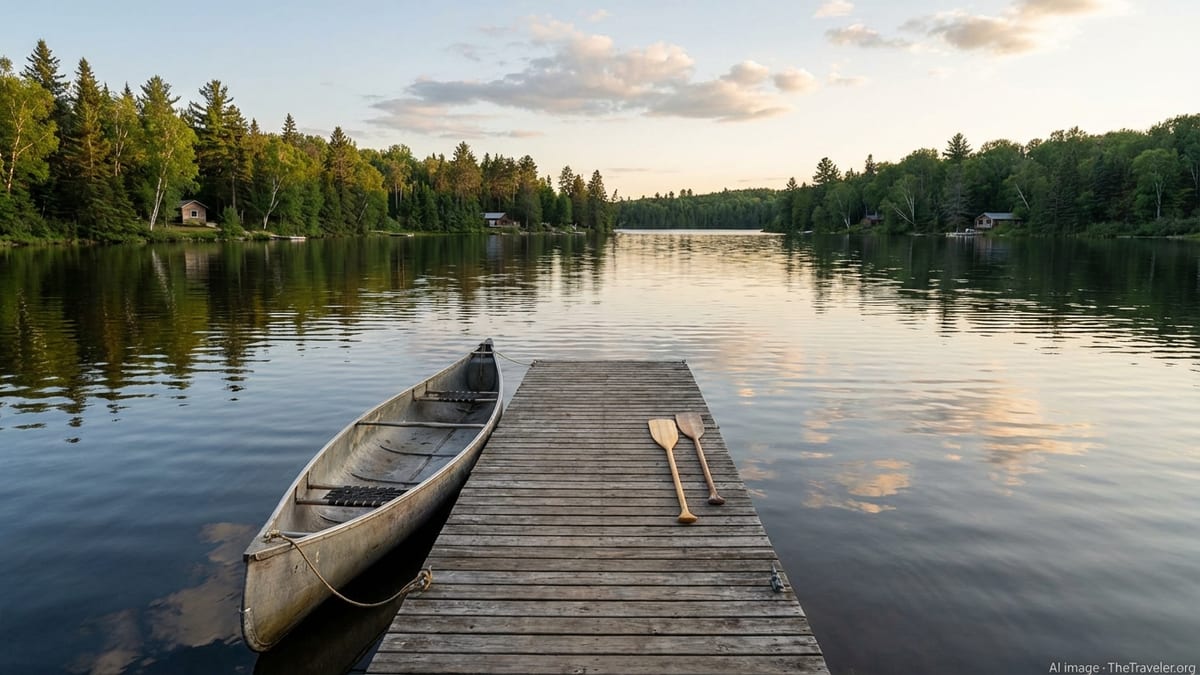
There is also a particular culture around lake life. Resorts and campgrounds tend to be modest in scale, with simple cabins, fish-cleaning houses, and docks lined with small fishing boats rather than large marinas of yachts. Evening bonfires, fish fries, and sunset pontoon cruises feel as essential to the experience as any formal attraction. Travelers searching for places like Minnesota are often looking for destinations where this casual, outdoor-centered way of life still thrives.
Finally, Minnesota’s best lake regions balance wilderness access with small-town comforts. In a single weekend it is possible to paddle a quiet chain of lakes, spot loons and eagles, then head into town for a brewpub dinner, live music, or a classic ice cream stand. The destinations that follow echo that same mix of nature and community.
Wisconsin’s Northwoods and Lake Country
Across the border to the east, northern Wisconsin feels instantly familiar to anyone who loves Minnesota’s Brainerd Lakes or Bemidji area. The Northwoods region, including places like Hayward, Minocqua, and Eagle River, is laced with countless lakes, glacial hills, and dense forests of pine, spruce, and hardwoods. Small resorts and family cabins dot the shorelines, often passed down through generations, and public boat launches make it simple to explore new water every day of a trip.
Like Minnesota, Wisconsin’s lake country is defined by four-season recreation. Summer brings boating, paddling, and swimming in clear, tannin-stained lakes, along with miles of hiking and biking trails on former rail corridors that feel similar to Minnesota’s Paul Bunyan State Trail. Anglers chase walleye, muskie, and bass, while families gravitate toward sand-bottomed beaches and warm, shallow bays. Evenings are for campfire cookouts and the occasional stop at a classic roadside supper club.
When the weather turns cold, the Northwoods lean into winter nearly as strongly as northern Minnesota. Snowmobile trails connect small towns and trail-side bars for long loops through the woods, while cross-country ski networks wind through state forests and county parks. Lakes become busy with ice anglers targeting panfish and pike, backed by simple shanties and pop-up shelters rather than elaborate ice houses. That easygoing, practical approach to winter will feel familiar to anyone who has spent time along Mille Lacs or in the Iron Range.
Travelers who like Minnesota’s relatively uncrowded feel will find much of the same in northern Wisconsin, particularly outside peak holiday weekends. It is a region built more around repeat visitors and cabin owners than quick-hit tourism, which helps keep the pace relaxed and the focus squarely on being outdoors.
Michigan’s Upper Peninsula and Inland Lakes
Head east across Lake Superior and you reach Michigan’s Upper Peninsula, a region that shares Minnesota’s rugged northern character with a slightly wilder edge. Here, clear inland lakes, boreal forests, and small towns meet dramatic Great Lakes shorelines. The climate and scenery will feel instantly recognizable to anyone who has driven Minnesota’s North Shore or camped in its northern state parks.
The interior of the Upper Peninsula holds a network of lakes and rivers tucked into state forests and parks. Travelers find quiet campgrounds, mom-and-pop resorts, and plenty of public access for boating and paddling. Many lakes are ringed with mixed hardwood and evergreen forests that glow in autumn, making fall color trips especially rewarding. Anglers target walleye, northern pike, and smallmouth bass on inland lakes, while salmon and trout draw attention on rivers and along the Great Lakes coasts.
Where the Upper Peninsula differs is in its sense of remoteness. Towns are smaller and sometimes farther apart than in central Minnesota’s lake country, and road trips between regions can feel more expansive. That distance brings rewards: dark night skies, quiet campgrounds outside peak dates, and long, uncrowded beaches along Lake Superior and Lake Michigan. Travelers who like the Boundary Waters’ sense of space but do not necessarily want a full wilderness canoe trip often find a sweet spot in Upper Peninsula state parks and forest campgrounds.
Winter in the Upper Peninsula echoes Minnesota’s northern regions, with reliable snow in many areas. Cross-country and downhill ski areas, extensive snowmobile trail networks, and frozen inland lakes draw visitors seeking a true cold-season getaway. For many outdoor travelers, that four-season reliability is a key reason to consider the Upper Peninsula as a counterpart to Minnesota.
Ontario’s Cottage Country and Shield Lakes
North of the border, parts of Ontario offer perhaps the closest match to Minnesota’s lake-and-pine aesthetic. Much of central and northern Ontario sits atop the same Canadian Shield rock that underlies parts of northern Minnesota, creating similar landscapes of rocky shorelines, deep blue lakes, and scattered islands. Regions commonly referred to as cottage country, such as those around Muskoka, Haliburton, and parts of the Kawarthas, are especially resonant for travelers who enjoy Minnesota’s cabin culture.
In these areas, lakes are ringed with modest cottages and family-run lodges. Wooden docks, screened porches, and evening loon calls set a tone that is unmistakably similar to summer at a Minnesota resort. Activities revolve around the water: morning canoe paddles, casual fishing from the dock, and afternoons swimming off small, sandy points. Many towns have compact centers with ice cream shops, outfitters, and independent cafés that cater to seasonal residents and visitors.
For those who gravitate toward Minnesota’s more remote boundary waters and backcountry experiences, Ontario’s provincial parks and crown lands provide a wealth of options. Multi-day canoe routes wind through chains of glacier-carved lakes linked by short portages. Rustic campsites, often accessible only by water, offer a sense of solitude while still being part of established route systems. The overall experience is strikingly similar to paddling in northern Minnesota, with the added layer of crossing an international border for the trip.
Because of its size, Ontario also accommodates shoulder-season and multi-activity travel in ways that mirror Minnesota. Spring brings fishing openers and early paddling, summers are for swimming and family trips, fall offers spectacular foliage across mixed hardwood forests, and winter opens cross-country ski networks and ice-fishing opportunities. Travelers looking for a new twist on the Minnesota style of outdoor vacation often find that cottage country feels comfortably familiar yet distinct.
New England’s Lakes and Forested Retreats
On the other side of the continent, New England holds several pockets that echo Minnesota’s lake and forest character, particularly in northern New Hampshire, Vermont, and parts of Maine. While the mountains are more pronounced and towns can be older and denser, the essential ingredients are similar: cool, clear lakes anchored by small communities, surrounded by wooded hills and protected lands.
In northern New Hampshire and western Maine, glacial lakes sit among rounded peaks and thick conifer stands, creating a backdrop that feels a bit like combining Minnesota’s lake country with a hint of the North Shore’s cliffs and ridges. Lakeside villages offer marinas, simple motels, and rental cabins, while nearby trail networks climb to viewpoints or wind through mixed hardwood forests. Paddlers find both sheltered ponds and larger lakes suitable for day trips and multi-day routes with a mix of shoreline camping and small-town stays.
Vermont’s lake regions, though smaller in number than Minnesota’s, evoke a similar sense of tranquil water framed by woods and rolling hills. Many lakes are ringed by state parks and public access points, allowing visitors to swim, boat, and camp without needing private memberships or long reservations. Like Minnesota, these areas reward slower travel: lingering at the same lake for a few days, trying different hiking routes, and getting to know the rhythms of a single town rather than racing from sight to sight.
New England also parallels Minnesota in its emphasis on fall and winter as key visitor seasons. Autumn color drives and lakeside stays are as popular as midsummer visits, and once snow arrives, towns transition smoothly to cross-country skiing, snowshoeing, and ice-fishing. Travelers who cherish Minnesota precisely because it is not only a summer destination will appreciate the similar year-round mindset in many New England lake communities.
Idaho and Montana: Western Lakes with a Northwoods Feel
For travelers willing to head farther west, parts of Idaho and western Montana offer lake and forest landscapes that echo Minnesota while adding a mountain backdrop. Regions around lakes such as Coeur d’Alene and Priest Lake in Idaho or Flathead Lake and Whitefish Lake in Montana balance clear water, conifer forests, and compact resort towns in ways that will feel familiar to many Midwestern visitors.
In these areas, lodging runs from small lakeside motels and cabin clusters to campgrounds and a few larger resorts. Days revolve around swimming, paddling, and exploring nearby hiking and biking trails. The water can be just as inviting as a Minnesota lake on a hot summer day, and the forests share a similar mix of pine, spruce, and fir. The big difference is the mountain horizon, which adds opportunities for more challenging hikes and scenic drives but does not take away from the appeal of quiet mornings on the dock.
Outdoor culture in these western lake regions leans slightly more toward mixed-adventure vacations. Visitors might combine time on the water with day trips into nearby national forests or parks, tackling a high-elevation hike one day and a relaxed paddle the next. Despite the added drama of the terrain, many communities retain the relaxed, come-as-you-are atmosphere that characterizes Minnesota’s lake towns, with casual restaurants, local breweries, and strong shoulder-season appeal.
Winters in parts of Idaho and Montana are robust, with heavy snow supporting both downhill and cross-country skiing along with snowshoeing and snowmobiling. Lakes ice over in colder basins, creating conditions that echo Minnesota’s winter traditions, from ice fishing to lakeside cabins warmed by woodstoves. The result is a strongly four-season destination that will speak to travelers who see Minnesota not as a single-season spot but as a year-round outdoor base.
How to Choose the Right “Minnesota-Like” Destination
Because Minnesota’s appeal is multi-layered, choosing a similar destination starts with clarifying what you value most. If your favorite part of a Minnesota trip is the ease of slipping a fishing boat into a quiet lake at sunrise, then a region with many public access points and modest development may rank high on your list. Northern Wisconsin, Ontario’s cottage country, and parts of the Upper Peninsula are strong candidates for that style of slower, water-centered travel.
If you are drawn to Minnesota’s blend of simple lakeside time and the option for day trips to more rugged landscapes, then western Montana, Idaho, or New England’s lake regions near mountain ranges may fit better. These offer the Minnesota-like comforts of cabins and mellow lake days alongside high-elevation trails and scenic drives. Travelers who like variety within a single trip often gravitate toward these areas.
Season also matters. Many Minnesota fans relish the chance to experience winter as much as summer, with cross-country skiing, snowmobiling, ice fishing, and cozy cabin stays. When comparing alternatives, look for destinations that treat winter as a full season, not just an off-peak period. The Upper Peninsula, much of Ontario, northern New England, and certain mountain lake regions in Idaho and Montana invest heavily in cold-weather recreation, making them particularly satisfying counterparts.
Finally, consider travel practicalities. Driving distances, border crossings, and reservation patterns can influence how a destination feels. Minnesota’s lake regions are known for drivable access from many Midwestern cities and a relatively relaxed reservation environment outside the busiest weeks. When choosing a similar place, think about whether you prefer a long road trip, a mix of flights and driving, or something within a day’s reach of home, and match your choice accordingly.
The Takeaway
For travelers who have fallen in love with Minnesota’s lakes and outdoor culture, it can be hard to imagine finding the same mix of water, woods, and relaxed small-town life elsewhere. Yet several regions across the United States and Canada capture that same magic in their own way. Northern Wisconsin, Michigan’s Upper Peninsula, Ontario’s cottage and shield country, the lake districts of New England, and select pockets of Idaho and Montana all offer clear lakes, accessible forests, and a four-season commitment to life outside.
Each of these destinations adds its own twist, whether it is the rocky islands of the Canadian Shield, the maritime history of New England, or the mountain horizons of the interior West. Still, the familiar patterns remain: early-morning paddles on calm water, campfires under bright stars, and small towns that welcome repeat visitors like seasonal neighbors. For many travelers, exploring these parallels deepens their appreciation for Minnesota itself while opening up a wider map of future adventures.
Ultimately, places like Minnesota are less about matching every detail than about sharing a mindset. They are destinations where lakes are part of everyday life, where outdoor time is prized, and where the changing seasons shape how locals and visitors spend their days. Whether you choose to head east to a New England pond, north to an Ontario shield lake, or west to a mountain-backed bay, you can carry the spirit of Minnesota lake country with you and find it reflected in new waters.
FAQ
Q1. What qualities should I look for in a destination that feels similar to Minnesota?
Look for a high concentration of lakes, easy public access to the water, mixed forests, four distinct seasons, and small towns or resorts that center daily life around outdoor activities.
Q2. Is there a Canadian destination most similar to Minnesota’s lake country?
Many travelers find that parts of Ontario’s cottage country and shield lakes, with their rocky shorelines, deep blue water, and cabin culture, feel very similar to northern Minnesota.
Q3. Which U.S. states offer lake regions closest in feel to central and northern Minnesota?
Northern Wisconsin, Michigan’s Upper Peninsula, pockets of northern New England, and certain lake districts in Idaho and western Montana all share a comparable blend of lakes, forests, and low-key resort towns.
Q4. Are these Minnesota-like destinations also good in winter?
Several counterparts, including the Upper Peninsula, much of Ontario, northern New England, and parts of Idaho and Montana, embrace winter with cross-country skiing, snowmobiling, and ice-fishing opportunities.
Q5. Can I find Boundary Waters style trips outside Minnesota?
While the Boundary Waters is unique, Ontario has many canoe route systems through chains of interconnected lakes, and some New England and Upper Peninsula parks offer multi-day paddling with backcountry-style camping.
Q6. Are lake destinations like these family friendly?
Yes. Most of these regions have gentle lakefronts, sand beaches, short hiking loops, and modest-scale resorts or cabins that work well for families seeking relaxed, nature-focused time together.
Q7. Do I need a lot of specialized gear to enjoy these places?
Not necessarily. Basic outdoor clothing, comfortable footwear, and simple items like life jackets or daypacks are often enough, and many destinations offer rentals for boats, kayaks, and bikes.
Q8. How far in advance should I book a trip to a Minnesota-like lake region?
For peak summer weeks and popular holiday periods, it is wise to reserve cabins or campgrounds several months ahead, while spring, fall, and midweek stays often offer more flexibility.
Q9. Are there options for travelers who prefer quieter, less developed lakes?
Yes. Interior areas of Ontario, sections of the Upper Peninsula, and smaller lake clusters in northern Wisconsin and New England often have fewer large resorts and more rustic campgrounds or simple cabin clusters.
Q10. How can I travel responsibly in lake and forest destinations like these?
Follow local guidelines on invasive species prevention, pack out all trash, use established campsites and trails when possible, and support local businesses that prioritize conservation and sustainable tourism.