

Duncan, in the heart of British Columbia’s Cowichan Valley on southern Vancouver Island, is compact enough to explore in a day yet layered with culture, Indigenous history and slow-travel charm.
Whether you have a single day or a full weekend, this itinerary helps you experience the “City of Totems” through its art, stories, local food and relaxed small-town rhythm.
Understanding Duncan and Cowichan Territory
Duncan sits on the traditional, unceded territory of Cowichan Tribes, the largest First Nation in British Columbia’s Coast Salish region. The city’s contemporary identity is tightly interwoven with the people whose language, art and stories have shaped this landscape for millennia. Visitors increasingly seek out ways to learn about this living culture in respectful, grounded ways.
The city is also the service and cultural hub of the Cowichan Valley, a fertile region known for farms, orchards, vineyards and forested hills that roll down to sheltered inlets. Duncan itself is small and walkable, with a historic core clustered around the rail station and a newer commercial strip along the highway. For a short visit, you can largely forget the car, slow your pace and absorb the details that make this community distinctive.
Planning a culture-forward stay here is less about ticking off attractions and more about layering experiences. A morning might start with coffee from a local roaster, flow into a totem pole stroll and museum visit, then segue to farm-to-table lunch and an afternoon wandering forest trails or meeting artisans. With thoughtful timing, you can comfortably compress this into one full day, or stretch to two days for a more relaxed, immersive trip.
This guide assumes you are visiting between spring and early fall, when outdoor experiences and local food are at their best, and when cultural sites and museums typically offer their fullest hours and programming. If you are traveling in winter or shoulder seasons, the same core experiences are possible, though you may need to reconfirm opening days and hours in advance.
Day One Morning: Totems and the Historic Heart of Duncan
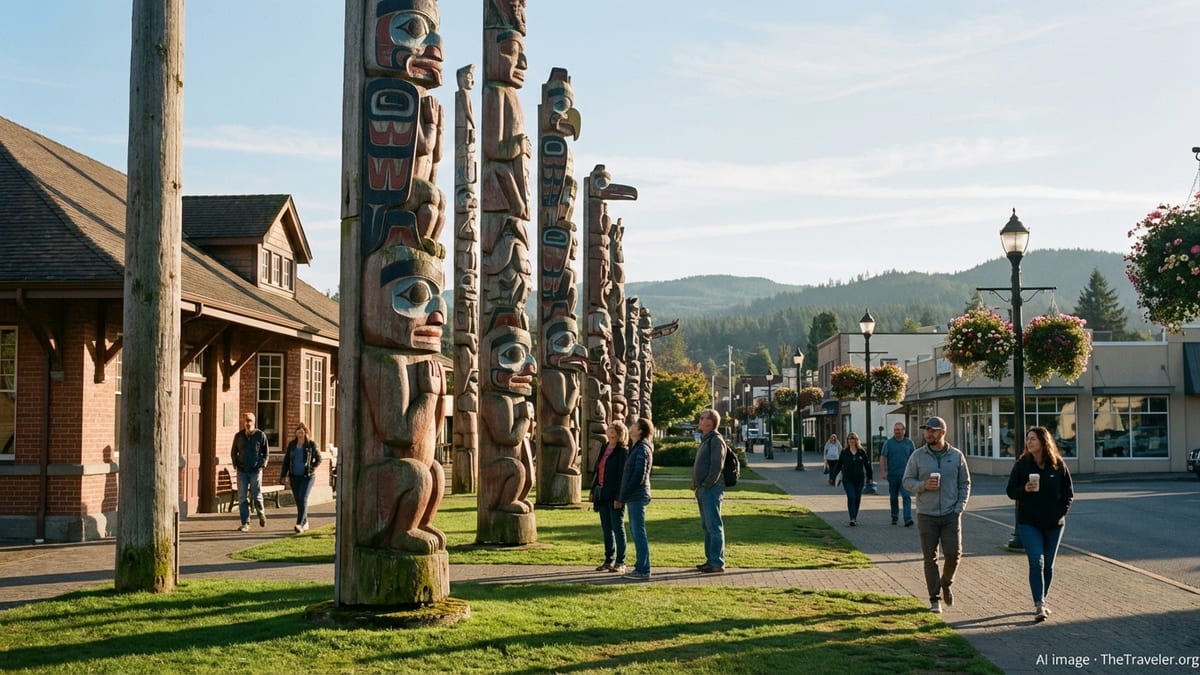
Begin your first morning in downtown Duncan, where the city’s renowned public art is woven directly into the streetscape. Duncan is officially known as the City of Totems, with more than 40 totem poles carved primarily by Indigenous artists positioned throughout the compact core. They are not museum pieces behind glass, but living works that continue to anchor stories, memory and identity.
The easiest introduction is the self-guided Totem Tour Walk, which threads through blocks around the historic train station and Charles Hoey V.C. Memorial Park. Distinctive markers on sidewalks and interpretive signs beside each pole help you follow the route at your own pace. Plan on at least 60 to 90 minutes to walk the loop, pause at carvings that catch your eye and absorb the details, rather than simply snapping a quick photograph of each pole.
Many visitors now pair the physical walk with Duncan’s digital totem tour app, which was rolled out recently as a collaboration between the city, Cowichan Tribes and a Canadian tour platform developer. Small decals and QR codes at totem sites unlock short videos, archival images and artist interviews on your phone. Used thoughtfully, this adds rich context about the carvers, their families and the stories depicted, while still letting you stay present in the place.
As you explore, look closely at the differences between Coast Salish and Kwakwaka’wakw design elements, and notice how many poles speak directly to specific families, local businesses or historical events. Remember that these works are cultural property and part of a living tradition. Photography is generally welcomed for personal use, but commercial or promotional use of images is controlled by the City of Duncan in consultation with artists and their communities, and should only proceed with explicit permission.
Day One Midday: Cowichan Valley Museum and Local Lunch
By late morning, orient yourself historically at the Cowichan Valley Museum and Archives, located in the restored 1912 E&N railway station beside Charles Hoey Park. The museum’s exhibits focus on the cultural and social history of the valley, including the long presence of Indigenous communities, the development of forestry and agriculture, and the stories of settlement and change across the 19th and 20th centuries.
The building itself is part of the experience, with its period details, views over the surrounding gardens and totem poles, and sense of a small regional hub shaped by the railway era. Displays are modest in scale but thoughtfully curated, often drawing on photographs, personal artifacts and oral histories. Allow 45 to 60 minutes to wander at an easy pace, reading panels, pausing at items that connect with what you saw on the totem walk, and noting how different cultural threads have intersected in this valley.
Opening hours at the museum vary seasonally, with longer daily hours in summer and more limited days from autumn to late spring. It is worth checking the schedule close to your travel dates and, if you hope to access the archives or speak in depth with staff, contacting the museum in advance. Admission is typically by donation, which helps support ongoing research, exhibits and stewardship of local collections.
From the museum, you are within a short walk of several independent cafés and casual eateries in downtown Duncan. This is an ideal time to sample locally roasted coffee, baked goods or a relaxed sit-down lunch that highlights Cowichan ingredients. Menus often feature seasonal produce from nearby farms, island cheeses and seafood. If you are visiting on a market day, such as a summer Saturday, you may also find stalls selling fresh fruit, preserves and prepared foods, adding to the sense of a region that feeds itself well.
Day One Afternoon: Forest Discovery and Cowichan Landscapes
After lunch, shift your perspective from the heart of town to the surrounding forests that have long shaped the region’s economy and identity. A short drive from downtown brings you to the BC Forest Discovery Centre, a 100-acre open-air museum on the edge of Duncan. The site combines heritage buildings, forestry exhibits and an operational narrow-gauge railway that circles through mixed forest, wetlands and open clearings.
The centre’s exhibits trace how forestry practices and technologies in British Columbia have evolved, from hand logging and steam equipment to more modern approaches that consider sustainability and habitat. It is not strictly a cultural institution in the same sense as an art gallery or language centre, but it does offer insight into how human communities in the Cowichan Valley have interacted with the land and with each other over the past century.
One of the subtle pleasures here is the chance simply to walk the forest and marsh trails, listening for birds, noticing the light falling through Douglas firs and cedars and imagining how these woods have been viewed by different generations. The miniature railway adds a layer of family-friendly fun and provides a different vantage point over the terrain, especially during special seasonal events when trains run after dark or through decorated landscapes.
The Forest Discovery Centre typically operates on a seasonal schedule, with regular daytime hours from spring through early fall and special events in shoulder seasons. Check current opening days, train schedules and event listings before you plan your afternoon, and budget two to three hours if you hope to combine indoor exhibits, a ride and an unhurried walk along the trails.
Day One Evening: Downtown Strolls, Public Art and Local Flavors
Return to downtown Duncan in the late afternoon as the light softens and the atmosphere turns to early-evening sociability. This is a comfortable time to revisit a few favorite totems, when the crowds of the day have thinned and the carved forms catch low-angle light, revealing surface textures you may not have noticed earlier.
Beyond totems, keep an eye out for murals, small galleries and community spaces that reflect the region’s creative energy. Depending on timing, you may come across live music in a café, a book launch at a local shop or informal gatherings in the park. Duncan’s cultural life is community-focused rather than flashy, so being open to serendipity often yields memorable encounters with local residents.
For dinner, look for restaurants and pubs that feature Cowichan wines, Vancouver Island ciders and seasonal menus. The valley’s climate has made it one of Canada’s emerging wine regions, with small wineries producing aromatic whites, Pinot Noir, and blends that pair naturally with seafood and farm fare. Even if you do not have time to visit vineyards directly, you can still experience the local terroir through carefully chosen glasses over dinner.
If you are staying overnight, consider an evening walk back through quiet streets after your meal, noticing the way the city’s public spaces feel at night and how the totems stand as silhouettes against the sky. For many visitors, these low-key, atmospheric moments are when Duncan’s character as both a living community and a place of deep-rooted culture comes into clearest focus.
Day Two: Deeper Indigenous and Local Experiences
If you have a second day in Duncan, use it to move beyond introductory impressions and engage more deeply with Indigenous and local experiences. Start with a slow breakfast, then look for opportunities to connect with Cowichan artists, cultural interpreters or guided tours that focus specifically on Indigenous perspectives. Availability changes from season to season, so it is worth researching ahead and reaching out to local visitor centres or cultural organizations for current options.
Some tours and experiences may incorporate visits to important village sites, canoe routes or traditional fishing locations, while others highlight carving, weaving, drumming or storytelling. Much of this programming is guided or hosted by Cowichan people themselves, which is essential when you are learning about a living culture. Approaching these experiences with humility, curiosity and a willingness to listen is key; the goal is not to consume culture as entertainment, but to understand the context and significance behind what is being shared.
Midday, you could pair this cultural focus with time in the wider Cowichan Valley. Short drives from Duncan bring you to farm stands, cider houses, tasting rooms and viewpoints over the river and surrounding hills. Many producers have small, informal tasting bars or patios where you can sample products, ask questions and learn how local conditions shape everything from honey and herbs to wine and cheese.
Throughout your second day, keep space in your schedule to return to places that particularly resonated with you on day one, whether that is a specific totem whose story you want to revisit via the digital tour, a corner of the museum exhibition or a quiet bench in the park. Deepening a few connections often leaves a stronger impression than racing to add new stops simply for the sake of variety.
Practical Tips for a 1–2 Day Duncan Stay
Because Duncan is compact, accommodation, dining and cultural sites are often only minutes apart. Staying within or near the downtown core lets you walk to the museum, parks and many totems, then make short drives to outlying attractions such as the BC Forest Discovery Centre. Visitors arriving from Victoria, Nanaimo or other parts of Vancouver Island typically travel by car or bus, with the main highway skirting the eastern edge of town.
Opening hours for key sites can vary, particularly outside the peak summer months. The Cowichan Valley Museum follows a summer-season schedule with daily hours and a more limited winter schedule with specific days and shorter hours. The BC Forest Discovery Centre operates on a spring and summer timetable, then transitions to special-event days in autumn and around year-end holidays. Connecting with the Cowichan Regional Visitor Centre or checking organizations’ official communications shortly before you travel is the most reliable way to confirm current details.
Weather in the Cowichan Valley is relatively mild by Canadian standards, with dry, warm summers and cool, damp winters. For a culture-focused visit, late spring through early autumn typically offers the best balance of comfortable walking conditions, outdoor events and open attractions. Regardless of season, bring layers, as temperatures can shift between cool mornings, warm afternoons and breezy evenings, especially if you plan to spend time in the forest or near the water.
Finally, approach your visit with the mindset of a guest in a living community. The totems, cultural sites and natural areas you explore are part of ongoing relationships between Cowichan Tribes, the City of Duncan and regional residents. Staying on marked paths, following site guidelines, supporting local businesses and speaking with people when opportunities arise all contribute to a more respectful, mutually enriching experience.
The Takeaway
In one or two days, Duncan offers a concentrated introduction to the cultural richness of the Cowichan Valley and the creativity of its people. Walking among totems that stand as living storytellers, stepping into a small but thoughtful regional museum, riding a heritage train through forest and marsh, then closing the day over a glass of local wine or cider, you glimpse how history, art, land and community intersect here.
The scale of the city encourages you to slow down. Rather than rushing between distant landmarks, you can loop back past the same carving at different times of day, notice patterns in the stories shared at various sites and appreciate how present-day residents inhabit a landscape that holds thousands of years of Indigenous knowledge. Even a short stay can leave you with a more nuanced understanding of Vancouver Island beyond its better-known urban and resort centres.
Whether Duncan is a focused one-day stop or the anchor of a weekend in the Cowichan Valley, planning with an eye to culture and local experiences makes the difference between simply passing through and truly engaging. With care and curiosity, your time here can become part of a broader relationship with this territory and its people, one that continues to evolve long after you leave.
FAQ
Q1. How much time do I need to see Duncan’s totems?
Most visitors spend 60 to 90 minutes on the self-guided Totem Tour Walk, but you could easily stretch it to half a day if you stop often to read interpretive signs, use the digital tour and photograph your favorite poles.
Q2. Is one day in Duncan enough, or should I stay overnight?
One full day is enough to walk the totems, visit the Cowichan Valley Museum and enjoy a good local meal, but staying overnight lets you add the BC Forest Discovery Centre, explore nearby farms or wineries and experience the town at a more relaxed pace.
Q3. When is the best time of year to follow this itinerary?
Late spring to early autumn usually offers the most dependable weather, longer opening hours at museums and outdoor attractions, and a wider range of markets and events, though it is still possible to enjoy a culture-focused visit in the cooler months with a bit more planning.
Q4. Do I need a car to follow this Duncan itinerary?
Downtown Duncan, including the totems and museum, is walkable, but a car or local transport makes it much easier to reach the BC Forest Discovery Centre and rural sites in the Cowichan Valley, especially if you want to visit farms, cider houses or wineries.
Q5. How can I experience Indigenous culture respectfully in Duncan?
Choose Indigenous-led or co-created tours when possible, listen more than you speak, follow guidance from hosts and interpretive signs, avoid touching carvings without permission, and remember that these are living cultural expressions rather than decorative backdrops.
Q6. Are the BC Forest Discovery Centre and Cowichan Valley Museum suitable for children?
Yes, both are family-friendly, with interactive elements and manageable exhibit sizes. The train rides and outdoor trails at the Forest Discovery Centre are especially popular with children, while the museum offers engaging displays that older kids and teens can appreciate.
Q7. What should I wear for a day of exploring Duncan?
Comfortable walking shoes, layered clothing suitable for changing coastal weather and a light waterproof jacket are recommended, along with sun protection in summer and a warm layer for cooler evenings.
Q8. Can I take photos of the totem poles?
Photography for personal use is generally welcomed, and many visitors enjoy capturing details of the carvings. For any commercial or promotional use, you should seek permission through the City of Duncan and, where appropriate, the artists or their families, in line with local image-use policies.
Q9. Where can I find local food and drink near the totems?
The streets surrounding the totem route and museum include independent cafés, bakeries, restaurants and pubs that highlight Cowichan-grown ingredients, island cheeses and regional wines, ciders and beers, all within a short walk of the main cultural sites.
Q10. Is Duncan a good base for exploring the wider Cowichan Valley?
Yes, Duncan sits roughly in the centre of the valley, making it a convenient base for short drives to nearby communities, lake and river viewpoints, farm stands, tasting rooms and trails, while still offering the amenities and cultural attractions of a small city.