

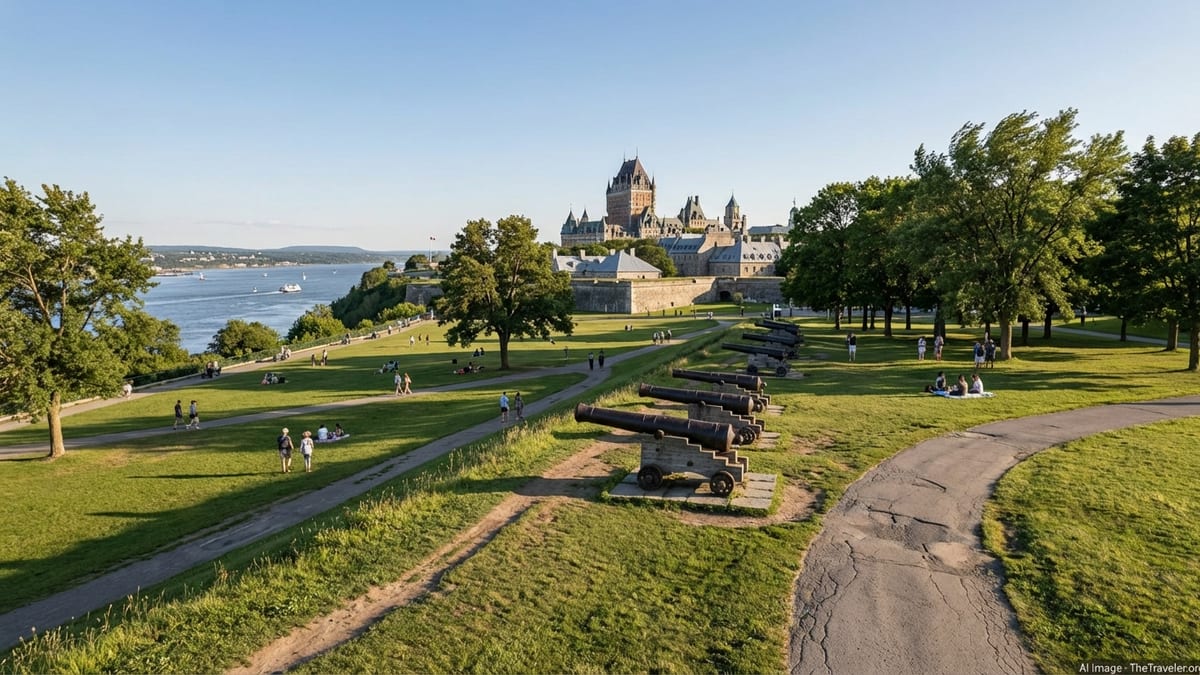
Stretching along the cliffs above the Saint Lawrence River, the Plains of Abraham form Quebec City’s great central park and one of the most important historic battlefields in North America.
Part urban oasis, part open-air museum, this sweep of lawns, monuments and riverside lookouts invites slow exploration in every season. Planning ahead will help you appreciate both its layered history and its contemporary role as the city’s green heart.
Understanding the Plains of Abraham and Battlefields Park
The Plains of Abraham are part of Battlefields Park, a 98-hectare historic green space that borders Old Quebec and the fortified Citadelle. Managed by the National Battlefields Commission, the park preserves the site of the Battle of the Plains of Abraham in 1759 and later clashes that shaped the future of Canada. Today it welcomes millions of visitors each year who come to walk, cycle, ski, picnic and attend festivals set against the backdrop of the Saint Lawrence River and Quebec’s skyline.
Rather than a single enclosed attraction, the Plains function as an open urban park with roads, walking paths and lawns that local residents use daily. Cannons, monuments and interpretive panels remind visitors of the decisive French and British campaigns fought here, but they sit alongside playgrounds, bandstands and scenic overlooks. Approaching the area with this dual identity in mind helps set expectations: you are visiting both a major heritage site and the city’s most beloved public park.
The Plains also link several of Quebec City’s cultural landmarks, including the Citadelle to the east and the Musée national des beaux-arts du Québec to the west. This makes it easy to weave time on the Plains into a broader day of sightseeing. You might start in Upper Town, stroll across the grass toward the river, then continue on to the museum district or back toward Old Quebec’s cobblestone streets without ever leaving the park’s boundaries.
Because the park is free to enter and open long hours, it is as suitable for a quick scenic detour as for a half day of focused exploration. Knowing how you like to travel, whether you prefer unstructured wandering or curated experiences, will guide how much time you devote to the Plains within your Quebec City itinerary.
When to Visit: Seasons, Weather and Atmosphere
The Plains of Abraham are open year-round, generally from early morning until late evening, and the atmosphere changes dramatically with the seasons. In spring, usually from late April into May, melting snow gives way to fresh grass and budding trees. Paths can be damp and the wind off the Saint Lawrence still feels sharp, but it is a tranquil time to trace the cliffside paths and watch the city emerge from winter.
Summer, typically from June through early September, is the liveliest season. Long daylight hours, warm temperatures and a full calendar of events draw both locals and visitors to the lawns. Major concerts, including shows tied to the Quebec City Summer Festival, often take place on the main fields, and crowds gather for Quebec’s Fête nationale celebrations in late June. If you enjoy energy, music and people-watching, visiting in summer lets you see the Plains at their most animated.
Autumn, from about late September through October, brings crisp air and vivid foliage that transforms the park’s trees into a patchwork of reds, oranges and golds. This is one of the most photogenic periods, especially on clear days when the fall colors frame the Château Frontenac and Old Quebec’s rooftops in the distance. Visitor numbers are usually lower than in peak summer, and the cooler weather makes longer walks along the cliffs and through the Joan of Arc Garden especially pleasant.
Winter on the Plains of Abraham has its own appeal. Regular snowfall typically turns the park into a playground for outdoor sports, with groomed cross-country ski trails, snowshoe routes and a large outdoor skating area becoming seasonal fixtures when conditions allow. Quebec’s Winter Carnival events also spill onto the Plains. However, temperatures can drop sharply, winds can be intense, and daylight is limited, so winter visits require proper clothing and flexible expectations around weather-dependent activities.
Key Areas, Monuments and Viewpoints
For many visitors, the Plains begin at the edge of Old Quebec, where stone fortifications and the Citadelle give way to open lawns sloping toward the river. As you step into the park, you will notice historical markers and cannons that hint at the military past of what now looks like a peaceful green expanse. Several trails and paved paths cut across the fields and trace the cliff edge, offering choices whether you want a direct route or a meandering stroll.
One of the most atmospheric sections is the area near Cap Diamant, where steep cliffs fall away to the Saint Lawrence River. Here, lookouts provide sweeping views across the water to the south shore and along the bend of the river toward the bridges in the distance. On clear days, this is an excellent place for photographs, particularly around sunrise or late afternoon when the light softens and shadows stretch across the lawns.
Scattered across the park, you will come across monuments and commemorative elements tied to the battlefield and later history. These include markers related to General James Wolfe and General Louis-Joseph de Montcalm, as well as memorials that reference later conflicts. While the exact location of each marker is less important than their overall presence, pausing to read a few plaques helps ground the scenery in the events that took place here in the mid eighteenth century.
Do not overlook the Jeanne d’Arc Garden, a formal garden set within the park that combines manicured flowerbeds with a central statue. In summer, its carefully arranged plantings offer a contrast to the wide lawns of the main battlefield, while in autumn its trees contribute to the season’s rich color palette. Nearby benches and paths make this a calming place to sit and take a break from walking.
The Plains of Abraham Museum and Martello Towers
The Plains of Abraham Museum, located on Wilfrid-Laurier Avenue at the edge of the park, serves as the primary visitor hub and interpretive center. Inside, permanent exhibitions such as the Battles 1759–1760 display use multimedia, models and artifacts to reconstruct the siege of Quebec and the clashes that unfolded on the plateau. Temporary exhibitions rotate, with current programming exploring themes such as the 1775 American invasion attempt and the evolving identity of the site.
Because the museum concentrates so much historical context in one place, it is worth visiting either at the start of your Plains experience or on a separate day if weather on the fields is poor. Typical opening hours run from mid-morning to late afternoon, though seasonal adjustments and short closures for maintenance do occur. Admission fees are modest by museum standards, with discounts commonly available for seniors, students, families and holders of partner tickets from other Quebec City institutions.
From the museum, you can also obtain maps, ask staff about current activities and conditions, and learn about guided tours, treasure hunts and special programs. The building houses basic services including restrooms, drinking water and parking for a fee. It is also a good place to warm up in winter after time spent on the trails or skating rink, or to cool down in summer between walks.
Within the broader Battlefields Park you will also find several Martello towers, round stone fortifications built in the nineteenth century as part of Quebec’s defensive system. Tower 1, in particular, is often opened seasonally for visits and sometimes features its own exhibition or animated activities. Opening periods are generally limited to the warmer months and can vary from year to year, so it is sensible to confirm current schedules once you arrive in the city.
Walking Routes, Picnics and River Views
One of the greatest pleasures of the Plains of Abraham is simply walking. A common route begins near the Citadelle or the upper Old Quebec walls, then follows the plateau along the cliffs, with intermittent openings that frame the Saint Lawrence. Several wide, paved paths accommodate strollers, wheelchairs and casual walkers, while narrower gravel tracks and grass routes let you drift further from the main flow of people.
On calm days, the cliffside paths are among the most scenic in Quebec City. From various points you can gaze down at the river traffic, watch ferries crossing between Quebec and Lévis, and look back toward Old Quebec’s steep streets and rooftops. Benches and low stone walls provide natural places to pause for a rest or a photo, and the open horizon lends a sense of space that contrasts with the tight alleys of the historic center.
Picnicking is popular from late spring through early fall, when the lawns dry out and temperatures are pleasant. Many visitors pick up bread, cheese and other provisions in nearby neighborhoods, then spread a blanket on the grass with views either toward the Citadelle or the river. While there are some trees, much of the main battlefield area is quite open, so the midday sun can be strong in high summer. Planning your picnic for late afternoon or early evening can offer softer light and cooler air.
Because the Plains sit at a higher elevation than Lower Town, you may experience more breeze here than in sheltered streets. In summer this can feel refreshing, but in shoulder seasons and winter it can make conditions feel several degrees colder than the forecast suggests. Bringing an extra layer, even on apparently mild days, will help you comfortably linger on the viewpoints without rushing back to the city core.
Winter Activities: Skiing, Skating and Snowshoeing
In winter, usually from late December through early March depending on snowfall and temperature, the Plains of Abraham transform into one of Quebec City’s most accessible outdoor sports areas. Groomed cross-country ski trails trace loops across the fields, offering routes suited to beginners and intermediate skiers. These tracks provide a chance to glide past historic cannons and monuments while taking in views of the river under a blanket of snow.
The park also typically maintains dedicated snowshoe routes along sections of Cap Diamant and other wooded or less-trafficked areas. These trails allow visitors to experience the quieter corners of the Plains, especially in the late afternoon when the low sun casts long shadows across the drifts. Guided snowshoe outings with historical storytelling elements have been offered in past seasons, often in the evening by lantern light, adding a sense of period atmosphere.
A large outdoor skating area on the Plains is another winter highlight. When operational, it spreads across a long, refrigerated surface on a sports field near the fine arts museum, attracting both local families and visitors. Services usually include a heated shelter, skate rentals and basic snacks, which make it easy to participate even if you arrived in Quebec City without equipment. Operating dates and hours shift from year to year and are always subject to weather, so a quick check with the city or park information channels is worthwhile before planning a dedicated skating outing.
Winter days on the plateau can feel particularly cold due to wind exposure and the reflective effect of snow. Dressing with insulated boots, warm socks, windproof outerwear and mittens or gloves is essential, as is covering your head and neck. Because daylight fades early, consider planning outdoor activities in a midday window, then reserving the late afternoon for indoor time at the museum or in nearby cafés.
Events, Festivals and Cultural Life on the Plains
Over the course of the year, the Plains of Abraham host a wide variety of events that underscore their role as Quebec City’s communal gathering place. During summer, concert stages rise on the lawns for major music festivals, including performances tied to the Quebec City Summer Festival. On those evenings, the quiet battlefield becomes a sea of people, with the skyline of Old Quebec and the illuminated Château Frontenac as a dramatic backdrop.
In late June, the Plains are a focal point for Fête nationale du Québec celebrations, drawing crowds for free outdoor shows that blend music, speeches and light displays. Throughout the warmer months, the Edwin-Bélanger Bandstand in the heart of the park welcomes smaller-scale concerts featuring jazz, blues, popular and world music, often free or low cost, which appeal as much to local residents as to visitors.
Autumn and winter bring their own programming. Seasonal storytelling evenings, Halloween-themed activities and family treasure hunts have become fixtures on the park calendar, often using costumed interpreters to connect younger audiences with the site’s history. During Quebec’s Winter Carnival, the Plains serve as a venue for outdoor structures and activities, helping anchor the event’s presence in the Upper Town.
Because the schedule evolves each year, the most reliable approach is to consult the latest event listings once your travel dates are set. When significant concerts or festivals are in progress, some areas of the Plains may be partially fenced or subject to crowd management measures, while at other times you might find the lawns almost empty. Deciding whether you prefer a quiet or lively experience can help you choose dates that align with your travel style.
Practical Tips: Access, Services and Accessibility
Reaching the Plains of Abraham is straightforward from most parts of central Quebec City. The park stretches between Old Quebec and the more modern districts, bordered by major streets that carry local bus routes and provide vehicle access. Many visitors arrive on foot from hotels in Old Quebec, walking uphill through the fortified Upper Town before stepping directly onto the lawns, while others approach from the west near the fine arts museum and Grand Allée.
The Plains of Abraham Museum functions as the main information point, providing maps, brochures and on-site staff who can answer questions in both French and English. Restrooms, a water fountain and a small shop are located here, and in the central part of the park a separate service pavilion near the Edwin-Bélanger Bandstand offers additional facilities such as washrooms and a seasonal café. In peak periods and during events, food trucks or temporary counters sometimes appear near high-traffic zones.
From an accessibility perspective, the park includes numerous paved, relatively level paths suitable for wheelchairs, mobility scooters and strollers, particularly along the main east-west axis and around the museum. However, some historic structures, including portions of the Martello towers and older stairways down the cliffs, involve steps or narrow passages that may be challenging for visitors with limited mobility. It is advisable to ask staff at the museum for the most accessible routes to specific viewpoints if this is a concern.
Because the Plains are open and exposed, practical items such as sunscreen, a hat, water and an extra layer can significantly improve your comfort, regardless of season. In summer, consider arriving early or later in the day to avoid the strongest midday sun, and in winter keep in mind that windchill can make the plateau feel considerably colder than sheltered streets. As with any urban park, keeping valuables secure and staying aware of your surroundings is wise, though the area is generally perceived as safe and family friendly.
The Takeaway
Planning a visit to the Plains of Abraham is less about reserving tickets and more about understanding how this historic battlefield fits into the fabric of modern Quebec City. It is a place where decisive eighteenth century clashes unfolded, yet also where residents walk dogs, skate under the winter sky and listen to summer concerts until late at night. Approaching it with both dimensions in mind allows you to appreciate the breadth of its story.
Whether you devote an hour to a riverside stroll or build a full day around the museum, Martello towers and seasonal activities, the Plains reward unhurried exploration. The panorama of the Saint Lawrence River, the juxtaposition of cannons and wildflowers, and the steady presence of the city walls at your back all combine to create an atmosphere that is both reflective and distinctly alive.
By aligning your visit with the season that best suits your interests, preparing for the weather and checking for current events, you can shape an experience that feels personal rather than prescriptive. In the end, the Plains of Abraham are less a single attraction to be checked off than a landscape to be inhabited for a few hours, where the past and present of Quebec meet in the open air.
FAQ
Q1. Do I need a ticket to visit the Plains of Abraham?
The park itself is free to enter and open to the public, but the Plains of Abraham Museum and certain guided activities charge admission.
Q2. How much time should I plan for a first visit?
Many visitors are satisfied with two to three hours, enough for a walk and viewpoints, while adding the museum or winter sports can easily fill half a day.
Q3. What are typical opening hours for the park and museum?
The park generally opens early in the morning and closes late in the evening, while the museum usually operates daytime hours; always confirm current schedules before you go.
Q4. Is the Plains of Abraham suitable for children?
Yes, the wide lawns, open paths and family-focused activities such as treasure hunts and museum exhibits make it a child-friendly destination in most seasons.
Q5. Can I visit the Plains of Abraham in winter?
Yes, winter visits are popular for cross-country skiing, snowshoeing and outdoor skating, provided you dress warmly and check which facilities are operating.
Q6. Are there guided tours available on the battlefield?
Guided walks, bus tours and themed activities are offered periodically, especially in the warmer months; information and reservations are usually handled through the museum.
Q7. Is the site accessible for visitors with limited mobility?
Many main paths and the museum have accessible features, though some historic structures and steeper sections remain challenging; staff can suggest the easiest routes.
Q8. Can I bring food and have a picnic on the Plains?
Picnicking on the lawns is common and generally permitted, as long as you respect the grounds, dispose of litter properly and observe any temporary event-related restrictions.
Q9. What is the best season to visit the Plains of Abraham?
Summer offers festivals and green lawns, autumn brings brilliant foliage, and winter adds snow sports; the best season depends on whether you prefer events, scenery or outdoor activities.
Q10. How do I get to the Plains of Abraham from Old Quebec?
From Upper Town in Old Quebec, it is an easy walk through the fortified area to the eastern edge of the park, while public buses and taxis can drop you near the museum or nearby avenues.