

Budapest is one of Europe’s most atmospheric capitals, a city divided by the Danube and united by steaming thermal baths, grand architecture and a nightlife scene that hums every night of the week. For a first-time visitor it can also feel like a lot: two historical centers, an unfamiliar language, quirky transport tickets and more baths, bars and viewpoints than you could possibly tackle in a short stay.
This step by step guide walks you through planning your first trip to Budapest, from choosing when to go and how long to stay, to mapping out your days and understanding local etiquette once you are on the ground.
Step 1: Decide When To Go And How Long To Stay
The first decision that shapes your Budapest trip is timing. Spring and autumn are generally the sweet spots, when temperatures are mild, hotel rates more forgiving and the city feels lively without being overwhelmed. April, May, late September and October are particularly pleasant, with comfortable walking weather and long enough days to linger on the riverside promenades. In summer, Budapest can be hot, and heatwaves in Central Europe have become more intense in recent years, so if you travel in July or August build in time for siestas and air conditioned museums.
Winter has its own charm. From late November into December the city dresses up with festive markets and light displays, and steam rises theatrically above outdoor thermal pools. January and February can feel quiet and cold, but prices tend to drop and you will see a more local side of the city. Pack a serious coat, hat and gloves if you visit then, as the wind off the Danube bites harder than you might expect.
For a first visit, three full days is an excellent starting point. That gives you one day each for Pest and Buda and a flexible third day for baths, markets or side trips. If you can stretch to four or five days, you will be able to slow your pace, add a second bath visit, explore more neighborhoods like Újlipótváros or the Jewish Quarter in depth, and perhaps squeeze in a quick visit to nearby wine regions or Szentendre, an artsy town upriver.
Your dates can also intersect with major events. The city hosts a large Pride march in late June, classical and pop music festivals in summer and the Formula 1 Hungarian Grand Prix. These can add atmosphere but also push up demand for beds and tables, so if your travel dates are fixed it is worth checking what will be happening while you are in town and booking accommodation accordingly.
Step 2: Understand Budapests Layout And Choose A Neighborhood
Budapest is effectively two cities. On the west bank of the Danube is hilly Buda, crowned by a royal palace and a storybook castle district. On the east bank sits flat, energetic Pest, home to the Parliament building, most nightlife, shops and many of the city’s grand cafés. For a first-time visitor, understanding this split quickly makes route planning much easier.
Most visitors choose to stay in Pest, because it offers the densest cluster of restaurants, bars, and attractions. District V (Belváros) is the historic downtown, with stately boulevards and easy access to the Danube and major landmarks. District VI fans out along Andrássy Avenue toward the opera house and Heroes’ Square, and has a mix of elegant townhouses and cultural institutions. District VII, the old Jewish Quarter, has become the city’s trendiest nightlife hub, with ruin pubs, street food and a more bohemian feel.
Buda, on the other hand, is calmer and more residential. District I around the Castle District offers cobblestoned charm and dramatic vistas, but evenings are quiet and you may find yourself crossing the river regularly for dinners and bars. District XI, including Gellért Hill and the area around the famous Gellért Bath, has a local feel and appeals to repeat visitors who want to see everyday life rather than just highlights.
When comparing accommodation, factor in transport access and the specific street, not just the district number. Budapest’s metro lines and tram routes make it easy to move around, but being within a few minutes’ walk of a metro station such as Deák Ferenc tér, Astoria, Kálvin tér or Blaha Lujza tér will significantly simplify your days. As of early 2026, short term holiday rentals have been restricted in some central districts, particularly District VI, so if you rely on apartment platforms, availability may be more limited there and hotel options more attractive by comparison.
Step 3: Arrange Arrival, Transport And The Budapest Card
Most travelers arrive via Budapest Ferenc Liszt International Airport, about 16 kilometers from the center. Getting into town is straightforward when you know your options. The dedicated 100E airport bus runs around the clock between the terminals and Deák Ferenc Square in the city center. It is the simplest choice for many visitors, with tickets sold at machines, kiosks and through the Budapest transport app, and a journey time of roughly 40 to 50 minutes depending on traffic.
If you prefer door to door comfort, use the official taxi stand outside the arrivals hall, which dispatches licensed cabs with regulated fares. Ride-hailing services also operate in Budapest and can sometimes be cheaper, but be sure to meet your driver at the correct airport pickup point and confirm the license plate before getting in. Private transfers booked through your accommodation or a specialist operator are another stress free option, especially if you are arriving late at night or with substantial luggage.
Once you are in the city, you will likely rely mostly on public transport and your feet. Budapest’s network of metro lines, trams, trolleybuses and buses is dense and generally reliable. Trams 2, 4 and 6, which skim the banks of the Danube or roll across major boulevards, can double as sightseeing routes. Validate paper tickets as soon as you board or before entering metro platforms, because fare inspectors are active and fines are on the spot. Journey planning apps provided by the transport authority make it easy to chart your route across town.
For many first time visitors, the Budapest Card is worth considering. This official city pass combines unlimited public transport within the city with free or discounted admission to a long list of attractions, including selected museums, walking tours and at least one thermal bath. Cards are typically sold for 24, 48, 72, 96 or 120 hour periods, with prices scaled accordingly and validity through at least spring 2026. To decide if it is good value, list the attractions you realistically plan to visit and compare their normal admission prices and likely transport costs against the card’s price. If your itinerary includes several museums, a bath visit and frequent public transport, the card often pays for itself across a three day stay.
Step 4: Build A Realistic First Timer Itinerary
With your dates and accommodation set, it is time to decide how you will actually spend your days. Think of Budapest in thematic blocks: river and views, Buda’s historic heights, Pest’s grand avenues and café culture, Jewish Quarter and nightlife, and thermal baths and relaxation. For a first timer, assigning half days or full days to each of these themes helps maintain a manageable pace while still seeing the city’s signature sights.
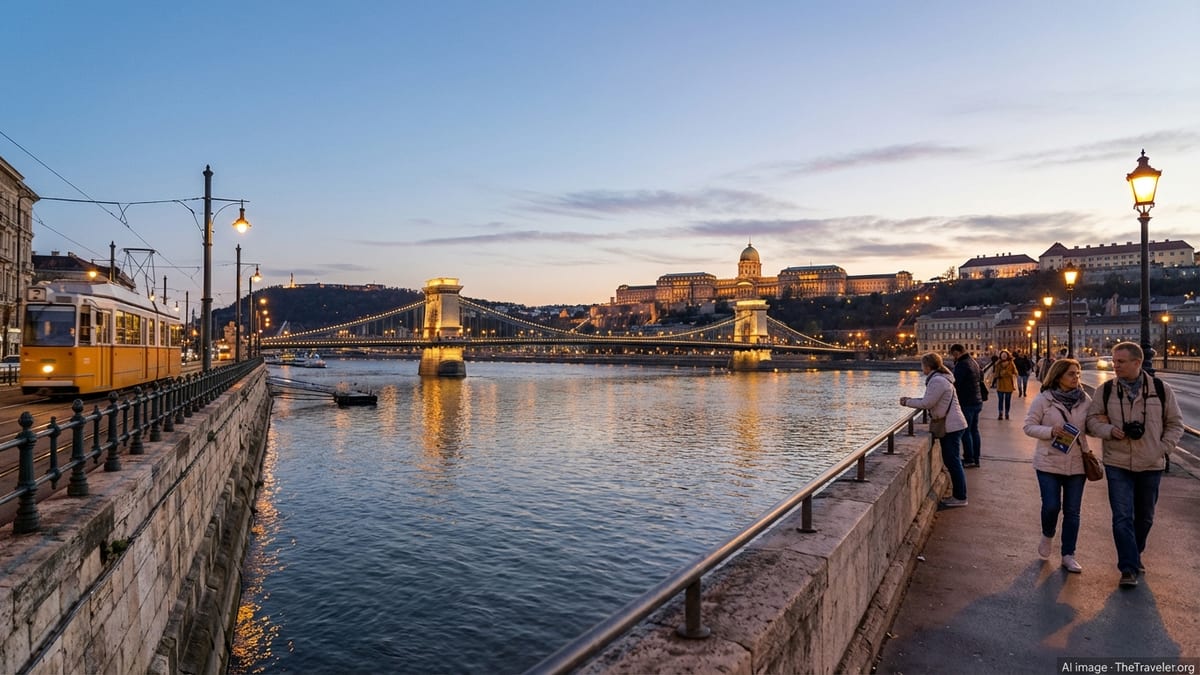
Many visitors find it natural to start along the Danube. A first afternoon could be as simple as strolling the river promenade on the Pest side, pausing at the Shoes on the Danube memorial, admiring the Parliament building and crossing one of the bridges for sunset views of Buda Castle. Following that, a relaxed dinner in downtown Pest introduces you to Hungarian flavors such as goulash soup, paprikás and flódni pastry without any rush.
Dedicate at least one full day to Buda. Spend the morning in the Castle District, exploring the courtyards of Buda Castle, the colorful roofs of Matthias Church and the arches of Fisherman’s Bastion with its iconic panoramas. After lunch, you might descend toward the river and walk across Chain Bridge, or detour to Gellért Hill for a more expansive view of the city. If you enjoy history, plan time for one of the museums inside the castle complex or a visit to the Hospital in the Rock, which intertwines war history with an underground setting.
Another full day in Pest allows you to follow the curve of Andrássy Avenue from the Basilica and the opera house to Heroes’ Square and City Park, where you can wander Vajdahunyad Castle and perhaps time a visit to the Széchenyi Thermal Bath. In the late afternoon and evening, explore the Jewish Quarter, with its synagogues, courtyards and famous ruin pubs. Keeping evenings relatively unstructured beyond a neighborhood choice leaves room for serendipitous finds, whether that is a wine bar specializing in Hungarian vintages or a small independent gallery.
Step 5: Experience Thermal Baths, Food And Nightlife
Budapest is synonymous with its thermal baths, which draw on a geological bounty of hot springs and have been a part of daily life for centuries. For a first visit, you will probably choose between a handful of the most famous complexes. Széchenyi, in City Park, is known for its large outdoor pools and striking yellow architecture and is especially atmospheric on cool evenings as steam curls into the air. Gellért offers art nouveau elegance and an indoor pool hall framed by mosaics and balconies. Rudas and Lukács have their own followings, the former particularly popular for its Ottoman era dome and rooftop pool with city views.
Whichever bath you pick, plan ahead. As of 2025 new policy statements govern opening hours, behavior and ticket types, and baths can be busy at peak times, especially on weekends and in summer. Booking online in advance is increasingly encouraged for popular slots, and some complexes have introduced separate lanes or prices for morning visits, late admissions or special experiences. Bring a swimsuit, flip flops, a towel and a lock for your locker if not included in your ticket, and be ready to follow clear signage about which areas are coed, where swim caps are required and any sauna etiquette.
Food is another highlight of any Budapest itinerary. Traditional Hungarian cuisine is hearty and relies heavily on paprika, pork, seasonal vegetables and rich sauces. Many visitors seek out classic dishes such as gulyás (a soup or stew with beef and paprika), pörkölt (a slow cooked meat stew), lángos (deep fried flatbread, often topped with sour cream and cheese) and chimney cakes sold from street stalls. In recent years, a new generation of chefs has also reinterpreted local flavors in lighter and more contemporary ways, so it is worth seeking at least one modern bistro along with old school restaurants and market halls.
Nightlife is where Budapest’s more anarchic side emerges. The ruin pubs of the Jewish Quarter, housed in semi derelict courtyards and apartments, have become a symbol of the city. Some now feel more curated and established than their improvised origins, but the atmosphere remains unique, with mismatched furniture, art installations and a wide mix of locals and visitors. Beyond these, you will find cocktail bars, craft beer spots and clubs of varying intensity. As with any city, keep your belongings close, pace your drinking, and choose licensed taxis or main streets when moving around at night, especially if you are unfamiliar with the area.
Step 6: Sort Out Money, Safety And Practicalities
Hungary’s currency is the forint, and while card payments are widely accepted in Budapest, it is wise to carry some cash for markets, small bakeries, public toilets and older ticket machines. Withdraw forints from bank operated ATMs rather than independent ones in touristy areas, as the latter can have poor exchange rates and high fees. Avoid dynamic currency conversion when paying by card, and instead choose to be charged in forints by default.
Budapest has a solid reputation as a relatively safe European capital, and recent studies have continued to place it among the safer big cities on the continent. Normal city sense still applies. Watch for pickpockets in crowded transport and around major tourist sights, secure your bag in cafés and bars and be cautious if strangers approach you with unsolicited offers of nightlife or tours. Licensed taxis should always use a meter, and you should avoid unmarked cars that attempt to solicit rides on the street.
Language is less of a barrier than many first time visitors expect. Hungarian is a unique and complex language, and you are unlikely to master more than a handful of phrases. However, English is widely spoken in the tourism industry, particularly among younger people, and menus and signage are often bilingual. Learning a few basics such as greetings and thank you is appreciated, but you will not struggle to order a coffee or buy a transport ticket without fluent Hungarian.
Practical details can smooth your experience further. Tap water is safe to drink, and you will see many locals filling reusable bottles. Power sockets follow the standard European two pin system, so travelers from North America and the United Kingdom will need an adapter. Smoking rules are strict inside bars and restaurants but outdoor terraces can be more relaxed. Public Wi Fi is available in some squares and transport hubs, but you may prefer to rely on an eSIM or roaming plan for consistent mapping and translation on the go.
Step 7: Respect Local Customs, Laws And Current Context
Understanding the broader context of the place you are visiting adds depth to any trip. Hungary’s political climate has been a topic of European debate for years, and social issues, including LGBTQ rights and the independence of institutions, frequently make headlines. Visitors may notice demonstrations, posters or conversations that reflect these tensions. While travelers are generally welcomed and can move about freely, it is worth remembering that protest events or large marches can temporarily disrupt traffic or public transport in specific areas.
Local laws around public behavior are broadly in line with other European Union countries, but there are some specifics to keep in mind. Identification should be carried or easily accessible, and police can request to see it. Drinking alcohol is banned in some public spaces, particularly in certain districts at night, and fines are possible if you ignore local signage. Noise regulations are taken seriously in residential blocks, so if you rent an apartment, be mindful of late night gatherings on balconies or in shared courtyards.
When visiting religious or commemorative sites, such as synagogues, churches or memorials related to the Second World War and the Holocaust, dress and behave with respect. Some attractions have controlled entry and bag checks, which can lengthen waiting times during peak seasons. Photography policies also vary from site to site; always look for posted rules or ask staff if in doubt before taking pictures, especially inside places of worship or smaller museums.
Finally, remember that tourism brings both economic benefits and pressures. In very central districts, residents have voiced concerns about noise, crowds and the impact of short term rentals on housing. You can travel more thoughtfully by keeping noise down at night, supporting locally owned businesses, not blocking narrow sidewalks in large groups, and disposing of litter properly, especially around the river and popular viewpoints.
The Takeaway
Planning a first trip to Budapest is largely about balancing structure with spontaneity. With a few deliberate choices on timing, neighborhood, airport transfers and whether to invest in a city pass, you can strip away most logistical friction before you even land. Once there, focusing on a core set of experiences Buda’s castle heights, Pest’s promenades and cafés, at least one thermal bath visit, a deep dive into local food and a taste of the city’s nightlife will give you a rounded sense of the place without overwhelming your days.
Budapest rewards both the checklist traveler and the wanderer. Its biggest monuments are genuinely impressive, but so are its quiet residential streets, early morning market scenes and chance encounters in tiny wine bars. If you leave room in your schedule between headline sights, you will give the city space to surprise you. And when you find yourself back on the embankment at night, watching the bridges and Parliament sparkle across the water, you will understand why so many first time visitors start planning their return before they have even left.
FAQ
Q1: How many days do I need for a first trip to Budapest?
Most first time visitors are well served by three full days in the city, which allows one day focused on Buda, one on Pest and a flexible third day for baths, markets or repeat visits. If you enjoy slower travel or want to explore side trips, four or five days will feel comfortably relaxed.
Q2: Is Budapest safe for solo travelers, including solo women?
Budapest is widely regarded as one of the safer large cities in Europe and attracts many solo travelers. Standard precautions apply: keep an eye on your belongings in crowds, avoid unlicensed taxis and be sensible with alcohol at night. In most central areas you will see people out late, and well lit main streets feel reassuringly busy.
Q3: Should I get the Budapest Card for my first visit?
The Budapest Card can be a good value if you plan to use public transport frequently and visit several museums and at least one thermal bath. For a three day visit with active sightseeing, many travelers find that the unlimited transport plus free and discounted entries outweigh the upfront cost. If your style is more about slow wandering and only one or two paid attractions, single tickets and individual museum admissions may be cheaper.
Q4: Where is the best area to stay for first time visitors?
For most first timers, central Pest is the most convenient base. District V is ideal if you want to be close to the river and major sights, District VI suits culture lovers along Andrássy Avenue, and District VII appeals to those prioritizing nightlife and casual dining. If you prefer somewhere quieter with big views, consider staying in Buda’s Castle District, understanding that you will cross the river regularly for restaurants and bars.
Q5: How do I get from Budapest Airport to the city center?
The simplest budget option is the 100E airport bus, which runs frequently between the terminals and Deák Ferenc Square in the center and operates around the clock. For door to door convenience, use the official taxi stand for licensed cabs or book a private transfer in advance. Public buses linked with the metro are available too, but are more suited to those already familiar with the network.
Q6: Do I need to book thermal baths in advance?
Advance booking is increasingly recommended, especially for the most popular baths such as Széchenyi and Gellért on weekends and during peak seasons. While you can often still buy tickets on the day, having a reservation can reduce waiting time and guarantee entry if capacities are reached. Check current policies for your chosen bath in the weeks before you travel, as specific rules and time slots can change.
Q7: What is the best time of year to visit Budapest?
Spring and autumn are generally the most comfortable times for a first visit, with milder temperatures, fewer crowds than high summer and pleasant walking conditions. April, May, late September and October are particularly attractive. Summer brings festivals and long evenings but also higher prices and the possibility of intense heat, while winter offers Christmas markets and steamy bath visits but requires serious cold weather clothing.
Q8: Can I use euros, or do I need Hungarian forints?
While some businesses in very touristy areas may accept euros, transactions are usually done in Hungarian forints and euro prices tend to be unfavorable. It is best to withdraw or exchange forints on arrival and use them for everyday spending. Cards are widely accepted at hotels, restaurants and larger shops, but having cash is useful for markets, small cafés and some public facilities.
Q9: Is English widely spoken in Budapest?
Yes, English is commonly spoken in hotels, restaurants in central areas, museums and among younger people. Menus, signs and transport information are often available in English alongside Hungarian. You can comfortably navigate the city without speaking Hungarian, though learning a few simple phrases is a courteous gesture and often appreciated.
Q10: Are there any cultural or legal issues I should be aware of?
As in any European capital, it is important to show respect at religious sites and memorials and to follow local rules on public drinking, smoking and noise, particularly in residential buildings. Hungary’s domestic politics and social debates can be visible in demonstrations or posters, but these rarely affect visitors beyond temporary traffic or transport disruptions. Carry some form of identification, use licensed taxis or public transport and you will find day to day life as a visitor straightforward.