

More news on this day
Polish citizens heading to the United Kingdom will now have to obtain digital permission before they travel, as Poland joins Italy, Spain, France, Germany, Portugal, the Netherlands and more than 70 other visa exempt countries under the UK’s new Electronic Travel Authorisation system, which becomes fully enforced from February 25, 2026.
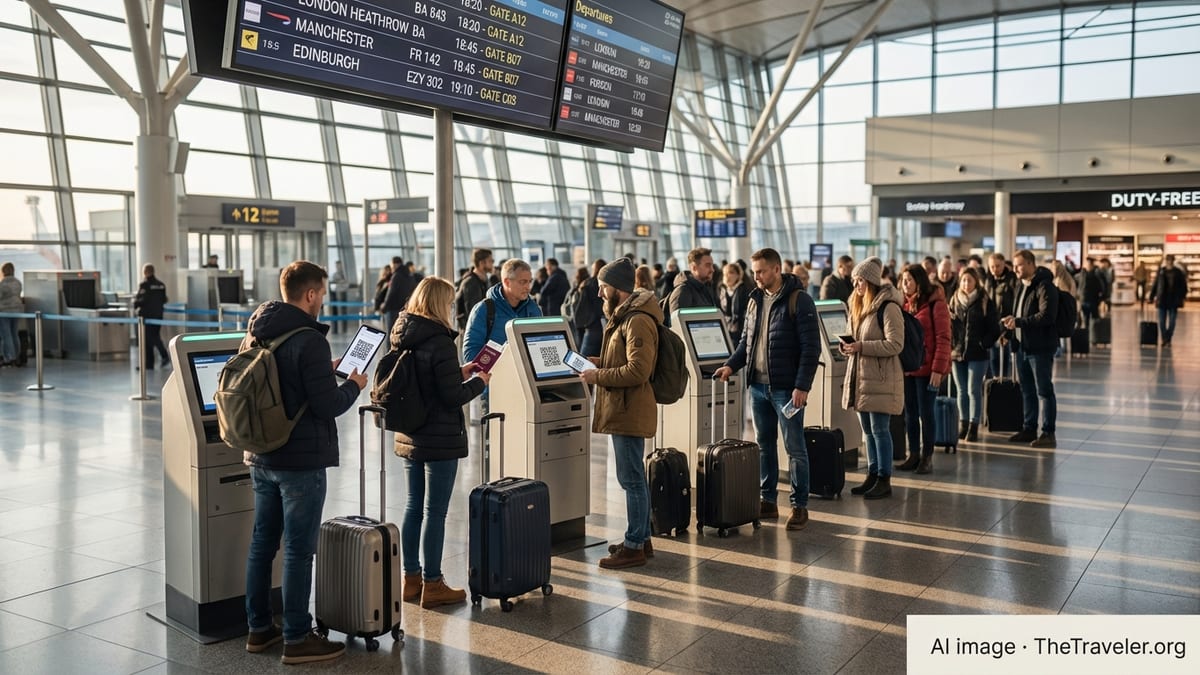
Full Enforcement Marks a New Phase in UK Border Controls
The UK’s Electronic Travel Authorisation, or ETA, has been rolling out in stages since late 2023, but the system enters a decisive new phase this month. From February 25, 2026, airlines, ferry operators and train companies have been instructed to apply a strict “no permission, no travel” approach, meaning most non visa nationals without either an ETA or a visa will be denied boarding before they ever reach the UK border.
The Home Office describes the shift as part of a long term plan to digitise the border, pre screen passengers and reduce the administrative burden at ports and airports. By moving checks upstream and linking authorisations directly to passports, officials say they hope to spot potential security risks earlier while speeding up clearance for low risk travellers once they arrive.
For the travel industry, the change represents both an operational and a communications challenge. Carriers must rapidly integrate ETA verification into check in systems, while tourism boards and travel agents across Europe and beyond are scrambling to inform customers that what was once a straightforward short trip to the UK now requires advance online authorisation.
Poland Joins EU Neighbours Already Transitioned to ETA
While enforcement becomes universal this month, Polish travellers have technically been eligible for the ETA since April 2025, when the scheme opened to all citizens of European Union and other Schengen associated states. The intervening period has operated as a transition window, during which many visitors could still arrive without an ETA provided they met other entry conditions and were prepared for additional questioning at the border.
That grace period is now over. Information campaigns led by the British Polish Chamber of Commerce and Polish public broadcasters throughout 2025 highlighted that ETA would become a mandatory requirement for visa exempt Polish visitors, including those travelling for tourism, business meetings, family visits or short courses. From this month, those warnings have turned into hard rules: without an approved ETA linked to their passport, Polish passengers will be turned away at check in.
Poland’s inclusion places it alongside major European tourism and business markets such as Italy, Spain, France, Germany, Portugal and the Netherlands, as well as Sweden, Belgium, Austria and all remaining EU member states. In total, the UK says 85 nationalities and territories that previously enjoyed visa free short stays are now covered by the digital pre travel authorisation regime.
What the UK ETA Is, and What It Allows Travellers to Do
The ETA is effectively a digital pre clearance required for visa exempt visitors. It is not a visa in the traditional sense and does not by itself guarantee entry, but it has become a compulsory step before boarding transport to the UK for most short term travellers who are neither British nor Irish citizens and who do not already hold a UK visa or residence permit.
Once approved, the authorisation is electronically linked to the passport used in the application. It is generally valid for two years, or until that passport expires, whichever comes first, and permits multiple visits to the UK during its validity. Each individual trip can last up to six months for tourism, family visits or many business activities, with shorter allowances for certain categories such as short study courses or medical treatment.
The ETA covers travel to all four nations of the UK England, Scotland, Wales and Northern Ireland and applies whether visitors arrive by air, sea or land. Travellers entering Northern Ireland from the Republic of Ireland must also hold an ETA unless they are legally resident in Ireland and covered by Common Travel Area exemptions, a detail that has drawn attention in cross border communities.
Application Process, Cost and Processing Times
Travellers eligible for the UK ETA can apply either via the official mobile application or through an online form. The process requires a biometric passport, a recent digital photograph, an email address and a bank card or digital wallet for payment. Applicants are asked to confirm personal details, answer security and immigration suitability questions and provide basic information about their planned trip.
The fee, which was originally set lower during the early rollout, is now set at 16 pounds per applicant and payable for travellers of all ages, including children. The Home Office says this charge is designed to recover the administrative costs of the scheme and fund wider investment in border technology.
In most straightforward cases, a decision is issued within minutes and emailed to the applicant, though authorities advise applying at least several days before travel in case additional checks are needed. Where an ETA is refused, the traveller may need to apply for a full UK visa if they still wish to visit, a process that is more time consuming and expensive and requires supporting documentation and, in some cases, an in person appointment.
Who Must Apply, and Who Is Exempt From the New Rules
The central group affected by the ETA requirement is non visa nationals people who could previously visit the UK for up to six months without obtaining a visa in advance. This encompasses citizens of all EU and Schengen states, many countries in the Americas, the Gulf, Asia Pacific and selected parts of Africa and the Caribbean. For these travellers, an ETA is now mandatory for almost all forms of short stay tourism, business or family visit.
British and Irish citizens remain exempt and can continue to enter the UK using a valid passport, while legal residents of Ireland benefit from specific protections when travelling within the Common Travel Area. Individuals who already hold a valid UK visa, an electronic visa in their passport, or certain categories of residence or frontier worker permits are also not required to obtain an ETA in addition.
There are limited exemptions for some airside transit passengers who remain in the international transfer area at designated airports and do not pass through UK border control. However, anyone planning to leave the airport, even briefly, or to transit through airports without such facilities will need an ETA or a visa. Dual nationals have been advised to take particular care to travel on the passport that matches their immigration status, since holding an ETA under one nationality does not substitute for a British passport where citizenship rules demand it.
Impact on Polish, European and Transatlantic Travel
For many Polish travellers, as for their counterparts in Italy, Spain, France, Germany, Portugal and the Netherlands, the practicalities of visiting the UK now more closely resemble the process required to travel to the United States or Canada, where electronic pre screening systems have been in place for years. Rather than simply booking and boarding, visitors must incorporate a short period of online administration and factor in the cost of the authorisation when planning their trip.
Travel trade representatives across Central and Western Europe report that the new requirement has prompted a surge of questions from passengers who are unfamiliar with the system or who assume that visa free travel means no prior formalities. Industry bodies have urged travellers not to leave applications until the last minute, warning that turning up at the airport without an ETA could lead to missed flights and lost money, as carriers are now expected to block boarding for anyone lacking digital permission to travel.
At the same time, some operators note that once travellers complete the process and understand that the ETA remains valid for repeated journeys over two years, the impact on demand is likely to be more muted, especially among frequent visitors who can spread the cost and effort over several trips.
Part of a Global Shift Toward Digital Pre Travel Screening
The UK’s ETA is arriving in a global context where more and more destinations are moving toward similar screening tools for visa exempt visitors. The United States has long required Electronic System for Travel Authorization approval from visitors under its visa waiver programme, while Canada, Australia, New Zealand and South Korea all operate their own electronic permits for short term travellers.
Europe is also preparing to follow suit from late 2026 with the European Travel Information and Authorisation System, or ETIAS, which will eventually require British citizens and other visa exempt third country nationals to obtain digital permission before entering most of the Schengen area and associated states. Together with biometric entry exit systems at external borders, these initiatives mark a decisive shift towards pre travel vetting as a standard feature of international mobility.
For travellers, the practical result is an increasingly complex landscape of overlapping authorisation schemes, each with its own fee, validity period and eligibility rules. Travel advisers recommend checking official government guidance well before departure, especially for multi stop itineraries that may involve several different electronic permissions.
Advice for Travellers Planning UK Trips in 2026 and Beyond
With full enforcement of the ETA scheme now in effect, tourism boards and consular authorities are urging would be visitors to make the authorisation a standard part of their trip preparation. Polish citizens and other affected nationals are advised to apply for an ETA at least a few days, and preferably a couple of weeks, before their intended travel date, and to ensure that the passport used to apply is the same one carried on the journey.
Travellers should also pay close attention to the conditions attached to the ETA. It does not permit long term work or study, and it does not override the discretion of Border Force officers, who retain the authority to refuse entry if they believe a person does not meet the requirements of a visitor. Those intending to work, undertake extended academic programmes or relocate to the UK will generally need to explore separate visa routes.
For now, the biggest risk for casual visitors is practical rather than legal: arriving at the airport, ferry terminal or international rail station without the necessary digital permission. With Polish citizens and other Europeans now firmly integrated into the UK’s ETA system, travel experts say that awareness and preparation will be key to ensuring trips proceed smoothly as the new digital border era beds in.